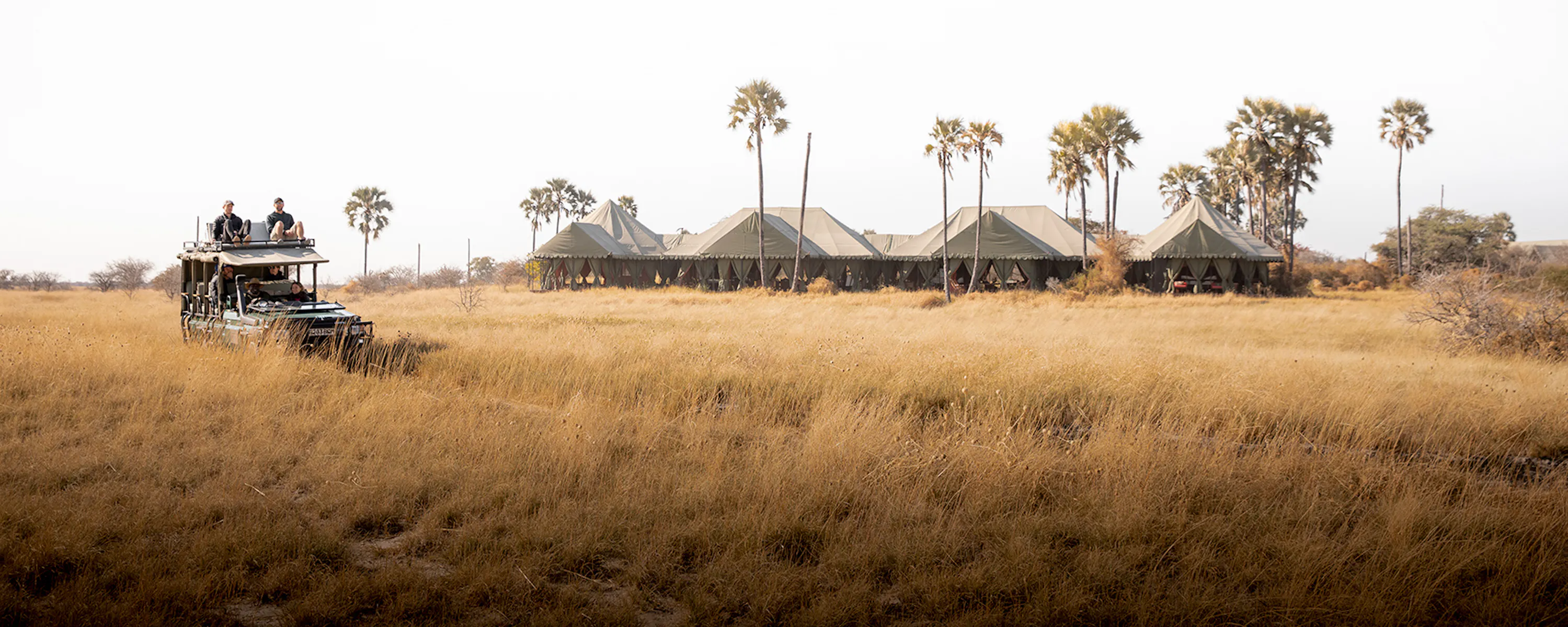
East Africa vs. Southern Africa: which safari is right for you?
Our safari specialists compare wildlife, timing, cost, culture, and travel style across Africa's two classic safari regions.

October 21, 2026
Whether you’re planning your first luxury Africa safari or your fourth, you’ll confront the same dilemma: whether to travel to East Africa or Southern Africa. Both deliver world-class wildlife, but offer meaningfully different landscapes, logistics, and pacing. One largely routes you through Nairobi or Kilimanjaro; the other lands you most often in Cape Town or Johannesburg — more than 2,000 miles away.
This guide makes the East Africa vs. Southern Africa safari comparison along the same fault lines our destination specialists consider every single day. Wildlife might be the trip anchor, but it’s only one piece of the puzzle. We balance the practical factors (who you’re traveling with, whether you’re an Africa first-timer or a repeat visitor, any unmovable priorities) with details that seem small, but make a safari feel meaningfully yours: the mobile tented camp with a private vehicle for the person who wants to track the migration from dawn to dusk, or a polished lodge for the traveler who enjoys a wardrobe change before dinner. There’s a mood for every safari type, and we know exactly where to find them.
Below, we make high-level observations about safari destinations. If you (like us) prefer to speak in specifics rather than generalities, start the conversation. We’ll give you a direct, textured, and personalized answer. If you enjoy the research process, read on.
Side-by-side comparison
East Africa | Southern Africa | |
Core countries | Kenya, Tanzania, Rwanda, Uganda | South Africa, Botswana, Zambia, Zimbabwe, Namibia, Mozambique |
Signature wildlife | The Great Migration (Serengeti & Maasai Mara), Amboseli's elephants, Laikipia's rhinos, Samburu's Special Five, gorillas, chimpanzees | Okavango/Chobe elephants, wild dogs, South Luangwa and Kruger leopards, Kalahari zebra migration, pangolin projects |
Landscape | Wide open savanna plains, Rift Valley, and Kilimanjaro | Varied. Okavango Delta, deserts, Zambezi River, Victoria Falls, long coastlines |
Safari types | Twice-daily game drives, possibly a bush walk. | Game drives and walking safaris; near water: mokoro, boat or canoe |
Malaria-free safaris | No | Parts of South Africa |
Cultural exchange | Strongest in Kenya | More limited |
Primary gateways | Nairobi and Kilimanjaro | Johannesburg and Cape Town |
Easiest beach add-on | Zanzibar or Lamu | Mozambique |
Best first safari | Maasai Mara or Serengeti | Greater Kruger plus Victoria Falls |
East Africa safaris at a glance
By volume, an East Africa safari generally means Kenya or northern Tanzania. Rwanda and Uganda are commonly added as gorilla-trekking extensions (though each has so very much more to give). Zanzibar is a popular beach finale, followed by the Kenyan Coast — the route less taken but an Extraordinary Journeys favorite. Southern and western Tanzania are wild and remote, classically chosen by repeat Africa travelers.
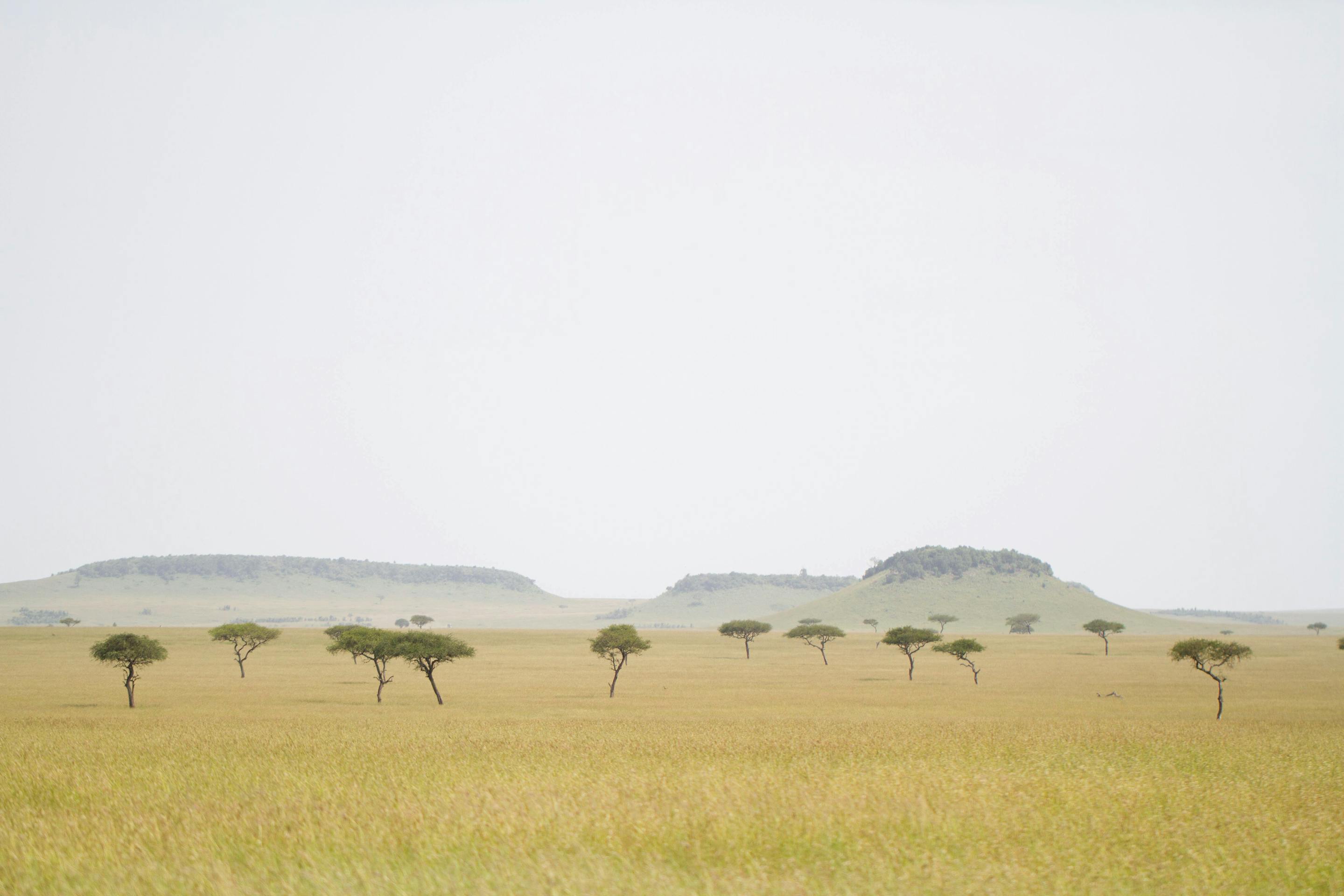
The iconic parks are the Maasai Mara in Kenya (the national reserve but also the private conservancies that neighbor it) and Serengeti National Park in Tanzania. Together, they make up one vast ecosystem characterized by open savanna — the big-sky imagery most people associate with the word "safari." People also know these parks for the Great Migration. The mass movement of zebra and wildebeest is a spectacle to behold, but in our opinion, not the whole of East Africa's appeal.
An Amboseli safari, with its super tusker elephants framed against Mount Kilimanjaro, has nothing to do with the migration calendar and is one of Kenya's most photographed destinations. Laikipia travel draws visitors for its heartening rhino conservation story, the only place to reliably see the Big Five in East Africa. Up north, Samburu offers arid landscapes, rich culture, and “the special five” species.
In northern Tanzania, crown jewels include the Ngorongoro Crater, Kilimanjaro, the Ngorongoro Highlands, and Tarangire National Park — all within driving distance of the southern Serengeti.
Tanzania's northern circuit (Serengeti, Ngorongoro Crater, Tarangire National Park or Lake Manyara), is the tidiest, most classical safari narrative on the continent: three standout parks, one region, well structured. Kenya is the birthplace of safari, and operates as a well-oiled trip where Nairobi is the hub that connects the Maasai Mara, Laikipia Plateau, Amboseli, and Samburu. It’s also possible to combine Kenya and Tanzania.
Southern Africa safaris at a glance
Southern Africa spans Botswana, South Africa, Zambia, Zimbabwe, Mozambique, and Namibia, and reads less like one wildlife park than a composed journey. The anchors: the Okavango Delta, which floods in the dry season into the world's largest inland delta; Kruger and the private reserves that neighbor it; South Luangwa in Zambia, birthplace of the walking safari; and Victoria Falls, the hinge connecting half the region's itineraries.
Diverse terrain is the most compelling reason to choose southern Africa. Two deserts define large stretches: Namibia's Namib, home to Sossusvlei, and Botswana's Central Kalahari, which greens dramatically after the rain. The Okavango Delta, a vast wilderness that rises and falls like a tide, has no paved roads. The Zambezi River threads the heart of southern Africa, passing Chobe, plunging over Victoria Falls, feeding Lake Kariba, Lower Zambezi National Park, and Mana Pools before eventually meeting the Indian Ocean in Mozambique. More than 5,000 miles of coast hugs southern Africa: Namibia’s shipwreck-littered Skeleton Coast, South Africa’s dramatic Cape Peninsula and Garden Route, and the shoals and untouched islands of Mozambique.
In our southern Africa portfolio, South Africa is the most popular choice for first-timers, followed by Botswana, each chosen for entirely different reasons. South Africa for a blended safari-city-and-Winelands trip or a malaria-free safari. Botswana for extended time in the bush where game viewing encounters few other vehicles or fence lines.
Wildlife and safari experience compared
East Africa
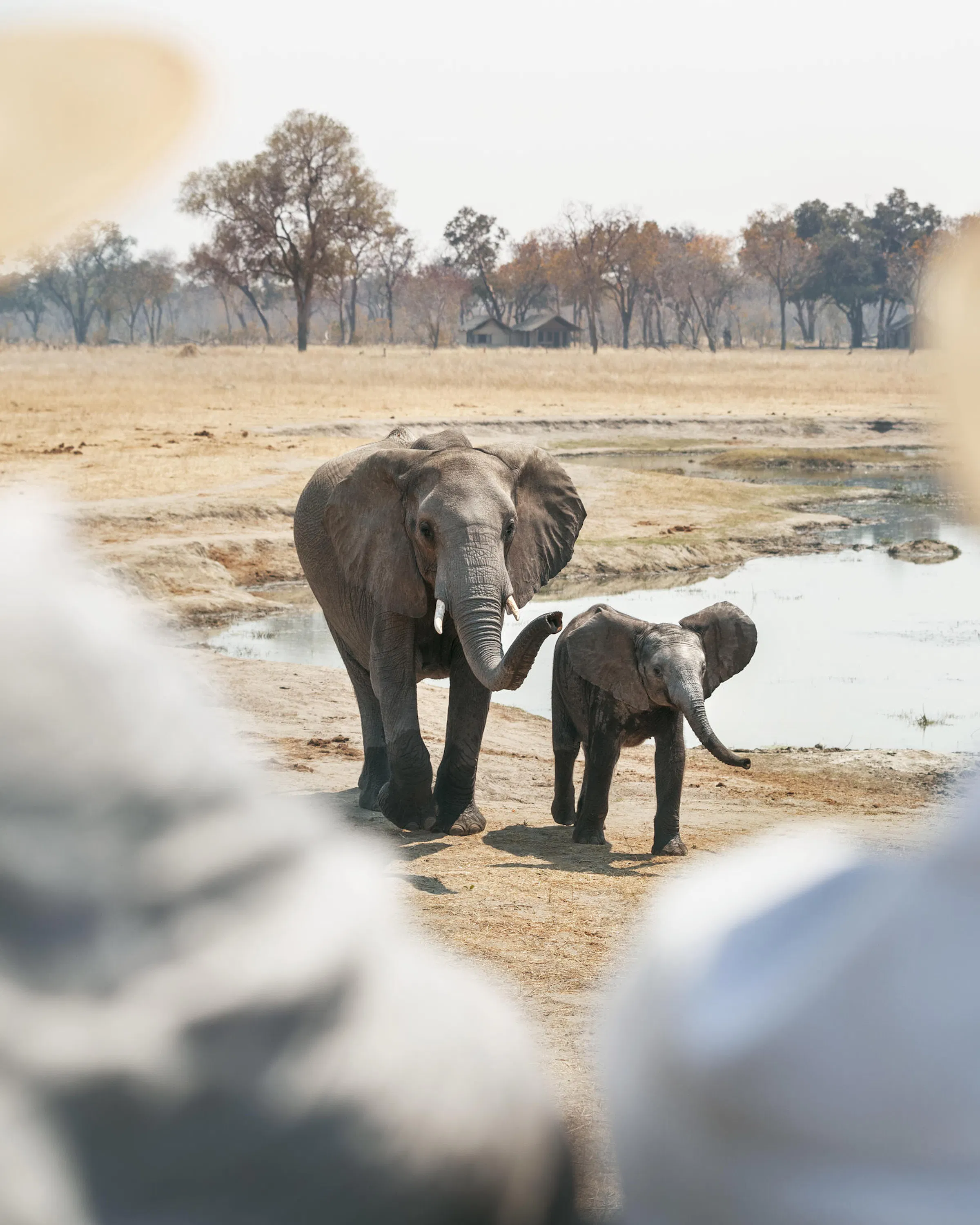
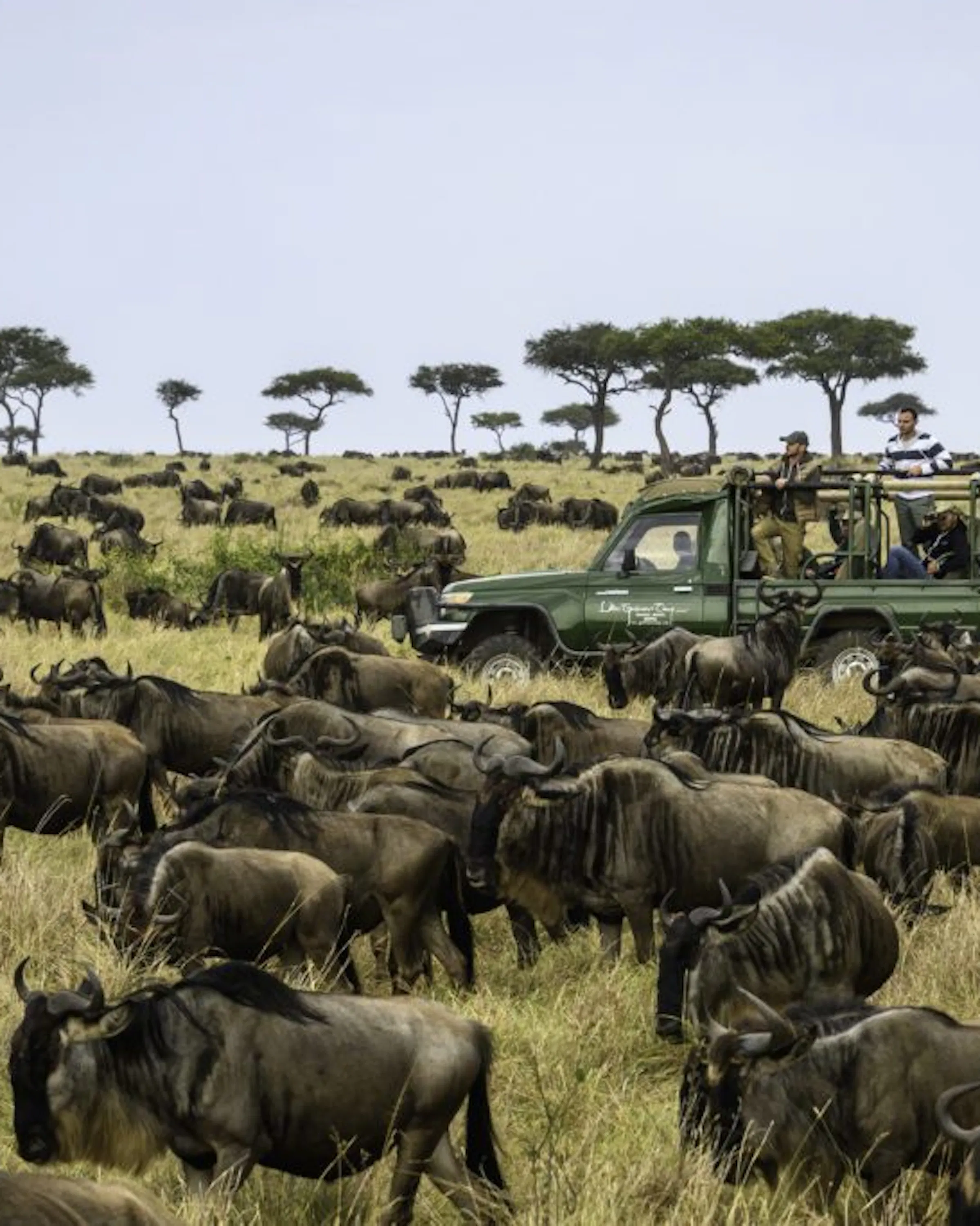
East Africa’s headline wildlife story is the Great Migration. Across the year, roughly two million wildebeest and zebra move en masse through the Serengeti-Mara ecosystem. It’s East Africa's single biggest spectacle and a visually arresting scale of life — and death. It’s also an entirely organic phenomenon. As much as the migration gets reduced to a circular diagram, it’s not a ticketed performance with a seating chart to choose from. Driven by rains, grazing, and calving, herds don’t move along predictable routes.
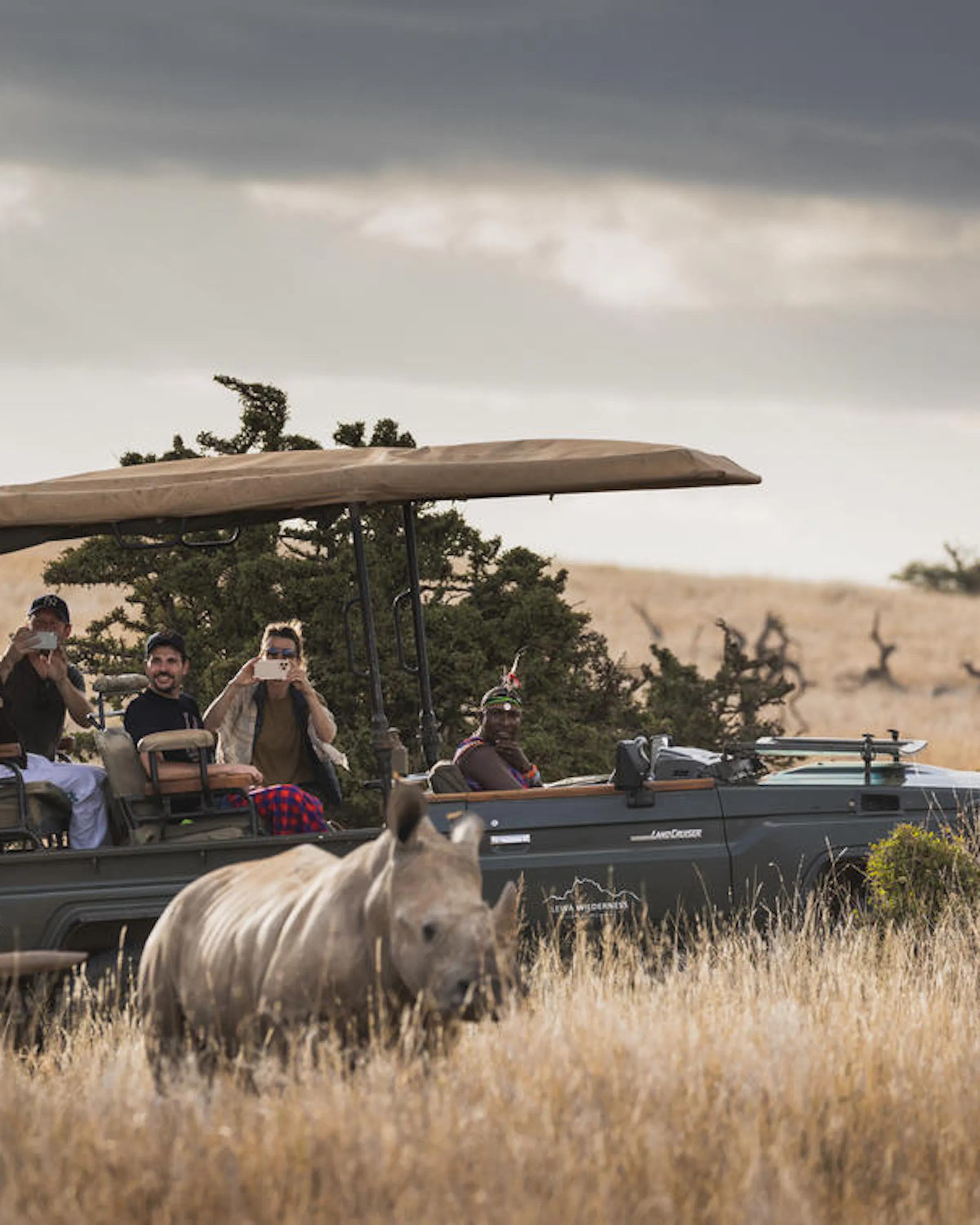
If your dream is a private Great Migration safari, we’ll flex our expertise to deliver, but it’s worth emphasizing that the Mara and Serengeti are premier safari destinations with or without migration masses. This is bona fide big cat territory. The unbound horizon is the stage for wildlife dramas where lion prides, cheetah, leopard, and hyena prey on year-round plains game. Giraffe, hippo, jackal, buffalo, warthog, and myriad birdlife are recurring characters. Amboseli's elephants, Laikipia's black rhino, and Samburu's Special Five round out the case that East Africa's draw doesn't begin and end with wildebeest.
East Africa is also home to the continent’s great apes. You can go mountain gorilla trekking in Rwanda's Volcanoes National Park or in Uganda's Bwindi Impenetrable Forest and Mgahinga Gorilla National Park. Chimpanzee trekking tours are possible in Kibale Forest (Uganda) or at Gombe and Mahale (western Tanzania).
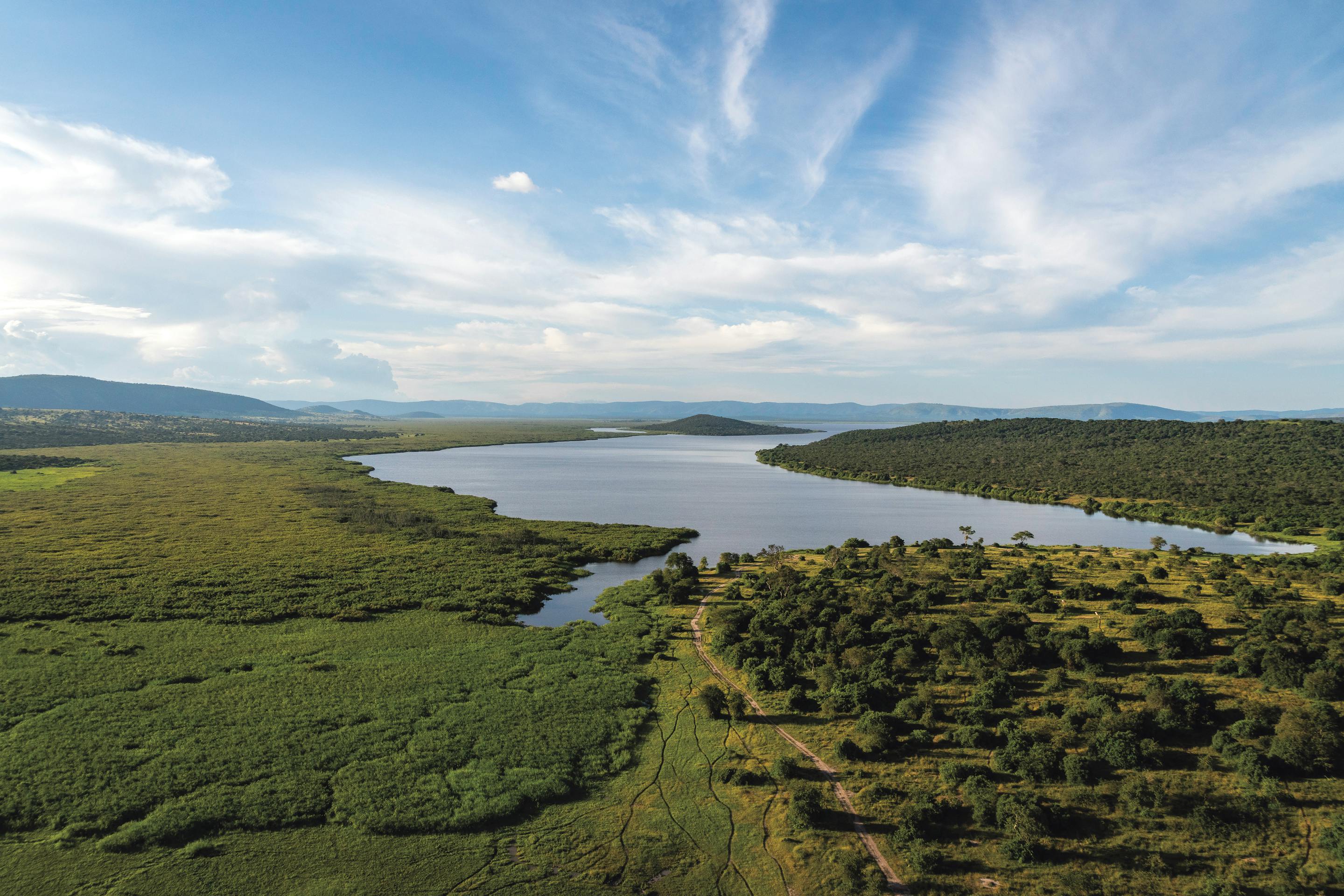
Our repeat safari-goers should consider East Africa’s more remote corners: Akagera (Rwanda’s only safari park, and one making a remarkable recovery), Kidepo (Uganda), southern Tanzania (Nyerere, Ruaha, Katavi), Mahale Mountains (western Tanzania), or the Mathews Range (Kenya). Those who have already done gorilla trekking in Rwanda or Uganda might look to Odzala-Kokoua National Park (Republic of Congo) to track lowland gorillas on a trip that feels like a true expedition.
Southern Africa
Southern Africa's pitch: consistent, year-round Big Five viewing without a calendar dependency, plus species East Africa doesn't reliably offer.
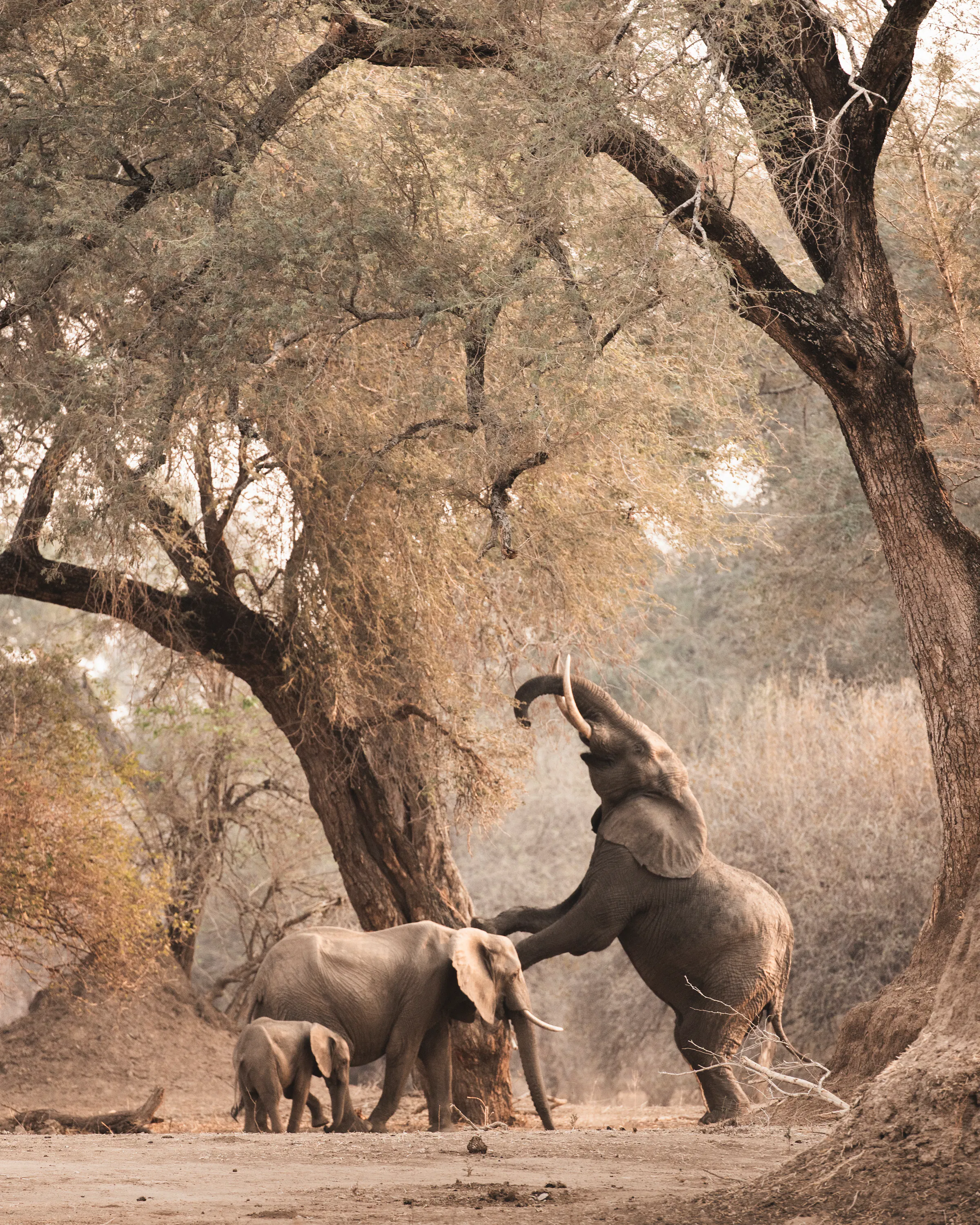
Chobe National Park safaris and neighboring Linyanti (Botswana) offer some of the densest elephant and buffalo concentrations in the region, with herds moving onto the rivers by the hundreds through the dry season, May to October. Wild dog is part of the same story, strong enough that Botswana markets itself as a Big Six destination (though we will never promise sightings). South Luangwa in Zambia, Africa's leopard capital, is a strong alternative for both. Botswana's Makgadikgadi Pans also host Africa's second-largest zebra migration, an undersold reason to add a Kalahari leg.
For some of the most dependable and efficient wildlife viewing, Greater Kruger’s Sabi Sand Private Game Reserve delivers better than anywhere: dense, habituated game, and decades of tracking expertise. This is an excellent choice if you’re only giving over a handful of days to safari on a South Africa trip.
Repeat safari-goers might look farther afield, to less obvious destinations or to parks that are early in their conservation journey. We might reach for safari in Gorongosa National Park (Mozambique), Lake Kariba or Gonarezhou (Zimbabwe), Kafue or Liuwa Plains (Zambia), Etosha (Namibia), Mababe Depression (Botswana), or Tswalu (South Africa).
Safari activities: game drives vs walking vs boat
East Africa
Safari days in East Africa largely follow a familiar rhythm: an early morning game drive, a relaxing afternoon, an afternoon game drive, sundowners, and dinner back at camp. In Kenya and Tanzania, most wildlife watching will take place in a Land Cruiser — though parts of Kenya have more going on.
Laikipia's ranches, including Borana and Lewa, have built their identity on camel and horseback safaris, extending to mountain biking, quad biking, and fly-camping further north. The Mara's private conservancies, through operators like Offbeat and House in the Wild, offer horseback riding too, which the public reserve doesn't allow. Kenya's Mathews Range and Namunyak Conservancy are sold on off-grid hiking, forest swimming, and fly-camping rather than Big Five game density. Hot air ballooning over the Maasai Mara is the best-known out-of-vehicle activity there.
Worth emphasizing: Tanzania's national parks are more strictly vehicle-based, much like Kenya's national reserves, and you’re not permitted to drive off-road, nor safari after dark.
Southern Africa
Southern Africa brings safari to the water. Parks that hem the Zambezi offer a whole new perspective to game viewing and lend variety to consecutive days on safari.
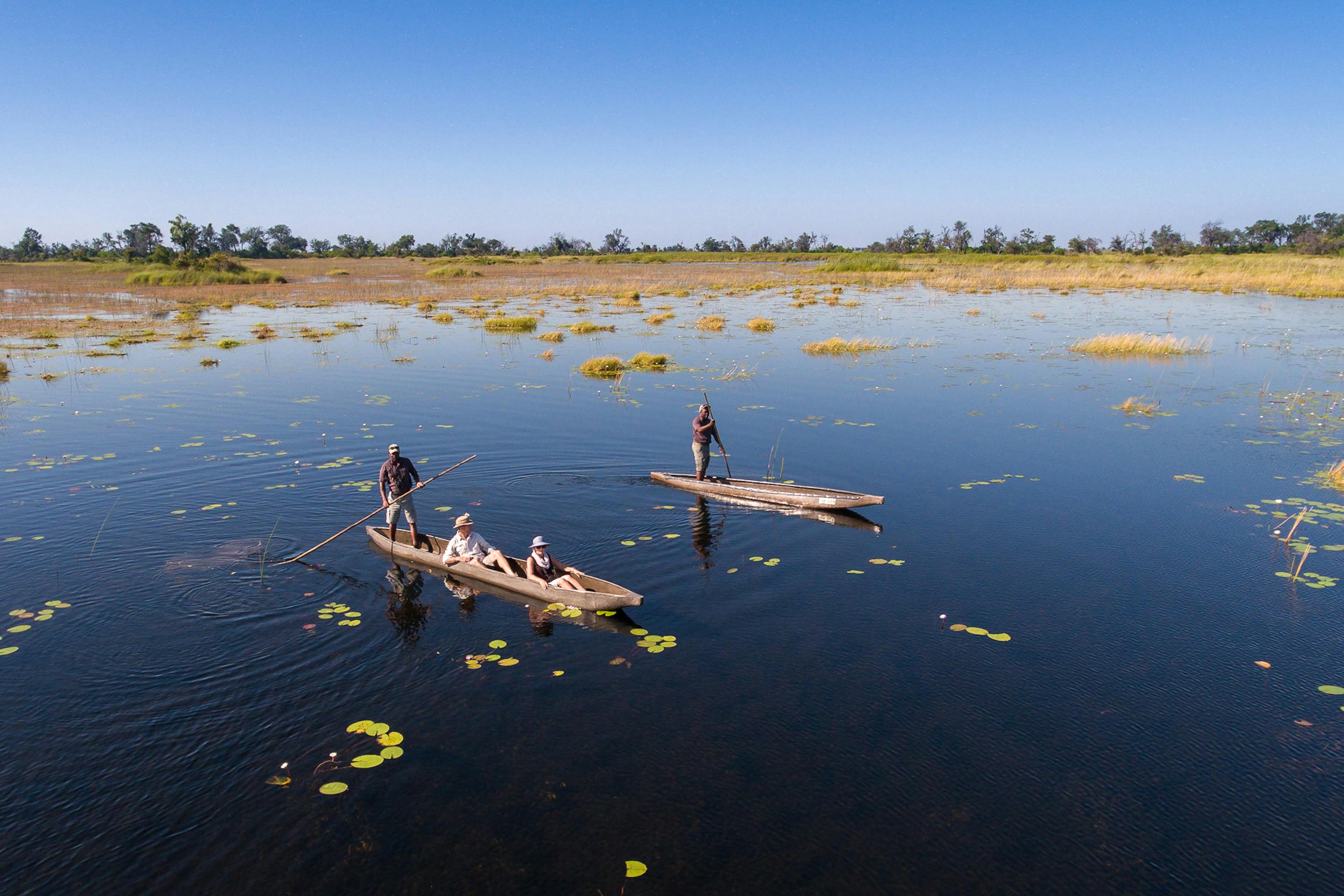
Closer to Victoria Falls, you can canoe or whitewater raft, and Botswana adds mokoro safari. Navigated by a skilled poler, mokoro is a poetic way to experience lily pad-filled and reeded waterways during the hush of the late afternoon.
On terra firma, Zambia is where the walking safari was born (South Luangwa in the 1950s), and remains the region's signature style. Zimbabwe’s highly credentialed guiding also opens up opportunities for walking safaris.
Cultural depth
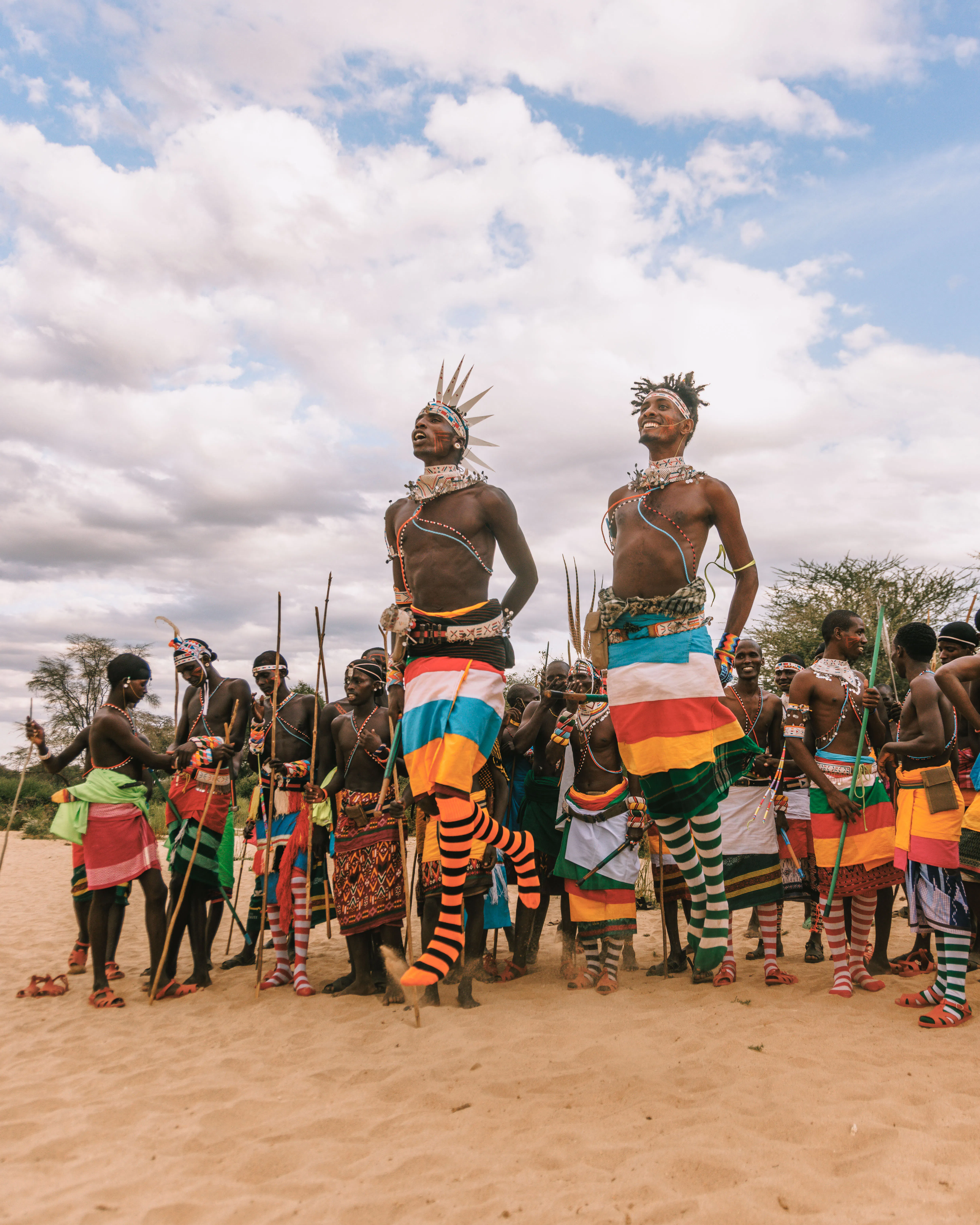
Tanzania and Southern Africa have their own cultural moments, from the Hadza and Datoga in north-central Tanzania to the San bushmen in Botswana to Namibia's Himba communities. But far and away, a private Kenya safari offers the deepest, most unforced cultural exchange.
The Maasai, Samburu, and other indigenous communities have lived alongside wildlife in Kenya for generations, and that coexistence shows up constantly in small, un-staged ways. Community-owned conservancies run cultural programs well beyond a photo stop: singing wells, where herders lower buckets into hand-dug wells and sing to call cattle to water, is a genuinely untouched tradition. Village visits include real access to schools and clinics, beading with the women, and a guide dressed in ochre, beads, and carrying a spear is dressed for his own day, not for you. Warrior displays tied to the Samburu moran tradition show up too, offered by communities with a direct financial stake in the land, which is why it feels like an exchange rather than a show.
Best time to visit each region
There's no single best time to go on safari in Africa. It depends what you're seeking, and increasingly, how many other vehicles you're willing to share your game viewing experience with.
East Africa
In East Africa, calving in Tanzania's southern Serengeti runs roughly December through March, and the Mara River crossings typically happen July through October — the most crowded window by far, with dozens of vehicles sometimes parked at one crossing point. Base yourself in a private conservancy, where outside guests aren't permitted. Or shift to the shoulder season instead. Late May and October, just outside the peak crowds, are Extraordinary Journeys favorites.
Migration aside, resident game viewing holds up well across Kenya and Tanzania. Amboseli, Laikipia, and Samburu aren't migration-dependent, and January through March combines strong game with quieter camps. The long rains, mid-March through May, are low season: muddy roads, some closures, and the fewest travelers.
Southern Africa
Southern Africa runs a dry-season/green-season split, and crowding here is more about geography than calendar.
- May through October (“winter”) is dry season, when animals concentrate at permanent water sources; it's also when the Okavango Delta's flood, counterintuitively, arrives, since Angolan rainwater takes months to travel downstream. Botswana's private concessions set a visitor cap on beds by law, so even at peak season you can go hours without seeing another vehicle, while South Africa's busy southern Sabi Sand can mean sharing a sighting regardless of season.
- November through April (“summer”) is green season: lush, newborn animals, dramatic skies, lower rates, offset by heat and some closures, but the emptiest roads of the year. The exception: Cape Town’s Mediterranean climate, where high-pressure systems stave off the rains for clear, sunny days.
Cost and value comparison
Cost depends on country, camp, and season.
Kenya's conservancy model supports a strong mid-range tier. A luxury Tanzania safari is typically more expensive than Kenya. Botswana operates a high-value, low-volume tourism model, limiting bed counts per camp which increases safari prices.
American dollars can fetch good value in South Africa, where travel is priced in rand, but it’s also home to some of the finest lodges on the continent. Zambia and Zimbabwe safaris are better value, offering substance over polish at a price below the manicured circuits of neighboring Botswana and South Africa.
All said, traveling outside of peak season or staying in a single portfolio of camps can stretch your travel dollars more meaningfully than whether you're in East or southern Africa.
Getting there: flights and accessibility
East Africa
Jomo Kenyatta International Airport (NBO, Nairobi) and Kilimanjaro International Airport (JRO, northern Tanzania) are East Africa's two largest gateways, then Kigali (KGL, Rwanda) and Entebbe (EBB, Uganda). Currently, JFK — Nairobi is the only direct route between East Africa and the United States. Tanzania's Dar es Salaam is a different type of hub, serving the southern safari circuit and coast, not the Ngorongoro Crater-Tarangire-Serengeti safari itinerary that most first-timers book.
In terms of getting around, Tanzania's northern circuit is East Africa's classic drive safari. Much of the route connects by road, and the drive between camps often doubles as a game drive, a serious draw for nervous flyers. Kenya's regions are more spread out, and while paved highways thread the country, its bush plane network is really the backbone.
Southern Africa
Southern Africa's gateways are spread out too, but Cape Town International Airport (CPT) and O.R. Tambo International Airport (JNB; Johannesburg) do most of the work, even for trips spending most of their time in Zimbabwe, Zambia, Namibia, or Botswana. Victoria Falls (VFA) and Livingstone (LVI) airports connect the Zimbabwe-Zambia-Botswana border area while Windhoek serves Namibia. South Africa is the one place you can reach a world-class safari destination without ever boarding a bush plane: Skukuza and Hoedspruit, serving Kruger and its private reserves, both take direct scheduled commercial flights from Johannesburg and Cape Town. Botswana is the opposite: a luxury Okavango Delta safari (or really, anywhere) requires a small charter or helicopter, since many camps have no road access.
Combining safari with beach
East Africa
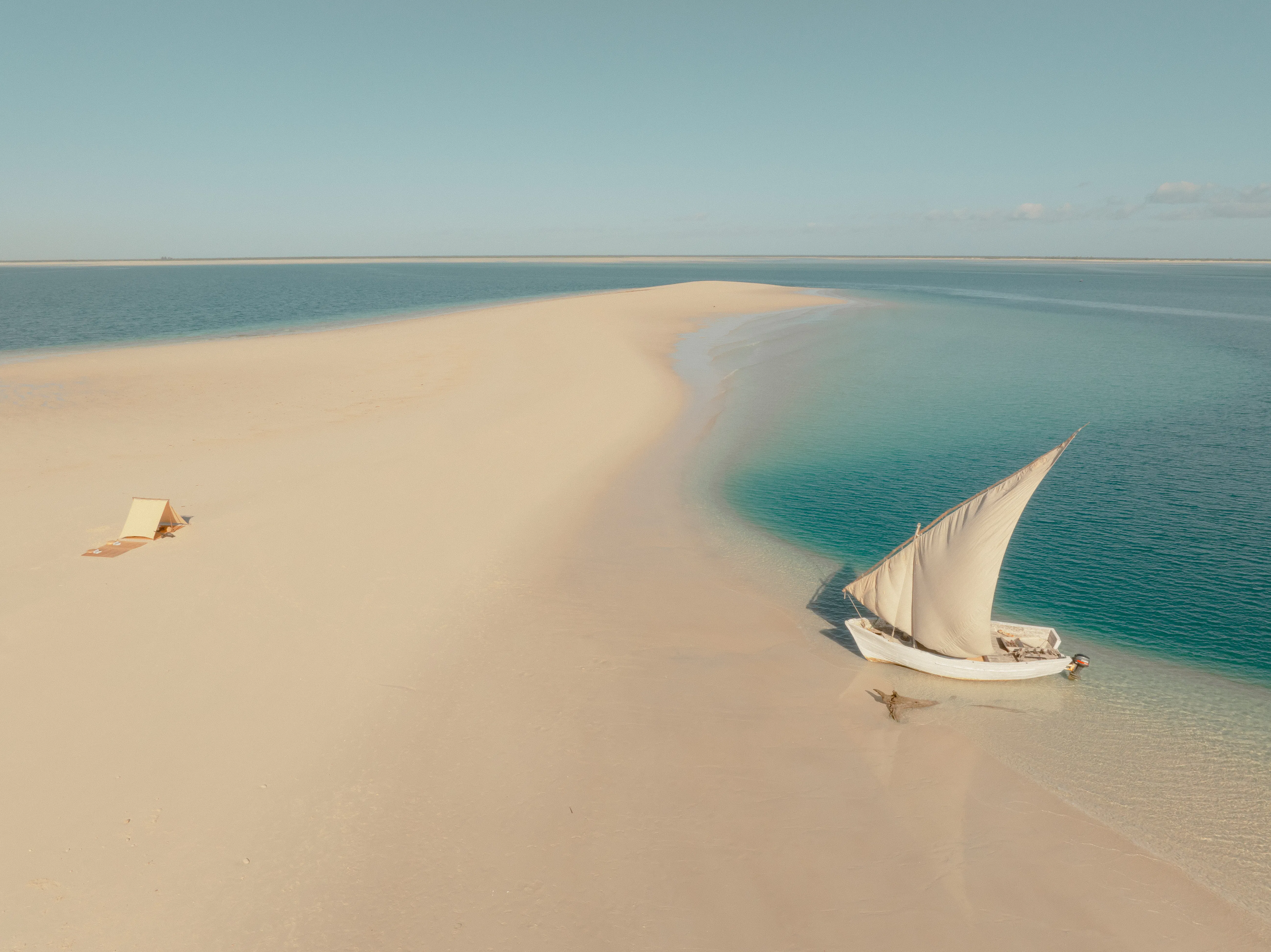
East Africa's easiest beach chapter is Zanzibar, a roughly 90-minute commercial flight from Nairobi. Go in expecting an eclectic island, and dramatic tides rather than a soft-sand Caribbean resort. We encourage travelers to venture deeper into the archipelago to escape the crowds on idyllic Pemba or Fanjove. Kenya's own coast (Lamu, Watamu, and Diani) is quieter and leans more barefoot luxe; a private dhow cruise is how we do it best. Kenya also connects directly to Mauritius and the Seychelles for a longer, polished, and exclusive safari finish. (Our Tanzania travelers just need to route through Nairobi for a night, which is easy enough.)
Southern Africa
Southern Africa’s offering is so classic it’s called a bush-and-beach honeymoon. Start with a luxury South Africa safari and end on Mozambique's Bazaruto and Benguerra islands. Again, the Seychelles and Mauritius travel are within reach, too. For an ending your friends haven't already seen, detour to a private island archipelago off Madagascar, or Lake Malawi, where islands like Likoma give you a freshwater beach finale.
Combining safari with cities
Southern Africa
When it comes to blending safari with time spent in genuinely captivating towns and cities, South Africa is unmatched. Cape Town is a place we constantly return to. Table Mountain, the Cape Peninsula, Atlantic beaches, world-class food and wine, and history worth unpacking: Robben Island, District Six, the Bo-Kaap. Nearby, Franschhoek and Stellenbosch make for a luxury Cape Winelands tour. Often rushed through, Johannesburg tells South Africa’s complete story. At the coast, there are good reasons to spend time in Hermanus, tucked-away towns along the Garden Route, and Durban. What’s more, Victoria Falls will give you some “town time” and adventure excursions between the wilderness chapters of a southern Africa safari itinerary.
East Africa
In East Africa, Kigali, the Rwandan capital, shines. Draped across lush green hills, quiet, and remarkably clean, it's a city that surprises in so many ways. Acquaint with Genocide history and memorials, a heavy but necessary history to understand that will contextualize your entire Rwanda trip. Then, explore this resilient and creative city. Sip cocktails at trendy lounges, shop independent fashion designers and for high-quality woven home goods, meet artists, and wander Nyamirambo Market.
East Africa versus Southern Africa: which region fits your travel style?
- First-time safari-goer: Kenya suits a first-time safari traveler wanting character and a straightforward itinerary mostly spent in the bush with plentiful opportunities to step out of the Land Cruiser; Tanzania's northern circuit suits one wanting the most classically polished, reliable narrative. South Africa plus Victoria Falls is Southern Africa's equally accessible entry point.
- Repeat traveler seeking something new: After East Africa, try Botswana's water-and-land contrast, Zambia's walking safaris, Namibia's deserts, or southern and western Tanzania. After Southern Africa, East Africa's migration ecosystems and cultural depth are a real change of texture.
- Traveling with teens or young kids: Malaria-free family safari options favor parts of South Africa, including the Eastern Cape reserves and the Waterberg. Kenya's Laikipia also carries notably low malaria risk and pairs strong family-friendly activities with character-rich lodges that don’t merely tolerate kids, but embrace them.
- Honeymooners: Mozambique-and-Botswana/South Africa is a dynamic honeymoon safari pairing. East Africa splits between the classic Kenya-and-Tanzania safari, and a higher-end Rwanda gorilla-trekking extension.
- Photography-focused travelers: Timed right, East Africa offers Great Migration action and boundless, open-plains scale. Southern Africa offers Delta water reflections, ground-level walking safaris, and species including wild dog and sable that are harder to capture elsewhere.
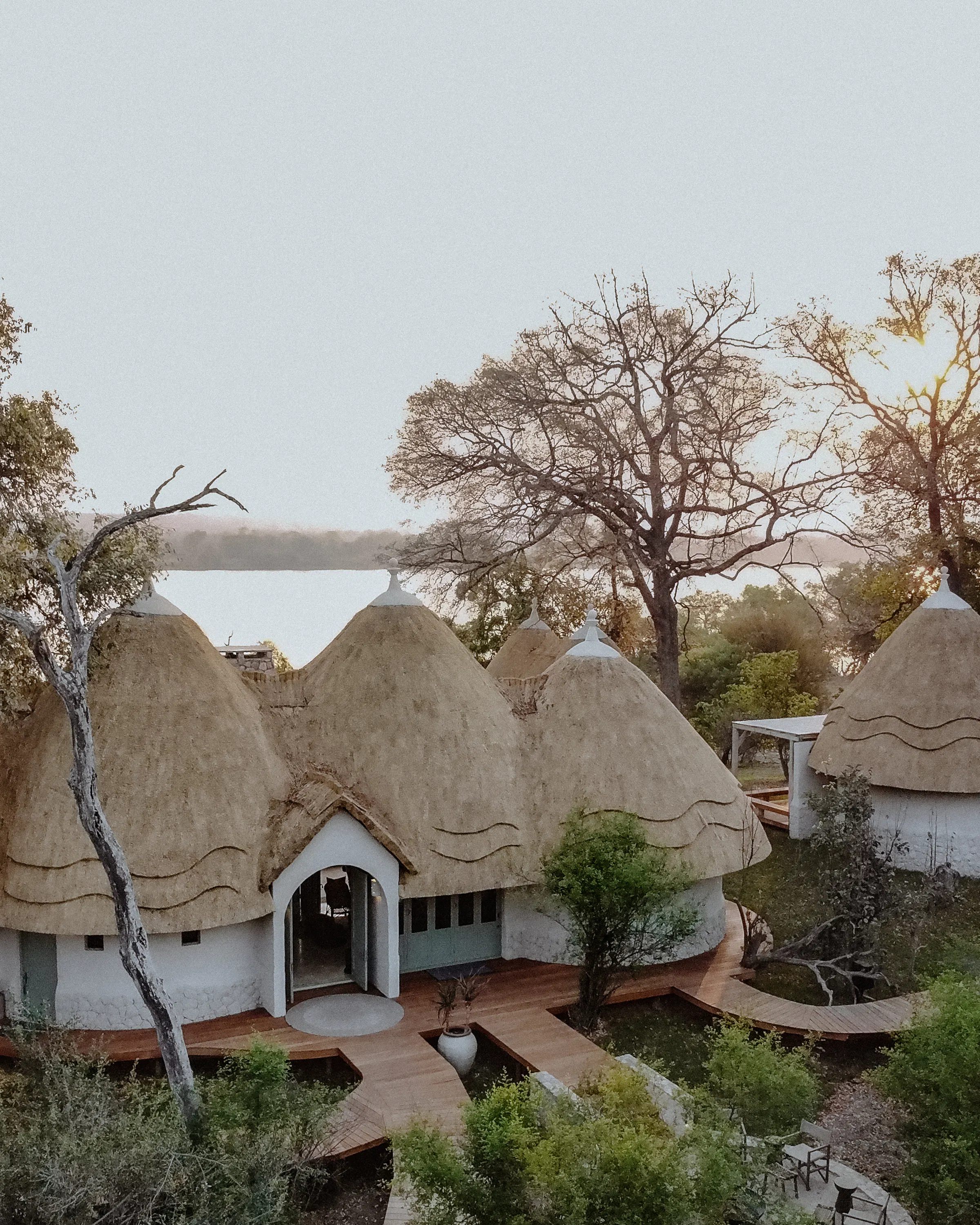
- Amenities and polish: There are two types of safari-goers. Those who want to appreciate nature through glass windows and behind real walls, and those who envision sleeping in nature. If you want a private plunge pool, dedicated spa, hair dryer, air-conditioning, wine cellars, and Wi-Fi throughout, there’s no better place than South Africa for a pampered safari. Its private reserves are built and operated like five-star design lodges. For the opposite, old-school and off-grid, where khakis at dinner is as dressed up as it gets, Zambia and Zimbabwe overdeliver: canvas tented camps, bucket showers, a stripped-down feel that's the whole point. Botswana is a compromise: fully wild, remote, but options for amenities and walls. East Africa is less differentiated. There are both polished and under-canvas options, but not quite like South Africa's permanent infrastructure (spas, in-suite plunge pools) or Zambia's full-throated bush immersion.
How Extraordinary Journeys helps you decide
There's no universal "which is better" answer to the East Africa versus Southern Africa safari question without knowing about you and your travel companions. The right region can also change with calendar dates, budget, and what you want to come home talking about. Our travel designers would rather ask a few pointed questions and build the right itinerary than hand you a generic answer. Let's talk through your dates and priorities and build a trip around them.
Africa safari FAQs
Plan your private Africa safari
Ready to experience safari, the Extraordinary way? Let a destination specialist shape a meaningful journey that goes beyond the ordinary.
Explore our luxury Africa safari itineraries
Every trip with Extraordinary Journeys is tailor-made, crafted in collaboration with one of our destination specialists. Use these as a starting point, or as inspiration to create your own journey.