What to know before your first African safari: Planning, packing, and pro tips
Discover the best places to go, what to expect, how to prepare, and essential tips for a smooth and unforgettable trip.
April 10, 2026
Unscripted wildlife moments, savannah sunrises, and sleeping under canvas, African safaris stir the soul. They invite you to feel with all five senses, and return to you a feeling of childlike wonder for the natural world.
Conjuring the daydream is easy; making it your reality requires some safari travel planning. With so many destinations to choose from (perhaps in places you’ve never heard of), first-timers might wonder how to plan an African safari. Is a travel agency required, or is it possible to plan one independently?
In this first-time safari guide we’ll cover a lot of ground, including all the best African safari destinations (then reveal where to go on first safari), the best time for African safari, tips for beginners, and safari packing list essentials.
How to plan your first African safari
Safari trips aren’t commonly DIY-ed for many reasons not limited to:
- Complicated logistics: Safari camps are often located in remote wilderness settings, and commonly require a bush plane flight, rural road transfer, or in some cases, a helicopter. What’s more, not all routes regularly fly each day of the week; some require a minimum number of passengers to operate, and others require a private charter. Plus, some safari destinations pair better in a way that contrasts landscapes for visual interest, and make for less intensive or wasted travel days—and it’s not always obvious which.
- Countless destinations: We plan luxury safari tours in 12 countries across East Africa, Central Africa, and Southern Africa. From national parks to private reserves, each country has wilderness that shines in different ways, from unique geography to densities of wildlife to rare species. (Ask our safari experts about our favorites!)
- Timing (why go where, when?): You can safari year-round in Africa, but some destinations have special reasons for visiting—or not visiting—during a particular time of year: wildlife migrations, annual flood waters, long rains, short rains, peak crowds, etc.
- Myriad of accommodations: There are plenty of dreamy safari camps and lodges but finding the one that fits your needs (amenities, configuration, style) in the location you want to be in, and within budget, takes expert travel matchmaking.
- You can’t book direct: Many safari properties don’t offer direct booking, actually requiring you to work with a travel agent or operator.
Thus, the first step in safari travel planning is choosing a reputable travel operator, such as Extraordinary Journeys. We use our expertise to alleviate all the challenges listed above—and more.
When you travel with Extraordinary Journeys…
- We dig into the “why” of your trip to suggest the magical setting(s) your safari should unfurl in.
- We take the “who” into account. Are you a couple seeking a safari honeymoon? Will you be traveling with young children who still nap? Are you a young-at-heart Boomer with a specific mobility limitation? We don’t sell copy-and-paste itineraries and “hope they fit;” we will design a custom trip that fits you/your party’s needs, interests, and pace.
- You’re never alone: We don’t just sell a trip and send you off. We anticipate your departure and connect you with a concierge for the duration of your trip. We don’t expect issues, but hiccups are inherent to travel, and our concierge support can troubleshoot in real time.
Where to go on your first safari
There are no rules about where to go on first safari, but as a trend, our travelers choose Kenya and South Africa. Botswana and Tanzania also rank among the best African safari destinations, while Zimbabwe and Zambia are equally alluring and wholly wilder. Less traditional than a savannah-set safari, Big Five wildlife can be seen on game drives in Namibia, Rwanda, and Uganda (with the latter two offer gorilla and chimpanzee trekking).
What to expect on safari
- Morning Game Drive | Whether you’re staying at a modern luxury lodge or in a classic tented camp, a typical day on safari starts with a morning game drive. Rise just before dawn to enjoy a cup of fresh-brewed coffee and baked goods, then meet your guide at the vehicle. In the stillness of the morning, inspect dusty roads for tracks, scat, and evidence of a night kill. After three or four hours, return to camp for brunch, or enjoy a picnic breakfast in a secretive spot in the bush.
- Midday | Use the hottest time of the day to retreat to your room or enjoy the amenities of your lodge. Swim in the pool, book a massage, read on a lounger, inspect field guides or coffee table books in the library, peruse the boutique, use the fitness equipment, or take a cat nap. Lunch is typically served between noon and 2 p.m., and afternoon tea around 3:30 p.m.
- Evening Game Drive | Around 4 p.m., meet your guide once again at the vehicle for your evening game drive. As the afternoon sun relents, wildlife begins to stir. Criss-cross the reserve in pursuit of animals as the sky shifts from bluebird to a bath of golden light. After a few hours, watch the sun sink below the horizon with a sundowner in-hand. (Gin and tonic is the traditional tipple.) Enjoy an unhurried drive back to camp during a mini night game drive. Sweeping the darkness with a special lamp, look for retinas glowing amid the grass.
- Dinner & After Dark | Back at camp, sip a pre-dinner cocktail in the main lodge, freshen up, or gather round the fire pit with the other guests. By 8 p.m., sit for a gourmet, multi-course dinner and a glass of South African wine. Close out another spectacular day on safari, reminiscing on the memorable moments of the day. At this point, most guests head back to their suite (if it’s an unfenced property you might be escorted) for a restorative sleep. If you’re committed to sighting elusive nocturnal species, your evening might include a dedicated night game drive. We recommend reserving one evening for some of the best stargazing or (where available) a star bed sleepout.
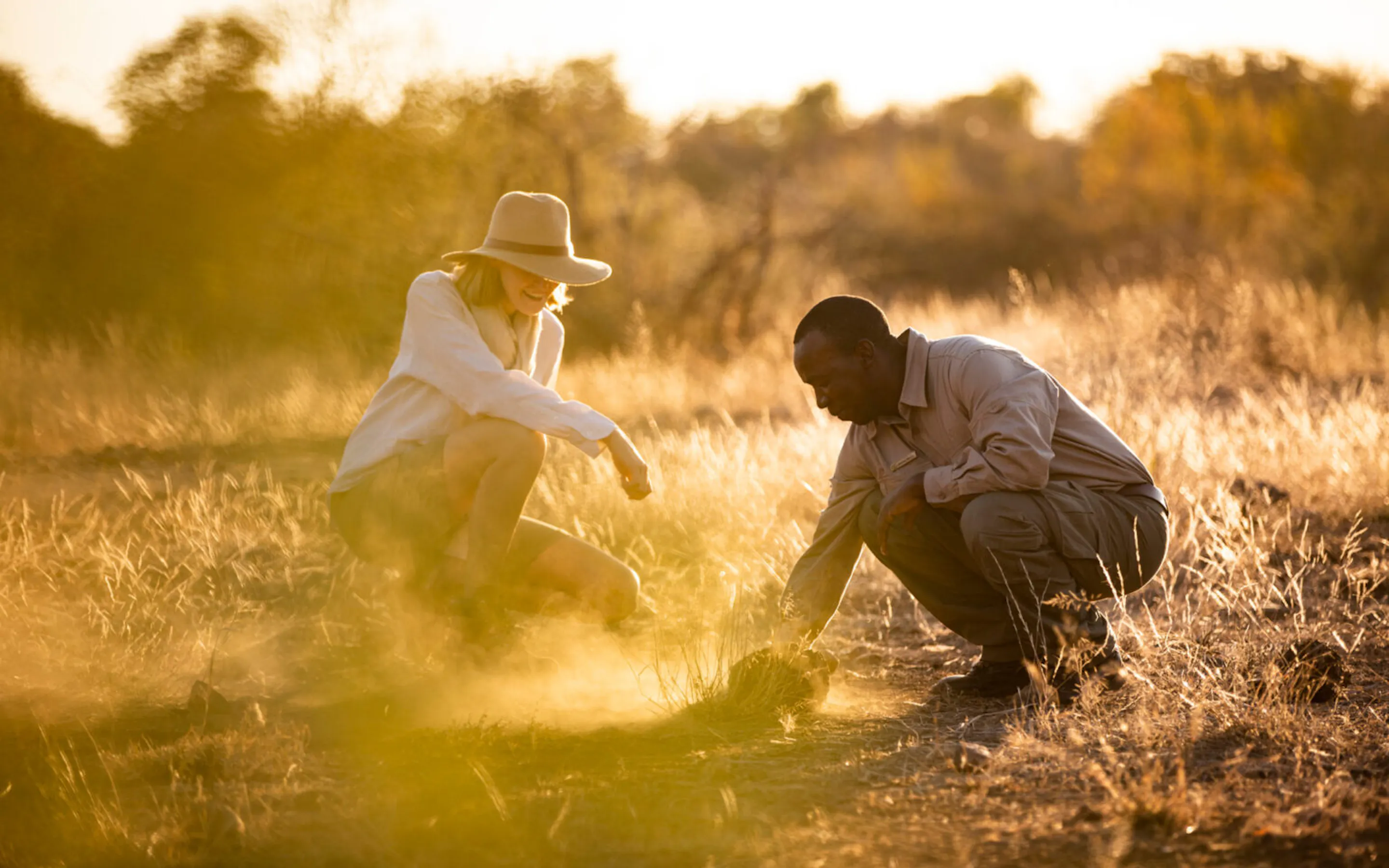
- Optional Safari Activities | One of our best African safari tips for beginners is to opt into an activity that gets you out of the Land Cruiser. (We know, game drives are spectacular, but activities add diversity to your days.) Bush walks and walking safaris invite you to stretch your legs. In places such as Botswana, Zambia, and Zimbabwe, motorboats, canoes, and mokoros bring safari to the water. Kenya is especially rich in activities, offering mountain biking, quad biking, swimming, camel safaris, and hot air ballooning in the Maasai Mara. Go chimpanzee trekking in Tanzania, Rwanda, and Uganda, or gorilla trekking in Rwanda, Tanzania, and Congo. In South Africa, balance time in the bush with urban adventures in Cape Town, Johannesburg, and the wine touring in the Cape Winelands. Conservation safaris offer fascinating glimpses into reserve management, veterinary care, and anti-poaching efforts, while cultural exchanges connect you to the people who call a place home.
When is the best time to go on safari?
African safaris can be enjoyed year-round, but some places shine brighter in select months. Extraordinary Journeys safari specialists can speak to every safari destination in each calendar month, but for this first-time safari guide, these are the general trends that influence how we think about the best time for African safari.
Peak Season
Peak season represents the busiest travel months, typically aligning with a destination’s drier or more pleasant weather conditions. In Africa, June, July, and August generally represent peak safari months (and, no coincidence, school break in the Western Hemisphere), and May and September are just as liable to be busy.
Perks of traveling during the dry season include thinner vegetation, making animals easier to spot; parched wildlife congregates in higher concentrations at water sources (it’s always fun to see a mix of species mingling in close proximity); in South Africa, it’s hot enough to enjoy your lodge’s unheated pool; you may witness a dramatic Great Migration river crossing (Serengeti/Maasai Mara); the Okavango Delta is wondrously flooded.
However, we don’t mean to imply that peak season is synonymous with the best time for African safari. Camps and lodges are at full capacity, rates are the highest, and with more game vehicles descending on big cat sightings, the wilderness can feel a little less wild—especially in places like the Ngorongoro Crater.
Festive Season
Spanning December 20 to January 5th, Festive Season is busy with holidaymakers and domestic travelers. We recommend booking a safari 18 months out to secure your preferred accommodation during the festive season, especially if your itinerary includes Cape Town.
Secret Season Safaris
Commonly called the shoulder or green season, we love secret season safaris for their laid-back, uncrowded experiences, both in the bush and back at camp. “There’s no compelling reason to pay double and be in crowds,” says Jamie Mehrotra, Extraordinary Journeys’ head of sales.
Mid-January and February, before April’s showers, can be a wonderful time to go on safari in Kenya, Tanzania, Zimbabwe, and Kruger. The bush is revived and lush, which means wildlife spotting feels a little harder earned, but it is undeniably more scenic. With fewer guests, lodge staff are relaxed and doting, lingering longer for friendly conversations. You may also find yourself treated to private game drives and adorable newborn animals making their grand debut. May and December can be a sweet spot for weather and rates before the peak season and festive season crowds descend. In Southern Africa, October weather can blister, but if you can stand the heat, the wildlife viewing is simply outstanding.
Safari safety and etiquette
Although you’ll be in close proximity to some pretty spectacular predators, safaris are quite safe—especially those organized by a reputable travel operator such as Extraordinary Journeys. At all times, you will be in the hands of very capable, experienced guides and trackers who have spent years earning their credentials and bush chops.
On your first ever game drive, up-close encounters will feel pulse-quickening and sublime. Your primordial senses kick in, reminding you of your human vulnerability. But after a while, you’ll notice how attuned your guide is to the environment and animal behavior. There are rhythms to the wild, and familiarity. Your guides may even know lions and leopards by name. Soon enough, you’ll be at total ease.
Safari Safety Tips
- Wildlife Safety: It is vitally important that you listen to your guides and follow their instructions. Never attempt to touch a wild animal. Do not exit the Land Cruiser without explicit permission. Your guide will do a perimeter check before setting up sundowners or allowing a bathroom break. Game drives are generally very safe and inherently, vehicles offer a level of comfort and security. Walking safaris, fly camping, and horseback safaris require some extra precautions, but when enjoyed in the company of experts, they are also quite safe. If your camp is unfenced, allow escorts to walk you between the dining tent and your suite after dark.
- Personal Safety: Use common sense and exercise situational awareness in cities. Take measures to protect your belongings or leave valuables at home. If urban travel makes you cautious, know that the logistics of your Extraordinary Journey will be fully coordinated, from touch-down to take-off. You won’t have to worry about things like getting to and from the airport or navigating public transit. Hosts and transportation partners will be anticipating your arrival, and our in-destination concierge will be checking in with you along the way.
- Health: Most of Africa’s safari destinations fall under some level of malaria risk. Speak to your doctor about any medical concerns. Alternatively, South Africa offers malaria-free safaris. Always safari with comprehensive travel and medical insurance.
Safari Etiquette
- Learn some common phrases in the local language, such as please, thank-you, hello, and goodbye.
- It’s common practice to tip guides, trackers, and camp staff. We will provide you with a tipping guide, pre-departure.
- Demonstrate curiosity for people, places, and wildlife. Ask a lot of questions. The depth of knowledge your guides express will astound you, and interactions with camp staff offer a window into local living. The connections you make will become souvenirs of the heart. We’ve heard of guests befriending the mixologist and then visiting their village, and many travelers keep in touch with guides via social media long after they’ve returned home.
What to pack for an African safari
Safari has an undeniable esthetic, but your safari packing list should prioritize function over fashion. Whether you’re traveling in the hot, dry season, during the humid secret season, or to a desert in winter, you’ll want a rotation of comfortable outfits suited to the elements.
- Layers: Safaris take place across various terrain, but all have one thing in common: you’ll be rising early in the morning and you’ll be out after dark. A packable puffer is a space-saving essential layer that you might appreciate after sunset or on a cool morning game drive. Shorts are fine for game drives, but do pack a set of long pants for activities such as bush walks, horse safaris, and primate trekking. Long sleeves and pants are also a deterrent for mosquitos, tsetse flies (where they exist), and as a defense against sunburn.
- Pack for the weather: In the heat, choose lightweight, breathable and natural fabrics; cotton and linen are great choices. If there’s a chance of rain, pack a water-resistant outer layer. However, most upscale camps will supply ponchos in your game vehicle.
- Color palette: Safari and khaki are synonymous, but don’t feel you need to buy a brand-new wardrobe. Stick to an earthy neutral palate—white, beige, green, grey—where possible, but don’t sweat some color; you won’t scare off the animals. In the Mara, vehicles are often stocked with bold red Maasai blankets.
- You need less than you think: Most camps offer same-day laundry, so you don’t need to pack 14 different outfits. Unless you’re at a very flashy camp, you probably won’t feel the need to change for dinner. Plus, you’ll be changing camps every few days, so you don’t need a fresh look given that you won’t likely see the same guests twice.
- Footwear: At minimum, pack one pair of sturdy, closed-toe shoes and a comfortable pair of slip-ons for lounging at camp. Hiking boots are necessary for primate trekking and lodges will happily perform same-day cleaning so you’re not stuck with muddy footwear for the rest of your trip.
- Electronics: Camera (lenses, extra batteries, memory cards, etc.), portable power bank, binoculars, E-reader, headphones (tip: bring a cord to connect with the plane’s entertainment system, travel adaptor, Bluetooth tags/air tags, chargers)
- Accessories: Hat (for sun), beanie (for warmth), sunglasses. Gloves are handy for primate trekking in dense tropical forest where nettle is present.
- Necessary items: Prescription medication, essential documents (visas, immunization cards), passport
- Useful items: Sunscreen, hand sanitizer, mini first aid kit, dry shampoo, pill/medication organizer, lip balm, wet wipes, bug spray, envelopes (for cash gratuities), hydration tabs, eye drops (for dust), lanyard case for smartphones, reusable water bottle, pen, packing cubes, zipped document holder.
- Extras: Swimsuit, journal, reading material, children’s items (favorite snacks from home, activity books, games, mini binoculars, blanket, stuffie, etc.)
- Luggage: If you’re traveling by bush plane, you will need a soft-sided duffel bag, rather than a suitcase. When shopping, consider capacity (often measured in liters) and dimensions. Weight allowances are limited on light aircraft, with 44 pounds per person in Southern Africa and 33 pounds per person per checked bag in East Africa, with some exceptions. You will also want a daypack for game drives and sightseeing excursions in cities.
Tips for booking your safari
- 1Start planning your safari 12 to 18 months ahead of time. This will give your Extraordinary Journeys safari expert the best opportunity to secure the accommodation they know you’ll love most. You’re also more likely to stick to the budget when you’re not pigeonholed into making a choice due to a lack of vacancy.
- 2We design bespoke travel, so share your preferences, niche interests, the “why” behind your trip, what you’ve enjoyed in the past, and travel experiences that didn’t land quite right. If you think of it as having a suit tailored, these are the measurements we use to craft the perfect fit.
- 3The best advice we can give first-time safari-goers is to stay in an uncrowded, private wilderness reserve. Located adjacent to national parks or sometimes situated like unfenced islands within them, you’ll share your experience with far fewer people and have more flexible options to trail animals off-road or after dark. For example: safari in Sabi Sands or Timbavati, rather than Kruger National Park; stay in Mara North Conservancy or Olare Motorogi Conservancy, rather than squarely within Maasai Mara National Reserve.
- 4Honeymooners: Ask us about where you can get a honeymoon discount.
- 5Families: Hesitant about bringing your kids on safari? We’re a collective of mothers who have safari-ed with all ages. From scavenger hunts to playrooms and family tents to childminding, we can plan a family safari for all. (Yes, even nappers, fussy eaters, and screen-addicted teens.)
- 6You don’t need to perform hours of intensive research before getting in touch with an Extraordinary Journeys safari expert.
- 7We understand that safaris aren’t cheap. It’s costly to run a remote operation, and things like bush flights and park/conservation fees can add up. However, we feel that African safaris offer outstanding value, especially when compared to five-star vacations in major US or European cities. Keep in mind that camps are fully inclusive of luxury lodging, all gourmet dining, local wine and beer, twice-daily game drives, activities, expert guides, and attentive service staff—all while generating local community uplift and driving conservation.
Explore our itineraries
Every trip with Extraordinary Journeys is tailor-made, crafted in collaboration with one of our destination specialists. Use these as a starting point, or as inspiration to create your own journey.