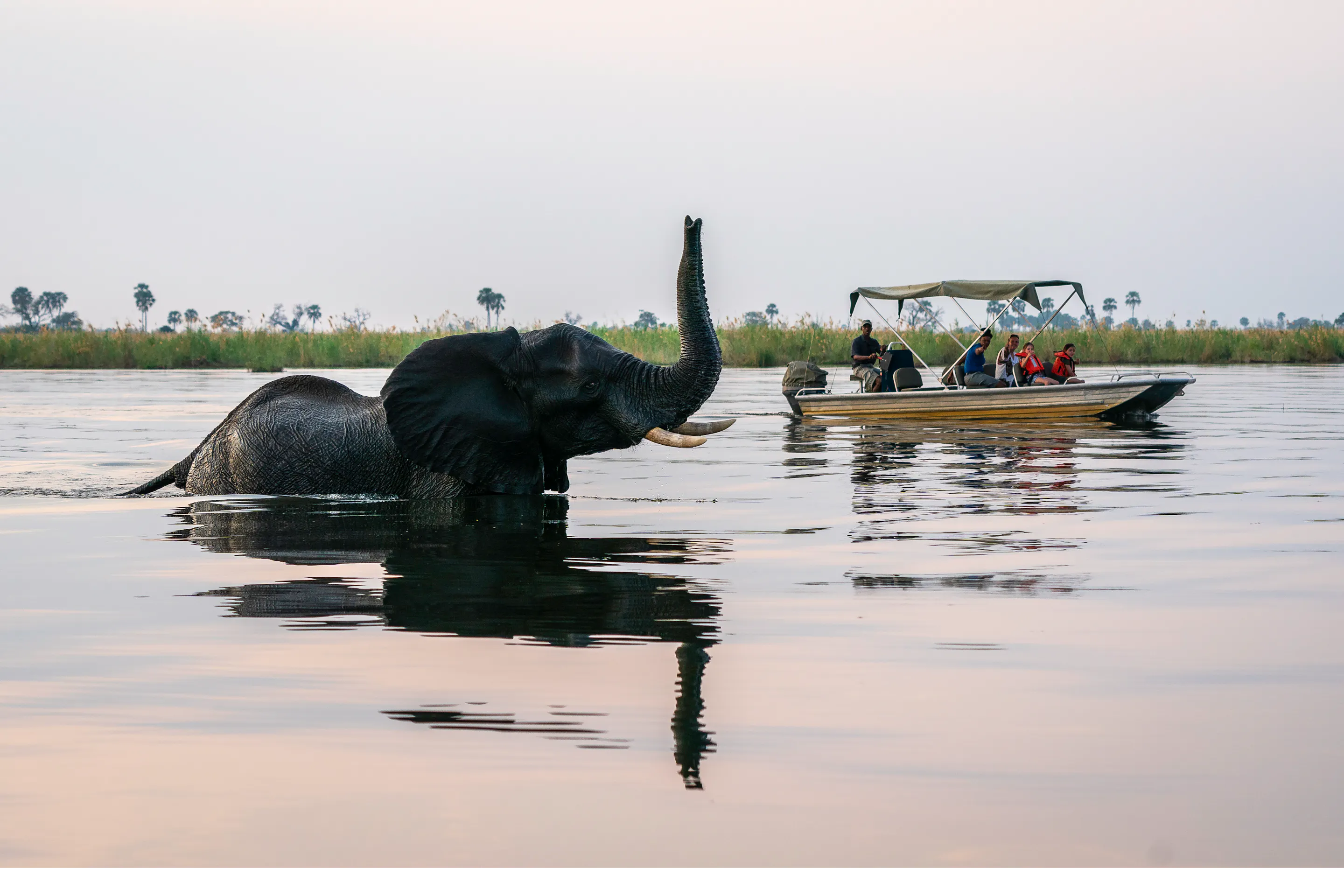
Chobe National Park
Botswana‘s Chobe National Park and the Savute area are renowned for great herds of elephant that come to drink and play along the sandy riverbanks of the Chobe River.
Mababe’s status as a safari destination is a recent evolution. Subtle tectonic activity across the last few decades has increased the volume of water arriving in the Mababe Depression via rivers and feeder channels. What was once described as a Botswana desert dustbowl now supports ecosystems that include grasslands, mopane woodland, and marsh. What’s more, the water reliably irrigates the plains’ phosphorous and calcium-rich soil to grow nutritious grass favored by buffalo, migratory zebra, and other grazers. And with prey, come predators—especially lions. As wildlife moved into the area, Mababe caught the attention of Wilderness Safaris. In 2021, the first temporary camp was established, and in 2024, Mokete Camp officially rolled out the welcome mat for guests.

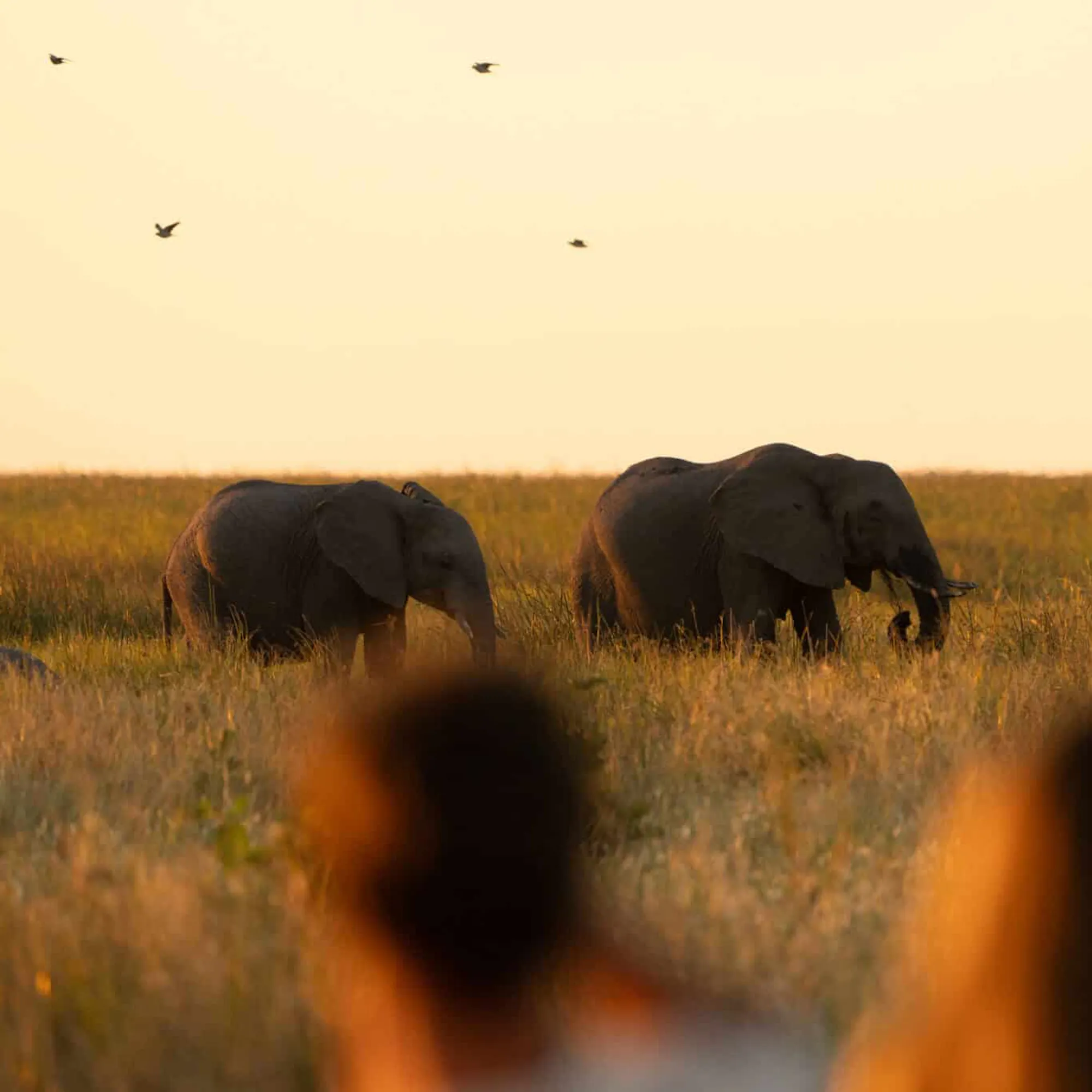
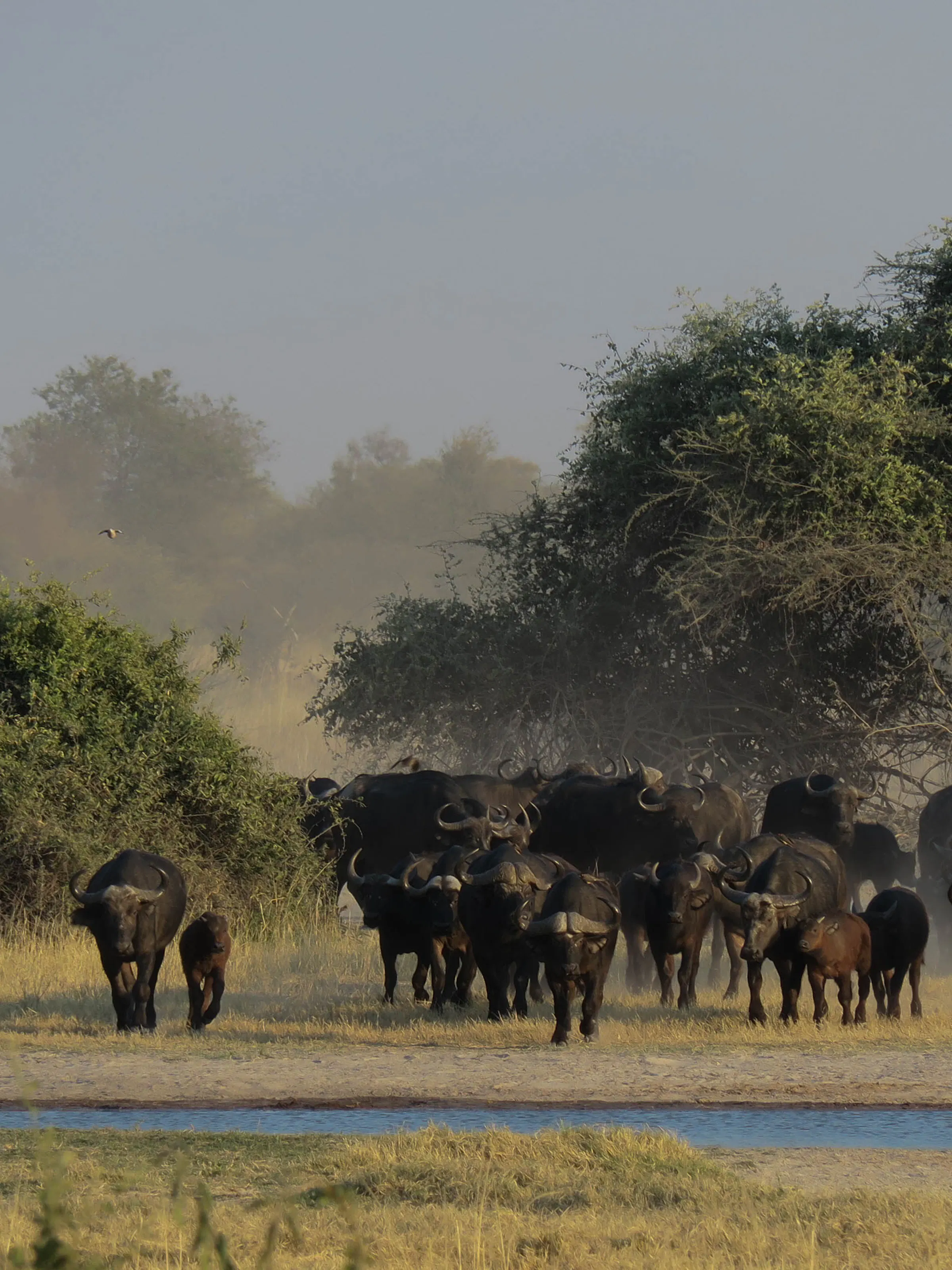
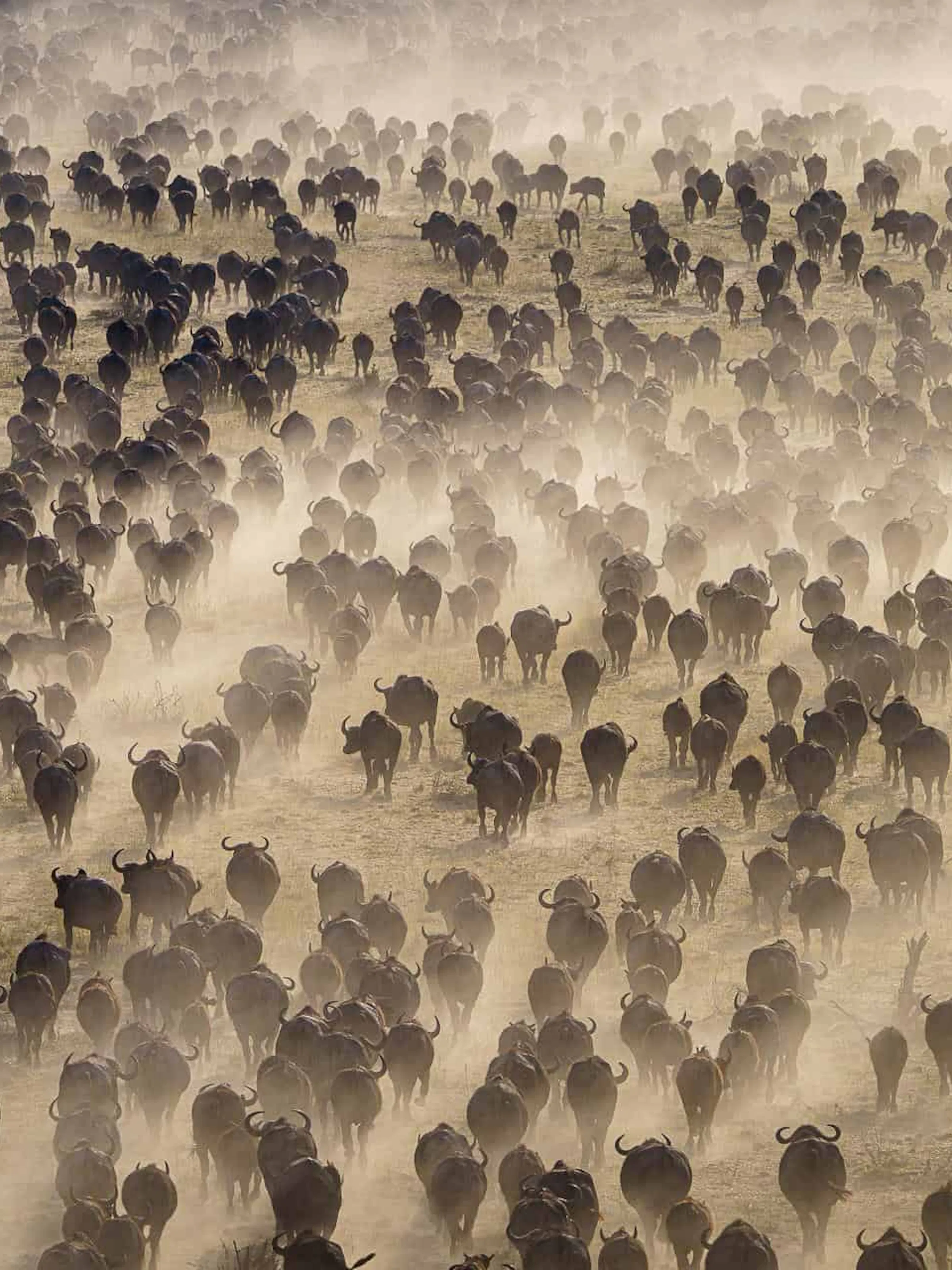
It’s possible to safari year-round in Botswana’s Mababe Depression, however, the wet and dry season will look and feel very different. Dry season in the Mababe Depression spans late May to early November and offers the most concentrated and thrilling game viewing. With less rain, the sunbaked landscape dries out, and the stamped grasslands turn tawny, brittle, and short. Wildlife crowds around permanent water sources. With less cover to hide behind, game spotting is easy. Buffalo, especially, congregate in dizzying mega-herds that number in the thousands. The cacophony of braying, swinging tails, and trembling ground is an experience to embody. Dry season conditions in the dusty, harsh, arid environment can be demanding on the resident wildlife, intensifying life and death dramas. The weak, young, and sick are picked off during dramatic predator-prey standoffs that can be emotional to watch.
During the wet season (mid-November through April), vitality returns to the Mababe Depression in broad strokes of green. The flora is restored and migratory birds are arriving. Pooling water expands the marsh to a vast 6,400 acres and creates additional waterholes. With plentiful drinking water, wildlife disperses from the center of the Mababe Depression toward its edges, where the short grassland plains meet the mopane belt. Although the buffalo super herds have dispersed, columns of migratory zebra are moving around Mababe in December (and again in March). It’s spring and adorable newborn animals make their dramatic entrance into the world. The Depression’s highly palatable, mineral-rich tall grasses are especially nutritious for pregnant zebra and mothers nursing their young.
Best
Mar
Jun
Jul
Dec
March - March
June - July
December - December
Good
Jan
Feb
Mar
Apr
May
Jun
Jul
Aug
Sep
Oct
Nov
Dec
January - December
Mega herds of dry season buffalo
Dramatic predator-prey interactions
Green season zebra migration stop-over
Crowd-free, exclusive safari destination
Exceptional night game drives
View big game (elephants, lion, buffalo) during walking safaris
An open plains safari experience not otherwise found in other regions of Botswana
Hang out in a sunken hide
Jaw-dropping helicopter arrivals and departures
A visit to the Mababe Depression puts you within easy reach of many other beautiful and fascinating parts of Southern Africa.
Botswana‘s Chobe National Park and the Savute area are renowned for great herds of elephant that come to drink and play along the sandy riverbanks of the Chobe River.
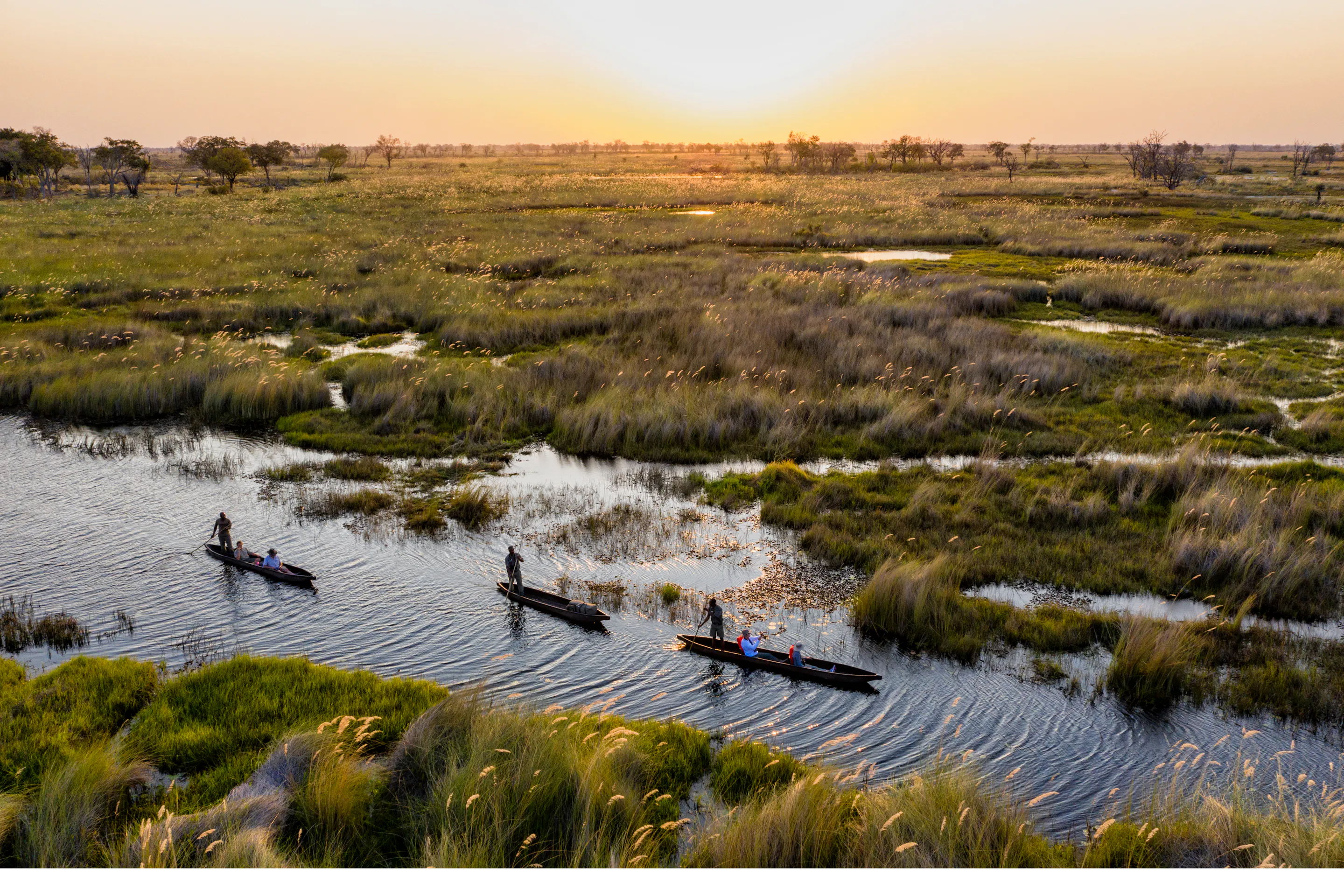
An Okavango Delta safari is one of the most unique safari experiences in Botswana and all of Africa. The region marks one of the world’s only inland Deltas, fed by rivers that rush down from Angola and create a braided waterway system from June to September.
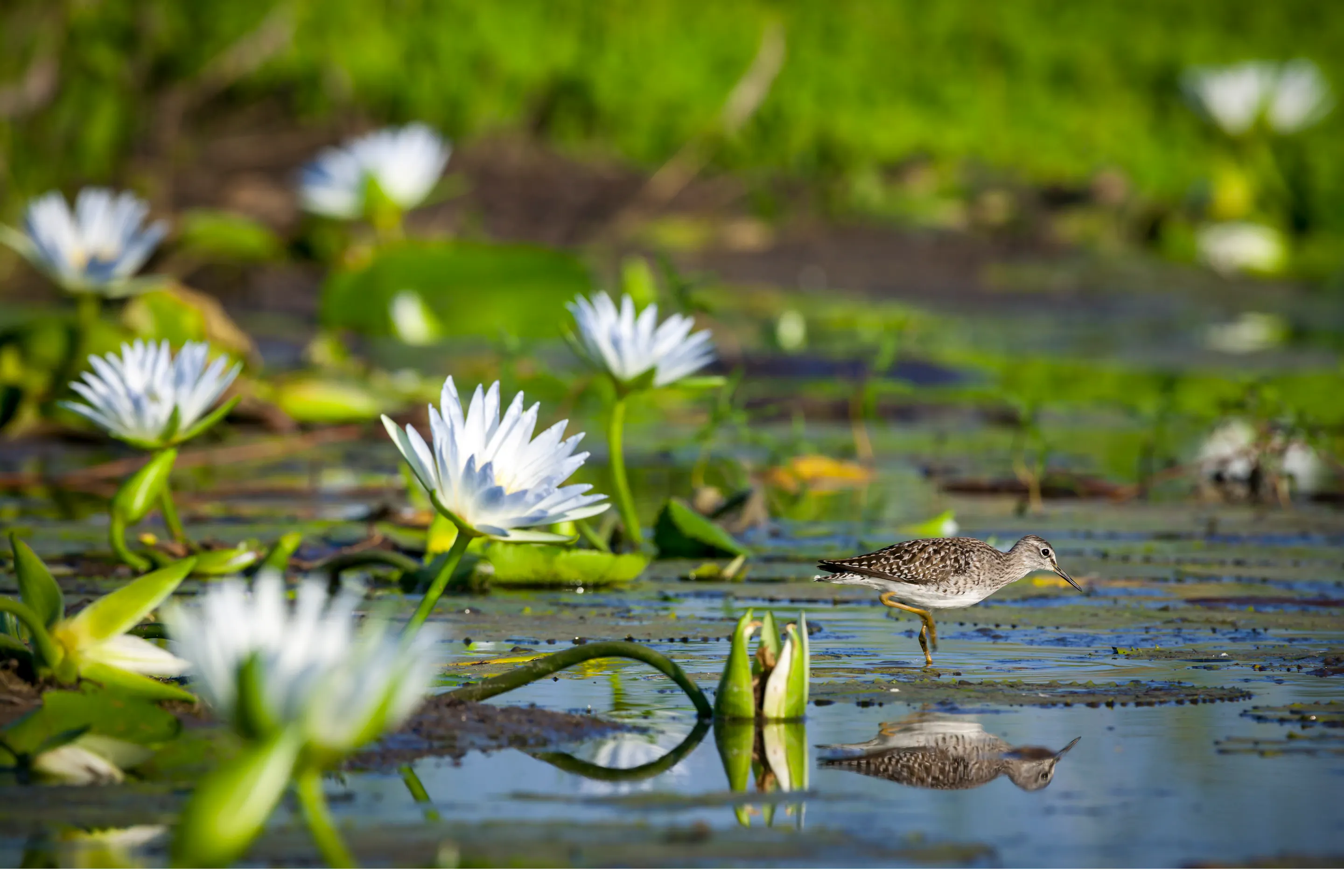
Situated in the far east of Botswana lies the Northern Tuli Game Reserve which shares unfenced boundaries with Zimbabwe and South Africa.
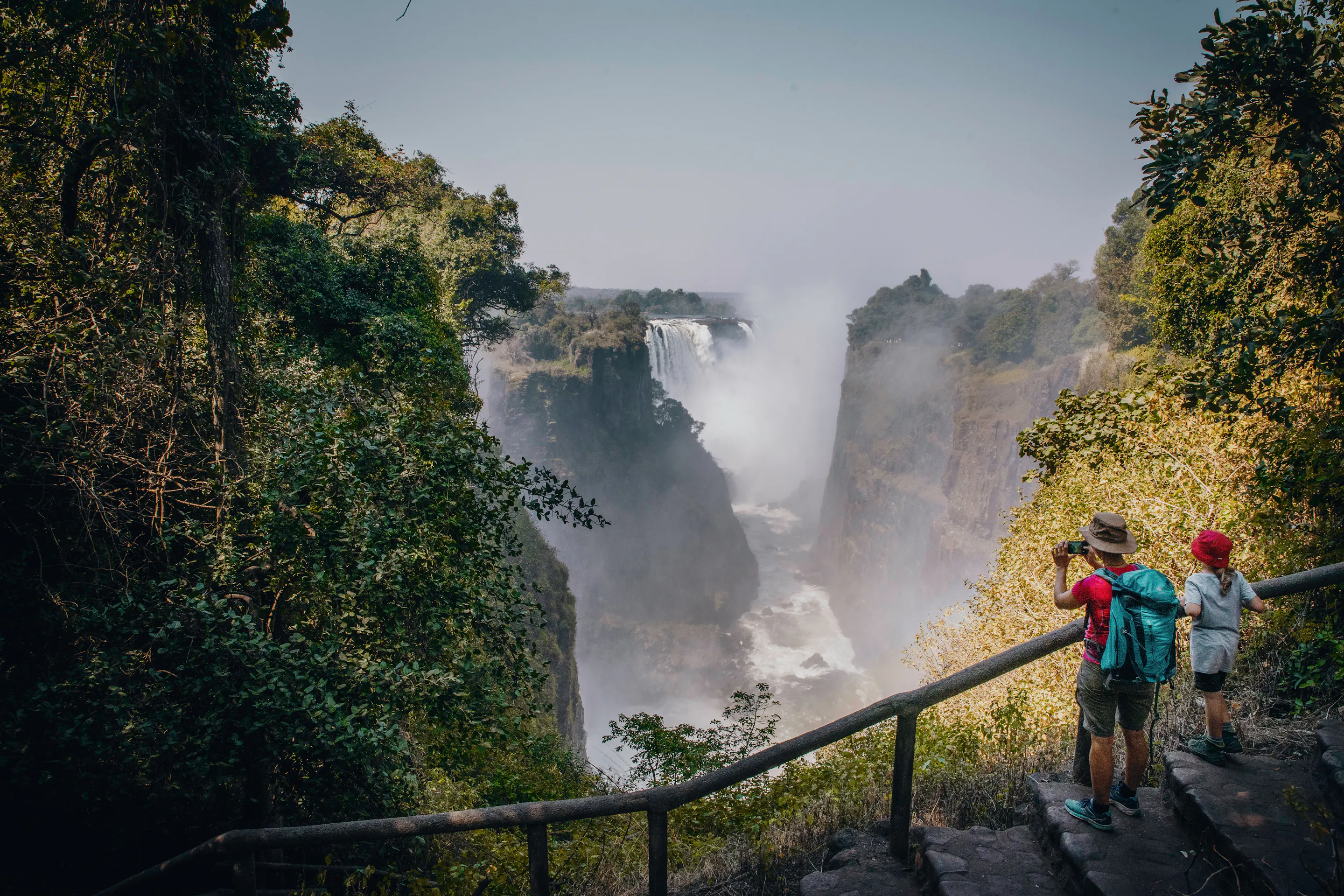
You don't just see Victoria Falls, you feel it. The roar, the spray, the hum underfoot. Extraordinary Journeys tailors your stay around your mood, contemplative or adrenaline-seeking.

Specialists with firsthand knowledge and deep local insight

Every trip designed uniquely for you
Engaging, adaptable guides who bring each place to life
Personalized pre-trip calls and curated documentation

A personal contact managing every detail on the ground

Complete care, every step of the way