The 10 best malaria-free safari destinations in South Africa
Experience big game viewing in South Africa’s most scenic, malaria-free game reserves.
February 12, 2026
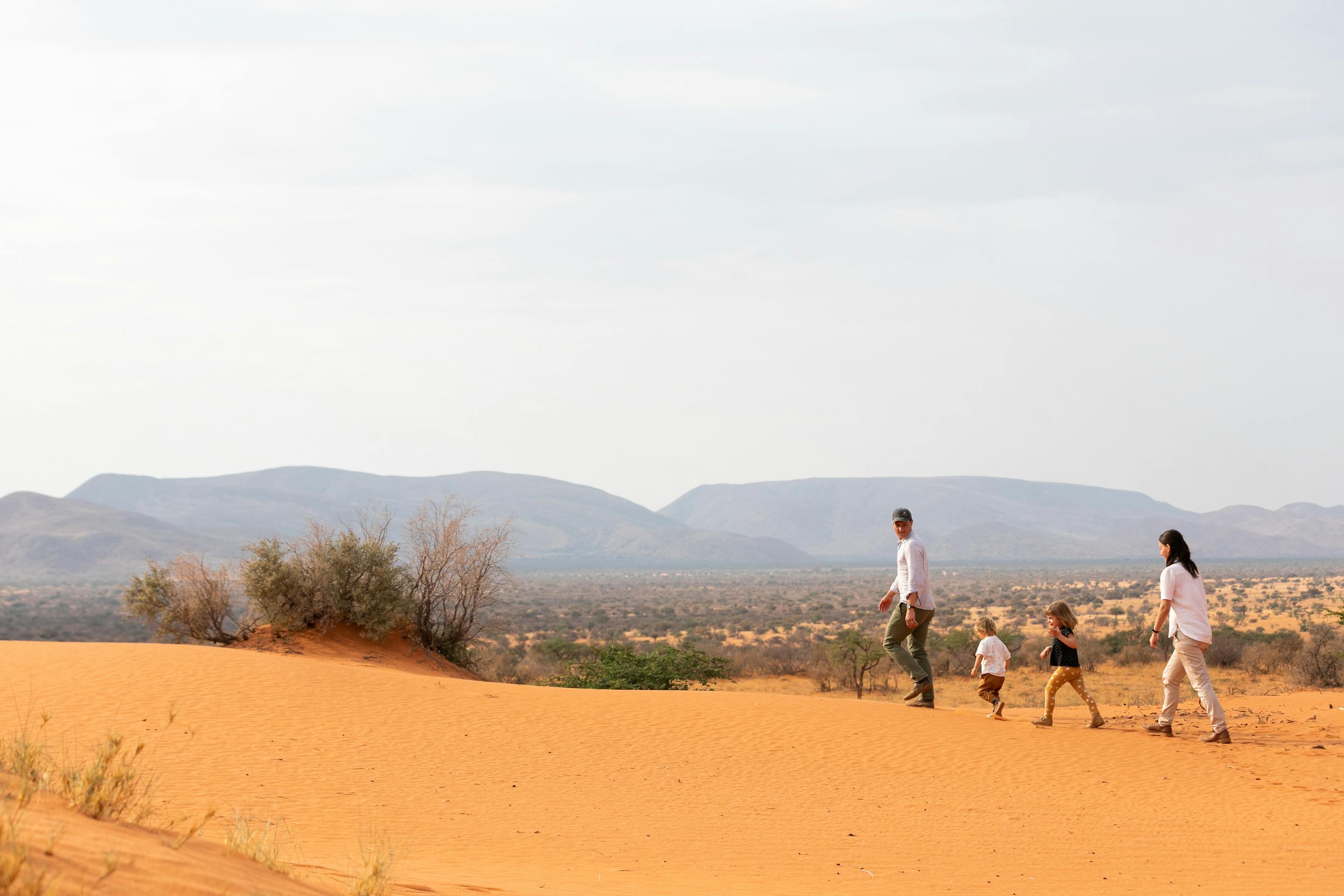
Although malaria is almost entirely preventable thanks to prescription prophylactics, some travelers choose to avoid medication by steering clear of malaria risk zones. Side effects and cost are chief among the reasons, but it's often the case for parents planning a family safari with young children who aren’t keen on swallowing pills.
For these travelers, the best option is a malaria-free South Africa safari. While not zero-risk, many phenomenal game-viewing locations are completely absent of the mosquitoes that carry parasite-causing malaria. In the 10 game reserves listed below you won’t have to sacrifice to enjoy a malaria-free safari in South Africa.
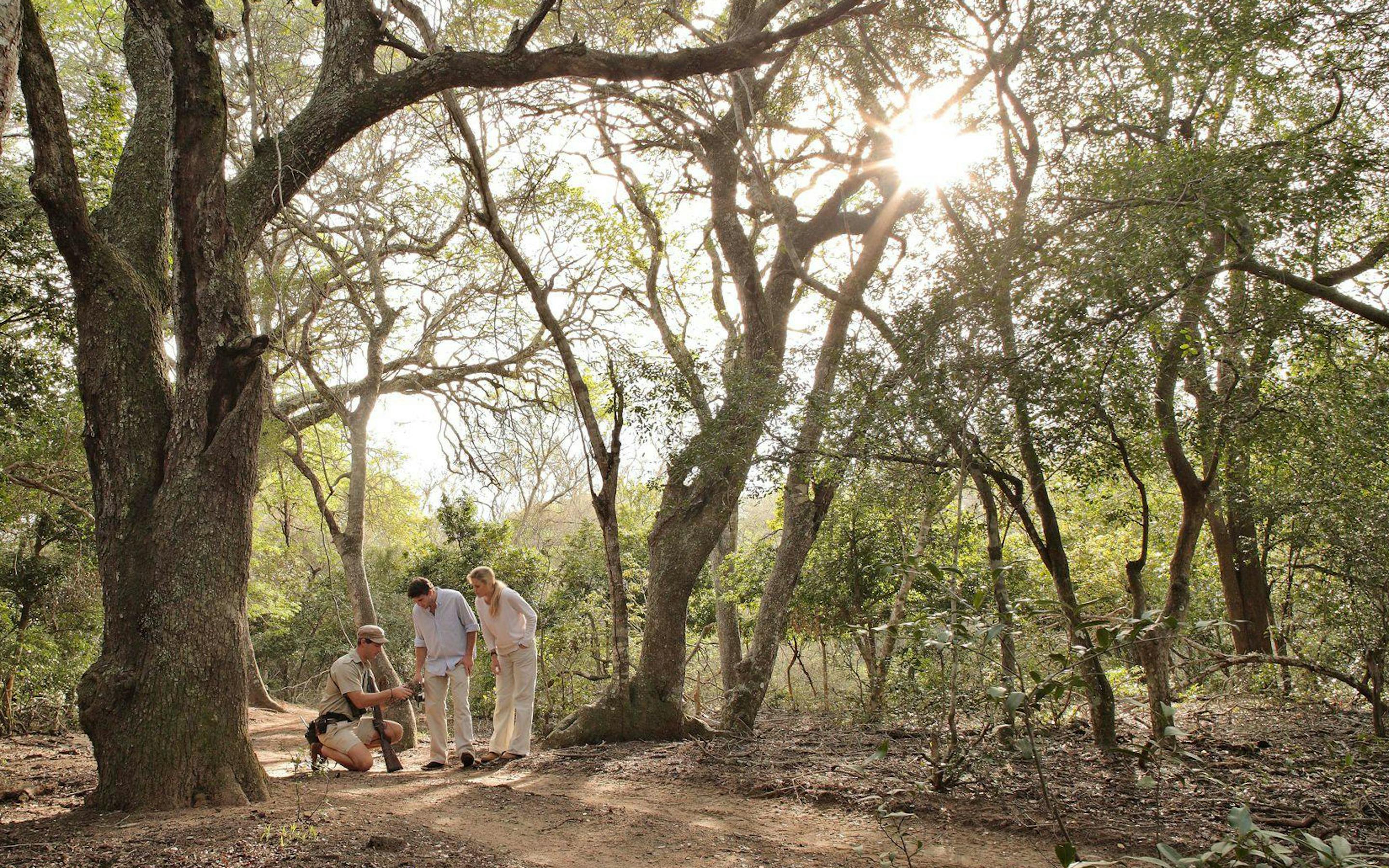
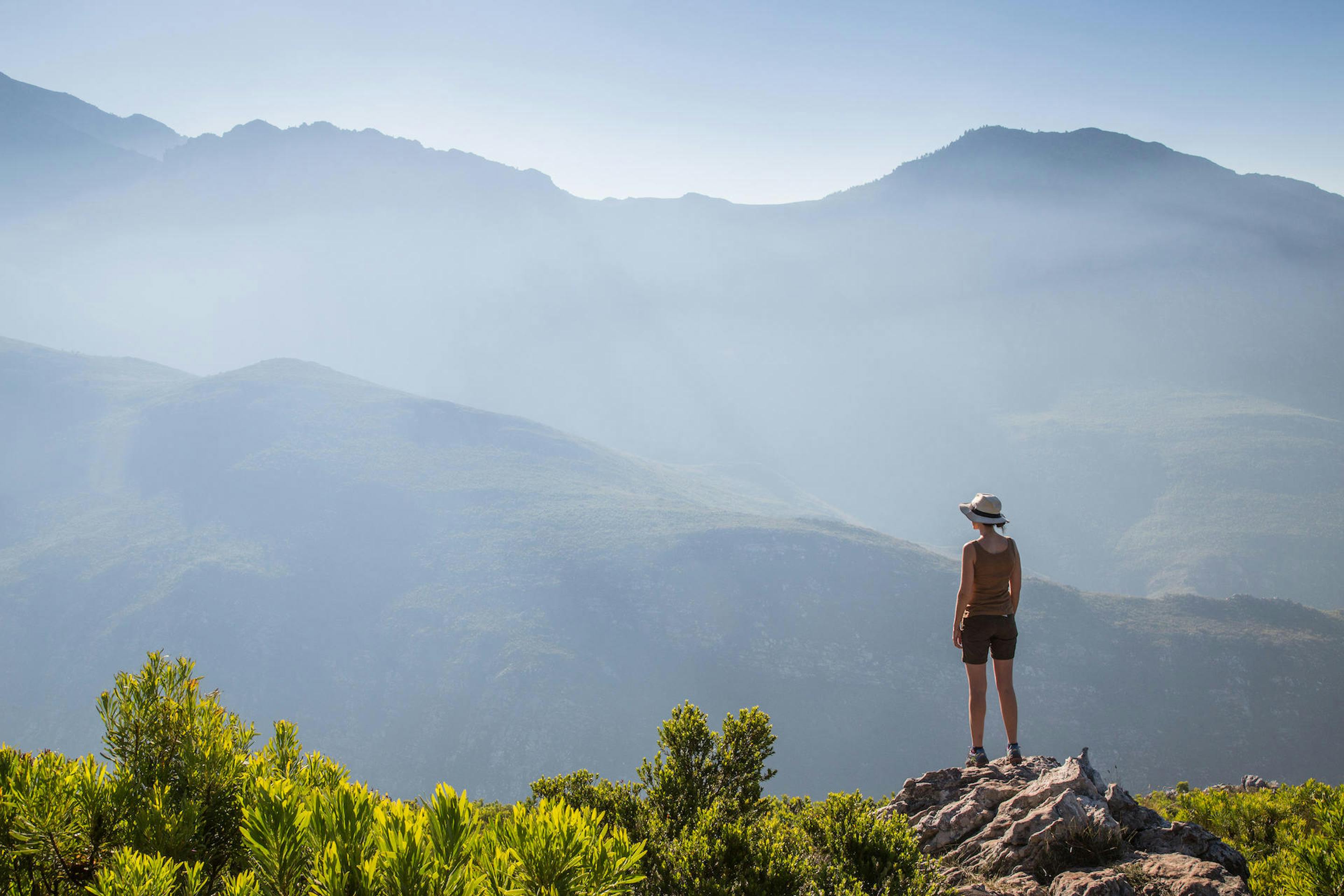
A guided walking safari is a magical alternative to a Big Five game drive inside Phinda Private Game Reserve.
What is malaria?
Malaria is a disease transmitted by certain types of parasite-carrying mosquitoes. Especially prevalent in sub-Saharan Africa, this serious and sometimes fatal disease often presents as a high fever, chills, muscle aches or flu-like symptoms.
Symptoms begin seven to 10 days after a person is infected, or even weeks after. In some recorded cases—up to a year later. Severe illness and fatalities are most common in children under five years of age who are not able to readily access health care. Pregnant persons traveling to countries of transmission will also want to take special precautions.
A diagnostic blood test can confirm malaria, and treatment requires prescription drugs. Anyone can be infected with malaria, and you can not be vaccinated against it.
Why some travelers dislike taking antimalarial drugs
No antimalarial is 100 percent effective and there are many reasons travelers may prefer to avoid taking them. The biggest downside to preventative prophylactics is the potential side effects which range from heightened photosensitivity and insomnia to yeast infections and upset stomach.
There are a handful of antimalarial drugs available to travelers, each with their own side effects and dosages. Some are taken daily, others weekly. Some can be taken a day or two before a trip, while others require a few weeks to kick in. Some drugs should be taken for seven days after travel, others for four weeks. it's also important to know that some drug types are not appropriate for children, pregnant persons, or those who are breastfeeding. What’s more, if you take prescription medications, some antimalarials may cause potential drug interactions or contraindications. Your doctor is the best person to discuss which antimalarial tablets are best for you.
Otherwise, remembering to take a pill can be a nuisance for some people or wholly impractical for others—think: children and infants. And depending on the duration of your trip, tablets can be a costly added expense, especially when the dosage is daily, or if you’re required to take them for weeks after your return home. A malaria-free safari destination avoids the entire issue.
Malaria risk areas in South Africa: Where to go and where to avoid
South Africa is not entirely malaria-free, but it is considered low risk and, in some pockets, no-risk. To understand why, it's helpful to think about climate.
Two things need to occur for malaria transmission to transpire: the presence of Anopheles mosquitoes carrying the plasmodium falciparum parasite, and for the parasite to fully incubate to maturity. Both thrive in the high temperatures and humidity of tropical and subtropical climates where rainfall contributes to standing water. (Mosquitoes lay eggs near water.) Below 68°F (20°C), the parasite will not survive which is why we can observe varying levels of transmission within a single country. Gaining elevation, traveling during the cooler seasons, and in arid landscapes all reduce the risk of malaria.
Unlike some of its sub-Saharan neighbors which experience malaria year-round, South Africa’s distance from the equator results in distinct seasons where the average temperature dips below the critical 68°F threshold. From April through October, the mean temperature fluctuates between 52°F and 66°F (11°C – 19°C). With varied terrain and elevation, more than 90 percent of South Africa falls outside of the malaria risk map, making it an appealing destination for travelers who don’t want to bother with medication.
When malaria is transmitted in South Africa, it's mainly along the country’s northeastern borders with peak cases observed in January and February.
In the moderate risk zone that borders Zimbabwe and Mozambique, antimalarial drugs are recommended, but just seasonally (September through May). In the low-risk areas, mosquito avoidance is sufficient (using repellent, covering your skin and if necessary, sleeping beneath a net) and only recommended seasonally.
Malaria-free safaris in South Africa
With most of South Africa falling well beyond the risk zone, travelers have a wide range of options when choosing a malaria-free safari destination. Here are Extraordinary Journeys’ top picks.
Kwandwe Private Game Reserve
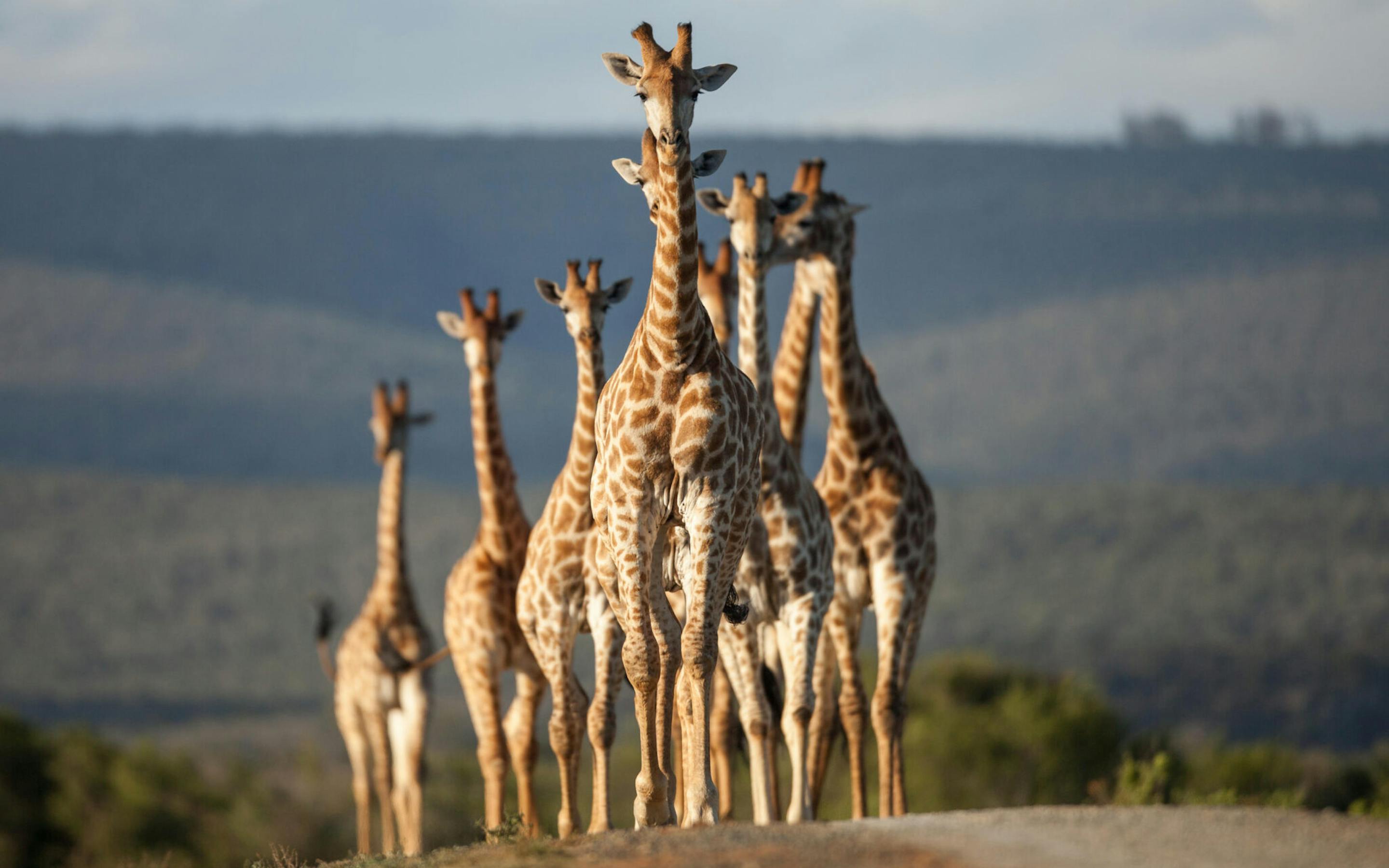
Located in the province of the Eastern Cape, Kwandwe Private Game Reserve boasts 74,000 acres of private wilderness. it's a Big Five (lion, leopard, elephant, Cape buffalo, and rhinoceros) destination, home to both black and white rhino. Within Kwandwe’s borders are 19 miles of the Great Fish River, lending to a more diverse landscape and great wildlife sightings.
There are only five properties in Kwandwe Private Game Reserve (Great Fish River Lodge, Ecca Lodge, Uplands Homestead, Fort House, and Melton Manor), totaling 26 beds, making for an excellent guest-to-wilderness ratio. Melton Manor, Uplands Homestead, and Fort House are exclusive-use properties perfect for families and small groups seeking a malaria-free safari.
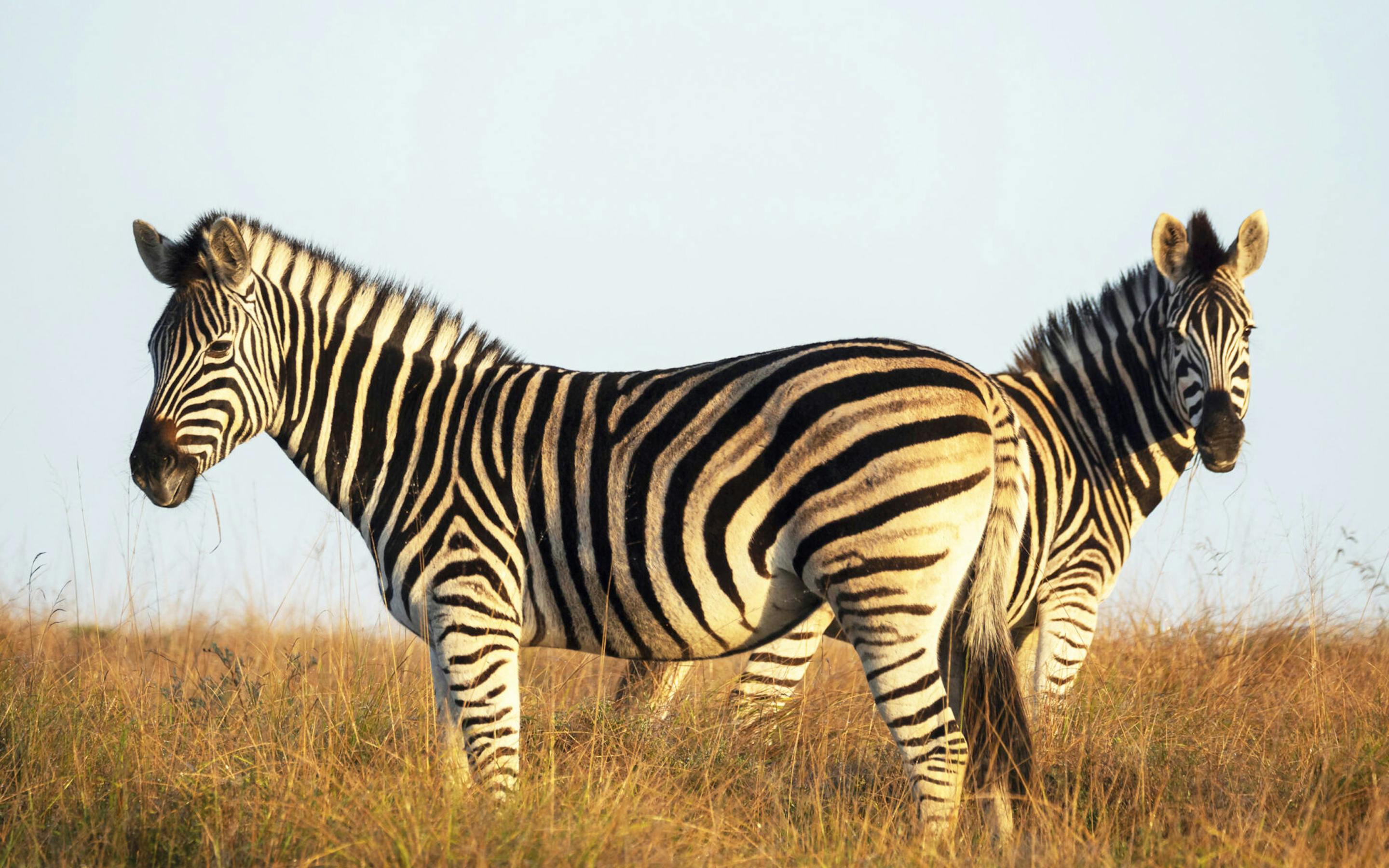
Amakhala Game Reserve
The Amakhala Game Reserve encompasses 18,000 acres of protected bushveld located in the Eastern Cape province. The area was settled in the 1800s by a handful of families who farmed sheep and cattle right up until the turn of the century. In 1999, a joint conservation effort of lodge owners, all of whom were direct descendants of the original Frontier settlers, was established. The efforts have reintroduced indigenous flora and fauna with great success.
Now, safari-goers might spot the Big Five, hyena, black wildebeest, giraffe, zebra, and antelope. There are 11 dreamy properties on the Reserve, offering a broad range of lodgings from restored country homes to tented camps. Located in a secluded corner of the Reserve and set on the banks of the Bushman’s River, the family-operated HillsNek Lodge is Extraordiary Journeys’ top pick. We love the luxurious tented chalets for their deep soaker tubs, splendid open-air bush showers, and the wraparound decks that offer commanding views of the plains.
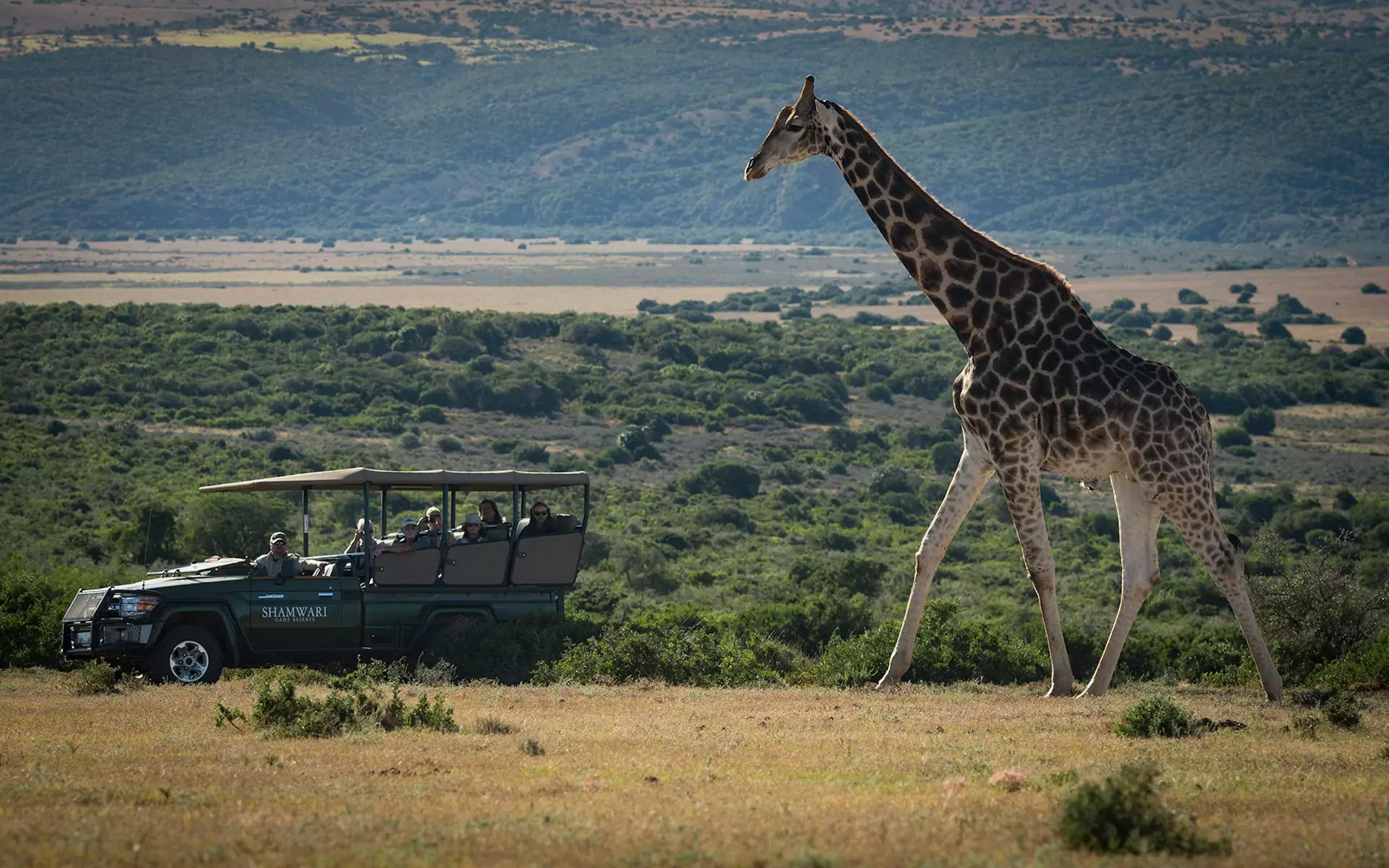
Shamwari Private Game Reserve
Another fantastic Eastern Cape malaria-free safari destination, the 61,776-acre Shamwari Private Game Reserve spans five South African biomes, attracting a diversity of wildlife and flora. The Albany thicket that predominantly carpets the Reserve appeals to the Big Five, kudu, black rhino, monkeys, and bushbuck.
Abundant biodiversity wasn’t always a given at Shamwari; the Reserve was established in the early 1990’s to reverse nearly three centuries of human activity that had negatively impacted indigenous wildlife. Today, there are seven superb accommodations to choose from, ranging from the private Sarili villa to the family-friendly Riverdene to the prim Long Lee Manor. Intrepid travelers who visit between October and May can take a stroll on the wild side by booking a stay at Shamwari’s seasonal bush camp, Explorer Camp, which celebrates walking safaris.
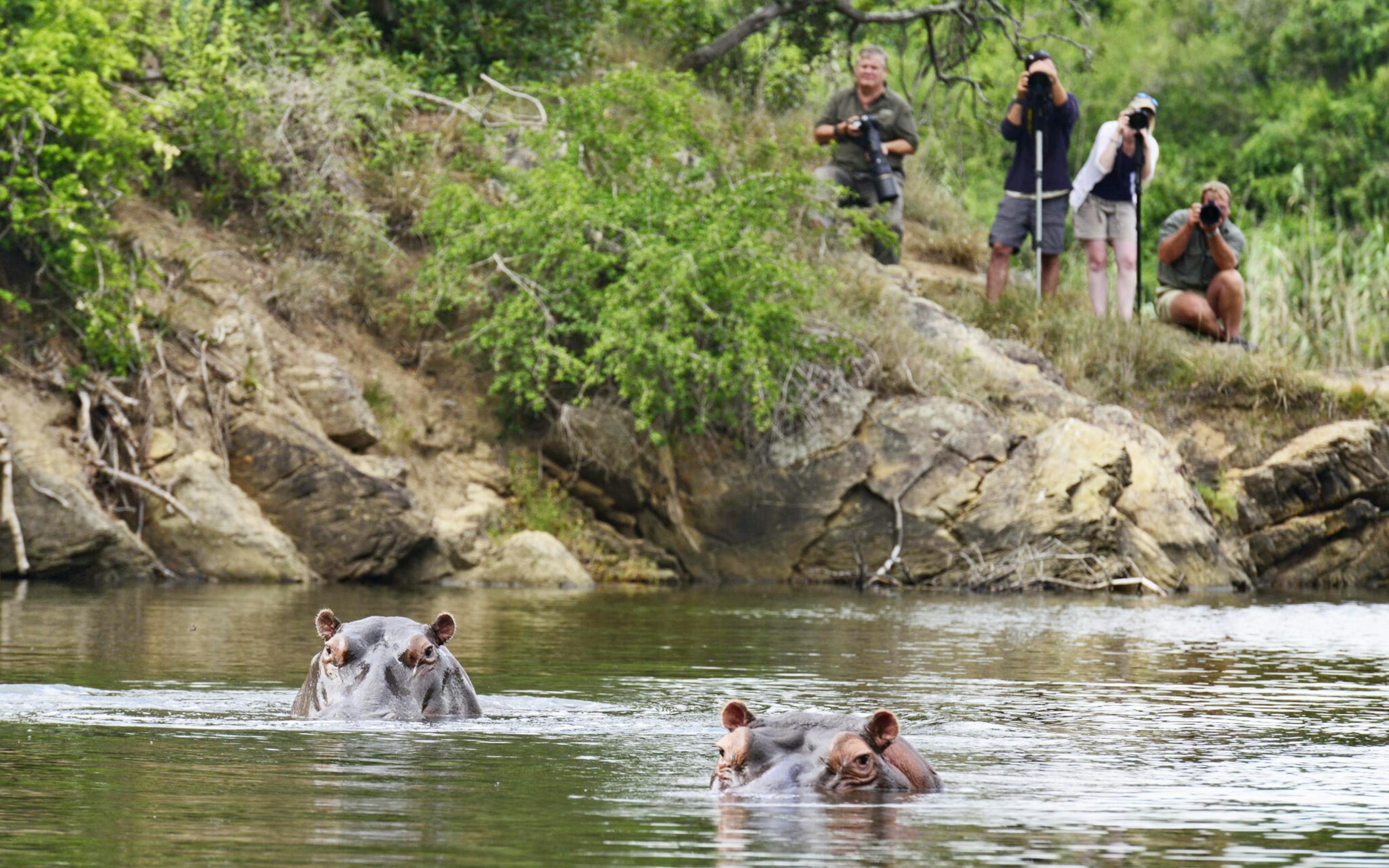
Kariega Game Reserve
Before Kariega Game Reserve’s 1989 inception, the overburdened land had been settled by some 21 different farms. It has taken more than three decades and immense consolidation to grow the initial 1,230-acre land purchase to what we see today: 28,417 acres of spectacular Eastern Cape reserve land where lions, elephant, rhino, buffalo, leopard, hippo, hyena, giraffe and zebra thrive. Game drives and bush walks bring safari-goers through varied ecosystems such as fynbos, riverine forests, valley bushveld, and acacia woodlands. Uniquely, the Reserve is threaded by two rivers, inviting guests to enjoy boat cruises, paddle a canoe, or cast a line.
Kariega offers a five-star tented experience (Settlers Drift), 24 log chalets (at Main Lodge), a private-use villa (The Homestead), 10 suites at River Lodge (which connects to the sea), and the rustic-luxe Ukhozi Lodge.

The Waterberg
Limpopo province’s exceptional Waterberg Region is a UNESCO World Biosphere Reserve and a malaria-free safari destination. The 5,600 square-mile expanse is graced with outstanding vistas, clear streams, rolling bushveld hills, and mountain gorges. There are just two accommodations: Ant’s Hill and Ant’s Nest—both owned and operated by the Baber family—set within a 12,500-acre private game reserve within the Waterberg bushveld. (Either lodge can be booked for exclusive use, or parties can book single rooms.)
Rife with biodiversity and home to the Big Five, guests can explore the varied topography via game drives or on bush walks, but the signature offering here is horse safaris. Home to a stable of 90-plus horses that have been adapted to the environment, viewing African wildlife over the ears of a pony is unlike any other safari experience. Groups are limited to six riders per departure and cater to all riding abilities.
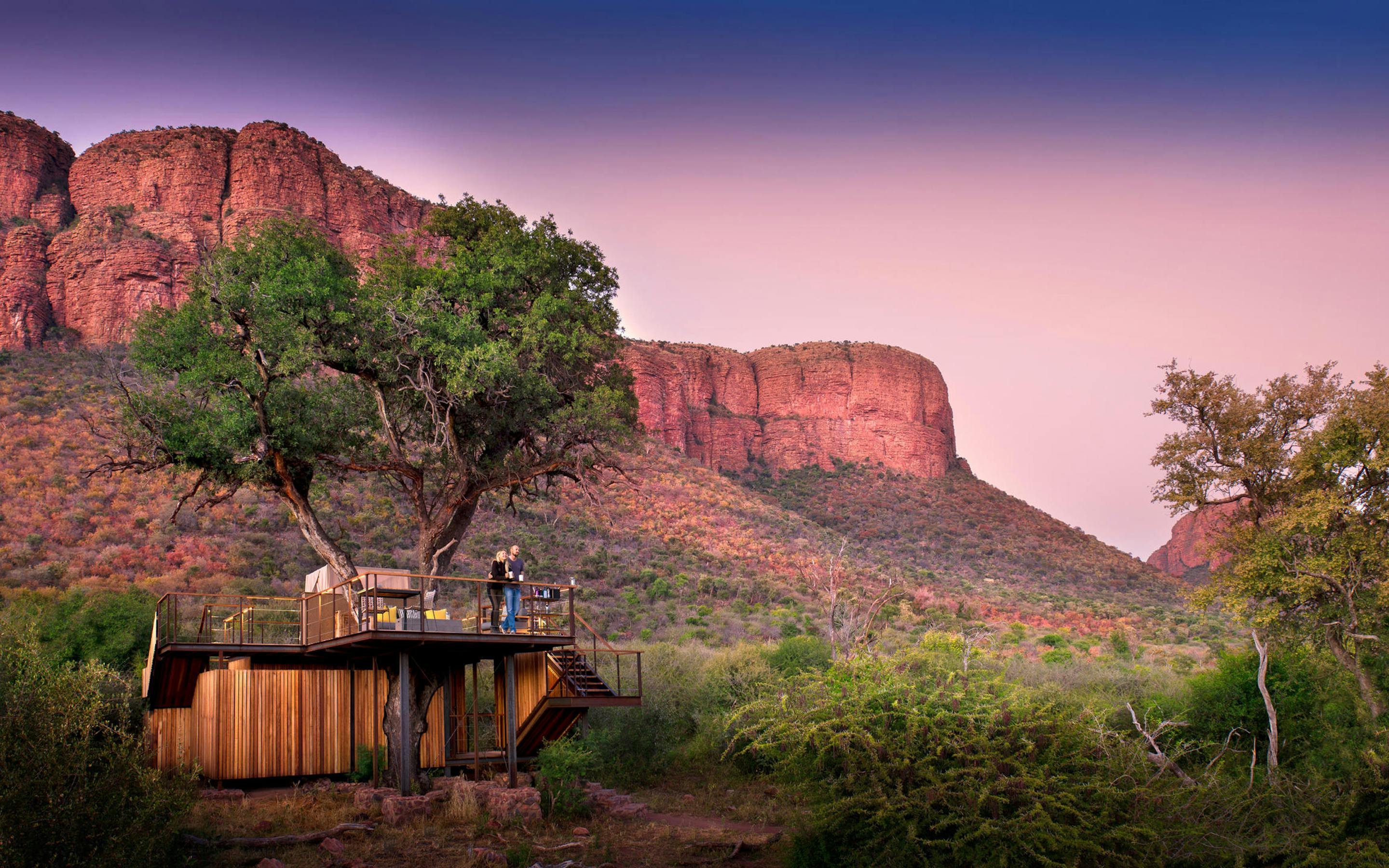
Marakele National Park
Also located in Limpopo province’s Waterberg Region is Marataba, a 52,000-acre privately managed section of the Marakele National Park. Here, at the foot of the Waterberg Mountains with the winding Matlabas River in the foreground, bushveld gives way to Kalahari sands. This remarkable landscape is home to the Big Five and a globally consequential population of white and black rhino.
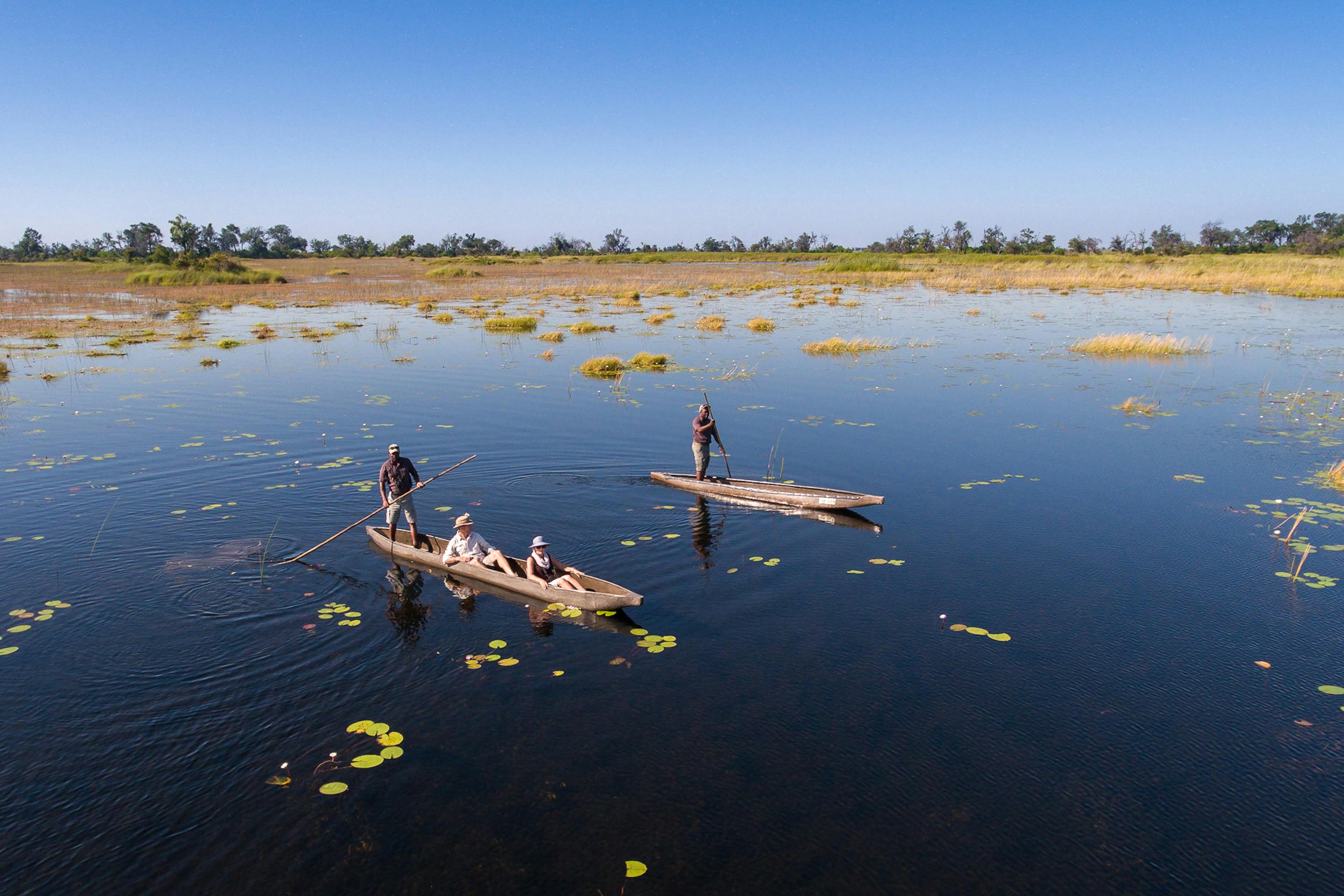
With only two luxury lodging options, Marataba is an intimate malaria-free safari destination. Marataba Mountain Lodge boasts just five eco-suites, while Marataba Safari Lodge’s 15 tented suites are exactly what travel dreams are made of. It also features a swoon-worthy treehouse for starry sleep-outs. Pass splendid days on game drives, bush walks, sunset water safaris along the Matlabas River, or participate in a hands-on rhino conservation experience.
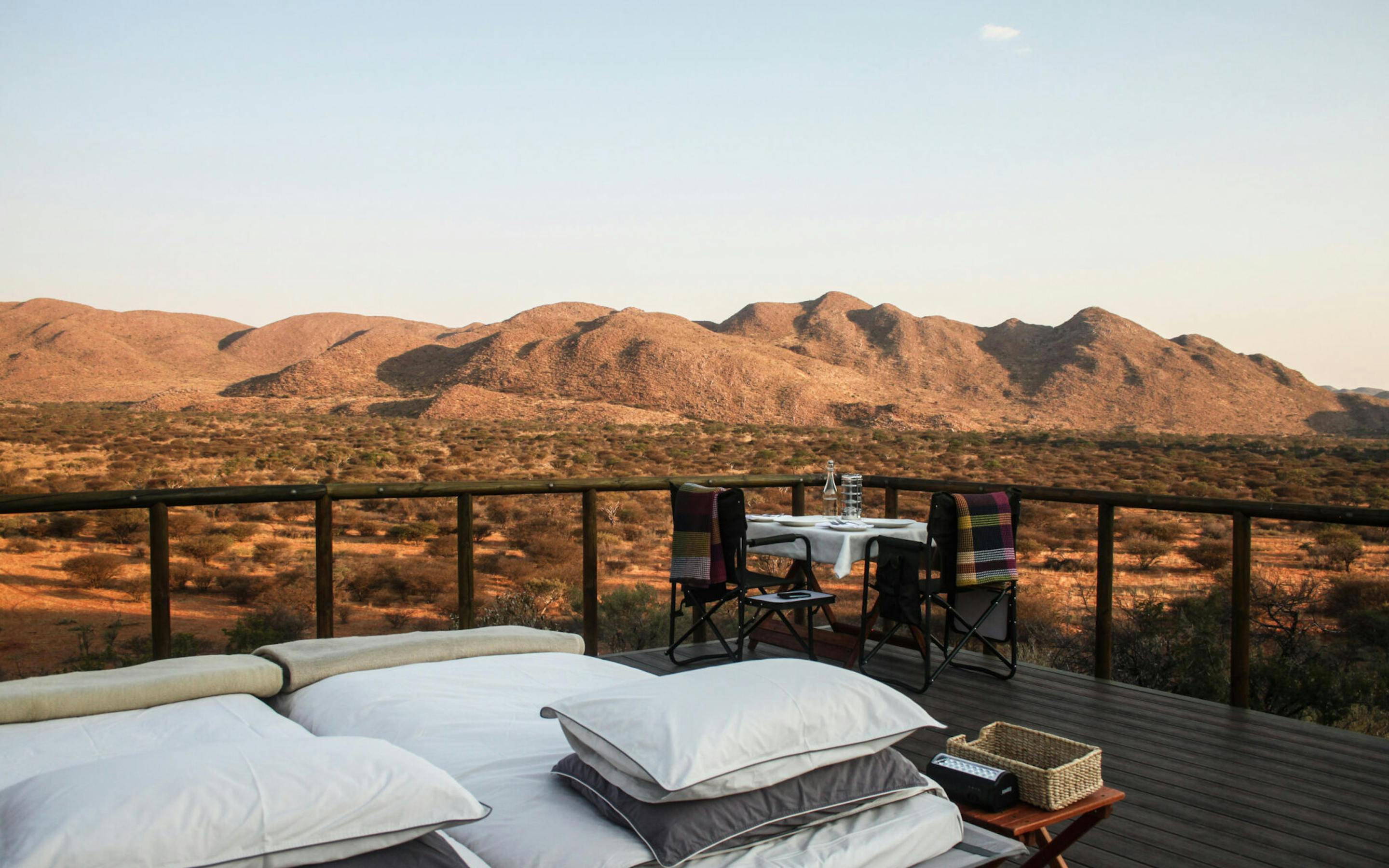
Tswalu Kalahari Reserve
Spanning 247,000 acres, Tswalu Kalahari Reserve is South Africa’s largest private game reserve. Located in the heart of the Northern Cape province, Tswalu was built on the principles of conservation. Thanks to the safeguarding of vital habitat and the restoration of biodiversity, the Reserve offers superlative game viewing: desert black rhino, white rhino, black-maned Kalahari lions, leopards, cheetah, meerkats, giraffe, antelope, aardvark, aardwolf, pangolin, and more.
To keep Tswalu wild, the Reserve features just three boutique safari camps: The Motse with nine suites; Tarkuni, a private, exclusive-use homestead; and Tswalu Loapi Tented Camp, six privately staffed pavilion-style safari homes. (Considered among the best South Africa safari lodges.)
Translation? Even at full capacity (~40 adults), Tswalu represents the lowest ratio of guests to wilderness in a privately protected area in South Africa. Star beds, a dining boma, and suites constructed of earthy materials in organic shapes make leaving Tswalu difficult.
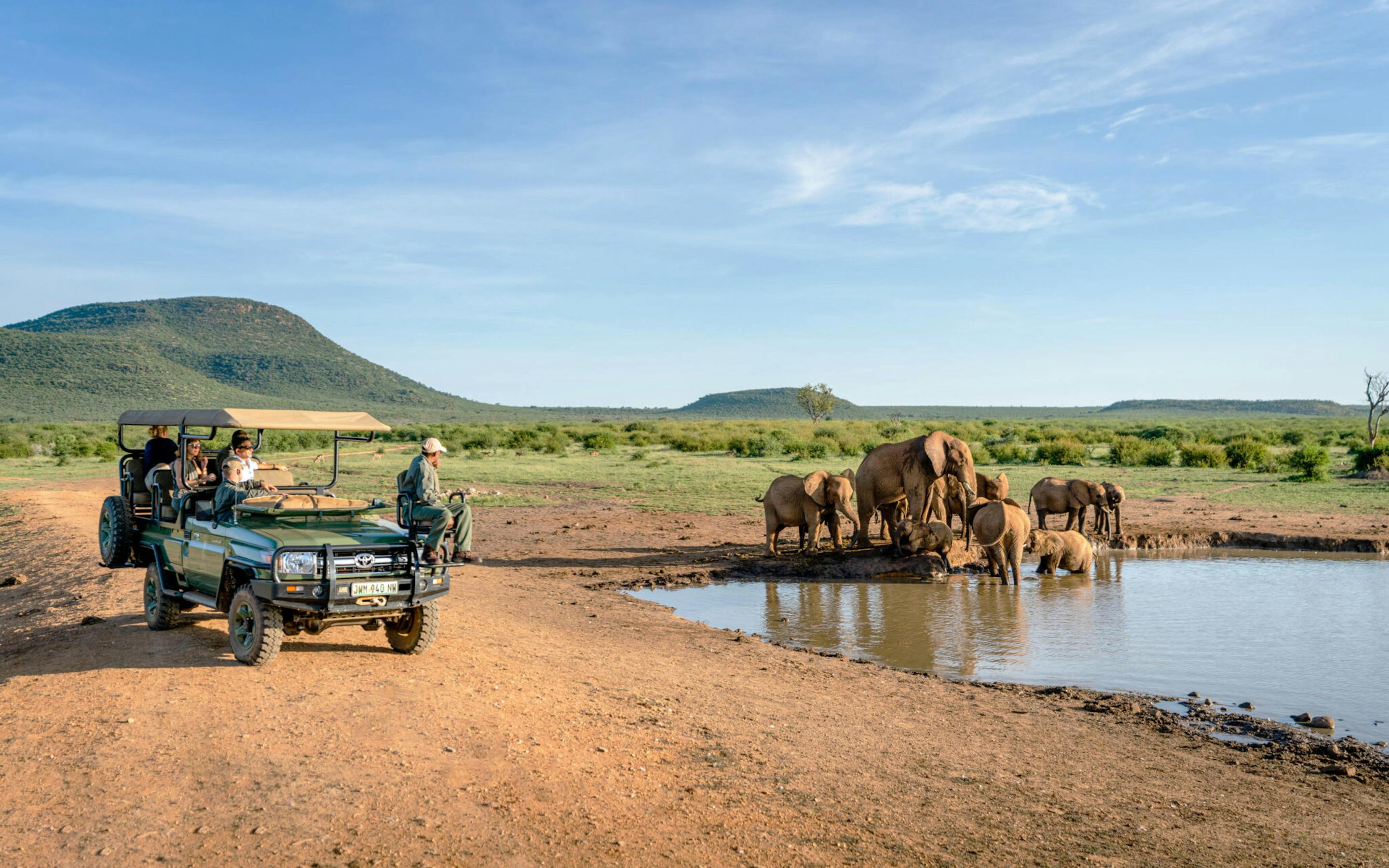
Madikwe Game Reserve
Located in the North West province bordering Botswana, Madikwe Game Reserve spans a vast 185,329 acres and is a malaria-free safari destination. The reserve represents a tremendous wildlife comeback story that demands admiration. After failed attempts to farm the land, Madikwe was established in 1991. Under the banner of “Operation Phoenix,” some 10,000 animals across 27 species were successfully reintroduced over a six-year period. Today, Madikwe is a hot spot for the Big Five, in addition to a thriving population of wild dogs. The Reserve also falls upon the junction of two unique ecosystems—Kalahari thornveld and bushveld—and examples of sentinel inselbergs (“island mountains”) can be seen to the west.
Despite it being just a four-hour drive from Johannesburg/Pretoria, Madikwe remains a lesser-touristed reserve. However, a higher volume and density of camps and lodges are clustered in the west side of the Reserve. Extraordinary Journeys safari specialists prefer Jaci’s Safari Lodge for its out-of-the-way location and Mateya Safari Lodge for exceptional guiding.
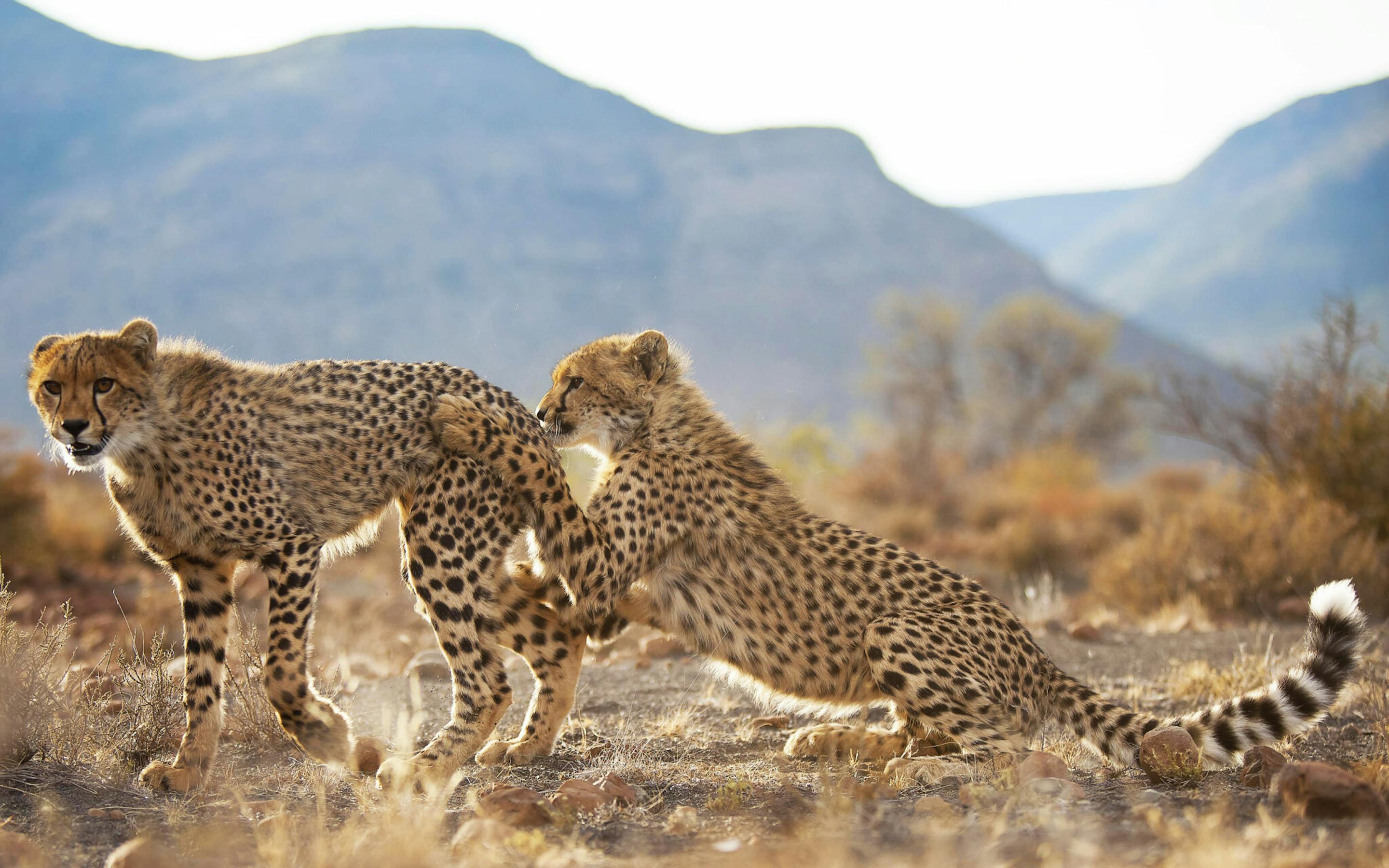
Samara Karoo Reserve
Overlaying four of South Africa’s provinces, the Karoo is a semi-desert region larger than the size of Germany. Sometimes likened to Australia’s Outback, the landscape is one of vast open plains hemmed by mountains.
Snug in the Karoo is the 67,000-acre Samara Karoo Reserve, a place where an ambitious but successful conservation story has been unfolding since 1997 when the land was purchased by Mark and Sarah Tompkins. A painstaking rewilding project was undertaken, first eradicating invasive plant species, removing fences, and resting depleted farmland, followed by the reintroduction of indigenous, iconic, and endangered species.
Guests of the two, intimate on-Reserve properties (The Manor and Karoo Lodge) are situated at the convergence of five unique vegetation biomes—grasslands, Nama Karoo, savannah, thicket, and forest—which support thriving populations of nearly 60 mammals. In this born-again wilderness, travelers can enjoy a malaria-free safari while spotting the Big Five. We also recommend the Reserve’s signature experience, tracking cheetahs on foot.
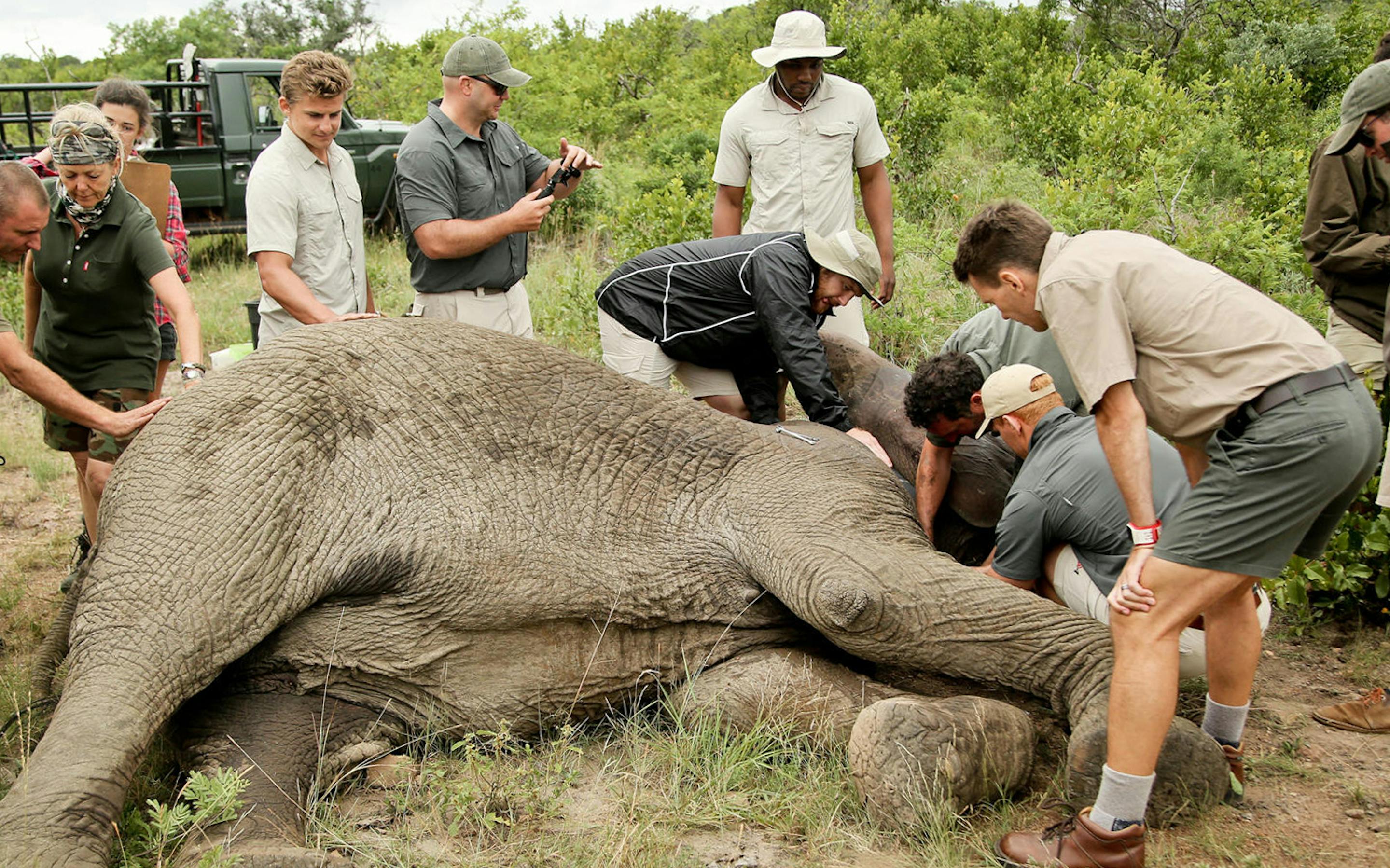
Phinda Private Game Reserve
Phinda Private Game Reserve is located in KwaZulu-Natal, a province known for its swimmable and surfable coast, tall mountains and big game savannah. We love Phinda for its diverse habitats (seven ecosystems within 73,800 acres) that support wildlife including the Big Five, elusive cheetah, rare black rhino and 436 bird species.
Phinda is owned by &Beyond and represents the company’s flagship property. There are six swoon-worthy luxury lodges peppered throughout the Reserve; our favorites are Phinda Zukaand Phinda Vlei. Guests interested in conservation-focused safari experiences can assist with rhino tracking and (painless) dehorning, elephant collaring, or pangolin tracking to better understand the world’s most trafficked animal. Choosing Phinda as your safari destination also means easy Indian Ocean beach excursions like scuba diving and seasonal turtle nesting.
It is important to acknowledge that Phinda is in a low-risk malaria zone. Antimalarial tablets are not recommended, but travelers visiting between September and May should practice mosquito avoidance.
Best time to visit malaria-free safari destinations
Although it is a year-round destination, most travel experts agree that the dry season (May to September) is the best time to go to South Africa. However, the country’s opposing geographies—a Mediterranean Atlantic coast versus a subtropical Indian Ocean—mean that the best time to visit is not uniform across the country. For example, the best time to visit Greater Kruger isn’t the same time as Cape Town/The Western Cape.
- KwaZulu-Natal, Madikwe & Limpopo: Take a malaria-free safari in Marakele National Park, The Waterberg, and Phinda between May and September for drier weather. Low grass and thinner, trampled bushveld offer better visibility for wildlife spotting. It also means animals tend to congregate at reliable water sources.
- Cape Town, Western Cape & Eastern Cape: Tour Cape Town, the nearby Winelands, Hermanus, the Garden Route, and the Eastern Cape’s private game reserves (Kwandwe, Shamwari, Amakhala and Kariega) between September and April.
- The Southern Kalahari: Tswalu can be visited year-round, but May through September “winter” temperatures are the most pleasant.
Family-friendly malaria-free safari lodges
Ant’s Nest/Ant Hill: Independently owned and operated property that feels like a bush home. Absent big predators and elephants; heated outdoor pool; archery, fishing, swimming, biking, horseback riding/pony rides (for 5 and younger); family cottage or book as an exclusive-use for multi-generational family travel.
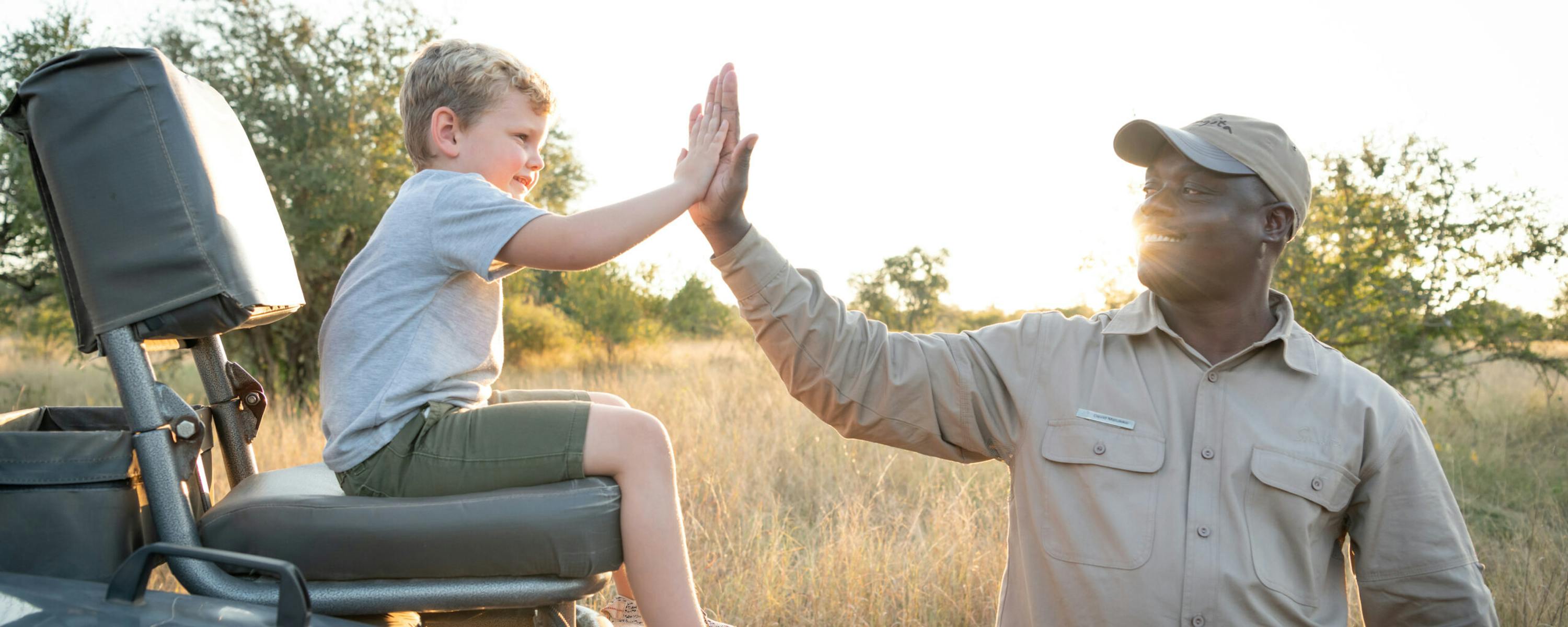
Phinda Mountain Lodge: WILDchild programme for children aged 3–12 years; backpack filled with age-appropriate goodies; bark rubbing, bug collecting, frog safaris, ‘poop walks,’ baking with the chef; children’s menus; childminding (extra fee); six cottages that can be turned into three adjoining family cottages, and one family suite.
Karoo Lodge & The Manor (Samara): Samara Cubs Programme with goodie bag and activities (spoor-horn-track identification, stargazing, beading, t-shirt and rock painting, etc) ; “bumble game drives” for 0 – 7; fenced property; Karoo Family Suite accommodates up to five or choose The Manor, an exclusive-use villa with four suites; childminding for a fee; croquet, boardgames, and soccer.
Melton Manor (Kwandwe): Exclusive-use contemporary farmhouse that sleeps eight guests across four suites; private guide and vehicle; swimming pool, outdoor fire pit; welcome gift pack tailored by age; scavenger hunts, fishing, face painting, beading, sand art, baking, spoor casting, and African bed time stories; kids menu; childminding (for a fee).
February 12, 2026
Explore our itineraries
Every trip with Extraordinary Journeys is tailor-made, crafted in collaboration with one of our destination specialists. Use these as a starting point, or as inspiration to create your own journey.