Where to see a pangolin on safari
Learn where pangolins live, why they’re so rare to spot in the wild, and how ethical wildlife tourism can support their survival.

February 6, 2026
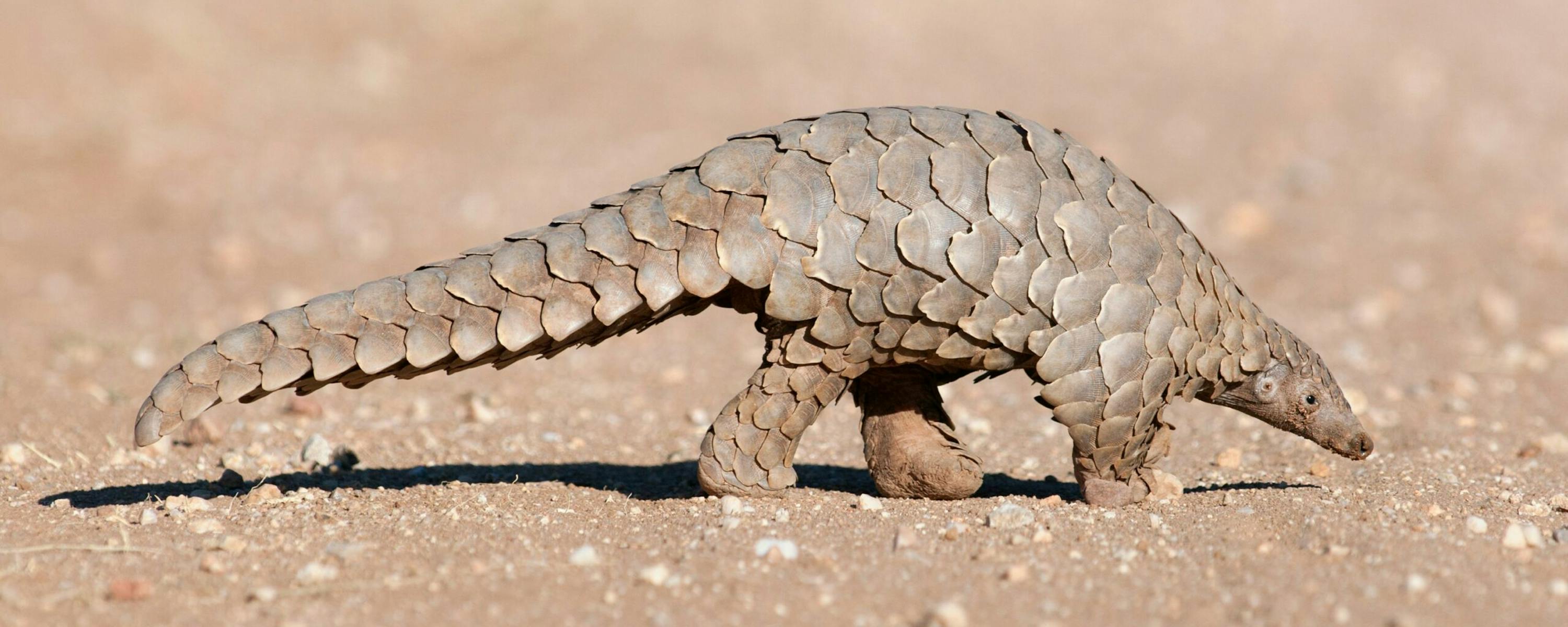
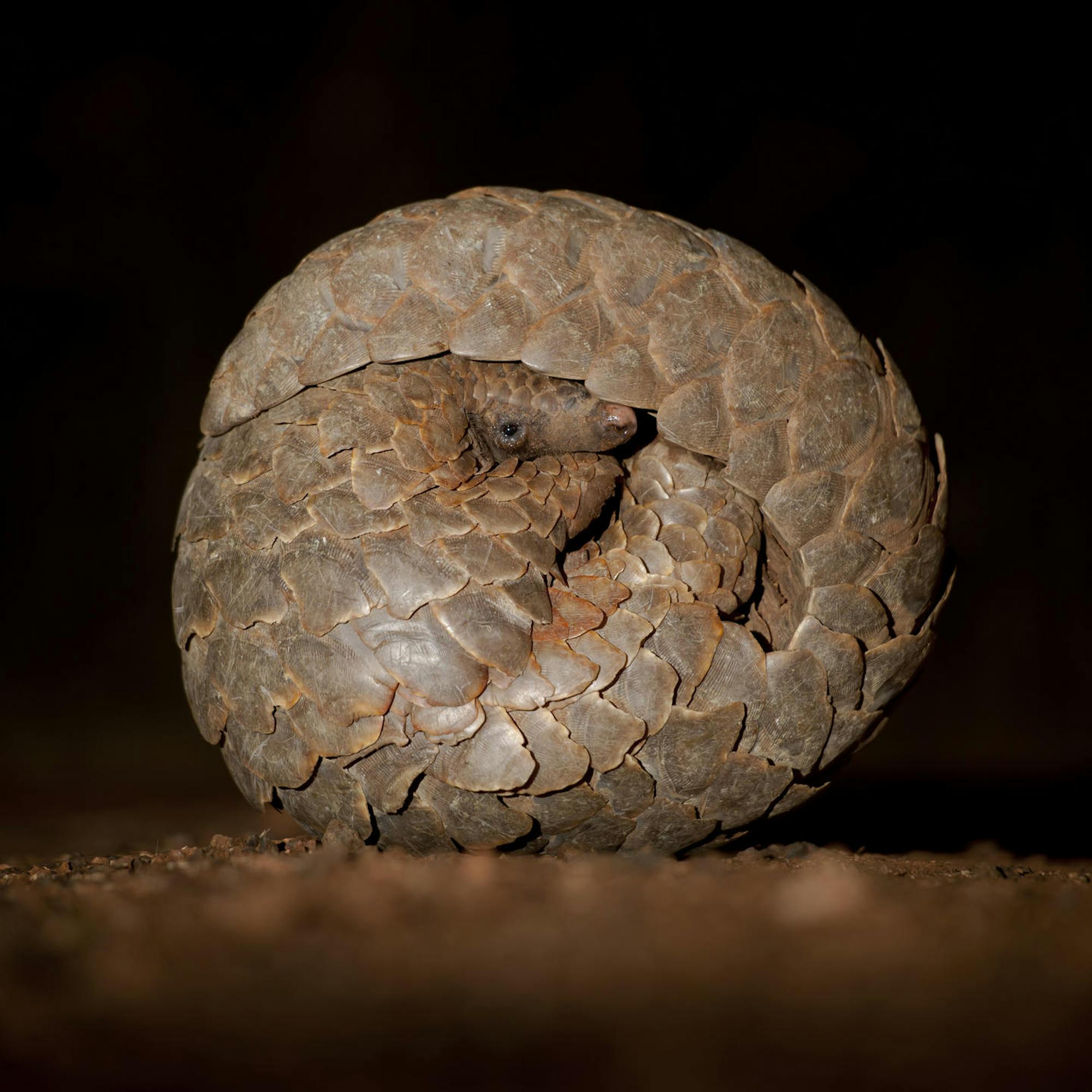
Rarely seen and comedic by description, it can feel as if wild pangolins are more fairytale than fiction. They wear armor of hardened scales plated from tip to tail, have long curved claws, and shockingly long, sticky tongues. Is it a reptile? An anteater? A pinecone?
The sight of a pangolin will catch your attention, but it's their distinctive hobbling gait that will endear you to the species. Bumbling along on two feet and with short arms held to the chest, it's impossible not to draw comparison to a miniature Tyrannosaur. Compounding the cuteness, baby pangolins ride on their mother’s tail.
Although pangolin exist in many countries across Africa and Asia, populations are so thin that they’re rarely sighted; rampant illegal poaching and habitat loss contribute to their critically endangered status.
The Big Five might reign supreme, but in safari circles, pangolin sightings are the Holy Grail. If the species is on your safari checklist, here’s where to see a pangolin.


Where to see pangolins
Pangolin are known to live in East Africa (Kenya, Tanzania), Central Africa, and Southern Africa (Namibia, Botswana, Zambia, Zimbabwe, Mozambique, and South Africa).
In Asia, you might find them in China, India, Southeast Asia, on the Malay Peninsula, and in Indonesia.
However, the odds of a chance encounter with a wild pangolin are extremely low. Even an experienced safari guide—on twice-daily game drives, for weeks on end—might not see more than a few pangolins across an entire career. Among Extraordinary Journeys’ entire staff of 30-plus safari-goers, only Lara Ray has sighted a wild pangolin—twice in Tanzania. Rare but not mythical.
While it's possible to see pangolin in the wild, if it's your singular safari goal, we recommend visiting a private game reserve where pangolin research efforts are actively underway.
Phinda Private Game Reserve, South Africa
Phinda is a private game reserve located in South Africa’s KwaZulu-Natal province. it's one of our top choices for a pangolin tour.
A conservation comeback story, Phinda’s landscape was once overgrazed farmland void of the wildlife that roamed here before European settlers arrived. In 1991, a 32,000-acre parcel was set aside for rewilding. Today, Phinda is home to thriving numbers of elephant, lion, cheetah, white rhino, leopard, Cape buffalo, zebra, giraffe, plains game, and myriads of bird species. And now, joyfully, a population of pangolins.
In 2019, Phinda launched a groundbreaking pangolin rehabilitation and reintroduction effort to reverse its local extinction. Working in collaboration with African Pangolin Working Group (APWG), Johannesburg Wildlife Veterinary Hospital, and Humane Society International-Africa (HSI-Africa), Phinda’s first wild pangolin pup was born in December 2020. Another two arrived the following year.
Guests staying in any of Phinda’s six luxury lodges can enjoy spectacular twice-daily game drives across its 73,800-acre wilderness. The Pangolin Conservation Experience is an optional add-on, where visitors set out with researchers and monitors to find pangolin. Use equipment to locate them (each is radio-tagged) to perform a general health check and afterwards, trail the pangolin as it forages for ants and termites. The cost of the experience contributes to the operations of this specialist conservation unit.
- Seasonal: Subject to availability between March and November
- Minimum age: 16
- Excursions with fewer than six guests will need to book a private vehicle
- Participants are not permitted to touch or handle a pangolin
Okonjima Nature Reserve, Namibia
Another conservation comeback story, the Okonjima Nature Reserve is a 55,000-acre expanse of wilderness in Namibia’s Central Highlands.
Eventually dissuaded from cattle farming by drought and a high-density leopard population that stalked their property, the Hanssen family pivoted to safari-modelled tourism. Shortly thereafter, the family began accepting rescue leopards and cheetahs from commercial farmers who considered the predators to be pests. Big cat welfare in Okonjima became the AfriCat Foundation and over time, the Foundation’s mandate shifted away from predator rescue to conservation and research.
With decades of big cat experience and data, Okonjima was identified as an optimal ecosystem for pangolin, and, in 2018, pangolin research began in the reserve. Happily, the reserve’s population has produced babies.
Today, guests staying at Okonjima’s luxury lodges can add pangolin tracking to their safari itinerary. Sightings are not guaranteed, but the odds are good. Depart on foot, accompanied by an experienced guide and a pangolin tracker-guardian using equipment to locate tagged pangolins.
- Maximum group size is 6
- Minimum age: 12
- Duration is two hours; spend 30 minutes with the pangolin
- Available to guests who stay a minimum of two nights
- Depending on the time of the year, pangolin tracking might take place between 5 and 11 p.m. (winter; June–August) or overnight, between 10 p.m. and 6 a.m. in summer (December–February).
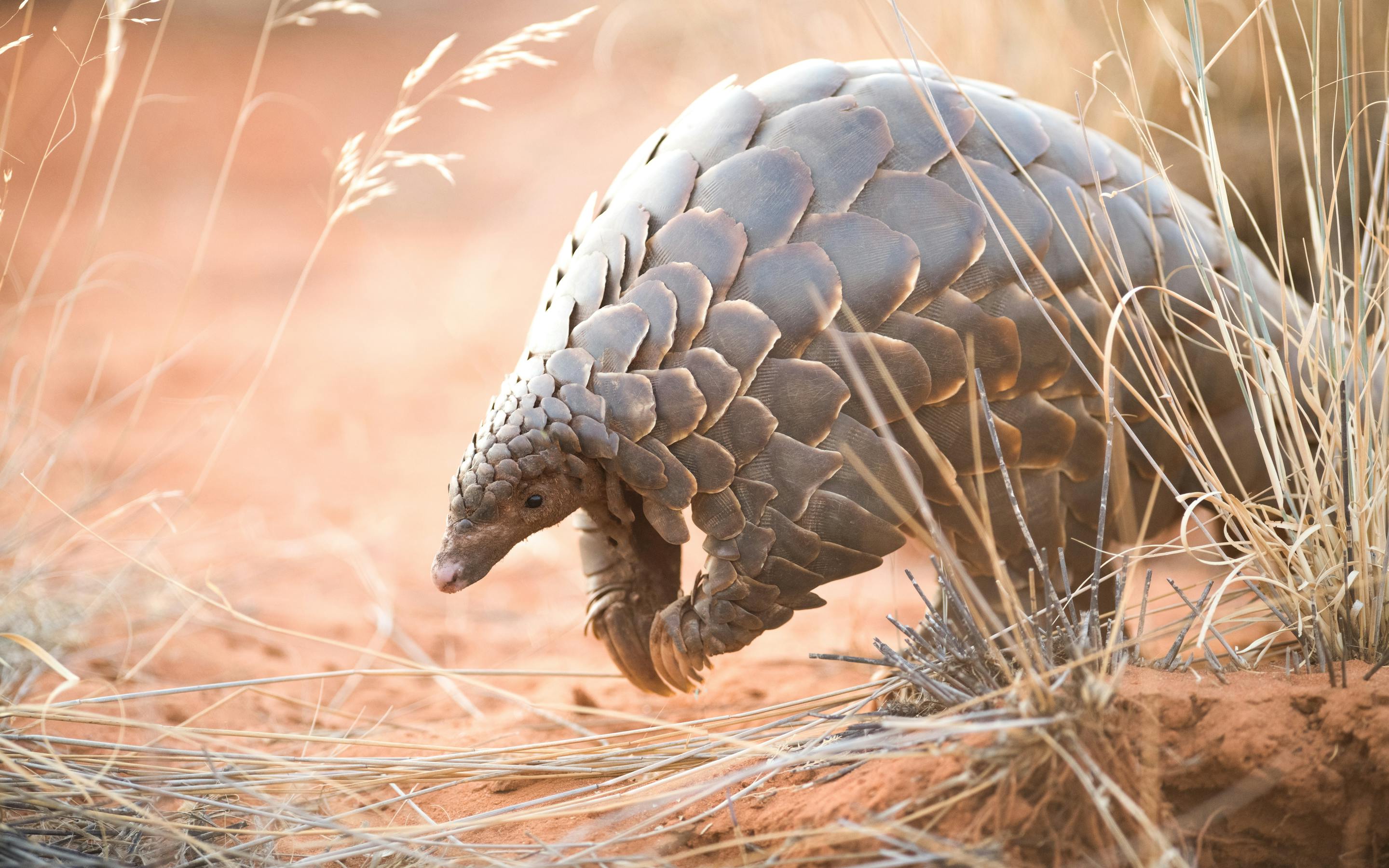
Tswalu Kalahari Reserve, South Africa
Situated in South Africa’s southern Kalahari, Tswalu is a semi-arid savannah known for unique and elusive species—including Temminck’s pangolin. In recent years, extensive studies conducted here by Dr. Wendy Panaino and Daniel Rossouw have revealed much about pangolin biology, diet, behavior, and the role that the species plays on the environment.
If you’re keen on seeing a pangolin in Tswalu, be sure to mention your goal during the trip-planning phase; an Extraordinary Journeys safari specialist will coordinate your safari to align with the availability of a pangolin field researcher.
Although sightings are not guaranteed, you’ll be using equipment to locate a tagged pangolin, so the odds are good. Along the way, you might spot another rare “Elusive Five” species: brown hyena, aardvark, aardwolf and bat-eared fox.
- Visit Tswalu Kalahari Reserve during winter (June, July, and August) when daytime sightings of pangolin are more common. (Pangolins forage for insects while bathed in the afternoon sunshine, before it gets too cold.)
- Locating pangolins during summer (December through February) is difficult. The daytime Kalahari sun is at its most oppressive, meaning pangolins hideaway in their cool burrows. What’s more, veld conditions in summer are dominated by tall grasses, obscuring ground-crawling pangolins.
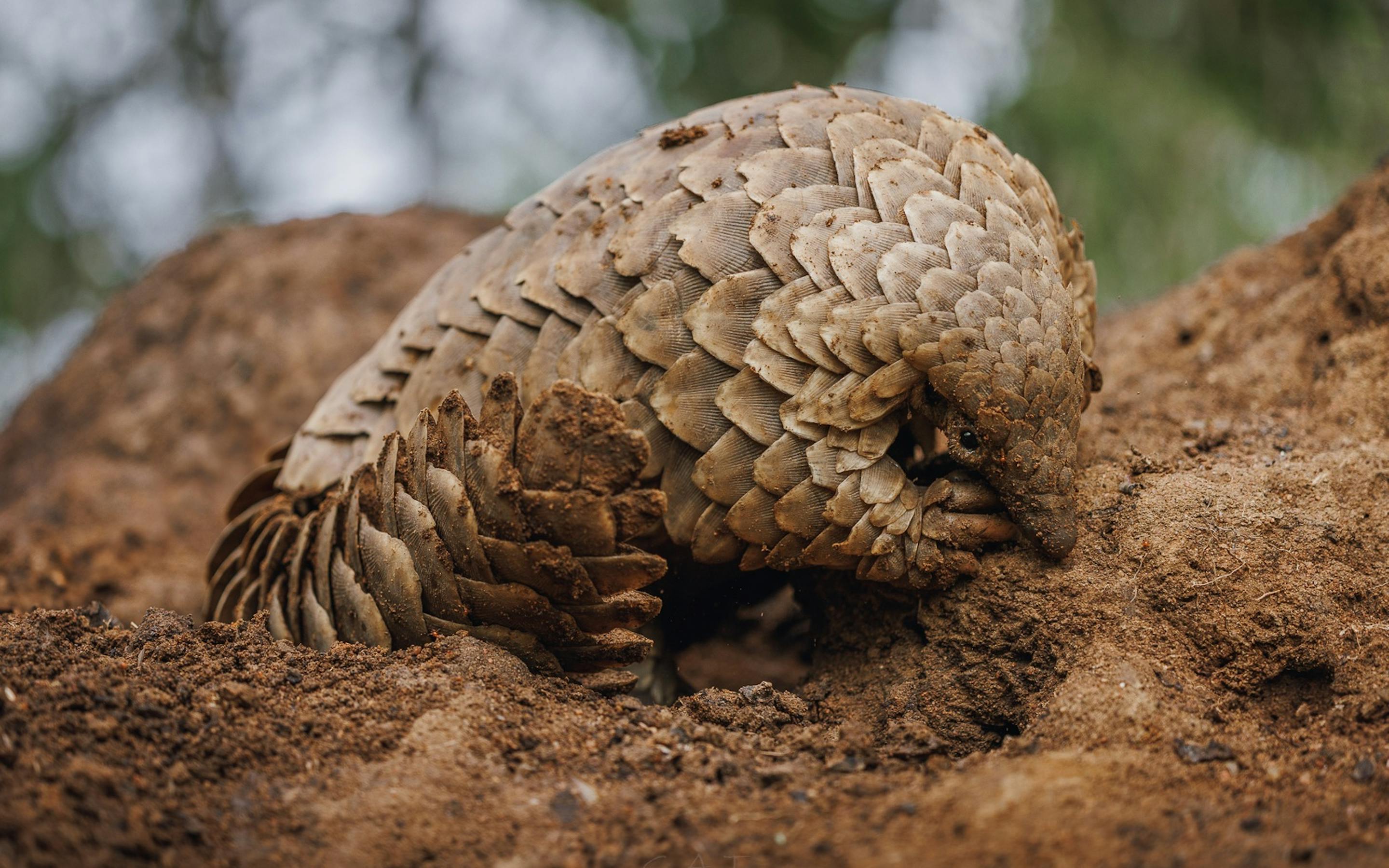
Lapalala Wilderness, South Africa
In April 2025, Netflix debuted Kulu’s Journey, beaming the plight of pangolins into living rooms around the world. The heartening documentary follows the rehabilitation and rewilding of Kulu, a traumatized baby pangolin recovered from the illegal wildlife trade. The film is set within Lapalala Wilderness, a 118,000-acre private reserve in the scenic Waterberg region of Limpopo province.
The African Pangolin Working Group (APWG) recently opened the Pangolarium—a purpose-built pangolin research and conservation center sponsored by Lepogo Lodges. With the arrival of veterinarian Dr. Kelsey Skinner, the Pangolarium will begin accepting pangolins in need of rehabilitation.
Once the team is settled, Lepogo Lodges anticipates that guests will be able to tour the Pangolarium. Visitors will learn all about the exhaustive efforts taken to rehabilitate a single pangolin from the APWG team, researchers, and pangolin guardians. (As it is a working clinic, viewing pangolins under care would depend on their progress and be at the sole discretion of APWG’s experts.) You’ll depart Lapalala in total admiration of the team working tirelessly to preserve the species’ survival.
Pangolin Safari Tips
- Communicate your goals to your destination safari specialist during the trip-planning phase.
- Visit a private reserve where pangolin research and conservation are underway
- Avoid the hottest summer months when pangolins shelter in burrows for most of the day
- Prioritize after-dark game drives
- Have good luck!
Pangolin FAQs
February 6, 2026
Explore our itineraries
Every trip with Extraordinary Journeys is tailor-made, crafted in collaboration with one of our destination specialists. Use these as a starting point, or as inspiration to create your own journey.