Rwanda vs. Uganda: Which country is better for gorilla trekking?
Explore our expert guide to the key differences in price, scenery, and trekking style to decide where to see mountain gorillas up close.

February 9, 2026
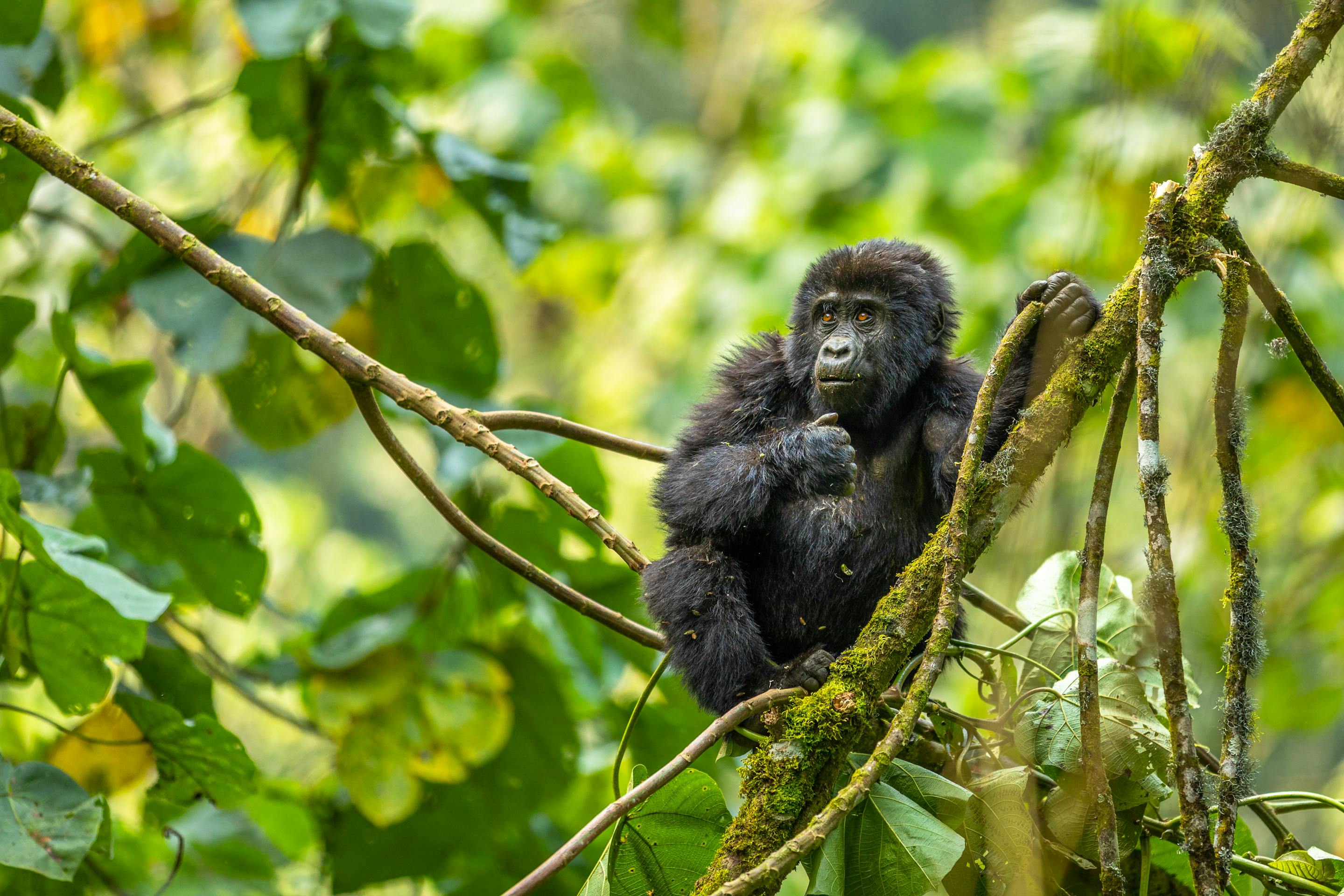
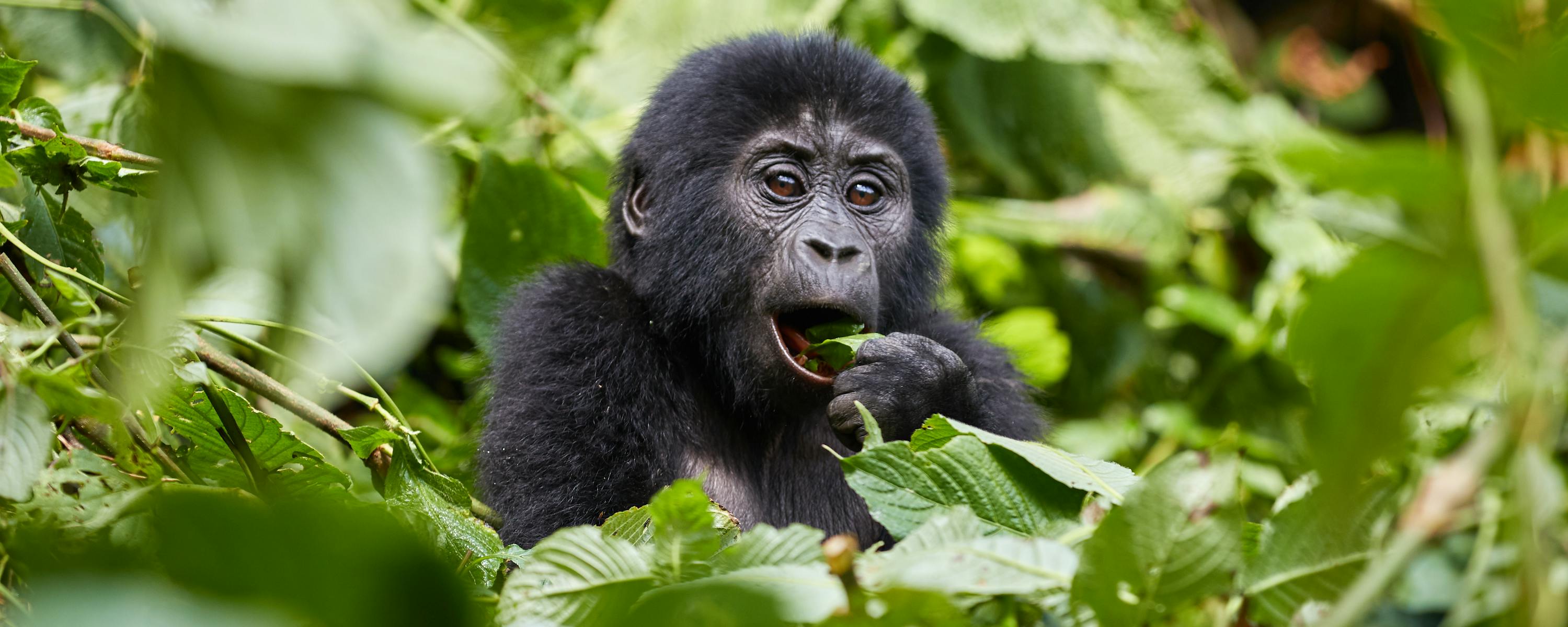
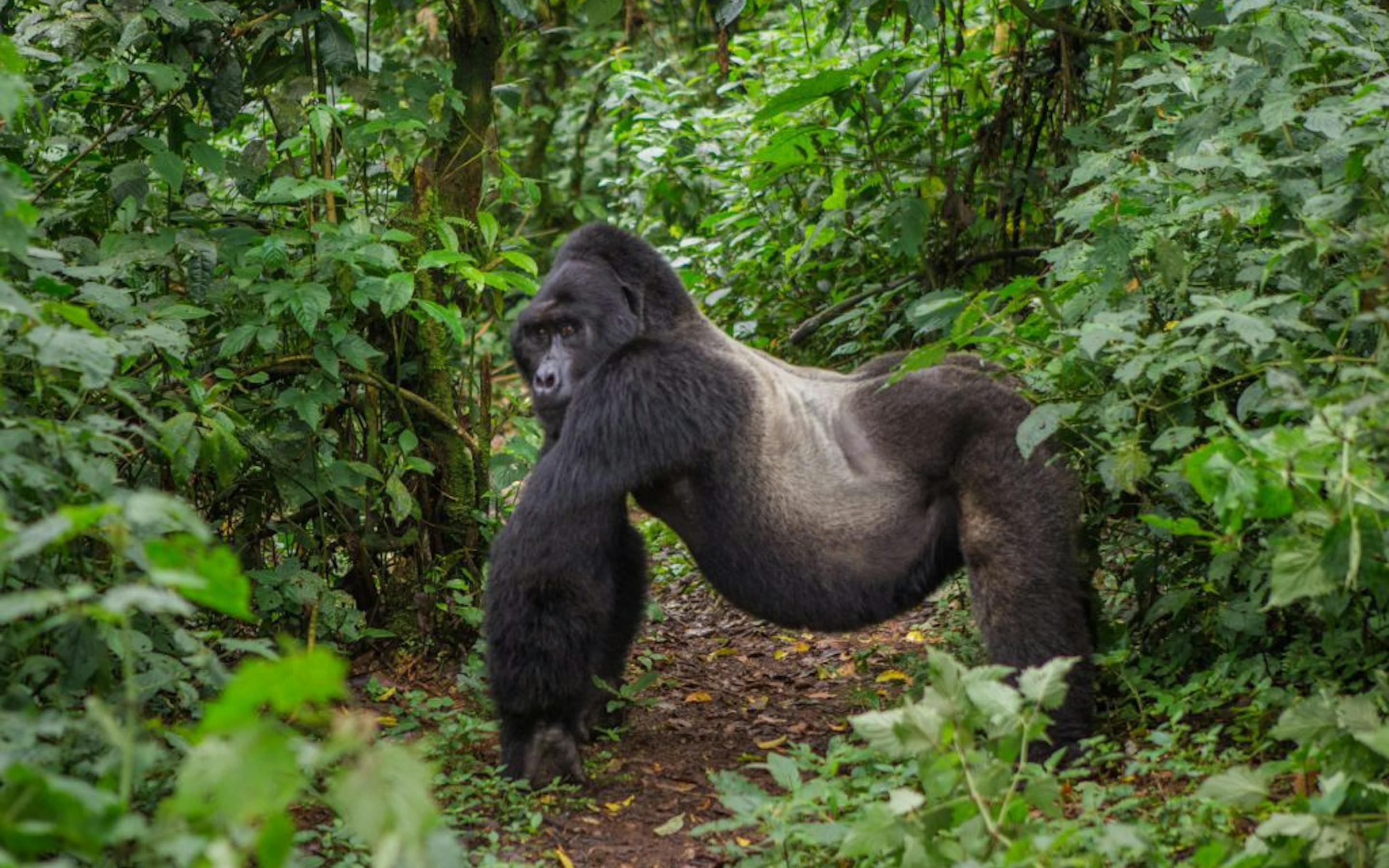
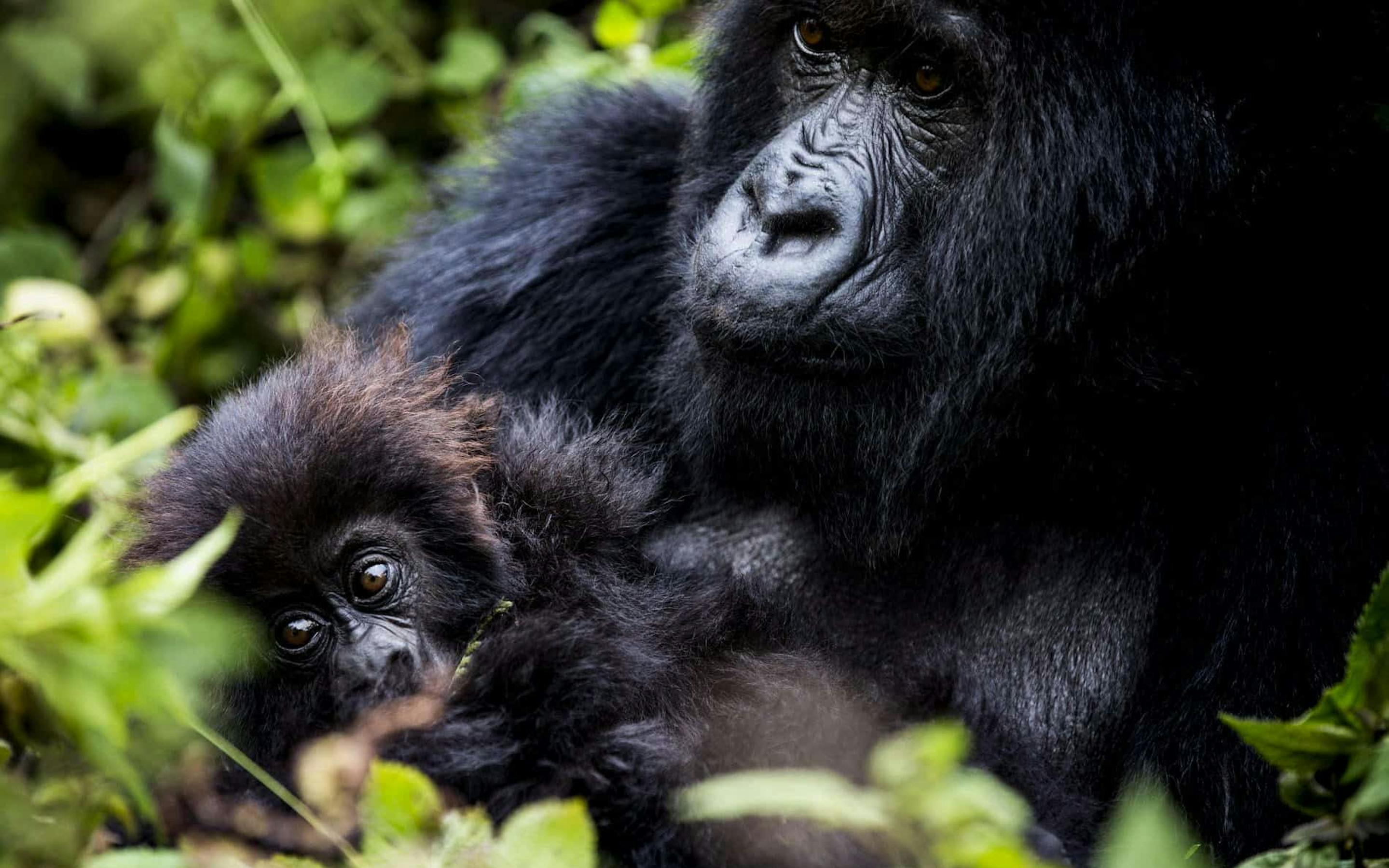
With populations hovering just above 1,000, endangered mountain gorillas are one of the world’s greatest wildlife treasures. Living in thick-knit tropical forests, the opportunity to lock eyes with these formidable primates is nothing short of a privilege. Memorable encounters involve traveling deep into East Africa and lacing up your boots to hike into their lush montane sanctuaries. Once you come upon a gorilla family, spend a memorable hour in their quiet company in profound fascination. Watch mothers cradling wide-eyed infants, proud silverbacks stripping bamboo, and juveniles congregating in dozy piles.
Dreaming of gorilla trekking is the easy part. Let our expert-informed gorilla trekking Rwanda vs Uganda guide help you decide the most important question: where to go?
Where you can see gorillas in Rwanda and Uganda
Mountain gorillas live in Rwanda, Uganda, and the Democratic Republic of Congo (DRC).*
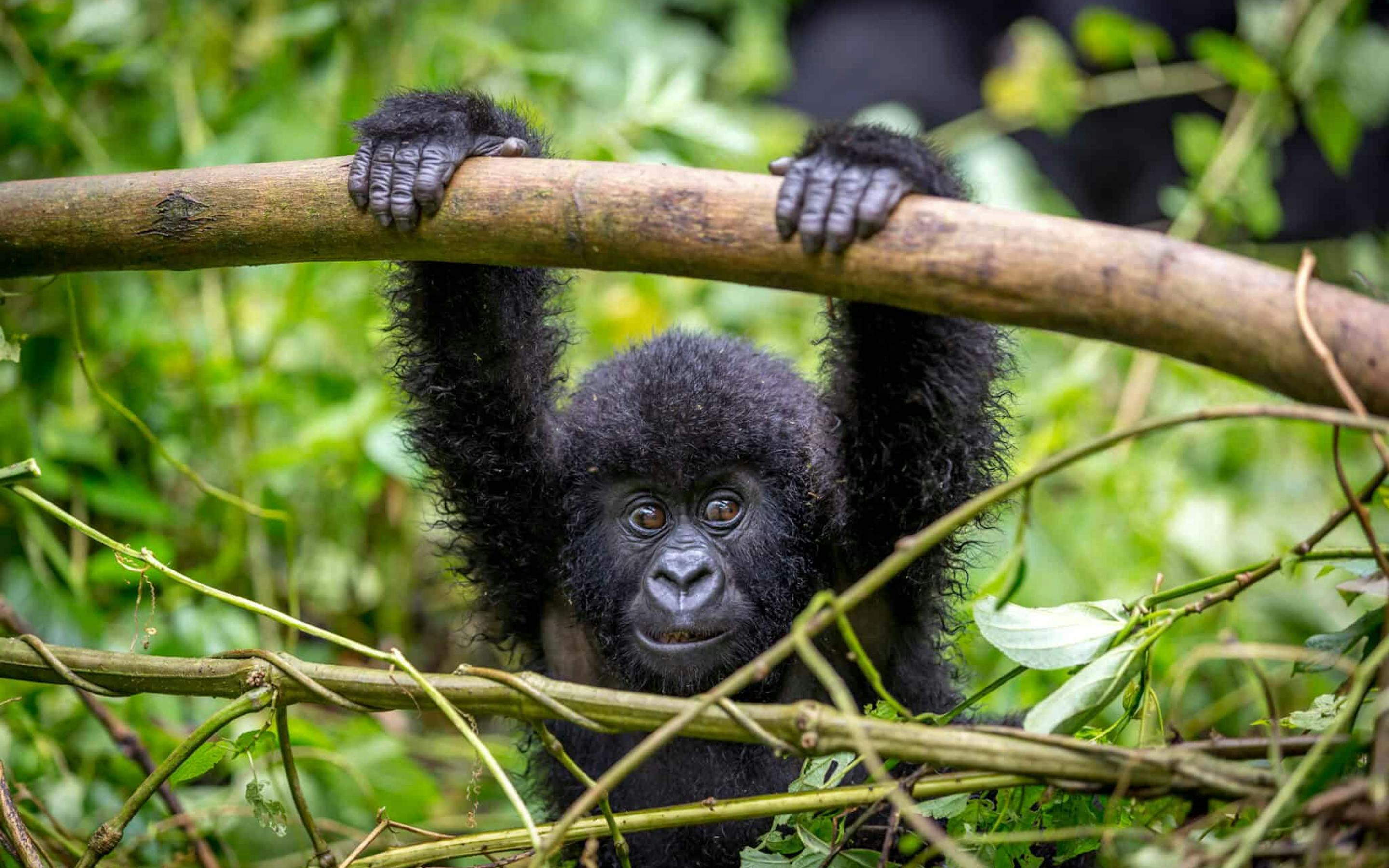
About half of the world’s remaining population (~1,000) live within the Virunga Mountains, a volcanic massif divided into three national parks: Volcanoes National Park (Rwanda), Virunga National Park (DRC), and Mahinga Gorilla National Park (Uganda). This stronghold is home to both habituated and unhabituated gorillas, and members or entire families are free to move between the respective national parks.
Rwanda gorilla trekking only takes place in Volcanoes National Park. (The location of Dian Fossey’s primate research and conservation legacy.)
By contrast, Uganda gorilla trekking occurs in two parks: neighboring Mgahinga and Bwindi Impenetrable National Park. Bwindi is a vast and ancient tropical woodland that critically shelters about 500 gorillas. Vastly outnumbering Mgahinga’s small population, the majority of Uganda gorilla trekking takes place in Bwindi.
Both Uganda and Rwanda practically guarantee successful gorilla encounters, meaning each country ranks as a best place to see gorillas in Africa.
*Extraordinary Journeys does not currently arrange travel to the Democratic Republic of Congo. As such, this guide omits DRC gorilla trekking.
**This guide speaks exclusively to mountain gorillas. The gorillas in the Republic of Congo are a lowland species, also excluded
Gorilla trekking permits
Trekking experience and terrain
When it comes to gorilla trekking Rwanda vs Uganda, the process will be comparable.
- Your guide will bring you to a park headquarters where permits are checked, and people are divided into groups of eight based on perceived fitness and ability. Meet your expert guide, make introductions with fellow travelers, and then return to your vehicle.
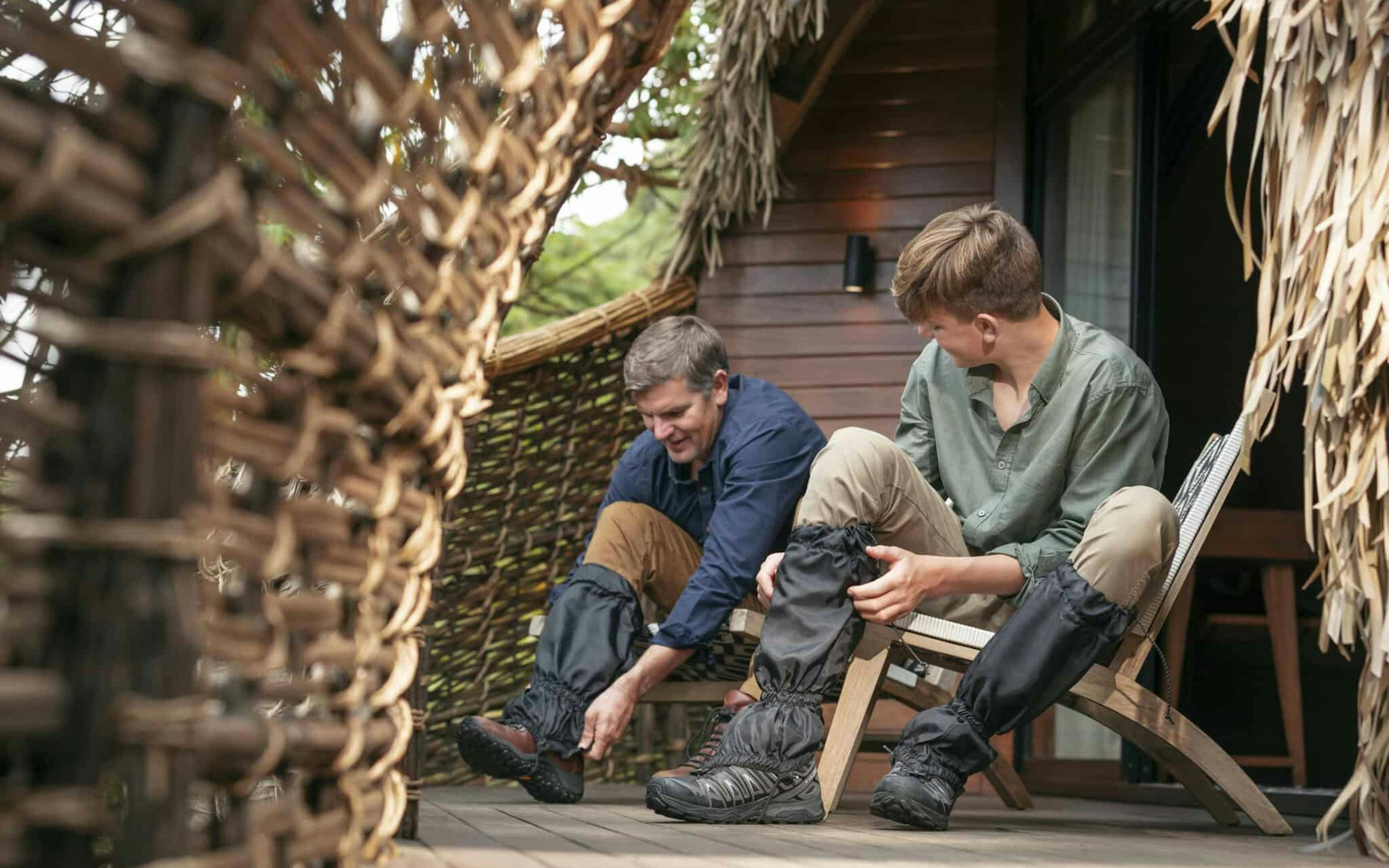
- Drive to the trailhead, hire a porter, be handed a walking stick, and begin hiking single file. An armed ranger leads the way, keeping watch for forest buffalo or other wildlife. Your party will hike into the forest, headed toward a group of rangers who departed much earlier that morning. Their job is to scout your gorilla family’s location and radio their position to your guide.
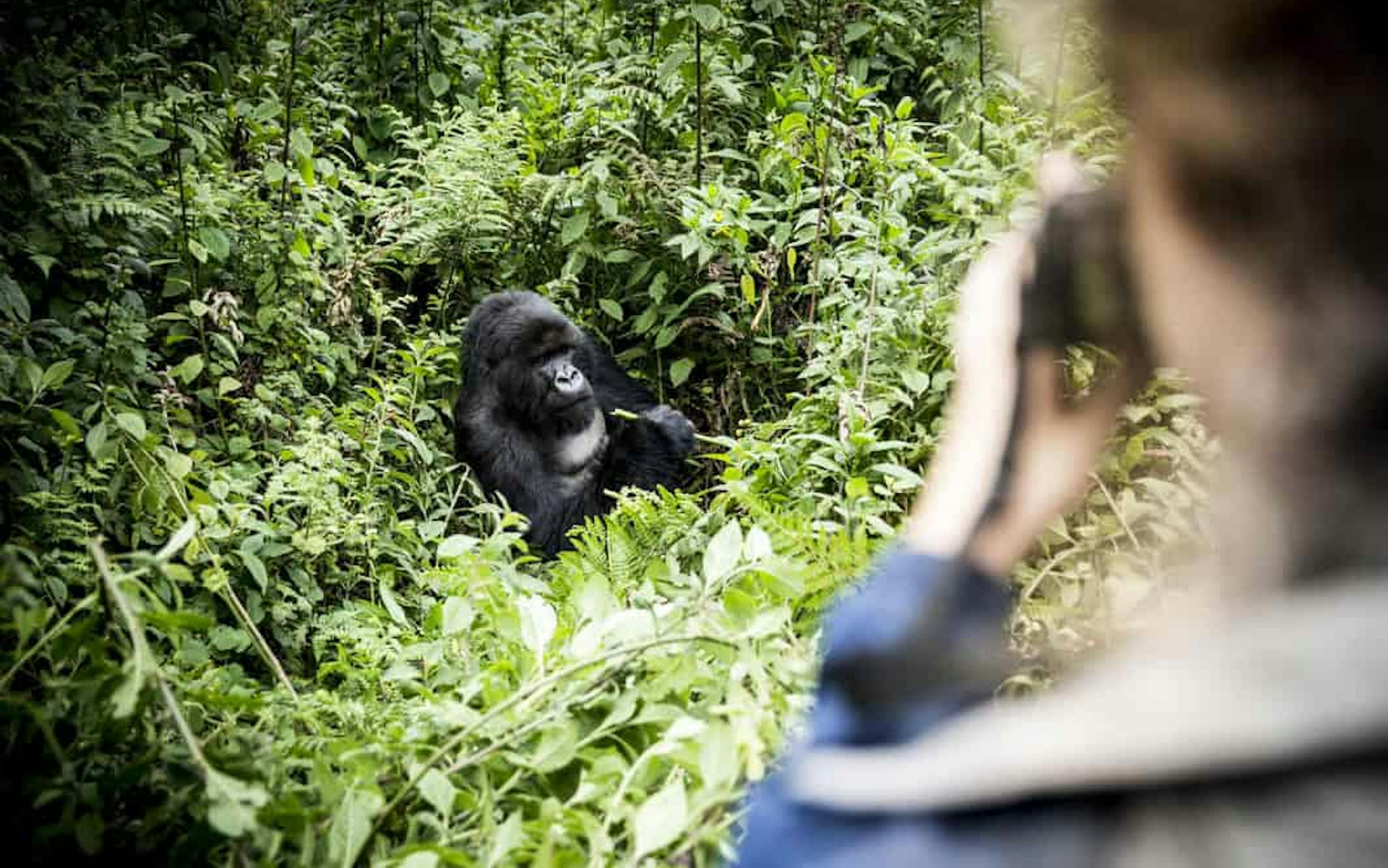
- After one to four hours, you’ll come upon the gorillas. You’ll fall silent, put on a mask, and ready your camera. Then, spend a magical hour in the company of these remarkable primates who share 98% of our DNA.
Generally speaking, Rwanda gorilla trekking is considered easier thanks to more forgiving terrain, less steep ascents, and better-defined trails.
By contrast, Bwindi has rugged topographical features that include narrow valleys intersected by rivers and steep hills. Expect more demanding walking and bushwacking in a denser forest.
Uganda Gorilla Habituation Experience
On this excursion, a maximum of four participants join guides, trackers, and researchers to spend time with a family of gorillas that is in the process of acquainting with human presence. The experience is longer, closer to four hours, and costs $1,500. However, habituation should not simply be viewed as an extended version of a gorilla trek. Unlike traditional treks where members are more likely to lounge in place, unhabituated gorillas are more likely to shy. To keep in gentle pursuit as they move around the dense Impenetrable Forest, participants should have a good level of fitness.
Scenery and natural environment
Gorilla trekking in Rwanda and Uganda unfurls in dramatic, scenic settings.
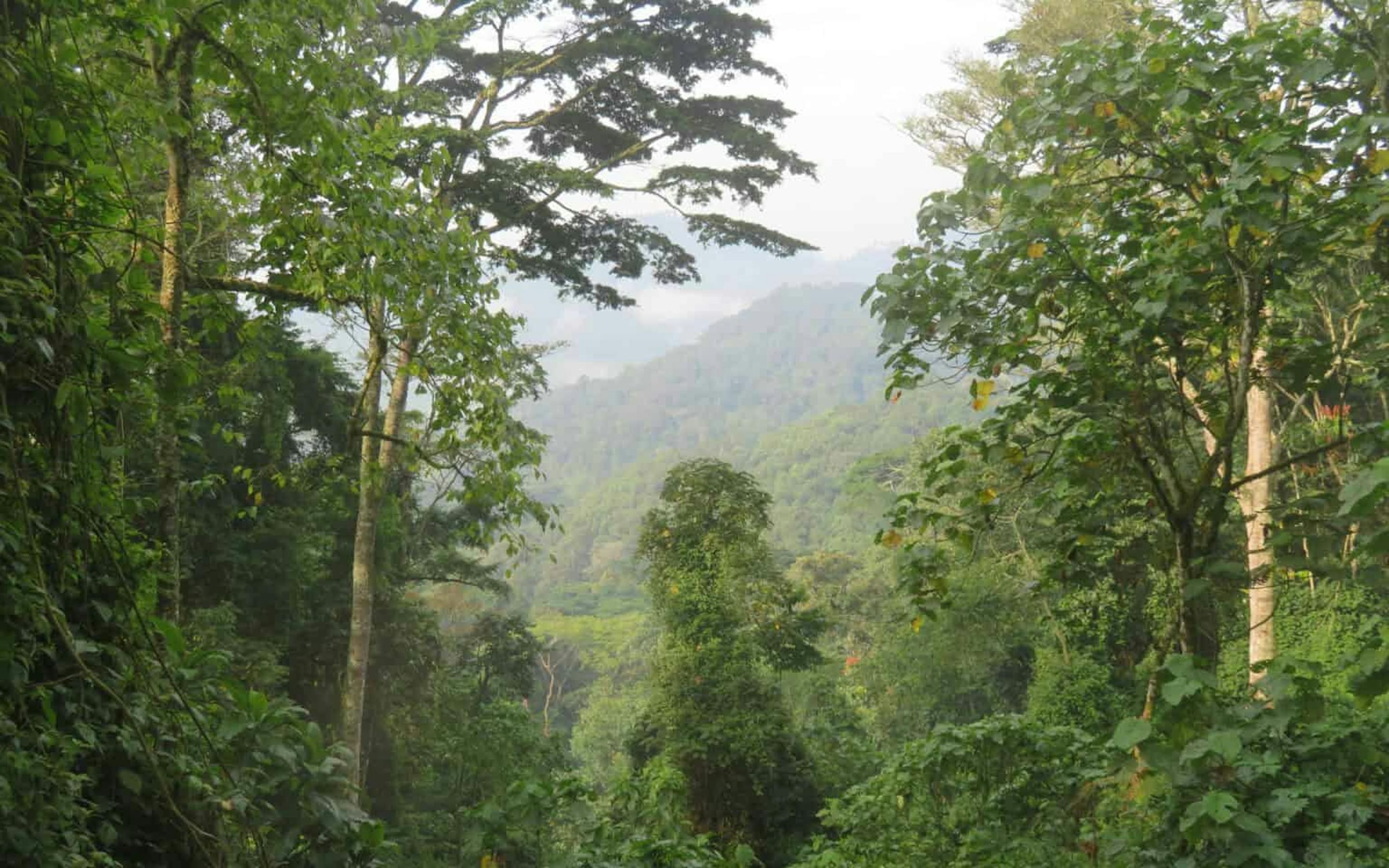
In Volcanoes National Park, Rwanda, trailheads are located at the edge of agricultural fields. Routes start out in the bamboo-blanketed foothills. As you ascend volcanic slopes, the trail narrows, and the foliage thickens. Thistle, nettle, and African rosewoods paint the ancient landscape in shades of emerald. At the top, your guide/rangers may need to cut a path through the bush in order to follow families on the move. Expect to duck, crawl, and squeeze through some parts, but as a trend, Rwanda gorilla trekking takes place in a more open setting than Bwindi. The scenery in Mgahinga Gorilla National Park, Uganda, will be similar to Volcanoes National Park, given that both parks neighbor one another and are situated on the Virunga Massif.
By contrast, Bwindi Impenetrable National Park offers an entirely different natural environment. As the name suggests, the forest here is a thick knit of dense trees and undergrowth. it's also more shut-in; tall trees form a clasped canopy for a more enclosed feeling. Absent a road network, the park is only explored on foot, truly evoking a tropical Eden.
Accessibility and travel logistics
When it comes to ease of access, Rwanda gorilla trekking in Volcanoes National Park is the most accessible. Reach the park via a 2.5 to three-hour drive from the capital of Kigali on a well-maintained road. If you are willing to drive a little longer (about four hours), you can gorilla trek in Mgahinga (Uganda) which saves on the cost of trekking permits.
By comparison, Uganda is a much larger country; about nine times bigger than Rwanda. Bwindi Impenetrable National Park and Mgahinga Gorilla National Park are accessible by road, but each is an eight to 10-hour drive from the international airport in Entebbe. We recommend breaking up the drive with a safari in Murchison Falls or Queen Elizabeth National Park (QENP), which commits you to at least a week in Uganda.
However, plenty of travelers gorilla trek in Bwindi as a standalone add-on to a broader Africa safari. Shorten the journey by taking a small, fixed wing plane from Entebbe to a local airstrip, followed by a road transfer.
Accommodation and travel style
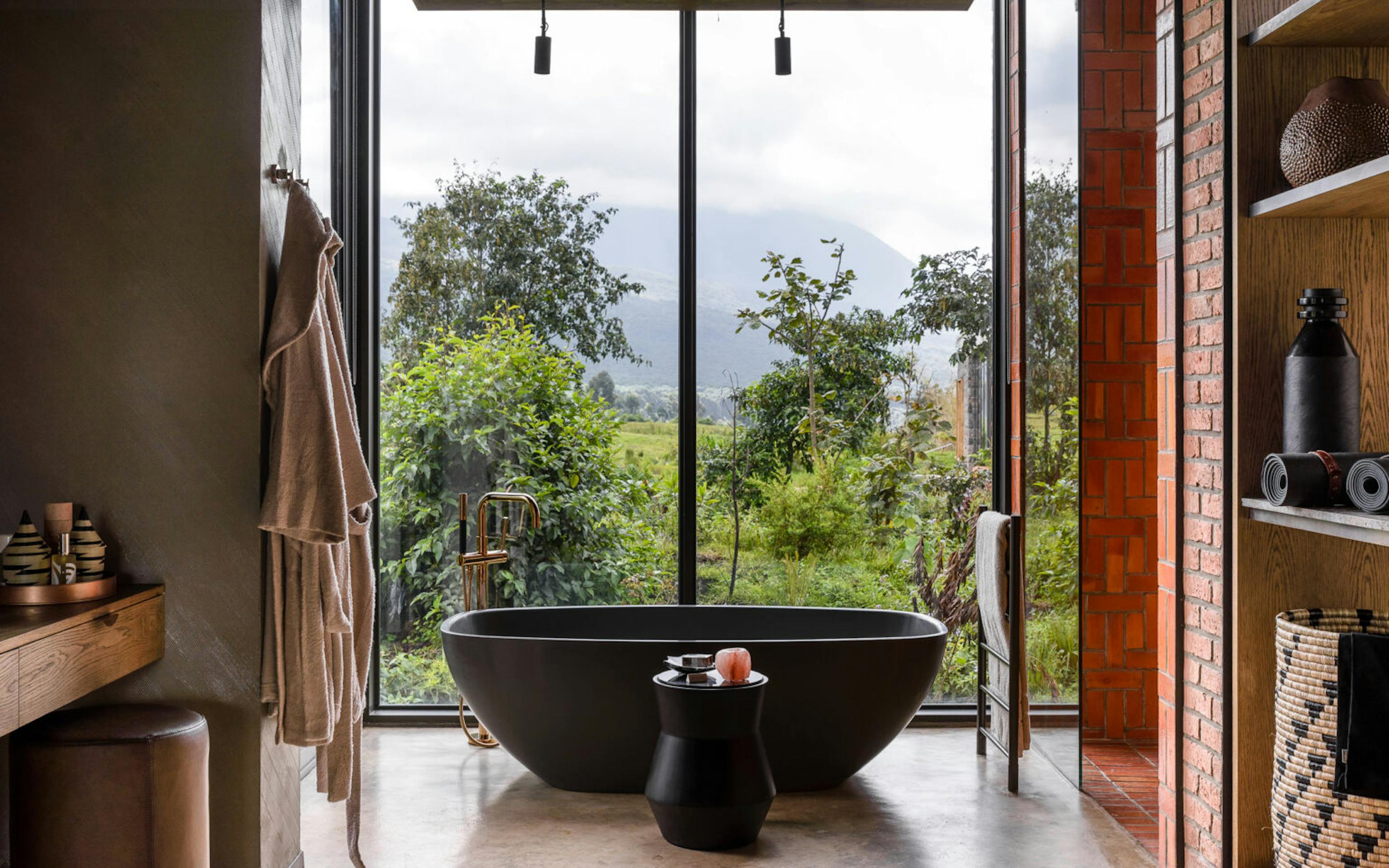
Rwanda’s government favors a high-value, low-volume tourism strategy over mass market travel. As such, Rwanda safari accommodations skew four and five-star. Prestige properties include Wilderness Bisate, Wilderness Bisate Reserve, One&Only Gorilla’s Nest, and Singita Kwitonda. Travelers move between destinations with a private driver and vehicle or via a helicopter transfer. In terms of travel style, Rwanda has a polished look and feel.
Uganda, by contrast, offers travelers a much better range of mid-range luxury options. Navigate the country by private vehicle or on fixed-wing light aircraft. Uganda has a travel style that is approachable and charming with a very friendly service culture.
Conservation and responsible tourism
Gorilla trekking in both Rwanda and Uganda are examples of responsible tourism. The process is highly regulated by federal wildlife authorities, and gorilla populations in protected parks where they live are slowly growing.
Much of the gorilla trekking permit cost cycles back to primate conservation. The industry generates sustainable employment for guides, trackers, porters, lodge staff, drivers, and countless others who serve travelers, from retailers to restaurants. A steady demand for gorilla tracking also dissuades illegal wildlife poaching and habitat encroachment. What’s more, every person who visits the gorillas is inspired to protect them, further expanding a global community of primate conservationists.
Travelers with a special interest in conservation might visit The Ellen DeGeneres Campus of the Dian Fossey Gorilla Fund near Volcanoes National Park, Rwanda. The world-class research and education center opened in 2022 and is open to the public. Upgrade your visit with an expert-hosted behind-the-scenes VIP tour.
Additional experiences beyond gorilla trekking
There’s more to Uganda and Rwanda than gorillas, and it's easy to fill a week-long itinerary (or more) in both countries.
Things to do in Rwanda:
- City Touring in Kigali: The Rwandan capital delights with its hilly vistas, trendy dining, galleries, tailors, and artisan boutiques. Kigali is modern, well organized, secure, and tidy in a way that pleasantly surprises many travelers. Be sure to visit the Genocide Memorialfor a sobering understanding of the conflict that will give context to your trip
- Golden Monkey Treks: Track golden monkeys in Volcanoes National Park, departing from the same headquarters as gorilla trekking. The permit cost is $100.
- Chimps & Trails in Nyungwe Forest National Park: Visit this ancient forest for memorable chimpanzee trekking, black-and-white colobus trekking, forest bathing, and serene, estate tea plantations.
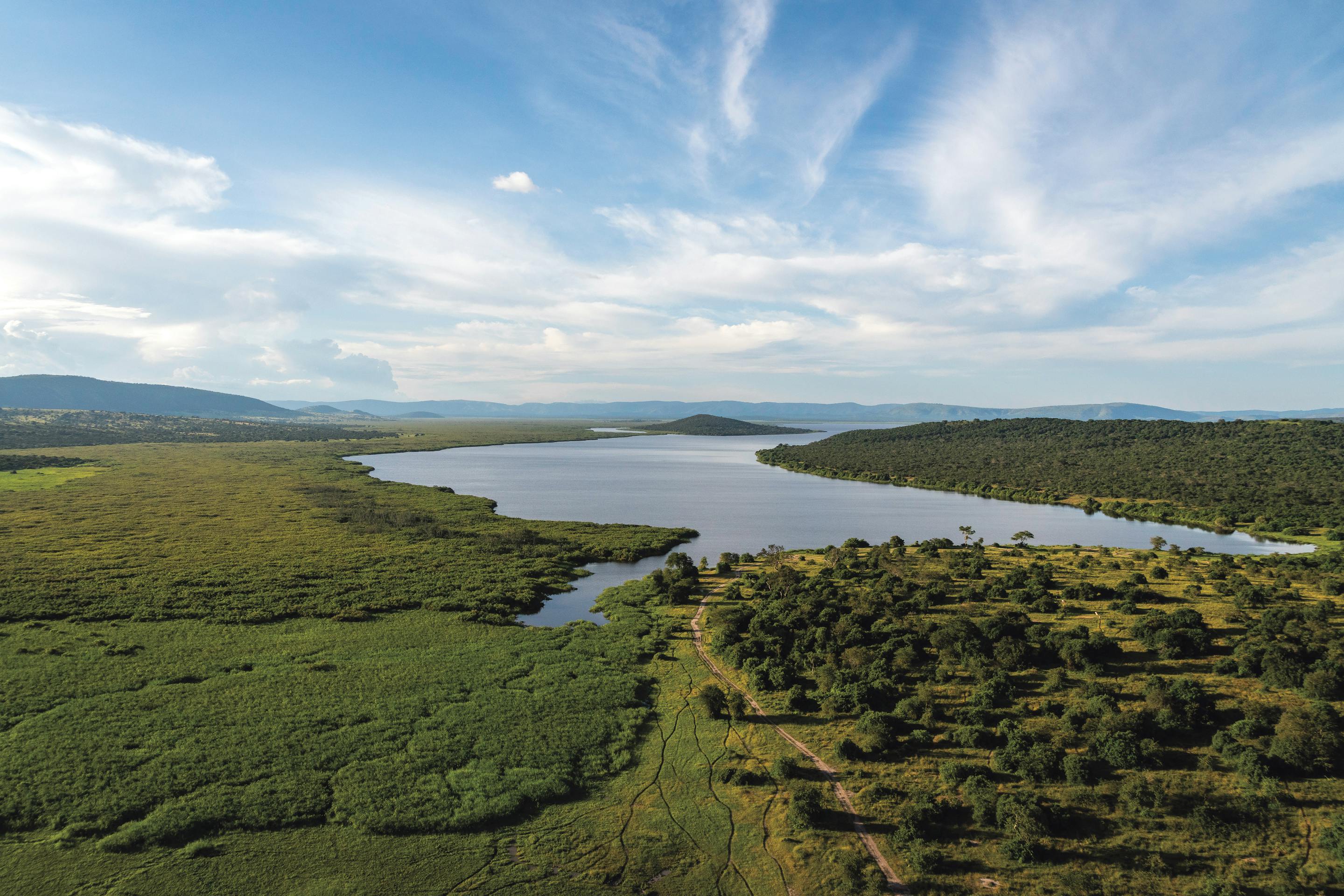
- Safari in Akagera National Park: A conservation comeback story, an Akagera safari is the only place to experience Big Five game drives in Rwanda.
- Lake Kivu: Experience an entirely different side of Rwanda, relaxing, boating or kayaking along the shimmering shores of Lake Kivu.
- Hiking: Active travelers wanting a challenging hike might tackle Mount Bisoke’s crater lake or set out along the Cyinzobe Trail for a three-day, cabin-to-cabin adventure in Nyungwe Forest National Park.
Things to do in Uganda
- Classic Safaris: Uganda’s wildlife takes sanctuary in diverse landscapes that shift between mountains and open plains with waterways aplenty. Experience four of the big five (no rhino) on safaris in Queen Elizabeth and Murchison Falls National Parks. Intrepid travelers might travel to Uganda’s far north to experience Kidepo National Park, a lesser-visited safari gem.
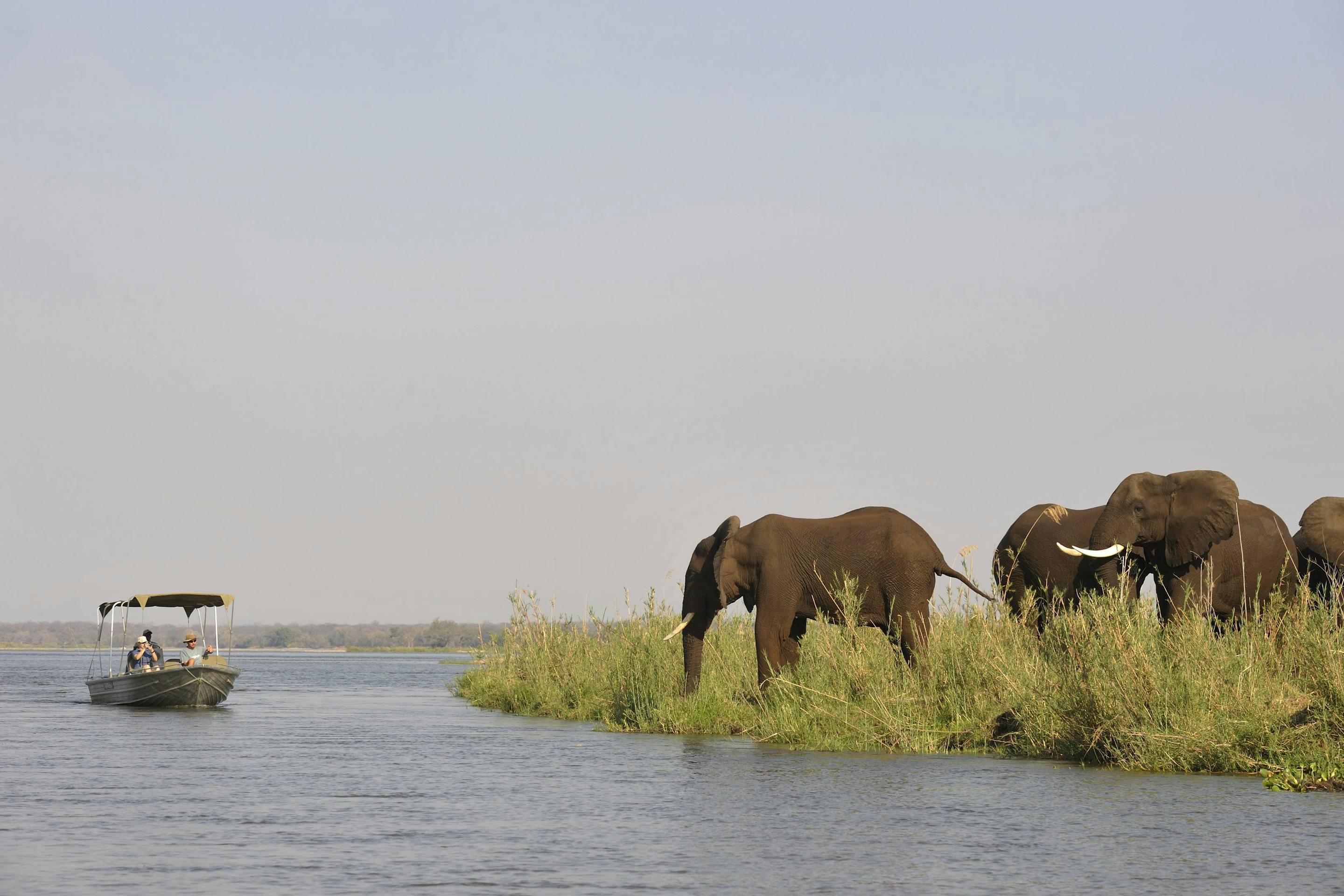
- Boat Safari: Bring safari to the water on the Kazinga Channel, QENP. Cruise for an hour or a day, viewing elephants drinking from the banks or bloats of hippo keeping cool.
- Adrenaline and Outdoor Thrills: Located on Lake Victoria, the town of Jinja is Uganda’s adventure capital. Bungee jump over the source of the Nile, go whitewater river rafting, and cast a line for some sport fishing.
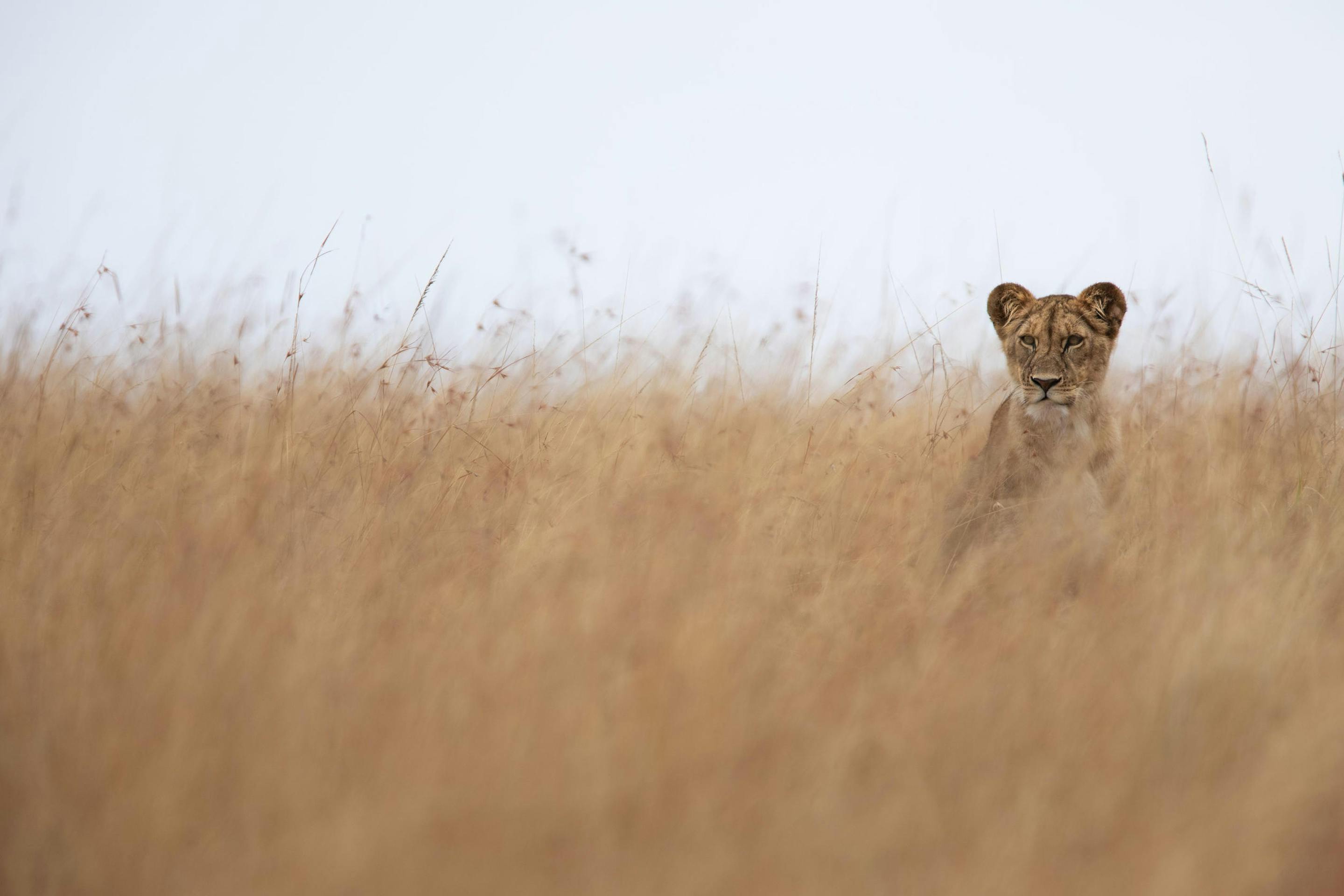
- Carnivore Conservation: Take a game drive with a researcher from the Uganda Carnivore Program in QENP to track lions, hyenas, and leopards.
- Chimpanzee Trekking & Habituation: Set out on foot in search of chimpanzees in Kyambura Gorge (QENP) or Kibale Forest National Park (a higher probability of success). Kibale also has a chimpanzee habituation experience.
- Hiking: The Rwenzori Mountains offer rewarding views on challenging hikes while Kyambura Gorge (QENP) boasts splendid trails for guided nature walks.
- Culture & Community: Spend time with indigenous Batwa near Bwindi, visit fairtrade coffee cooperatives, and women’s cooperatives.
Which country is right for you?
Gorilla trekking in Rwanda and Uganda is so similar in process and outcome that you’re not likely to make a destination determination based on experience alone. (Encounters are practically guaranteed in both countries.) Most likely, it comes down to budget. Secondary considerations include your broader trip goals and whether you intend to combine gorilla trekking with a safari in another country.
Budget
Uganda safari tours are less costly than Rwanda, both in terms of gorilla trekking permits and overall trip cost. Consider some comparisons:
Unforgettable Kenya and Uganda Tour | 16 days | Starts at $30,000 pp
Rwanda and Tanzania Safari | 15 days | Starts at $32,000 pp
Gorilla Trekking & Safari Combinations
it's possible to do Bwindi (Uganda) or Volcanoes (Rwanda) as a standalone add-on, combining gorilla trekking with a classic safari in Tanzania or Kenya.
Uganda pairs especially well with a Kenya safari, courtesy of a direct, daily flight between Nairobi and Entebbe.
A practical reminder: it's reasonable to drive from Kigali to Volcanoes National Park (about three hours), but Entebbe to Bwindi is not (eight to 10 hours). For the latter, you will require internal flights and an extra night in Bwindi. This is all just to say, a four-night/five-night gorilla extension in Uganda will spend more time on the move than it will in Rwanda.
Specific Reasons
- If you want to experience gorilla or chimpanzee habituation, Uganda is your only choice.
- Travelers who want polished, five-star luxury should choose Rwanda. If you want soulful, buttoned-down gorilla lodges with personality, Uganda is the better choice.
- For more diverse activities (river rafting, horseback safari, boat safari, biking, non-primate hiking, an Equator visit), choose Uganda.
February 9, 2026
Explore our itineraries
Every trip with Extraordinary Journeys is tailor-made, crafted in collaboration with one of our destination specialists. Use these as a starting point, or as inspiration to create your own journey.