How much does a Botswana safari cost?
Planning a safari trip to Botswana? Check out these average cost estimates based on trip length, activities, accommodation, and travel.
April 3, 2026
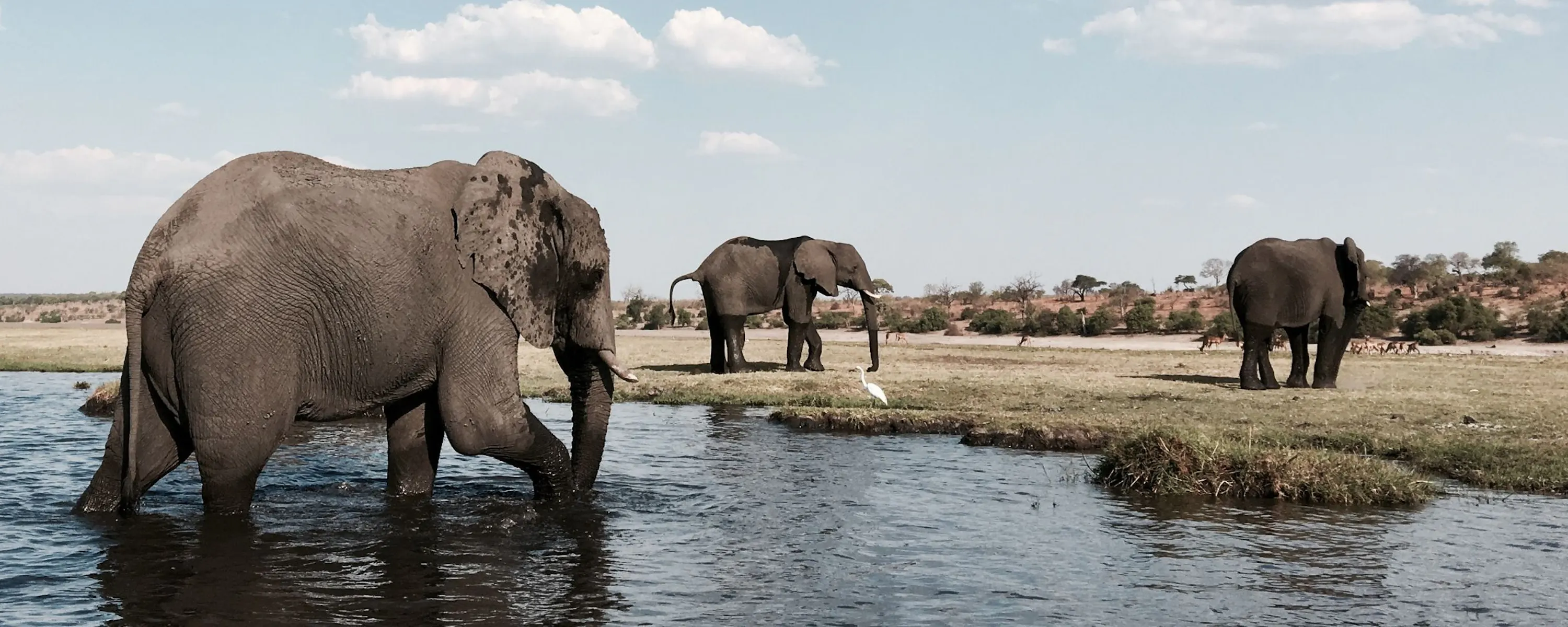
Snug in southern Africa, Botswana is not the most famous, nor the most frequented safari destination. And yet, when comparing Botswana safari prices to those of neighboring countries or East Africa, travelers might experience sticker shock: during peak season, upscale camps in the landlocked country command the highest rates in all of Africa. In this article, we’ll tease apart a handful of influential factors to answer the question, “How much does a Botswana safari cost?”
The average cost of a Botswana safari
A ten-day, nine-night luxury safari in Botswana that visits both the Okavango Delta and the Kalahari might cost $17,000 to $22,000 in peak season per person, sharing. During secret season in Africa (green season), we’ve seen camps offer exceptional pricing or extend value-adds like long-stay discounts, complimentary upgrades and exclusivities, or free air transfers for guests staying at multiple properties owned by the same brand collection.
At the top of the market, the most upscale and exclusive properties can easily double or triple the aforementioned budget. The peak season rack rate for the iconic Jack’s Camp in the Makgadikgadi Salt Pans exceeds $3,000 per night per person, while top-rated Mombo Camp (Okavango Delta) stretches to ~$4,500 pp, pn. Add hot air balloon excursions and helicopter transfers or sightseeing…and the sky becomes the literal and figurative limit.
Budget options in Botswana are largely limited to northeast Chobe National Park.
Ultimately, the question is less about “How much does a Botswana safari cost?” so much as, “What do you want to spend?” Extraordinary Journeys safari experts have a deep understanding of the Okavango Delta’s camps and seasonality; bring an open mind and trust us to create a bespoke itinerary to fit your budget.
What factors influence Botswana safari prices?
Seasonality
As with any destination, seasonality exerts upward and downward pressures on Botswana safari prices.
Rates universally rise during festive season (December 20 to January 5), but thanks to varied geographies and floodwaters, peak season in Botswana is nuanced.
The influence of floodwaters can not be understated, and sweeping generalizations about Botswana safari costs should be taken with a grain of salt. What we consider to be “the best camps” may wholly depend on the season or even the month.
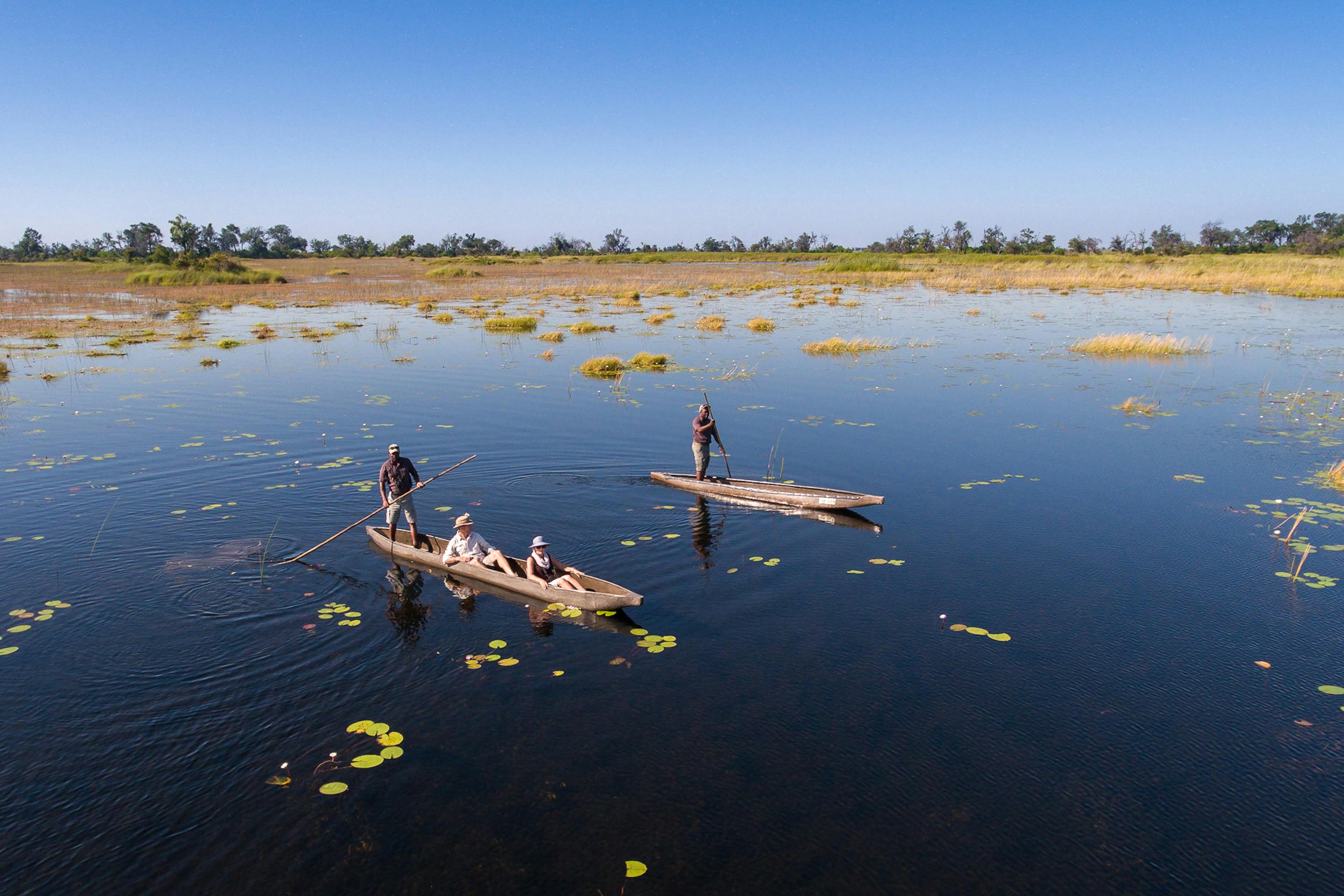
Peak season in the Okavango Delta typically runs from mid-June through to October. Not only are North American travelers arriving with their kids who are on summer vacation, but water levels are reaching their highest, isolating concentrations of wildlife on islands, making for spectacular game viewing. What’s more, it’s dry season and thin foliage means spotting animals is that much easier. October is typically the least comfortable in terms of weather, but boasts great fishing and the best wildlife viewing–if you can stand the heat. November rains cleanse the skies, ushering in green season, which lasts through March. With the exception of festive season, this is generally considered to be secret season in the Delta. The month of May can be an excellent time to sneak in before peak season rates rise in June.
Conversely, peak season in the Okavango Delta is not the best time to visit the arid Central Kalahari—our specialists recommend December through February. Wildlife viewing in the Delta in January and February can be especially scant, but it’s the perfect time to go on safari in the desert as it coincides with a lesser-known migration of zebra that numbers in the tens of thousands.
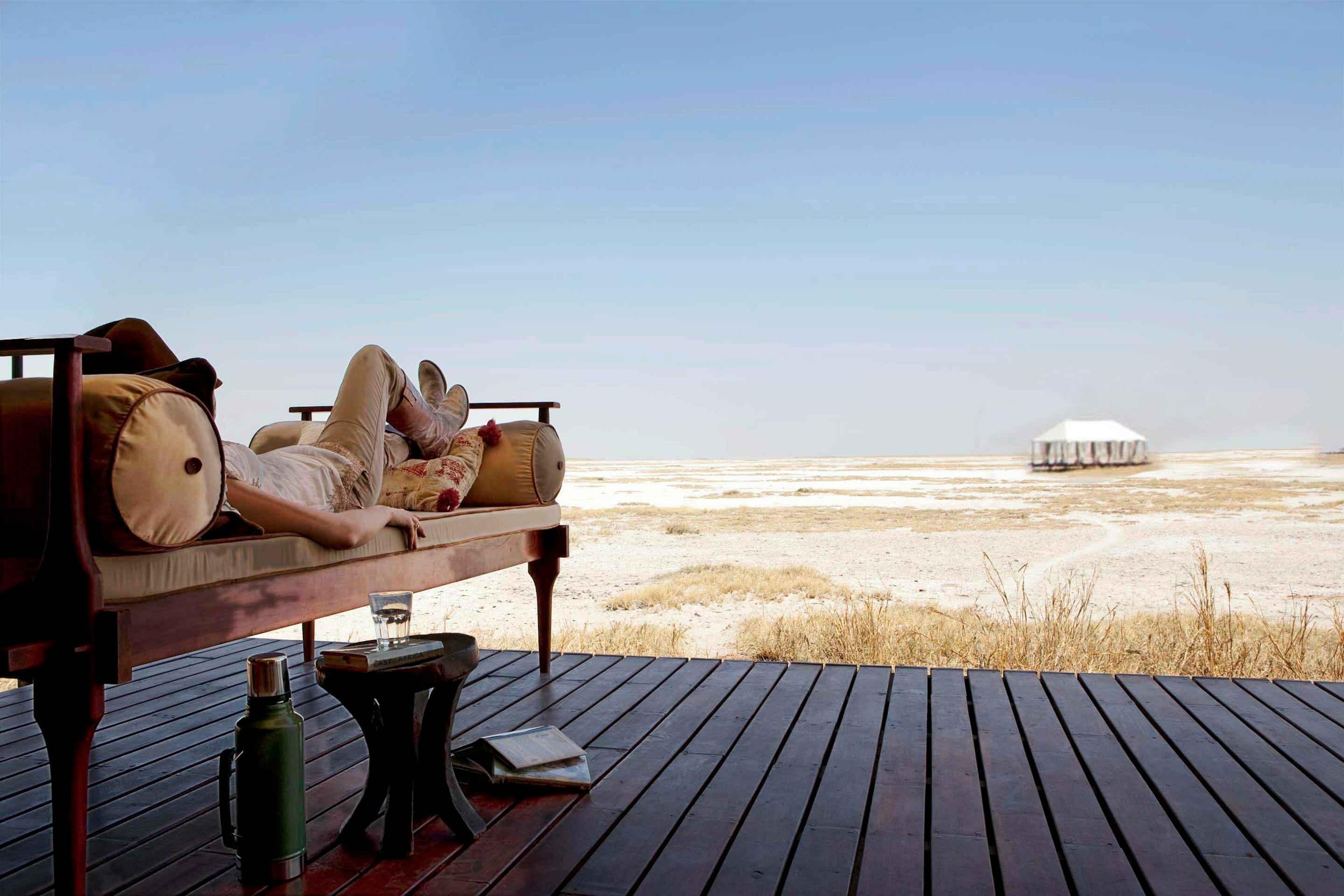
The Makgadikgadi Salt Pans can be visited year-round destination though travelers craving an eerie, lunar landscape and experiences like quad biking should go in dry season (April to October).
Trip length
As a general rule of thumb, when budgeting for a luxury Botswana safari you can use a peak season average of $1,500-$2,000 per night, per person as a starting point, multiplied across the number of active safari days on your itinerary.
Exclusivity
A lack of crowds in Botswana’s wilderness is not by happenstance. Rather, it’s a feature of a very intentional national tourism strategy. A focus on high-end, low-impact tourism places absolute priority on conservation and the welfare of wildlife. As such, there are limits to the number of guests in a given concession. Some of our favorite luxury safari camps in Botswana have as few as four suites. The result? Seclusion, privacy, and crowd-free big game viewing—and the rates needed to sustain that exclusivity.
Tip: Given Botswana’s smaller selection of lodges than say, South Africa, we recommend travelers book 12 to 18 months out, especially if their preferred dates coincide with peak season.
Safari circuits
As a trend, Extraordinary Journeys travelers spend six to 10 nights in Botswana.
Generally, two or three nights are allocated to each the Okavango Delta, Linyanti area, and/or a desert property—and ideally, include a land and water camp experience. Common extensions include a trip to Victoria Falls, a Namibia safari experience, South Africa safari, or a luxury Zimbabwe safari. Most “circuits” start and end in Maun unless travelers are coming from Victoria Falls, and in that case, Kasane is the practical jump-off point.
Without a robust network of highways in Botswana, small planes are the quickest and most practical way to transfer between camps. These brief hops (some as short as fifteen minutes!) cost a couple of hundred dollars, so frequently switching camps will increase the total Botswana safari cost.*
*In some cases, when guests stay at multiple camps owned by a single collection or brand, air transfers are complimentary.
Accommodation
Across the board, Extraordinary Journeys safari specialists recommend camps and lodges in private concessions rather than national parks. Chobe National Park is a popular destination but it can feel overcrowded thanks to self-drive safaris and daytrippers from nearby Victoria Falls.
Botswana’s high-end/low-impact offering naturally aligns with this ideal: small camps—four to 10 suites or tents—in remote locations spread across a patchwork of private reserves. Within this category, there are properties ranging from approachable luxury to ultra high-end and exclusive use. In the Okavango Delta, there are water camps, land camps, and combination camps where water levels may affect the activities on offer. An EJ specialist can help you make sense of it all.
Botswana safari cost FAQs
April 3, 2026
Explore our itineraries
Every trip with Extraordinary Journeys is tailor-made, crafted in collaboration with one of our destination specialists. Use these as a starting point, or as inspiration to create your own journey.