How much does a South African safari cost?
Learn more about how much a safari costs and the factors that determine pricing. Plus, tips for stretching your dollar.
April 3, 2026
Heart-stopping wildlife encounters, game drives through breathtaking veld scenery, and jaw-dropping safari lodges, South African safaris are the stuff of daydreams. For some, it will be a once-in-a-lifetime experience, perhaps a celebratory milestone trip or to mark an anniversary; for others, it will be the start of a new travel obsession. Regardless, one of the most commonly asked questions that travelers pose, is how much does a safari cost in South Africa?
Perform an Internet search and you’ll find a myriad of travel operators selling all sorts of safaris. From group departures to budget self-drive safaris to private luxury itineraries, you’ll also encounter a wide range of prices—why?
Allow the experts at Extraordinary Journeys to explain. In this guide, we will dissect the factors that determine how much a South African safari costs and then lend some advice for stretching your travel dollar.
How much does a safari cost in South Africa?
South Africa offers a broad range of safari experiences, from self-drive and Uber Safari (yikes) to the prestige-brand lodges of Sabi Sands—and everything in-between.
Generally speaking, $1,000 per day, per person is a good budget for a luxury South Africa safari. This figure may ebb based on several factors. Budget additionally for international flights, tips, and optional specialized activities.
Side note: When considering which country to visit, taking advantage of the weaker South African Rand means American travelers will enjoy good value, especially when compared to a Tanzania or Botswana luxury safari.

Factors influencing safari prices
1. Lodge exclusivity
Lodge exclusivity influences safari pricing in a handful of ways. Typically, properties with fewer suites on larger acreages within private reserves are more exclusive—and costly. A boutique property might have 15 or less rooms/suites, and possibly a private villa.
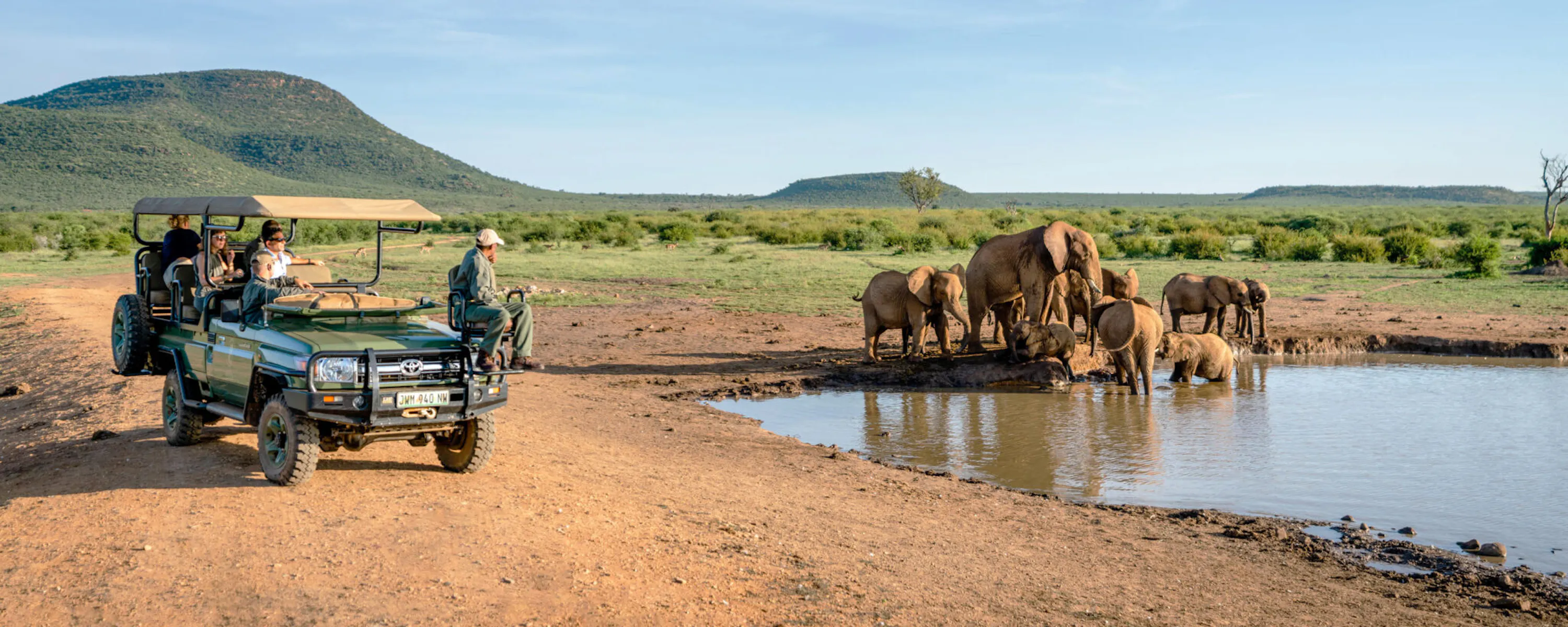
In the most exclusive South Africa safari lodges, you are paying for more private access to wilderness, wildlife viewing with less pressure from other guest vehicles, a higher staff-to-guest ratio, private Land Cruisers, comprehensive amenities (think: private plunge pools, gyms, and spas), and perhaps some brand recognition.
However, exclusivity doesn’t necessarily mean “better.” You may not need or want a designer safari lodge; perhaps you want to get a little dust under your fingernails, so to speak. We equally love rustic-luxe lodges that feel closer to nature. While still ensconced in the exclusivity of a private game reserve (perhaps even a lesser-visited gem), you might enjoy a more convivial experience—shared game drives, chatty sundowners with strangers-turned-friends, and swapping stories around the fireplace or dinner table.
Whether you’re looking for a Champagne brand safari lodge or a mid-luxury gem, an Extraordinary Journeys South Africa specialist can match your taste to your budget.
2. Transportation costs
Unlike many other African destinations, most South African safaris don’t require helicopter transfers or bush plane travel. This helps keep the overall cost of a South Africa safari down. You’ll arrive via Cape Town or Johannesberg, and then take a commercial flight to Kruger, Port Elizabeth, or Durban. You’ll be collected at the airport and then transferred by private vehicle to your lodge.
3. The time of year
Conventionally, safari prices rise in the dry season. In Kruger, peak season runs from April to November; this also aligns with summer break in the United States.
A secret season safari (“green season”/shoulder season) is a good opportunity to capitalize on a long-stay discount or complimentary upgrades. Plus, the lodges aren’t as full of guests. You might just find you have the pool or a game drive vehicle all to yourself, which feels like a major perk.
Festive season is particularly busy in Cape Town (a time when many South Africans return home for the holidays) which spikes hotel prices and properties often implement minimum night stays. On the whole, we don’t recommend a Cape Town tour between December 20 through January 5.
4. Booking window
We recommend booking a luxury South Africa safari one year in advance; if you must travel during festive season, reach out even earlier. This will give your Extraordinary Journeys destination specialist the most available options to consider. In other words, you won’t be pigeonholed into making a decision above your budget due to a lack of vacancy.
5. Number of days on active safari
When drawing up a trip budget for South Africa, consider that the days you spend on safari will likely cost more than your city breaks and travel days. For example, a day spent touring Soweto township by bike with a guide, dinner, and hotel, will cost far less than a day on safari.
6. Activities
How much or how little you plan to do on holiday will impact your trip cost. While most of your safari will be all-inclusive (accommodation, twice-daily game drives, bush walks and other activities, gourmet food and domestic beverages), there might be additional costs for optional special excursions. Examples include rhino notching, pangolin tracking, and spa treatments. In Cape Town, Johannesburg, and the Cape Winelands, you might enjoy daily, expert-guided tours with a private car and driver. How much shopping you intend to do and where you like to dine also plays a role.
What’s included in an Extraordinary Journey?
It’s not our practice to sell copy-and-pasted itineraries and simply hope that they fit “well enough.” Your trip will be custom-tailored to you, and it’s important to us that we nail it. We don’t just sell a trip and send you off. We anticipate your departure, connect you with a concierge for the duration of your trip, and we’ll lean into your feedback once you return.
Here’s what clients love about their Extraordinary Journeys:
- A bespoke trip that invites you to feel a place, rather than just see it. We don’t do “obvious,” cliches, or crowds. And if you’ll allow us, we’ll nudge you to the edge of your comfort zone which is often where surprise and delight awaits.
- On-the-ground concierge support for the duration of your journey. We can’t navigate hiccups once you’ve returned home. A concierge means we can troubleshoot in real time, giving you the best possible experience.
- Safaris in reputable, crowd-free private reserves.
- Decades-long collective knowledge held by a team of Africa destination specialists who personally visit safari properties. We intuit the best fit for you based on our lived experiences.
- We supply you with pre-departure resources, entry requirements, and inspiration. After all, anticipation is a palpable joy of travel.
- Day-touring in Cape Town, Johannesburg, and the Cape Winelands is private (no shared group tours), expert-led, and enjoyed in a private vehicle. Explore your niche interests on your schedule.
- 100% handled ground logistics—from touch-down to take-off—so you can enjoy worry-free travel. All you have to do is pack a bag and your passport.
- (Where possible) VIP fast-track through customs and immigration.
Tips for stretching your safari budget
- Come to us with an open mind and a long lead time. The more flexible you are, the more creative we can be in maximizing your travel dollars.
- Avoid the festive season: December 20 to January 5.
- Travel during the secret season.
- If you don’t need to safari in Kruger, consider some of the incredible private reserves of the Eastern Cape.
- Spend time in non-safari destinations such as dazzling Cape Town, the scenic Cape Winelands, and culture-rich Johannesburg.
South African safari cost FAQs
April 3, 2026
Explore our itineraries
Every trip with Extraordinary Journeys is tailor-made, crafted in collaboration with one of our destination specialists. Use these as a starting point, or as inspiration to create your own journey.