Malaysian Borneo or Indonesian Borneo? How to choose the right trip for you
Malaysia and Indonesia claim the lion's share of Borneo. Our expert-informed guide makes the comparison and the case for choosing one over the other.
October 29, 2026
In Indonesian Borneo, the day begins with coffee on the deck of your klotok, a traditional riverboat. It noses up the Sekonyer, a tea-colored river that snakes through dense walls of nipa palms. In Malaysian Borneo, you might start on a canopy walkway in the Danum Valley at first light, the mist lifting off the treetops and gibbon calls carrying across the valley. Both are Borneo trips worth taking. Both place you squarely in orangutan habitat. But they couldn't be more different. Tanjung Puting National Park, in Indonesia's Central Kalimantan, is experienced as a single river journey. A trip that usually lasts two or three nights on a boat that's yours alone. In Sabah, on the Malaysian side, a handful of standout conservation areas ask for 10 days (or more) and give you the island's widest range of wildlife in return. Neither is the lesser trip. Each suits different types of travelers, their circumstances, and priorities. By the end of this guide, you'll know which side is yours.
Jump to section:
Wildlife comparison
Where you stay
Getting around
Best times to go
The case for private guides
How to decide
The two Borneos at a glance
| Tanjung Puting (Indonesia) | Sabah (Malaysia) | |
|---|---|---|
Location | Southern central Kalimantan | Borneo's northern tip, east coast |
Style of trip | One river, one boat, one national park | Multi-stop route: Sepilok, Kinabatangan, Danum Valley (Tabin optional) |
Days needed | 3 days/2 nights | 10 - 12 days; 4 if only Danum Valley |
Where you sleep | A privately chartered klotok riverboat | Eco-lodges |
How you move | By boat | Vehicles, river boats, short flights |
Headline wildlife | Orangutans at feeding stations, hornbills, proboscis monkeys | Wild orangutans, pygmy elephants, gibbons, hornbills, sun bears |
Best fit for | One chapter of a wider Indonesia trip | A standalone Borneo wildlife tour |
Indonesia Borneo or Malaysian Borneo: wildlife
Orangutans: feeding platforms vs wild encounters
A lot of Borneo travel advice blurs an important distinction: wild orangutan sightings versus feeding stations. If your trip hinges on a spontaneous sighting rather than seeing a semi-habituated orangutan during a scheduled feeding, where you go – and how long for – will send you to different places.
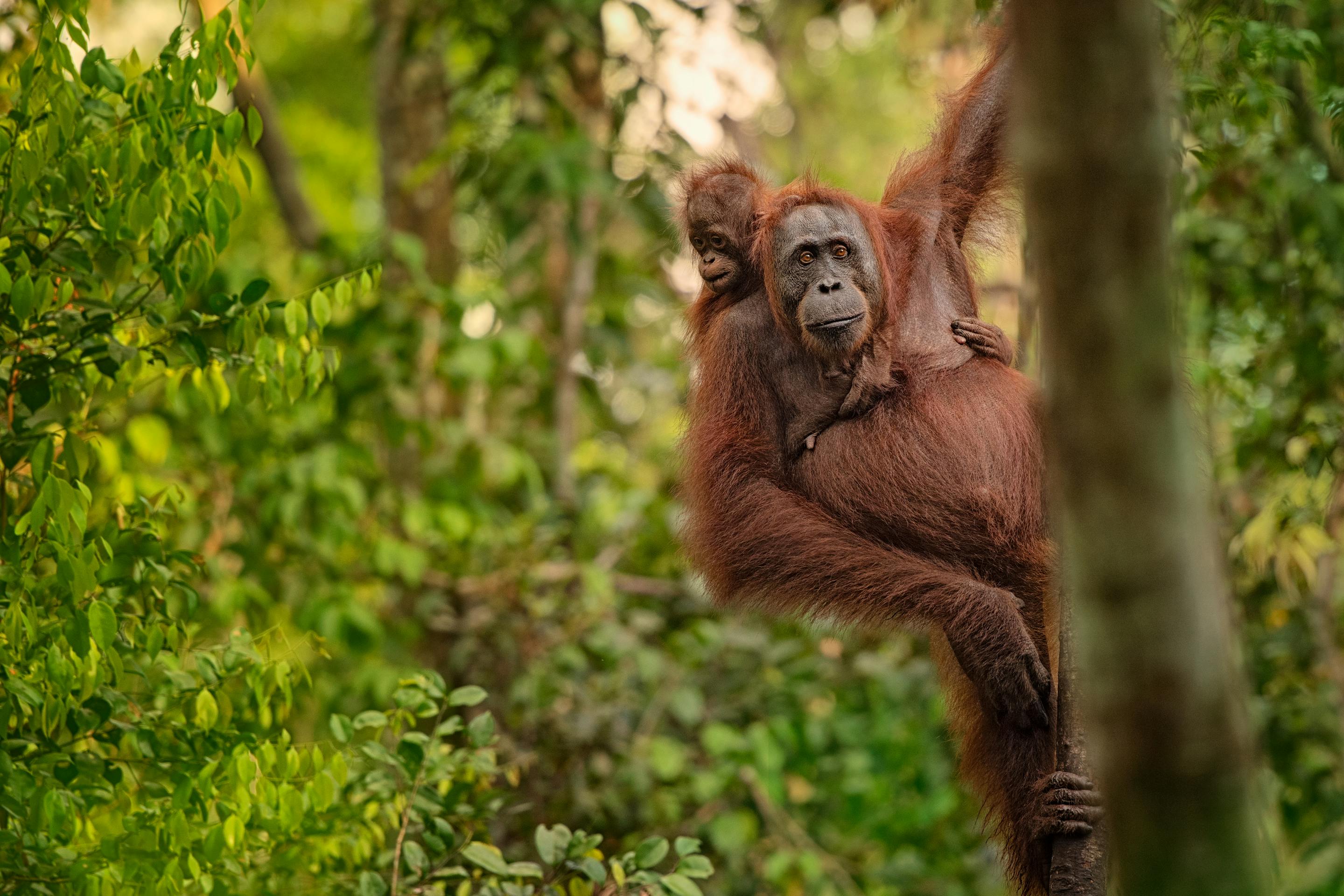
In Tanjung Puting (Indonesian Borneo), assured sightings are staged at three feeding stations: Tanjung Harapan, Pondok Tanggui, and Camp Leakey, where rangers distribute fruit at scheduled times. The orangutans who arrive are a mix of rehabilitated former captives, their wild-born descendants, and wild individuals who supplement when forest fruits thin. Sightings here are as close to guaranteed as wildlife viewing gets. You hear them before you see them: the canopy shakes, branches bend, and a mother with an infant clinging to her side climbs down a liana to the platform while the dominant male settles in nearby. Camp Leakey has the deepest history of the three. Primatologist Biruté Galdikas founded it in 1971, and it anchors the world's longest continuous field study of wild orangutans, now linked with Orangutan Foundation International. The park is home to an estimated 5,000 orangutans, so a sighting away from the platforms is possible, though never promised.
In Malaysian Borneo, Sabah offers both types of encounters. The Sepilok Orangutan Rehabilitation Centre has cared for orphaned orangutans since the 1960s, and its fixed morning and afternoon feedings give you a reliable first sighting. The more memorable encounters (might) come later. Some 30 orangutans live free near Borneo Rainforest Lodge in the Danum Valley. They're accustomed to people, but aren't fed by rangers. Along the Kinabatangan River, scan the riverbanks from the boat for nests and movement. However, another point of clarity must be raised: Sabah itineraries are usually three times longer than Kalimantan boat tours. The longer you stay in Borneo and the more habitat you pass through, the better your odds of seeing a wild orangutan.
Beyond orangutans
The Sekonyer River is a stage for Tanjung's supporting cast of characters. Proboscis monkeys gather in the riverside trees at dusk, their noses and pot bellies as comical as their reputation. Gibbons call from deeper in the forest, and macaques patrol the banks. Kingfishers flash electric blue past your klotok's bow. The slender-snouted false gharial, a rarely seen crocodile, keeps to the quieter stretches. After dark, fireflies might flicker in the trees.
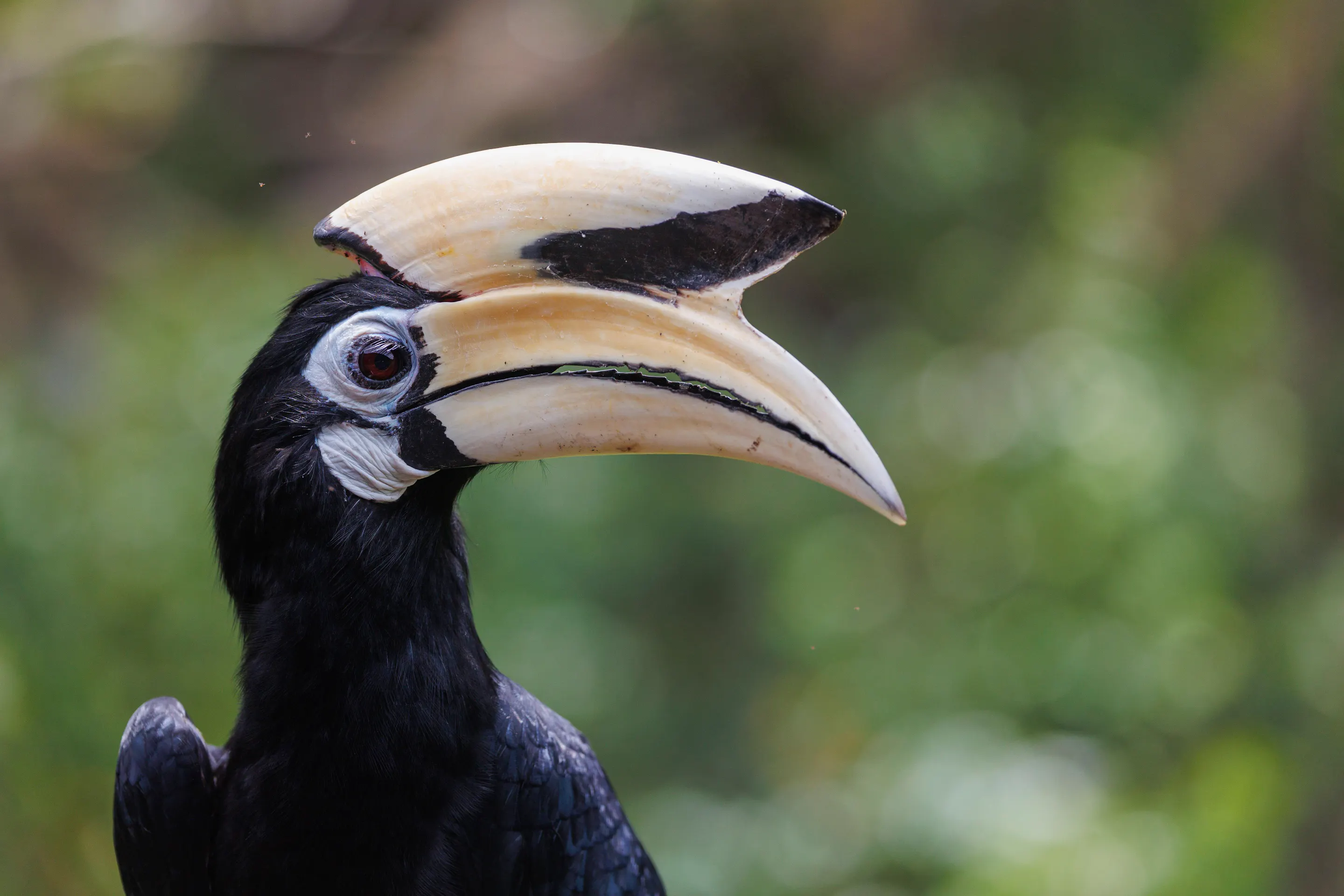
Sabah's list is simply longer. The Kinabatangan River is the stronghold of the Bornean pygmy elephant. The herd moves up and down the river on its own schedule, so elephants are your trip's wild card. Sabah is home to eight hornbill species, including the rhinoceros hornbill. At the Bornean Sun Bear Conservation Centre, founder Dr. Wong introduces you to the world's smallest bear. Tabin Wildlife Reserve is home to Borneo's only habituated gibbons. Night walks in the Danum Valley can turn up civets, slow loris, and western tarsiers. By day, watch for the great argus, a pheasant-like ground bird with extraordinary wing feathers.
Related reading: Wildlife of Malaysian Borneo: What to see and when to go


Where you stay: what luxury looks like on each side of Borneo
Indonesian Borneo: your own klotok
We won't editorialize here: there are no luxury lodges inside Tanjung Puting National Park. A liveaboard is the "upgraded" experience — not a yacht, but a traditional wooden riverboat called a klotok. They're small vessels (two or three compact cabins with one often holding the luggage), furnishings are thin, and washrooms are spartan.
To offer the level of experience Extraordinary Journeys is known for, we privately charter a klotok for each booking. "Luxury" in this sense is exclusivity. Your own captain, cook, crew, and guide. With the boat to yourselves, the deck becomes your living room, dining table, and wildlife hide all at once. Al fresco meals are served facing the river. The boat moves upriver between feeding stations, then moors along the bank for the night. Once the engine cuts out, them pitch black forest's night sounds take over. There are no requisite leech socks or long hikes, because excursions are limited to the brief, well-defined trails that lead to the feeding stations. The fleet of klotoks we've vetted and trust is very small, so we recommend booking well ahead of the season you want.
Sabah: land-based lodges
Sabah's accommodations are true jungle eco-lodges: rustic, with terraces open to the rainforest, and serving genuinely good food. In place of five-star gloss, you have the privilege of sleeping inside a fragile habitat where wildlife visitors outnumber paying guests. Anticipate handsome timber bungalows made comfortable with air conditioning or fan cooling systems.
Where excursions in Tanjung Puting are restrictive, days in Malaysian Borneo follow a steady rhythm: an early outing as the forest wakes, a midday pause at the lodge, a late-afternoon excursion, and a spotlit walk or cruise after dinner to search out nocturnal life.
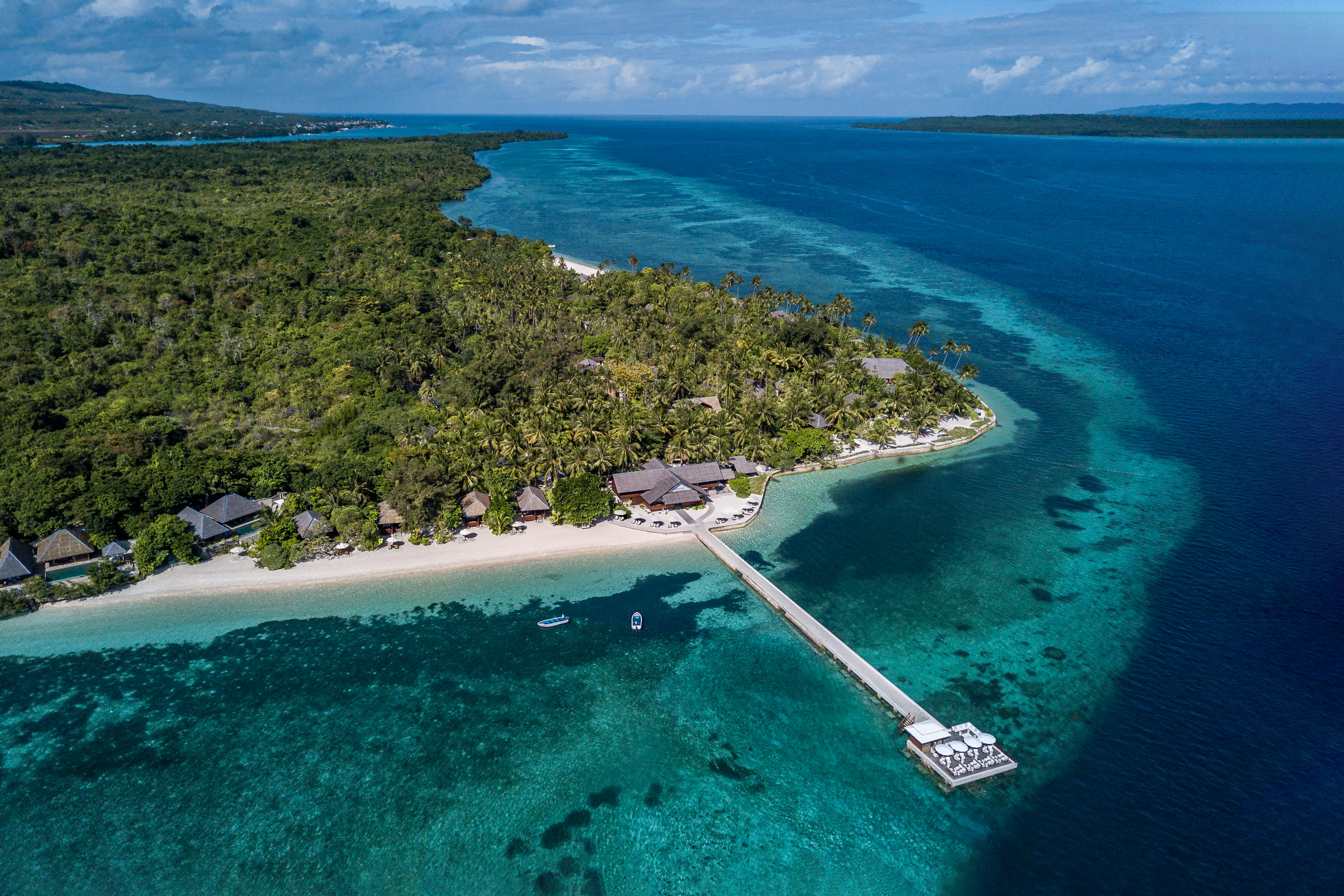
Each stop changes the setting. Sepilok is the gentle, land-based opening act, with conservation centers and forest trails. In the Kinabatangan wetlands, the river takes over, and nearly every outing is boat-based. If you can give over four days, we split the visit between two lodges to improve the chances of glimpsing pygmy elephants. The Danum Valley is the closing chapter; the forest that every Malaysian Borneo itinerary builds toward: biodiverse lowland dipterocarp rainforest that was already ancient when dinosaurs walked the Earth. The signature lodge is Borneo Rainforest Lodge. Its spacious villas replete with a private dipping pool overlooking the river are a fitting finale.
Getting to Borneo, and how to get around
Tanjung Puting is the simpler trip – once you arrive. From Jakarta, a domestic flight carries you to Pangkalan Bun in Central Kalimantan. From there, a short vehicle transfer brings you to the dock at Kumai where your klotok is moored. After that, the river is the only way in or out, and you won't re-pack your bag again until you disembark. Indonesian Borneo can be experienced as a relatively short commitment. Most commonly, three days/two nights.
Sabah has more moving parts stitched together, but the infrastructure is well established. Most travelers fly long-haul to Kuala Lumpur or Singapore, then arrive at Sandakan Airport, and transfer 10 miles to Sepilok. After Sepilok, a private boat carries you to Kinabatangan. Road transfers then run south through Lahad Datu, the gateway town for Tabin and the Danum Valley. Transferring between regions in Sabah rarely takes longer than four hours, so an early breakfast usually means arriving at the next lodge by lunch. Departing by air from Lahad Datu or Tawau, saves the long drive back. When you travel Malaysian Borneo with Extraordinary Journeys, all your logistics are handled, and road transfers are all private in upgraded models. A private Borneo itinerary that calls on all three conservation areas takes about nine nights/10 days—longer if you like. If you only have four nights for Malaysian Borneo, we'd spend them all in the Danum Valley.
When to go to Borneo
Tanjung Puting has a clear season
We recommend traveling Indonesia between March and November, but the drier months from May to September are the most predictable. The sky is sunnier, the water is calmer, and river travel is smoother. This is also peak season, so expect more boats and earlier starts to claim a good spot at the feeding stations. During the wetter months, trails turn slippery and wildlife moves away from the river so we don’t recommend it.
Sabah has a longer season
March, April, July, August and September are the busiest months, driven more by school holidays (British, then American) than by optimal wildlife viewing conditions. May, June and October are pleasant shoulder months. December to February brings rain and we don't recommend it. Our best advice? Whenever you go, book early. Some reserves only have one lodge, and reserving 12 months in advance is common, though 24 months is not unheard of.
Indonesia versus Malaysian Borneo: cost
A private, 11-day Sabah circuit through Sepilok, the Kinabatangan and the Danum Valley, starts around $13,500 per person, sharing. The price rises with trip duration, the addition of Tabin Wildlife Preserve or a beach finale, and availability.
A private klotok journey in Tanjung Puting starts from around $3,500 per person for three days/two nights. The total is lower mainly because the trip is shorter. The day rate reflects what exclusivity costs: a full boat and crew for your party alone.


What going "private" meaningfully changes in Borneo
In Borneo, "private" is not a marketing label. It changes the entire experience.
An exclusive-use klotok runs on your schedule, not a group's. Your guide understands feeding times less as the moment food is dispensed, and more as the best time to stake out the optimal position before the branches start to move. A flexible schedule also lets you reach Camp Leakey early, ahead of the other boats, and you’re welcome to linger as long as your attention holds because no one is rushing you out before you’re ready to leave.
On the Kinabatangan River, we know which lodges allow private charter boat safaris, and on which dates. It's the type of detail a DIY trip planner doesn't casually turn up on a web search. But for our travelers, it means the river runs on your schedule rather than a group timetable. It's the difference between absorbing an unhurried hour with a herd of pygmy elephants and being pressed to move on by those who have already snapped their photo.
On every Extraordinary Journey to Sabah, a private specialist guide joins you for the entire trip. The jungle speaks to them in a language you're still beginning to understand. They interpret subtle forest clues, use a well-trained eye to spot what's easily missed, and lean on encyclopedic plant knowledge. Their rapport with lodge-based guides gives them the inside report of what's been spotted as of late, and what's eluding them. By the time you reach Danum, your specialist guide has shared all your sightings, and (crucially) knows what still remains on the list.
Our Verdict: is Indonesian Borneo or Malaysian Borneo right for you?
- Choose Tanjung Puting if you want orangutans as close to guaranteed as wildlife allows, in a trip that takes only a few days. It's also well suited to older travellers and anyone with limited mobility, because days are spent on the deck ("armchair safaris") and walking along short, flat trails. If leeches are non-negotiable, this is the better Borneo option for you.
- Choose Sabah if wildlife is the whole point, especially Borneo's Big Five. Malaysian Borneo gives you the widest range of species, a chance at spotting wild orangutans and pygmy elephants, and is substantial enough a destination to stand as it's own trip. Sabah's land-based eco-lodges suit families with older children and travelers who want more comforts than a boat can afford them. It's a great fit for wildlife enthusiasts who have already experienced an African safari, the Amazon, Galapagos, or Pantanal, and want something new but equally wild.
- Can you do both sides of Borneo? We'll be honest: they don't combine well. Despite sharing an island, traveling between Indonesian Borneo and Malaysian Borneo means routing back through a major city (Kuala Lumpur, Singapore, or Jakarta), costing an entire day(s) of travel. Our advice is to commit to the side that fits your priorities.
Plan your luxury Borneo trip
Whether it's a few quiet nights on the Sekonyer or ten days building to the Danum Valley, the right side of Borneo depends on how you like to travel. Talk it through with one of our Borneo specialists, and we'll shape the journey around you.
October 29, 2026
Explore our private Borneo itineraries
Every trip with Extraordinary Journeys is tailor-made, crafted in collaboration with one of our destination specialists. Use these as a starting point, or as inspiration to create your own journey.