Chilean vs. Argentine Patagonia: Which side should you visit?
When time is finite or travelers have specific interests, visiting one side of Patagonia is the practical choice.

October 28, 2026
If you only give the map a passing glance, Patagonia travel looks manageable: a narrow tail at the bottom of South America. In reality, it covers roughly 400,000 square miles of remote and rugged terrain. Mountains and ice fields stretch roads into long detours, and the region’s best-known landmarks sit on opposite sides of an international border.
In our early conversations with travelers planning a luxury Patagonia tour, many hope to fit the icons they’ve heard about into a single trip: the towers of Torres del Paine in Chile and Mount Fitz Roy and Perito Moreno Glacier in Argentina. On the map, these landmarks appear close enough to visit back-to-back. In practice, Patagonia’s tempest winds make road transfers the most reliable way to travel, and crossing from one country to the other takes most of a day.
Combining both sides of Patagonia is possible, and it’s the trip we love to plan, but it asks for time that not every traveler can give: 16 days at minimum, and ideally three weeks. With less time, our experts would rather you explore one side in depth than spend long days in transit. This guide will help you turn a region larger than Texas into a journey that fits the time you have, beginning with the question we ask every traveler: which side of Patagonia is right for you?
Note: This guide is a broad overview, not an exhaustive rundown. It focuses on the places we recommend for a first or second trip to Patagonia.
Jump to section:
Which side of Patagonia should I travel to?
How to decide: two questions we ask
What is Argentine Patagonia known for?
What is Chilean Patagonia known for?
Combining both sides of Patagonia
Best side for wildlife
Best time to visit Patagonia
Patagonia travel FAQs


How to decide: two questions we ask
The best Patagonia trips begin with a question about you, not the map. Every journey we plan starts with a conversation, and two questions shape it more than any others: what you want to do in Patagonia, and where else you’re traveling in South America. Your answers usually make the choice of which side clear, and they guide everything that follows, from your lodges and guides to the best season to go.
1. What do you want to do in Patagonia?
Chilean and Argentine Patagonia both draw active travelers with dramatic landscapes, land’s-end frontier culture and remarkable wildlife. Still, depending on how you picture your days, one side may suit you better than the other.
- Do you want to spend most of your days hiking? Would you rather return to a lodge each evening, or carry on as a multi-day trek?
- Have you always wanted to walk on a glacier?
- Are you set on tracking pumas through the grasslands around Torres del Paine?
- Would you love to ride horses with gauchos across the steppe and stay on a family-run estancia, where sheep farming has shaped life for generations?
- Is there a turquoise mountain river where you’ve dreamed of fly fishing for sea-run trout?
- Do you picture a design-forward lodge framed by floor-to-ceiling glass? Or tented luxury glamping in an Andean forest?
- Would you rather road trip the Carretera Austral or cruise the fjords of Chile’s southern coast?
- Are you celebrating something with the people you love most?
Most of our travelers want a little of everything, and helping you weigh the trade-offs is what our specialists do best. Once we understand what makes your pulse race, every choice that follows becomes clear. That’s the conversation our specialists look forward to most. A call takes the guesswork off your plate and lets us start building a journey that could only be yours.
2. Where else are you planning to go?
If Patagonia is one chapter of a broader South America private tour, the rest of your itinerary often makes the choice for you. Travelers bound for Mendoza’s high-altitude vineyards tend to pair them with Argentine Patagonia, while those stargazing in Chile’s Atacama Desert can fly south through Santiago to Torres del Paine. Crossing between countries is always possible, but when time is short, staying within one usually means less time in airports and more time where you want to be.Staying within one country isn’t a rule, but when time is short, it’s usually the simplest choice.
What is Argentine Patagonia known for?
Peaks, glaciers, ice fields, estancias & “The End of the World”
Glaciers are one of the biggest draws in Argentine Patagonia, so much so that the region’s premier park, Los Glaciares National Park, is named for them. Standing before one of these ancient rivers of ice is among the best things to do in Argentina, and a moment most travelers carry home with them.
The park holds 47 major glaciers, but none is more famous than Perito Moreno, a 19-mile-long, three-mile-wide giant flowing from the Southern Patagonian Ice Field into the turquoise waters of Lago Argentino. Walkways face its towering front wall, giving you a front-row seat as house-sized slabs of ice break away and crash into the lake. You can also cruise among the icebergs by boat or strap on crampons and trek across the glacier itself with a specialist guide. Perito Moreno is reached from the town of El Calafate, and we like to plan visits for the quieter hours, when you can hear the ice crack and groan without the crowds.
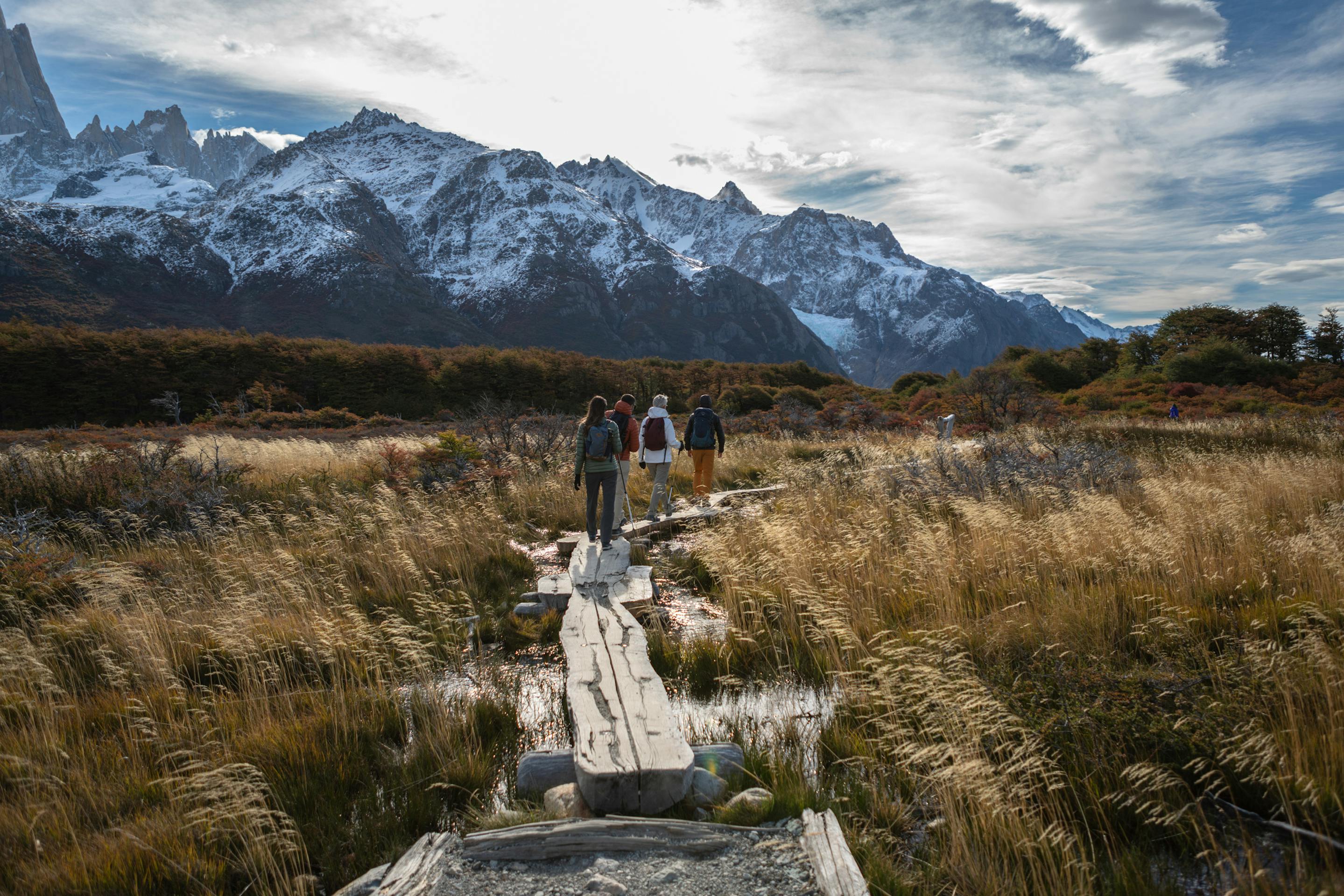
A few hours north, El Chaltén is known as Argentina’s trekking capital. The small mountain town sits inside Los Glaciares National Park and some of the best hiking trails in Patagonia start right on its doorstep: the climb to Laguna Torre, Laguna de los Tres, and the jagged granite spires of Mount Fitz Roy. If the toothy skyline looks familiar, that’s because it inspired the logo of the outdoor brand Patagonia. Our specialists match each hike to your fitness level.
Farther south lies the "End of the World". The Tierra del Fuego archipelago is shared by Chile and Argentina, but Ushuaia, on the Argentine side, is widely known as the southernmost city on Earth. About 600 miles north of Antarctica, it has an unmistakable frontier feel. Days here are spent cruising the Beagle Channel past sea lion colonies and seabird rookeries, hiking the forests and coastline of Tierra del Fuego National Park, and dining on centolla, the region’s prized king crab, freshly pulled from the sea.
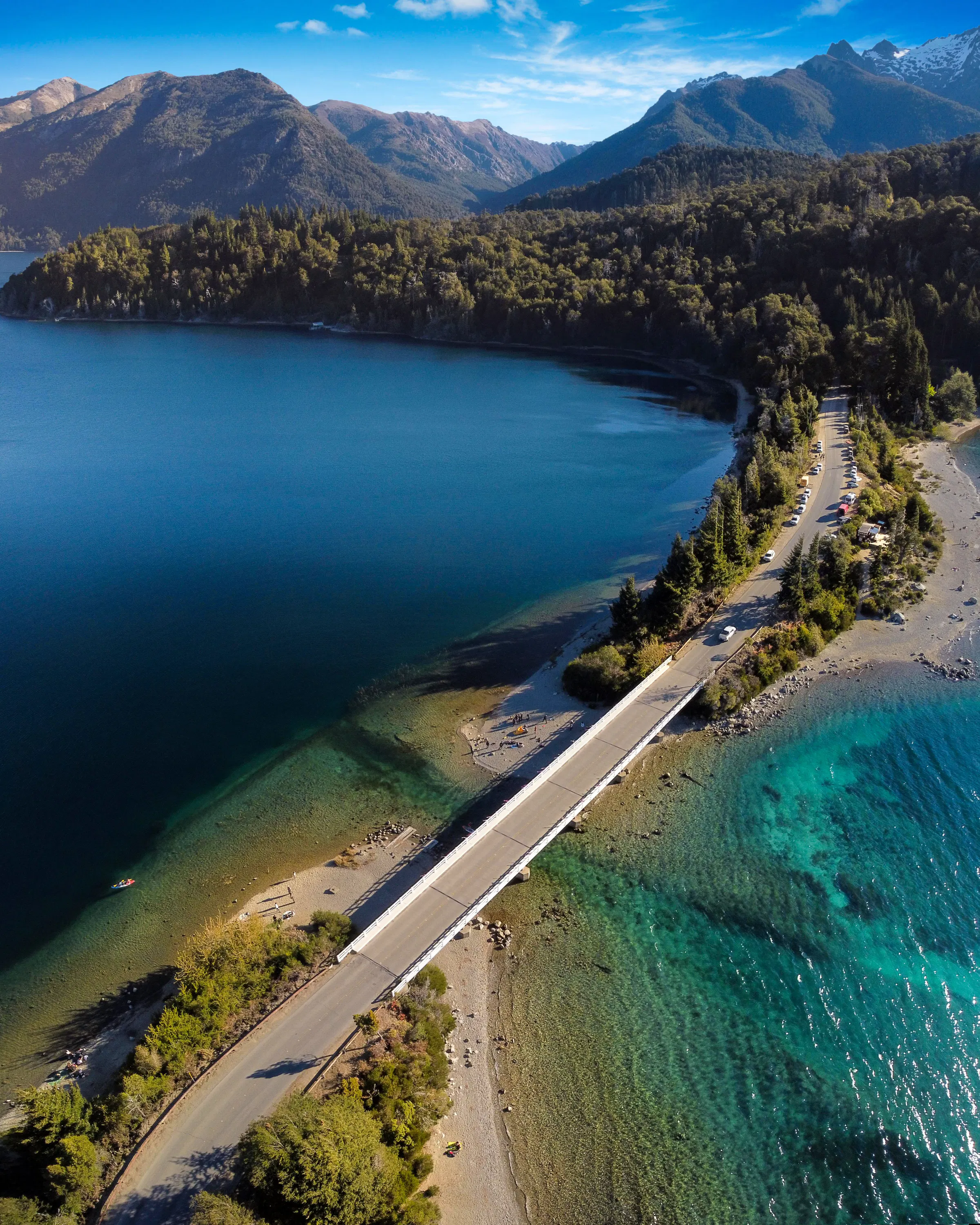
In the north of Argentine Patagonia lies the Lake District. Most travelers base themselves in Bariloche, on the shores of Lake Nahuel Huapi, within the national park of the same name. Ringed by volcanic peaks in the foothills of the Andes, the area offers hiking, biking, kayaking, fly fishing, and river rafting in summer, and skiing and snowboarding in winter. The Argentine Lake District pairs easily with Chile’s, but it’s noticeably drier. Moist Pacific air drops most of its rain on the Chilean side as it rises over the Andes, leaving Argentina in the mountains’ rain shadow.
What is Chilean Patagonia known for?
Trekking, a daisy chain of national parks, rugged remoteness
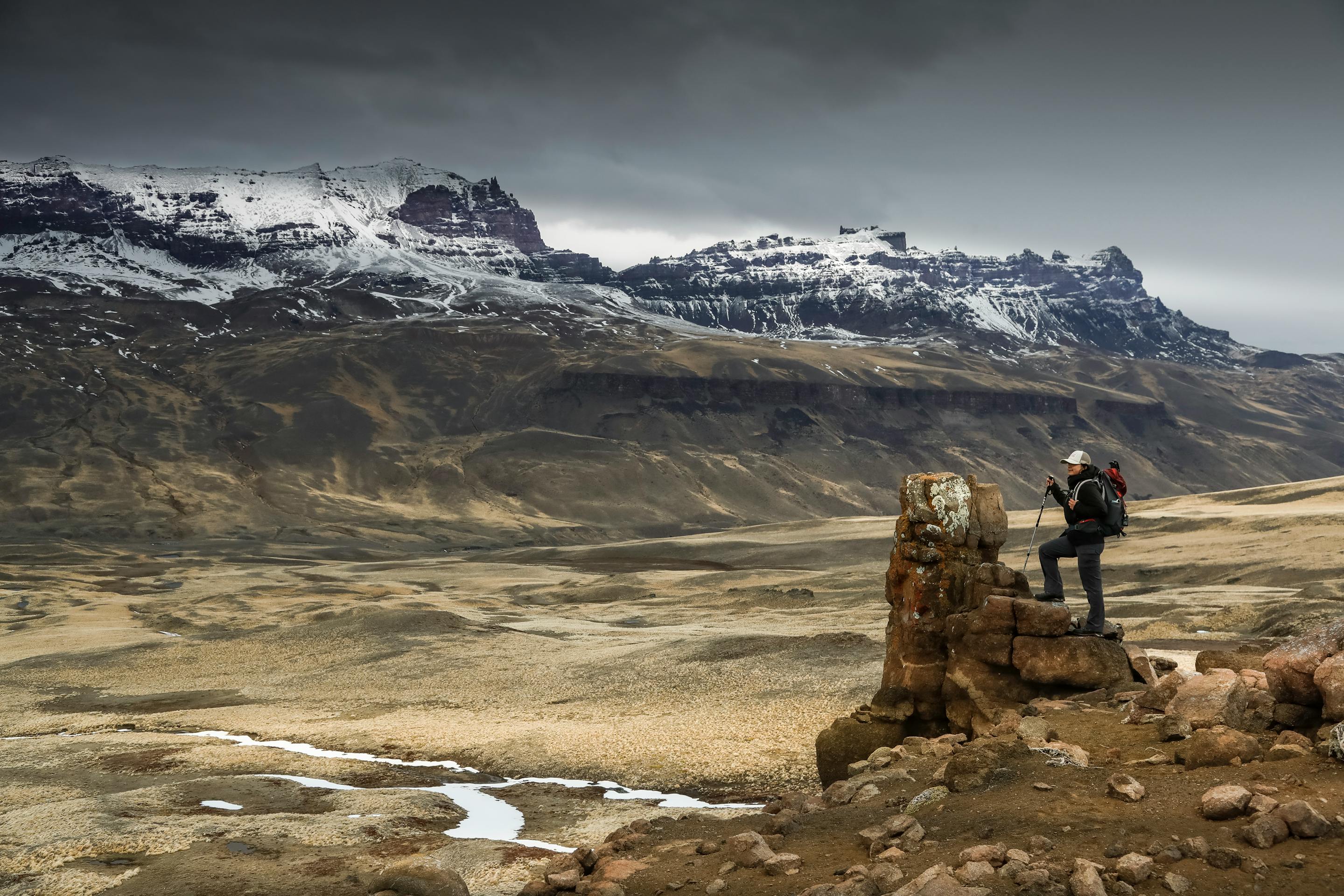
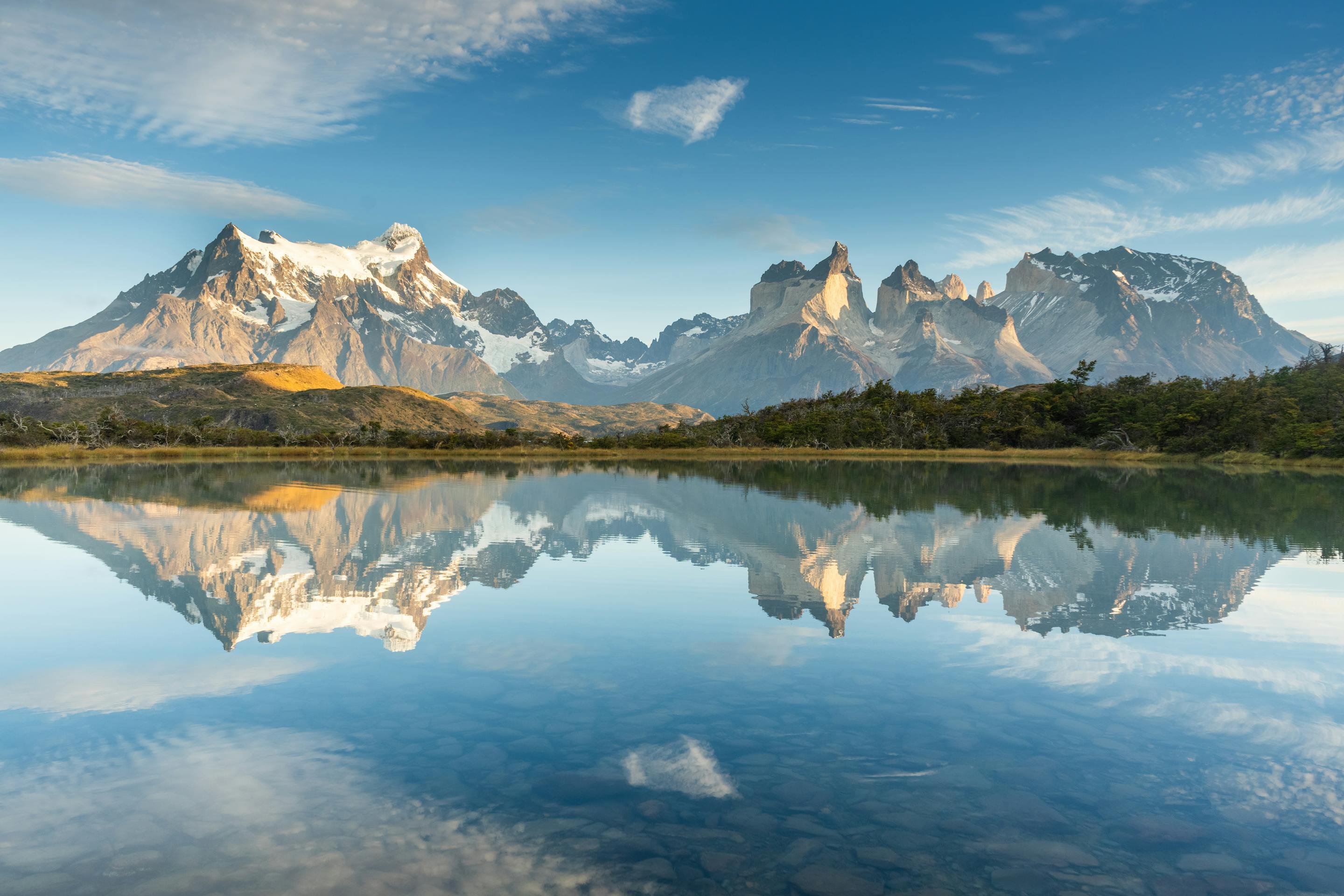
Picture Patagonia, and the three granite spires of Torres del Paine National Park are probably what come to mind. The towers are so iconic that they alone have likely inspired countless trips to the region. In the mild, windy summer months, hikers arrive from around the world to take on the park’s famous multi-day routes, including the W Trek, named for the shape it traces through the Paine Massif, as well as day hikes like the climb to the base of the towers. Trails crisscross the park in every direction, leading to viewpoints over Grey Glacier, where condors circle overhead, and across open grasslands where guanacos graze and pumas hunt. Our specialists can pair you with private guides and lodges that let you hike the park’s highlights by day and return to comfort each night, so you can enjoy the trails without having to carry a heavy pack.
As famous as Torres del Paine is, it’s just one of Chile’s national parks, and 17 of them form a chain through Patagonia. Known as the Route of Parks, this network stretches some 1,700 miles from the Lake District to Cape Horn and makes it easy to step off the beaten path onto trails few travelers ever see.
In northern Chilean Patagonia, Aysén region travel is packed with natural wonders and national parks, yet it sees a fraction of the visitors who head south. It’s home to Patagonia National Park, one of the most ambitious rewilding stories in South America, where former grazing land has been restored to wild valleys and grasslands for guanacos, pumas, and the endangered huemul deer. Staying at an eco-lodge in Aysén puts you close to turquoise lakes, untouched valleys, and wild trails, and every visit supports the conservation work that brought this landscape back.
Farther north, Chile’s Lake District is a tangle of glacial lakes beneath snowcapped volcanoes, laced with rivers and hot springs. You can hike through ancient forests of araucaria, or monkey puzzle trees, then spend the afternoon river rafting, canyoning, fly fishing or mountain biking, and end the day soaking in a hot spring. It suits travelers and families looking for adventure as much as those who want to unwind in the woods. Lush and green, Chile’s Lake District is a striking contrast to Argentina’s drier side, and the two pair easily on a single luxury Patagonia itinerary.


Chilean vs. Argentine Patagonia comparison
| Chilean Patagonia | Argentine Patagonia | |
|---|---|---|
Signature sights(s) | Torre de Paine's granite towers | Perito Moreno Glacier & Mount Fitz Roy |
Best hikes | Multi-day treks like the W Trek, plus day hikes to the Base of the Torres | El Chaltén, Argentina’s trekking hub, with trails to Laguna de los Tres |
Wildlife highlights | Pumas (with luck), condors, humpback whales, Magellanic penguins (Oct–Mar) | Valdés Peninsula orcas, southern right whales and elephant seals; Beagle Channel penguins and dolphins |
Lesser-visited gems | Aysén region, Patagonia National Park, the Route of Parks | Ushuaia and Tierra del Fuego, at the “end of the world” |
Iconic road trip | Carretera Austral (~770 miles) | Route 40 |
Gateway airports | Punta Arenas, Puerto Natales, Puerto Montt | El Calafate, Ushuaia, Bariloche |
Airport to lodge | About 2.5 – 5 hours | ~10–20 minutes to El Calafate or Ushuaia; ~3 hours to El Chaltén |
Lake District | Volcanoes, hot springs, araucaria forests | Bariloche, with its Alpine chalets and Swiss-German heritage; Lake Nahuel Huapi; drier, with winter skiing |
Pairs well with | Atacama Desert stargazing, Santiago | Mendoza wine country, Buenos Aires |
Choose this side if... | Torres del Paine is your must-see; you want remote eco-lodges and fjords | You want access, glacier experiences, and big marine wildlife |
Which side of Patagonia is best for wildlife and nature?
Both sides of Patagonia are rich in wildlife, from pumas and condors to whales, penguins and elephant seals. Which side suits you best depends on the animals you most hope to see and when you’re traveling.
Puma tracking in Patagonia
Chile has the edge for pumas. With patience, a skilled tracker and a little luck, you may watch one of these elusive cats crossing the grasslands of Torres del Paine, which has one of the densest puma populations anywhere, or the restored valleys of Patagonia National Park. We pair you with expert trackers who follow strict ethical guidelines, keeping a respectful distance so the cats can hunt and rest undisturbed. Guanacos and Andean condors are common sights on both sides, in Torres del Paine and Argentina’s Los Glaciares National Park alike.
Marine life & whale watching
- Argentina: On the Atlantic coast, the Valdés Peninsula is one of South America’s great marine wildlife destinations. Southern right whales come close to shore to calve, and you can snorkel with playful sea lions, stand near colonies of Magellanic penguins and watch elephant seals haul out on the beaches. In autumn, the peninsula’s resident orcas perform one of nature’s rarest hunting behaviors: they deliberately strand themselves on the beach to catch young sea lions, something seen in only a few places on Earth. Birders will find more than 180 species, including Darwin’s rhea and Chilean flamingos. Seasons vary by species, so our specialists will time your visit for the encounters that matter most to you.
- Chile: In Francisco Coloane Marine Park, near Punta Arenas, humpback whales gather to feed in the Strait of Magellan during the summer months.
Where to see penguins in Patagonia
You’ll find Patagonia’s flightless favorites in both countries.
- Argentina: Beagle Channel cruises from Ushuaia pass sea lion and fur seal colonies, cormorant rookeries and, on select departures, Isla Martillo, home to nesting Magellanic and gentoo penguins. Keep an eye out for Peale’s dolphins along the way.
- Chile: Los Pingüinos Natural Monument protects two islands in the Strait of Magellan and one of the region’s largest Magellanic penguin colonies. Visit between October and March, during breeding season, and you may see fluffy chicks in December and January. A marked path leads through the colony, bringing you close to the birds while protecting their burrows.


Patagonia weather guide: travel tips for both countries
On any given day, Patagonia writes its own forecast. Its mountains, ice fields and open steppe can bring a bright, still morning and a storm by lunch. That variability is part of the region’s wild character, and the old adage holds true here: there’s no bad weather, just bad clothing. Pack layers for all four seasons and you’ll be ready for whatever the day brings. Our specialists will help you prepare for your route, and the best lodges in Patagonia pair you with guides who check the sky each morning and plan the day around it.
Then there’s the wind. Patagonia lies in the latitudes sailors called the “roaring forties” and “furious fifties,” where westerlies race off the Pacific and sweep across the land in gusts of up to 100 miles per hour. The wind blows year-round and peaks in summer, so a good windproof shell will be the hardest-working item in your bag.
- Summer (December to February): Summer is high season on both sides of Patagonia, and for good reason. Long, mild days, with daylight lasting well into the evening, leave plenty of time for hiking, horseback riding, and boat excursions, though the wind can be fierce. You’ll share trails and viewpoints with more travelers, so we recommend booking lodges and guides well in advance. Where we can, we’ll time your outings to miss the busiest hours.
- Spring (September to November) and fall (March to May): These shoulder seasons are some of our specialists’ favorite times to go. Days are cooler and bring the odd shower, but many in southern Patagonia are crisp and sunny, and conditions still suit long days outdoors. The Lake District on both sides of the border stays milder, though the Chilean side is greener for good reason: it sees far more rain. Torres del Paine travel and Los Glaciares tours are far quieter than in summer, and the landscape changes by the week, with newborn guanacos and wildflowers in spring, and lenga forests turning red and gold in fall.
- Winter (June to August): Winter is Patagonia’s quietest season, and snow dusts the peaks and forests of the south, turning the region into a veritable winter wonderland. Many hotels and attractions in the south once closed until spring, but more properties now operate year-round. For the lodges that stay open, winter isn’t the off-season. It’s a season unto itself, and our specialists know where to find it at its best. Days are spent snowshoeing through silent forests, and evenings by a crackling fire. Out on the steppe, wildlife stands out against the white, which makes winter a prime time to track pumas in Torres del Paine with expert guides. Farther north in the Lake District, skiers and snowboarders head for the slopes of Cerro Catedral near Bariloche.
How to combine Chilean and Argentine Patagonia
Combining both sides of Patagonia is the trip we love to plan, and with enough time, it’s the most complete experience of the region. (After all, you’ve come so far.) By Patagonian standards, the two headline parks are neighbors, with Torres del Paine in Chile and Los Glaciares National Park in Argentina a day’s drive apart, making them a natural pairing. It’s a long day, but we make it easy. You’ll have a private vehicle and a driver who handles all the border formalities and knows the best stops along the way. Rather than managing a road trip, you’re free to take in the scenery, and you’ll arrive at your next lodge ready for a glass of Malbec and big mountain views instead of decompressing from hours behind the wheel.
Our Ultimate Patagonia adventure: Chile and Argentina shows how it all comes together. Stay at an estancia on the Argentine steppe, trek across Perito Moreno Glacier, hike Torres del Paine with a private guide, then finish among the lakes and volcanoes of Chile’s Lake District. Think of it as a starting point rather than a fixed plan. Our specialists will shape the route, pace and lodges around you, because no two travelers are alike, and no two journeys should be either.
Patagonia travel FAQs
Your private Patagonia tour
Torres del Paine or Fitz Roy. The Carretera Austral or Route 40. Ice trekking on Perito Moreno or hiking the empty valleys of Patagonia National Park. Our South America specialists have hiked these trails, crossed these borders and stayed at these lodges. Tell us when you’re traveling and what you want from Patagonia, and they’ll tell you which side to choose, or how to see both.
October 28, 2026
Patagonia itineraries for Chile and Argentina
Every trip with Extraordinary Journeys is tailor-made, crafted in collaboration with one of our destination specialists. Use these as a starting point, or as inspiration to create your own journey.