Our blood: A story of escape, connection, and home
In remote Kenya, Madeleine Rafferty joins a small group of extraordinary women on a mission to end period poverty.
May 19, 2026
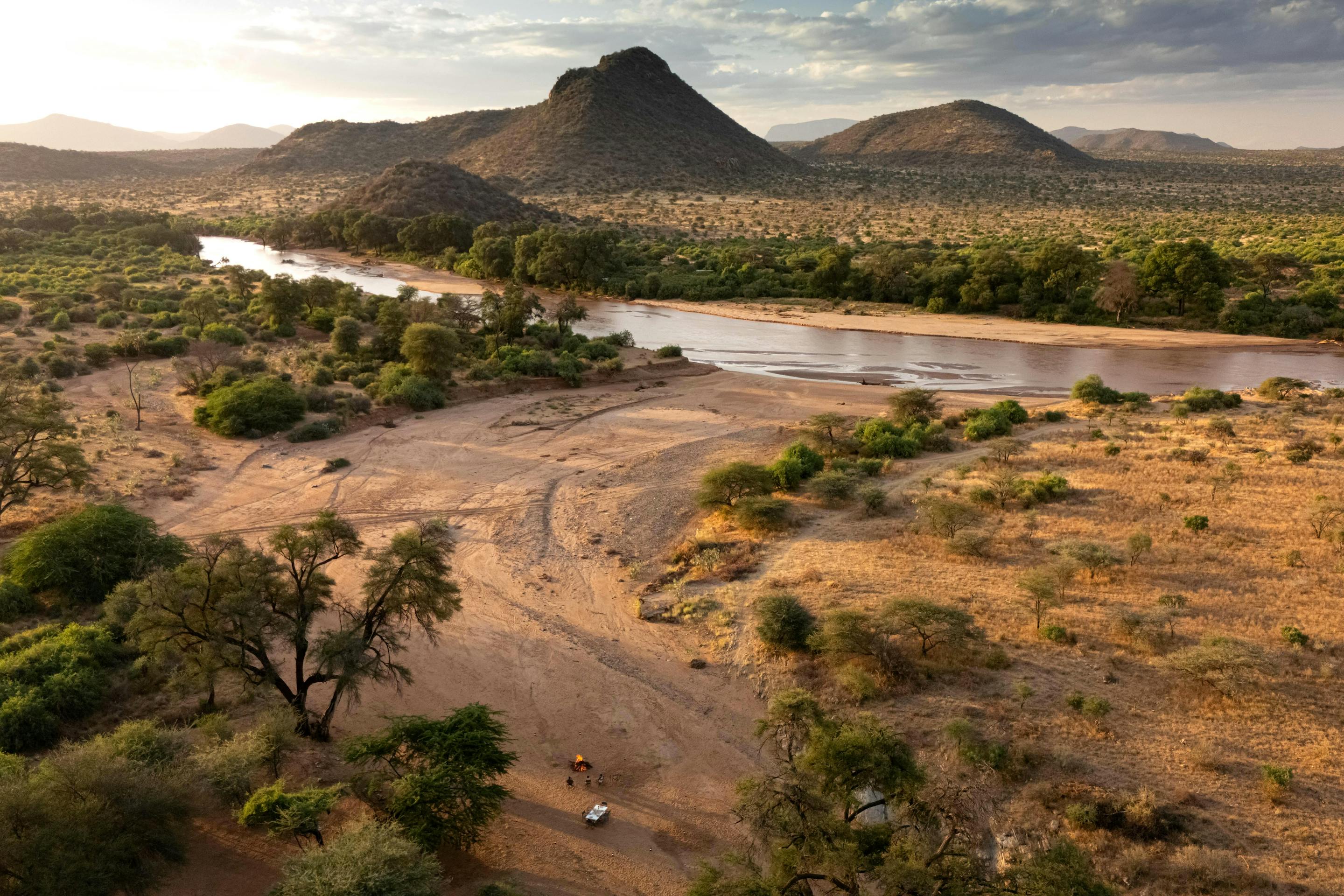
We are driving through the expanse of scrublands, dodging termite mounds that emerge from the terracotta earth—cathedrals of soil, saliva, and fecal matter, carefully constructed to house entire colonies—when I feel the shift.
A deep calm washes over me as the urgency and right angles of my life back home melt into the expanse of red earth and grey sky. The 15-hour flight from JFK to Nairobi feels as distant as my family, whom I've left to take this adventure with my best friend, Katie, in a moment of whimsy: What would it feel like to free ourselves from the grind of life in New York, from our families, from our way of seeing the world?
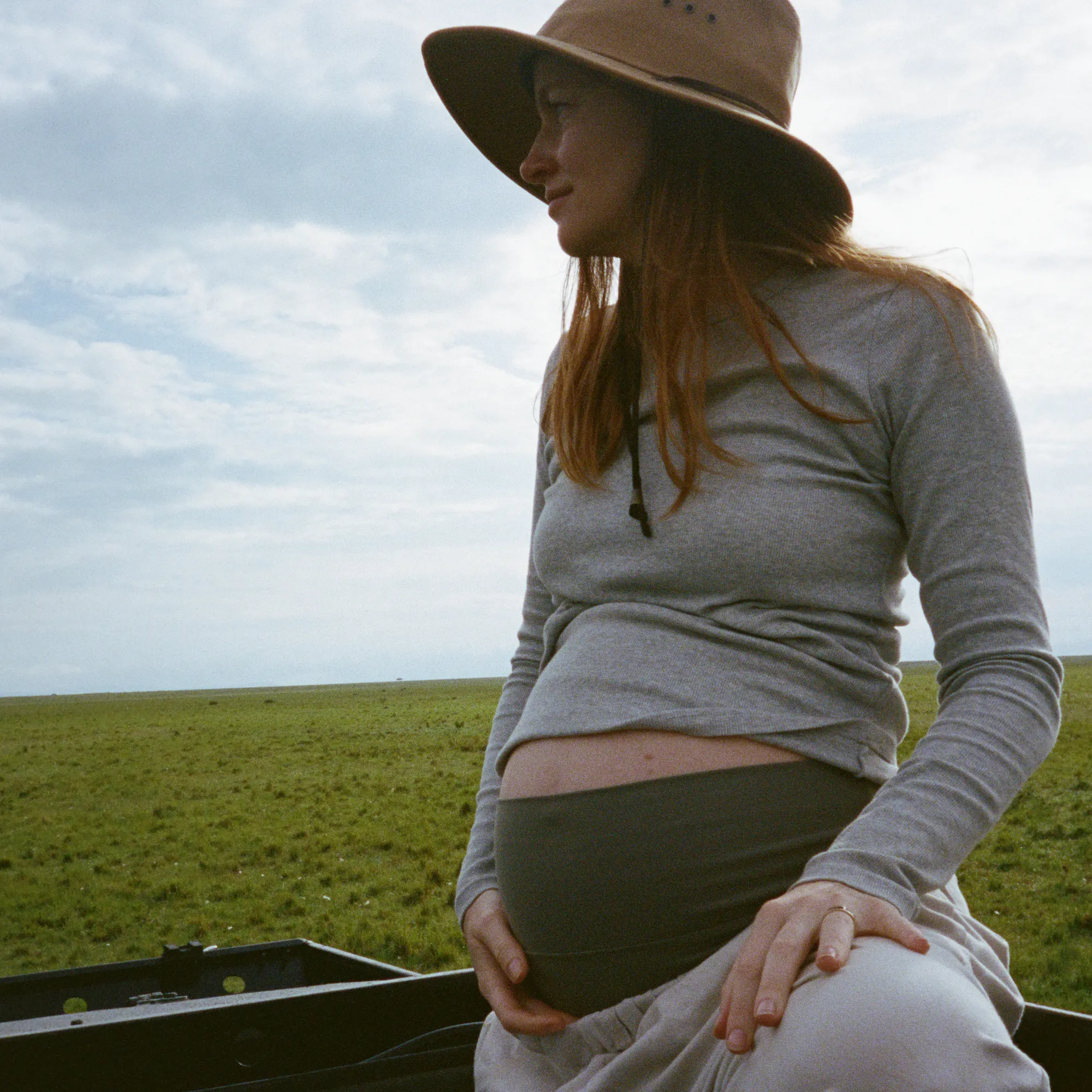
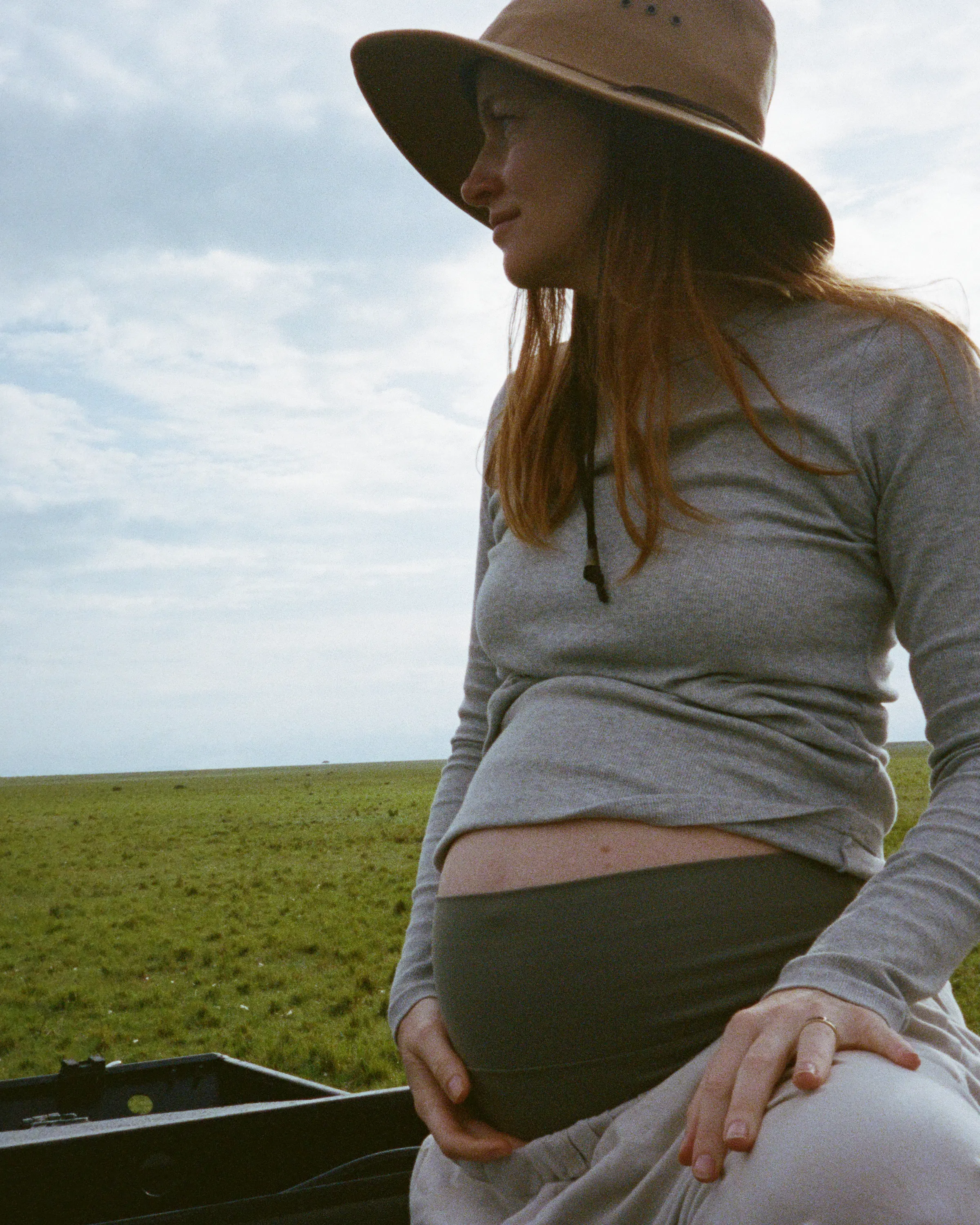
Free from my family, mostly. I am five months pregnant.

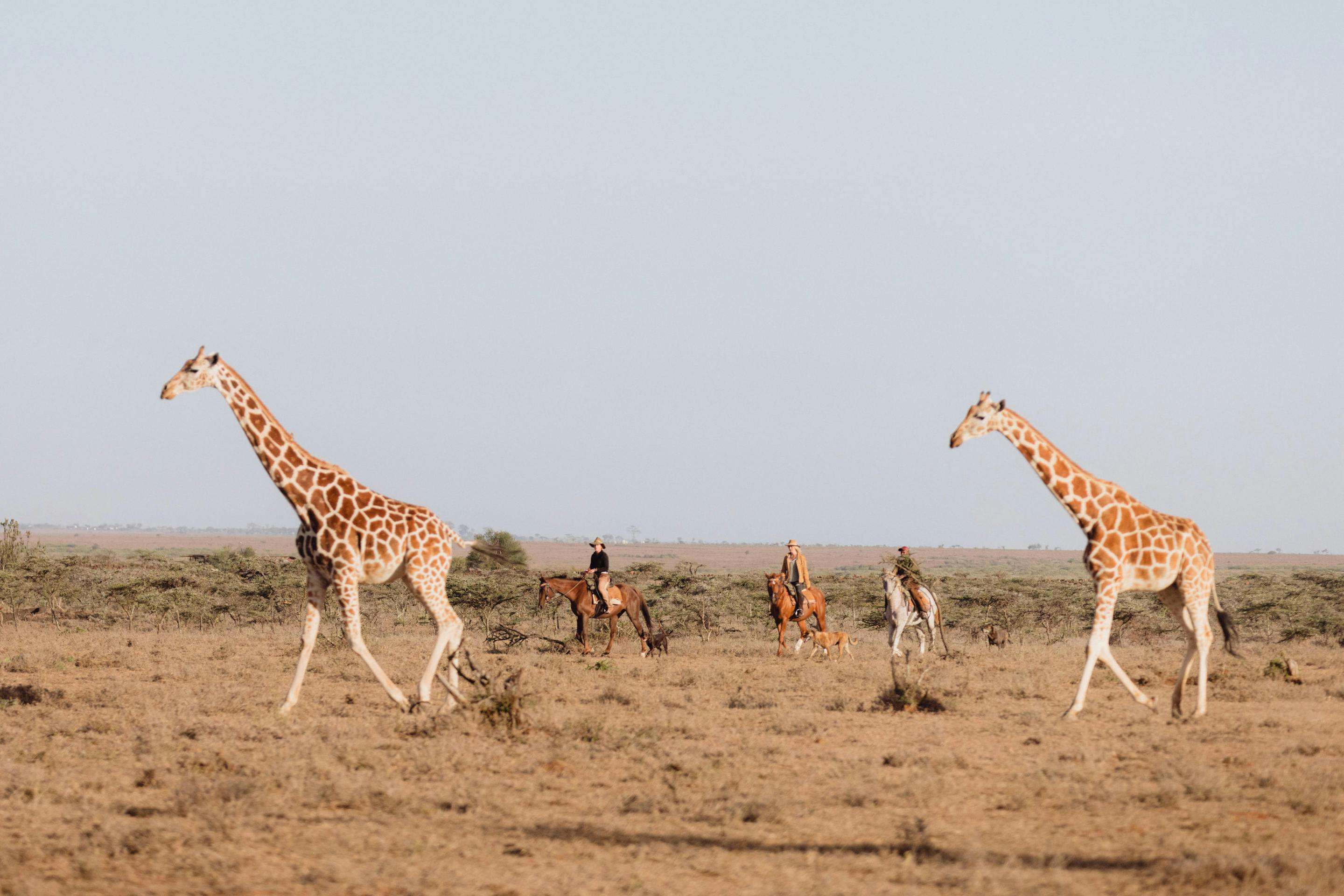
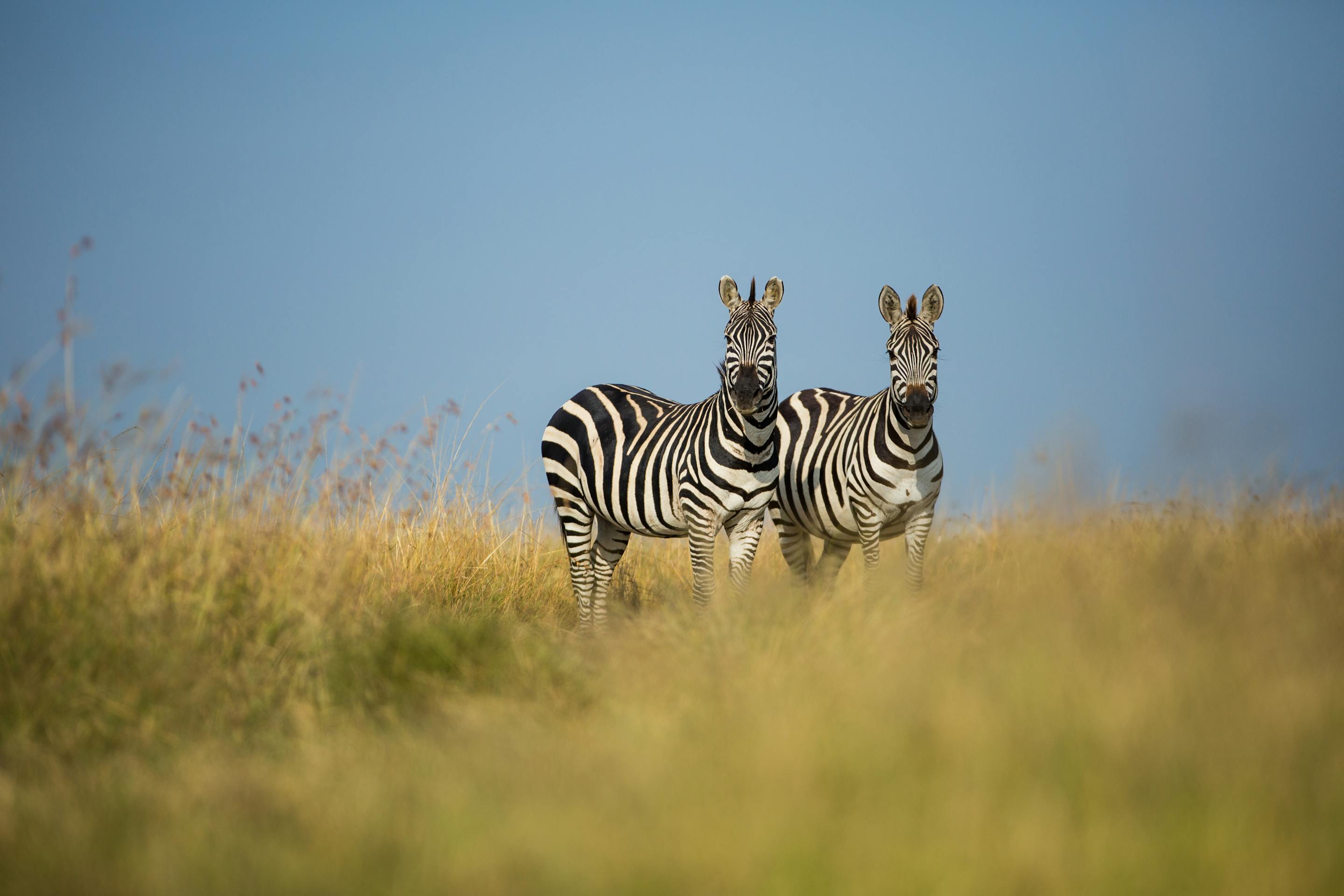
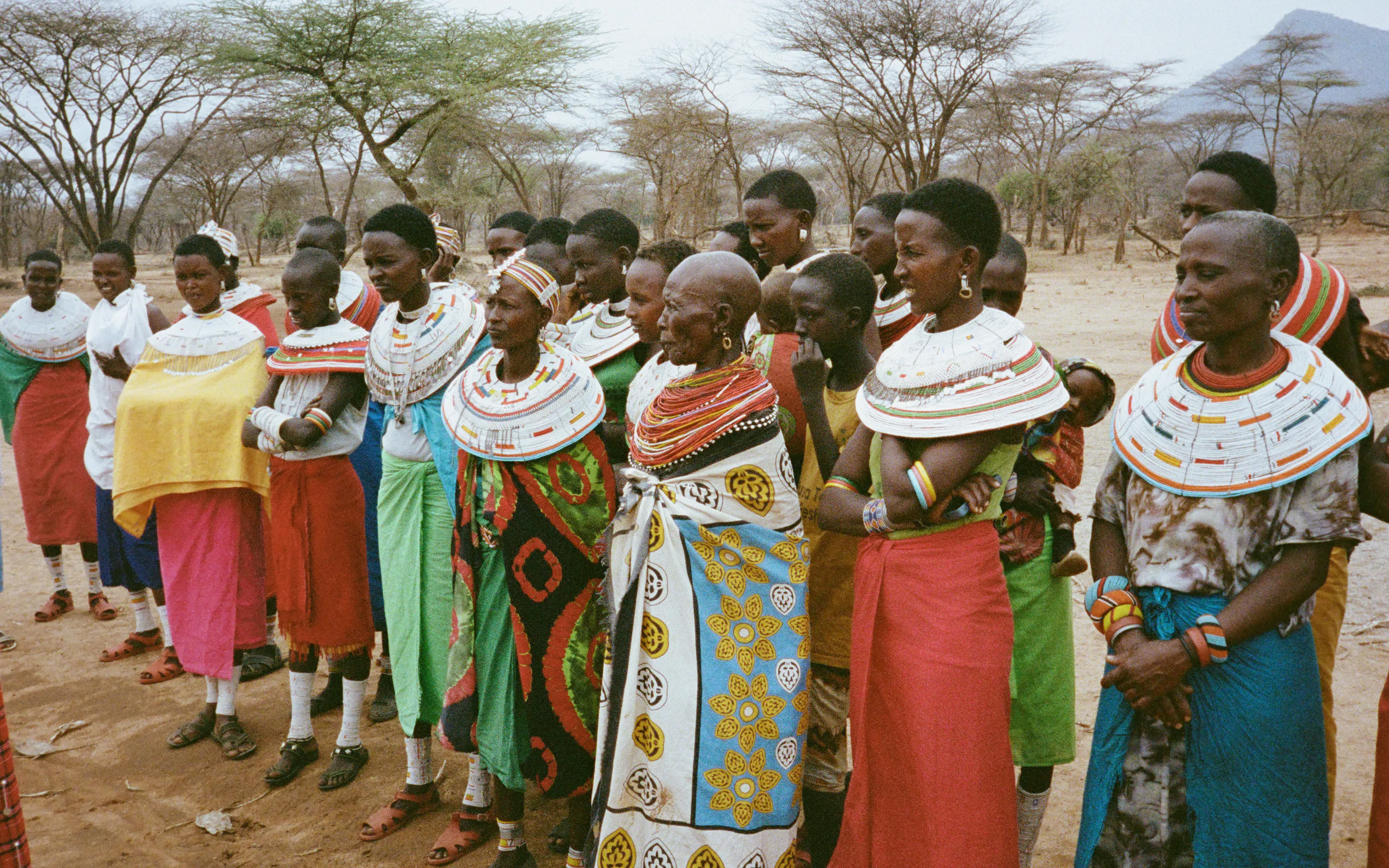
The back of our driver Sumoro's head is handsome, smooth and adorned with strings of beads woven by the many women who raised him here in the arid savannah of Samburu. We are alone. The only 4x4 we see for days. Although, of course, we are not. We are here with the herds of elephants, friends of Sumoro, who come to the watering hole at dusk beneath our safari camp. And the dik-diks, a species of tiny antelope the size of rabbits with large liquid eyes, who prance around like young lovers bonded for life. And the imperial zebra, an endangered cousin of the mountain zebra known for its tight stripes and hulking bodies, indigenous only to here. We are here with the Samburu people, who have traversed these lands for centuries, moving with their cattle as the seasons turn, their young moran, the community’s warriors, guarding the herds and the ancient volcanic earth beneath them.
The shift is subtle, imperceivable. I taste the air, hot and dry, in the back of my throat. My shoulders, tight from days of traveling, lower. In the distance, a mother giraffe gently nudges her calf among the flat-topped trees. I close my eyes. I can feel the edges of my baby's knees inside of me.
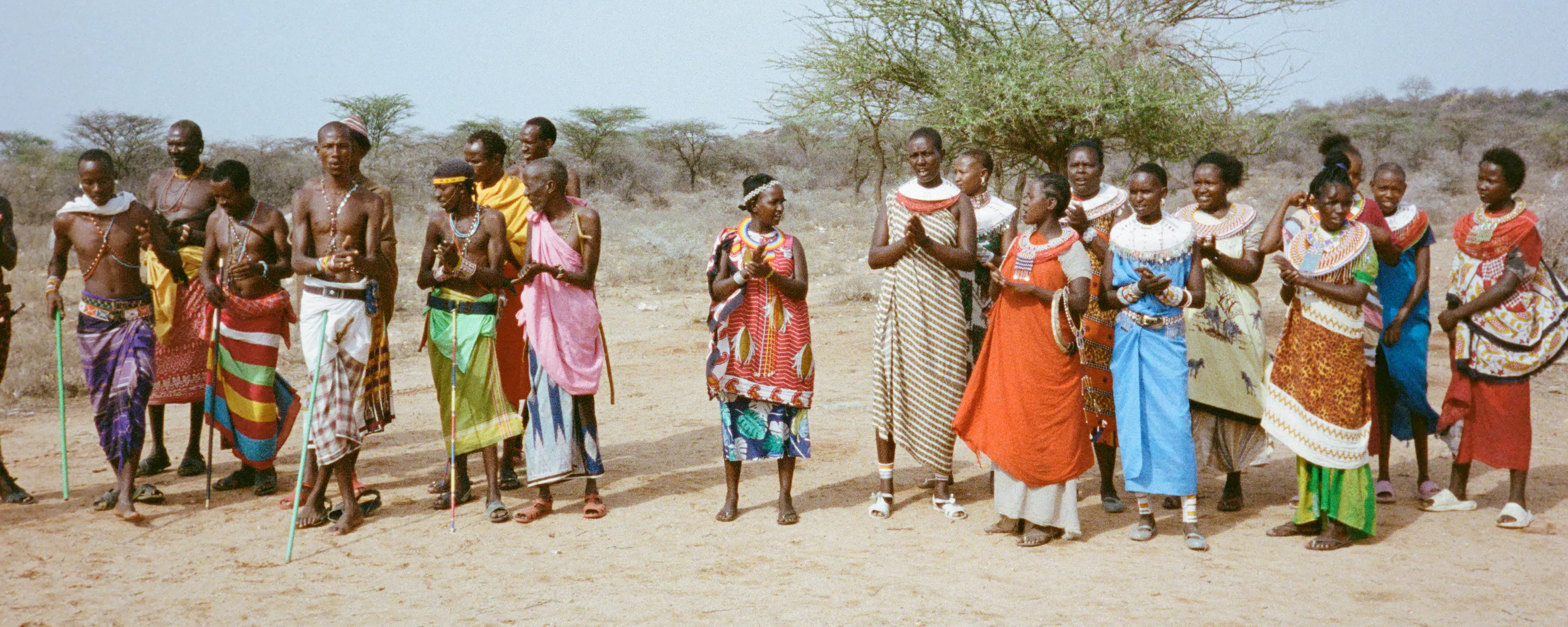
As we ascend an expansive rockface, we hear a welcome song, the first of many we will hear as we enter new villages.
This feeling has a name. The open space effect. Neurobiologists study the impact on the brain of wide, unobstructed views and theorize that our nervous systems were calibrated for exactly this—for the savanna, the long view. I feel somehow like I've slipped into some original state, like I'm standing where hundreds of thousands of years of ancestors looked out onto horizons like this. Sumoro tells us it would have looked very similar then.
As we ascend an expansive rockface, we hear a welcome song, the first of many we will hear as we enter new villages. Women and men in saturated hues and intricate patterns, beaded collars rising and falling on their dancing necks, welcome us with open smiles. I am overwhelmed with emotion. I blame the hormones but notice Katie looks a bit glassy-eyed too. Immediately, impossibly, as our dusty 4x4 Jeep comes to a jerking halt, I feel I am home.
Our days start like this: wake to the songs of starlings. Breakfast with the seven women who have opted to come on this trip—once strangers, now comrades—sharing stories over fresh juice and scotch eggs in foldable lawn chairs beneath the acacia trees at dawn. Stories of motherhood, of addiction and loss; of the partners and children left behind—how they’re missed, and sometimes, how they’re not.

But mostly, stories of adventure. Yes, we are mothers and wives and retired doctors and art history professors and biomedical engineers back home. But here, we are travelers who all share an insatiable hunger for adventure, for remembering how big the world is in our bones, for travel that gives as well as takes.
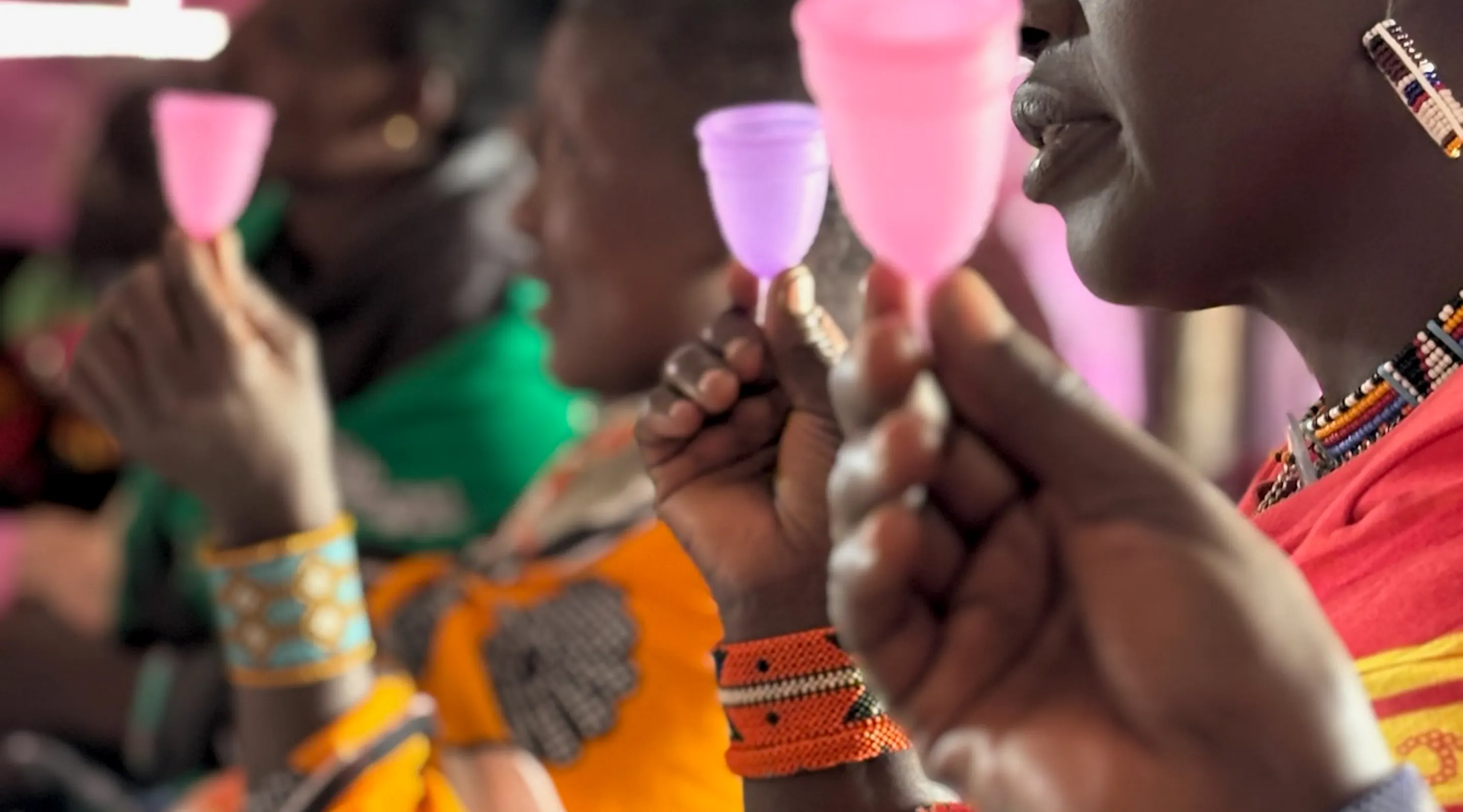
A portion of our trip's cost is being donated to Great Being a Girl, a non-profit supported by Extraordinary Journeys Foundation fighting period poverty in Kenya. Period poverty means a lot of things: the inability to afford pads, the health risks of improvising with rags, the ecological impact of pads that end up in the bush swallowed by livestock, and nearly a million girls missing school each month to avoid the shame of bleeding without supplies. The clarity of GBAG's mission and the simplicity of the solution is what first compelled me to come on this trip.
The other reason is Marcia Gordon, our trip leader and co-founder of Extraordinary Journeys: a mother who raised three daughters in the bush, built a thatched hut from red mud on the outskirts of Nairobi, and earned her pilot’s license in the seventies; a woman who now, in her seventies, climbs atop our 4x4 to make sure all 60 widows who have walked for hours to meet us fit into the frame of her Nikon; a grandmother who ignited my own sense of adventure when I cautiously emailed to say, “surprise, I am pregnant, is that OK?” replied simply: “how fabulous.”

We point to pictures of vulvas and reenact washing our hands, folding the cup, placing it inside us to collect our blood. In celebration, we sing and we dance and we hug.
The other trip leader is Mary, a Maasai woman of extraordinary levity and presence: a teacher, a mother to many, a guardian of orphaned children. After only a few hours, she is already my dear friend and co-conspirator, leaning over as I polish off our evening’s appetizer of burrata with balsamic reduction over tempura butternut squash to mischievously whisper that she would much prefer blood and milk.
Mary's skin is like butter. I know this because we spend most of our game drives holding hands. When we enter the villages, the women there take our hands too. I think of the women I love back home, and how I don’t know what their hands feel like. I make a note to find out.
Mary tells me Maasai women cherish pregnancy. Over the course of our ten days together, she shares the responsibility of keeping my baby comfortable, making sure I have water, snacks, and that there are no hyenas around when I squat to pee every 40 minutes behind our 4x4. She has named my baby, Baby Saruni. In Maasai, Saruni means "our savior." It is also the name of our camp, and Mary's last name, which makes a lot of sense to me.
So we go, village to village, equipped with menstrual cups and posters of female genitalia, and enter into the worlds of these women whose day-to-day life could not be further from our own in Portland and Brooklyn and Albuquerque—and yet we have this thing, our blood, to bond us. We point to pictures of vulvas and reenact washing our hands, folding the cup, placing it inside us to collect our blood. In celebration, we sing and we dance and we hug. A woman who looks about as pregnant as me, with a newborn baby slung around her back and a toddler by her side, points to my belly. I point back at hers and nod. We smile.
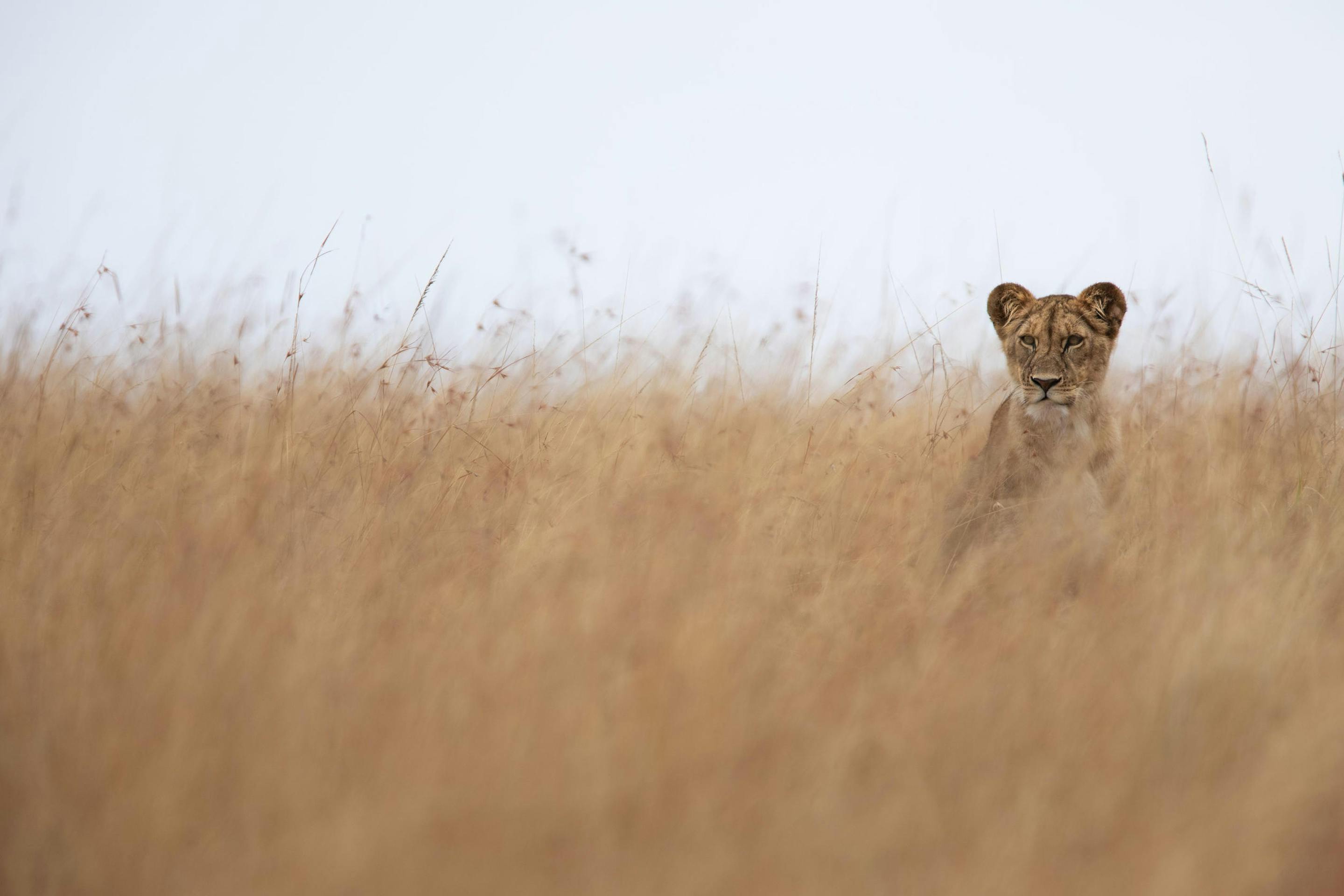
I am home now. My body aches. My toddler curls up in my lap. I show him photos of zebras and hippos and lions. He roars. I roar back. My baby kicks to remind me he, too, was there, and is, in some cellular way, filled with the wonder, gratitude, and freedom of my time in Kenya, encoded in his dividing cells. Though we have chosen another name, I still call him Baby Saruni in my mind and still feel the dusty air in my throat, the calls of the hyenas clanking in my ears. The three of us drift to sleep together, watching the snow fall, dreaming of lions in the dust.
May 19, 2026
Explore our itineraries
Every trip with Extraordinary Journeys is tailor-made, crafted in collaboration with one of our destination specialists. Use these as a starting point, or as inspiration to create your own journey.