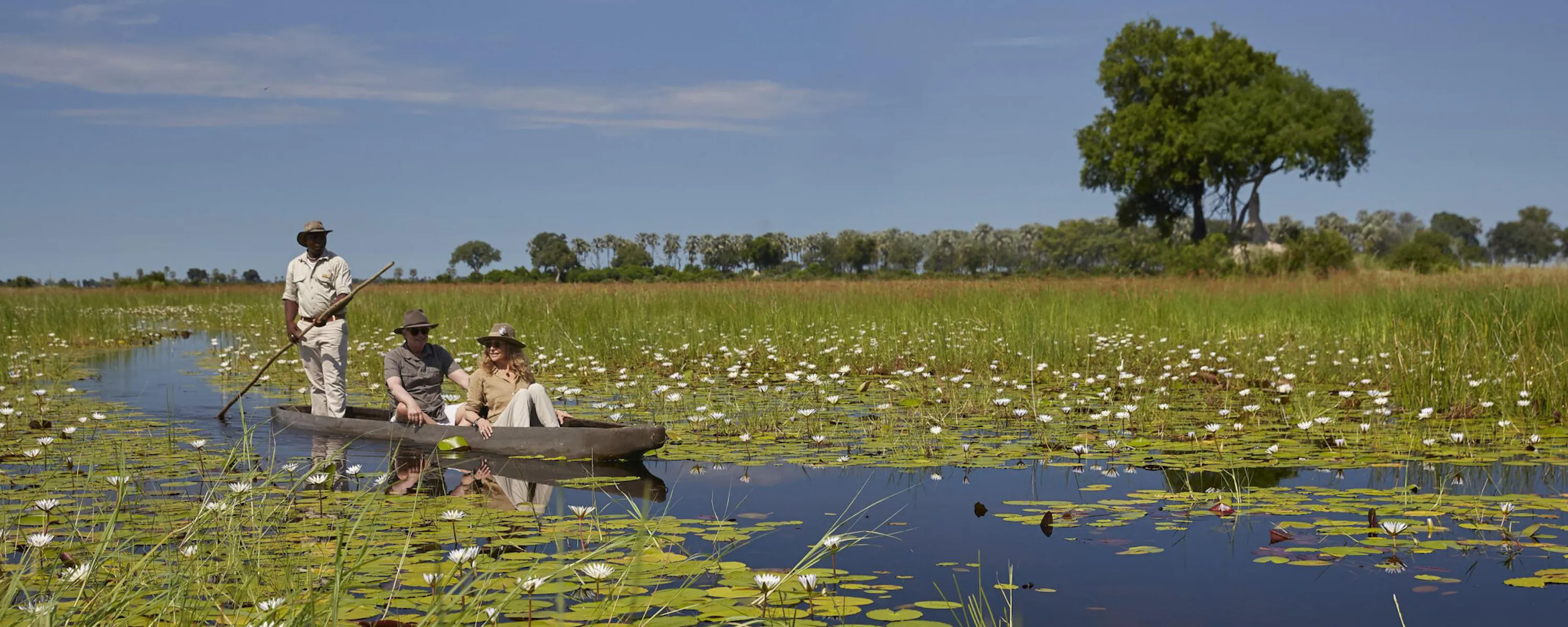
Experience the magic of mokoro safaris
A quiet, close-up journey through Africa's most pristine wetland.

September 15, 2026
Many Extraordinary Journeys southern Africa safari itineraries feature mokoro rides as a unique, water-based add-on activity that offer game viewing from a fresh perspective. Based on the questions we receive from travelers, it’s clear that most folks have no idea what a mokoro is. Though the word is foreign, the concept will not be unfamiliar to those who have experienced canoeing or kayaking, or even a gondola ride. Here’s what a mokoro safari entails and why it’s pure magic.
What is a mokoro?
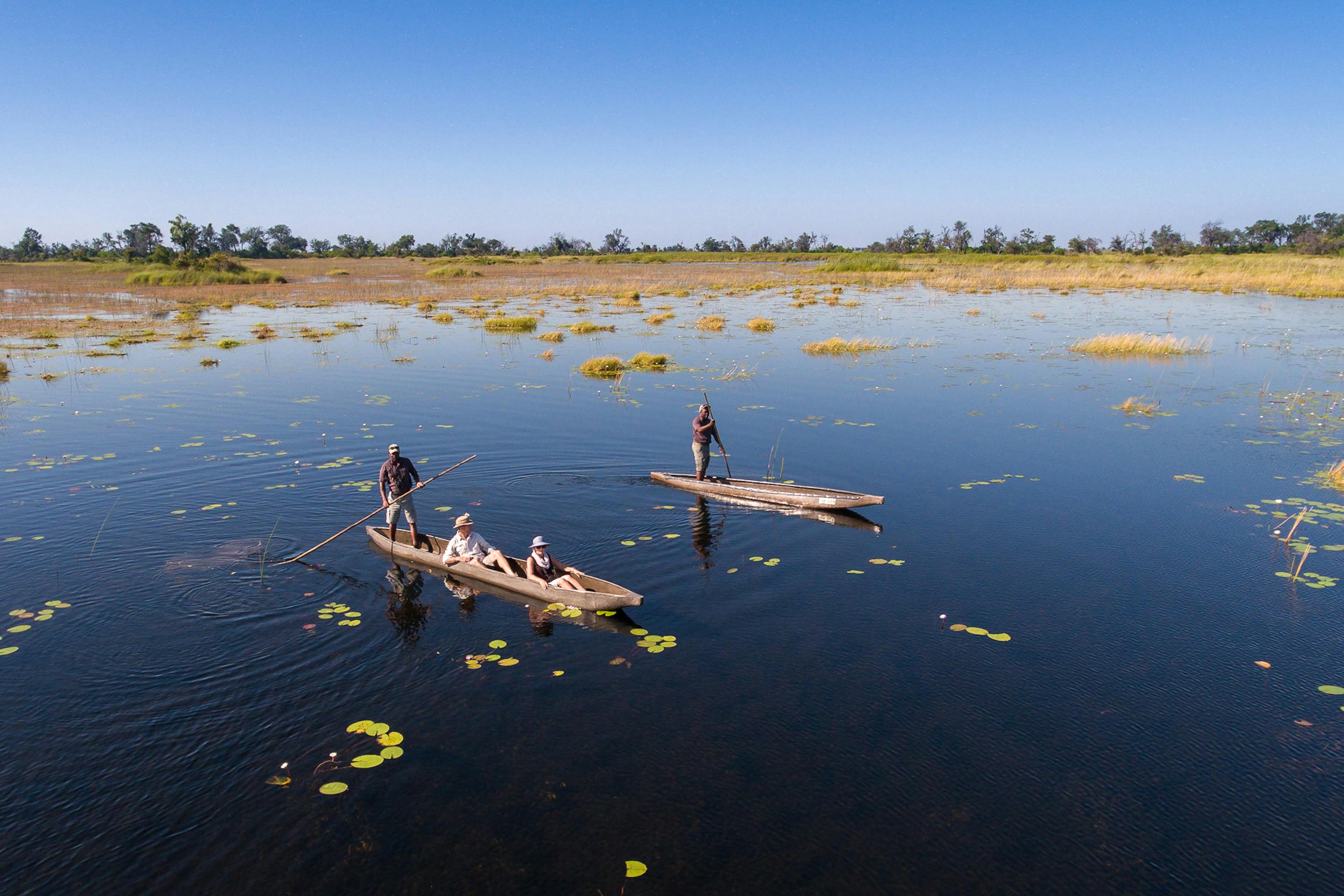
At a most basic level, a mokoro is a dugout canoe propelled by a solo operator (a “poler”) who stands at the back and navigates with a ngashe (pole). A mokoro follows the basic shape of a canoe and is traditionally carved out of a single tree trunk, though operators are increasingly turning to fiberglass in order to preserve large, indigenous hardwood trees. Boats measure 20 feet in length, accommodating one or two passengers seated tandem on molded plastic seats. Mokoro rides are a signature experience at properties in Botswana’s Okavango Delta—particularly those set on permanent waterways. Excursions last an hour or so, often taking place in the morning or at sunset, before or after a game drive.
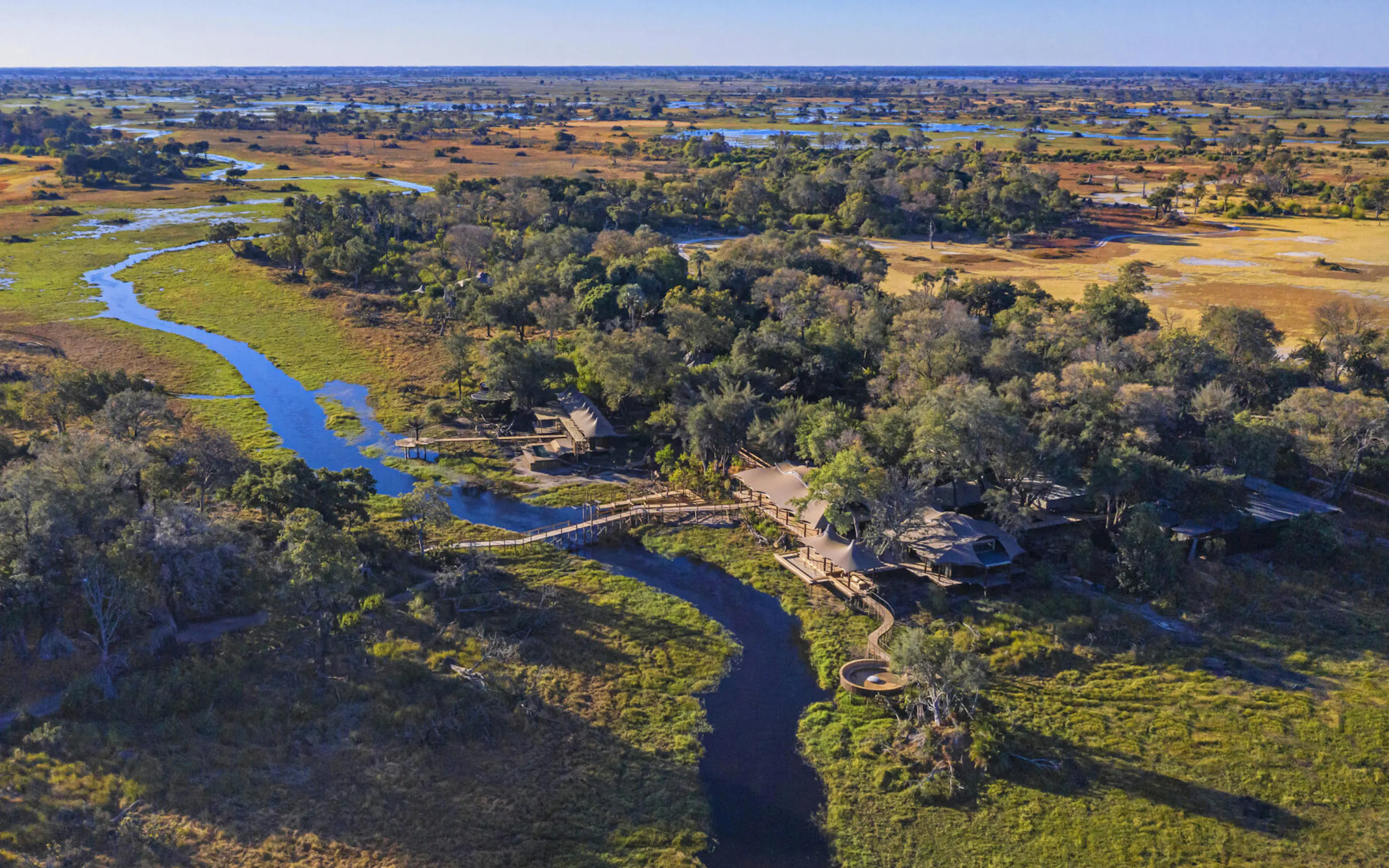
The history of mokoros
Each year, the Okavango Delta swells with water that originally fell as rain across Angola’s highlands. Meandering some 600 miles south to Botswana and arriving as flood water, it transforms the Delta into a labyrinth teeming with wildlife before draining into the sands of the Kalahari. In a place where rivers outnumber roads, mokoros have been used for generations to fish, harvest reeds and traverse the watershed.
Historically, mokoros were operated by two people—one steering seated at the stern and a poler, standing at the front, propelling it with a ngashe. Having navigated the channels on a regular basis and for most of their lives, modern boatmen have perfected the lifelong skill and are able to gracefully maneuver the mokoro at a considerable speed.
Traditionally, mokoros were built by talented craftsmen and made from moisture-resistant hardwoods like jackalberry, sausage and mangosteen. In order to achieve the right shape and buoyancy, straight, mature trees are favored. To hollow out the tree trunk, a controlled burn is performed, and historically a curved-blade tool called an adze was used to chop away at the burnt wood. (Hatchets are preferred now.) Once hollowed and proven buoyant, the trunk is then crafted into an elongated and streamlined shape with distinct points at the bow and stern.
Today, you’re just as likely to encounter mokoros made of fiberglass (some with glass bottoms for underwater viewing) which eliminates the need to extract volumes of trees from the sensitive Okavango ecosystem. What’s more, unlike their fiberglass counterparts, the lifespan of a wood canoe is just three to five years, at which point rot renders them unusable.
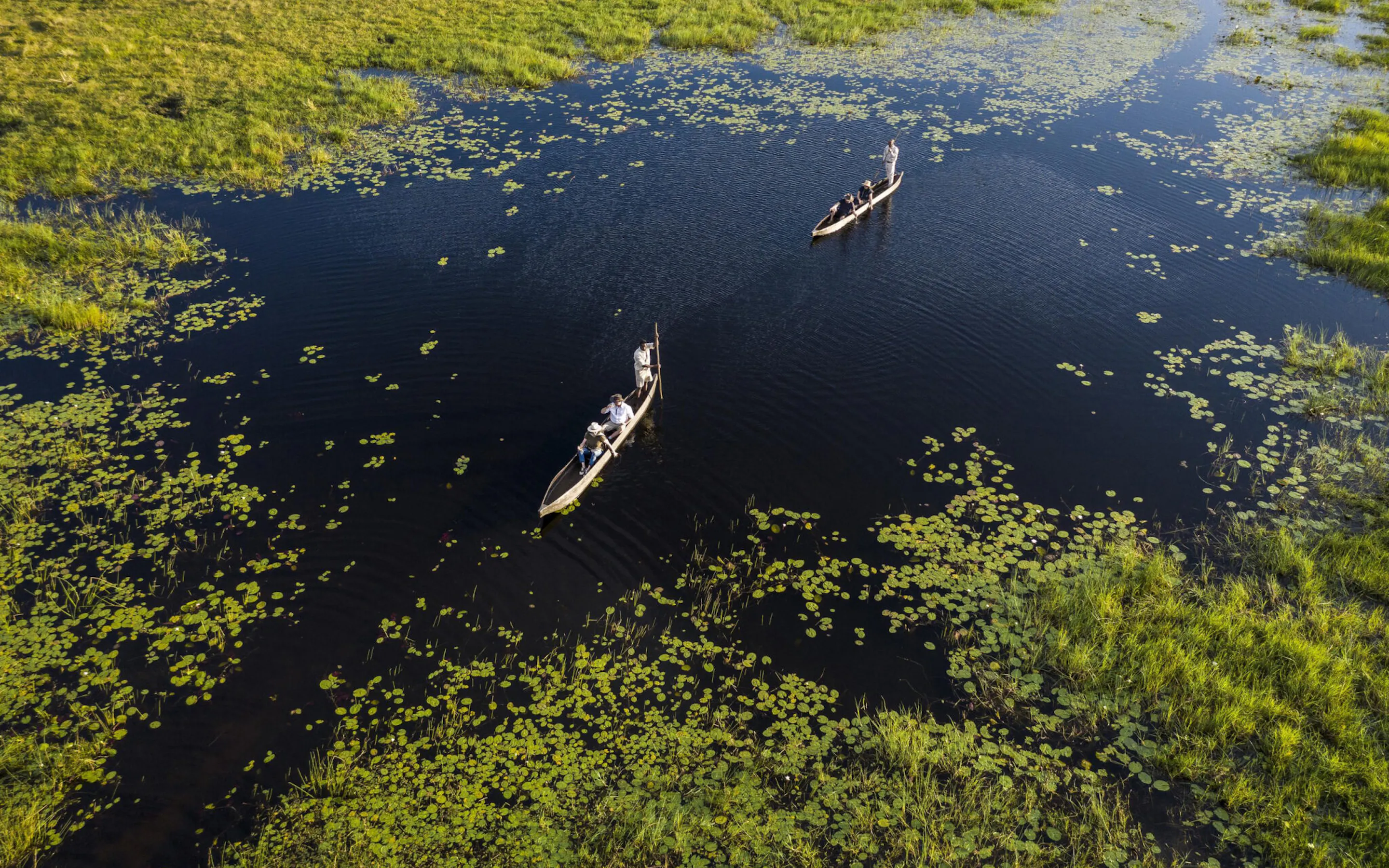
Mokoro boats measure 20 feet in length, accommodate one or two passengers, and are propelled by a “poler.”
What makes mokoro safaris special?
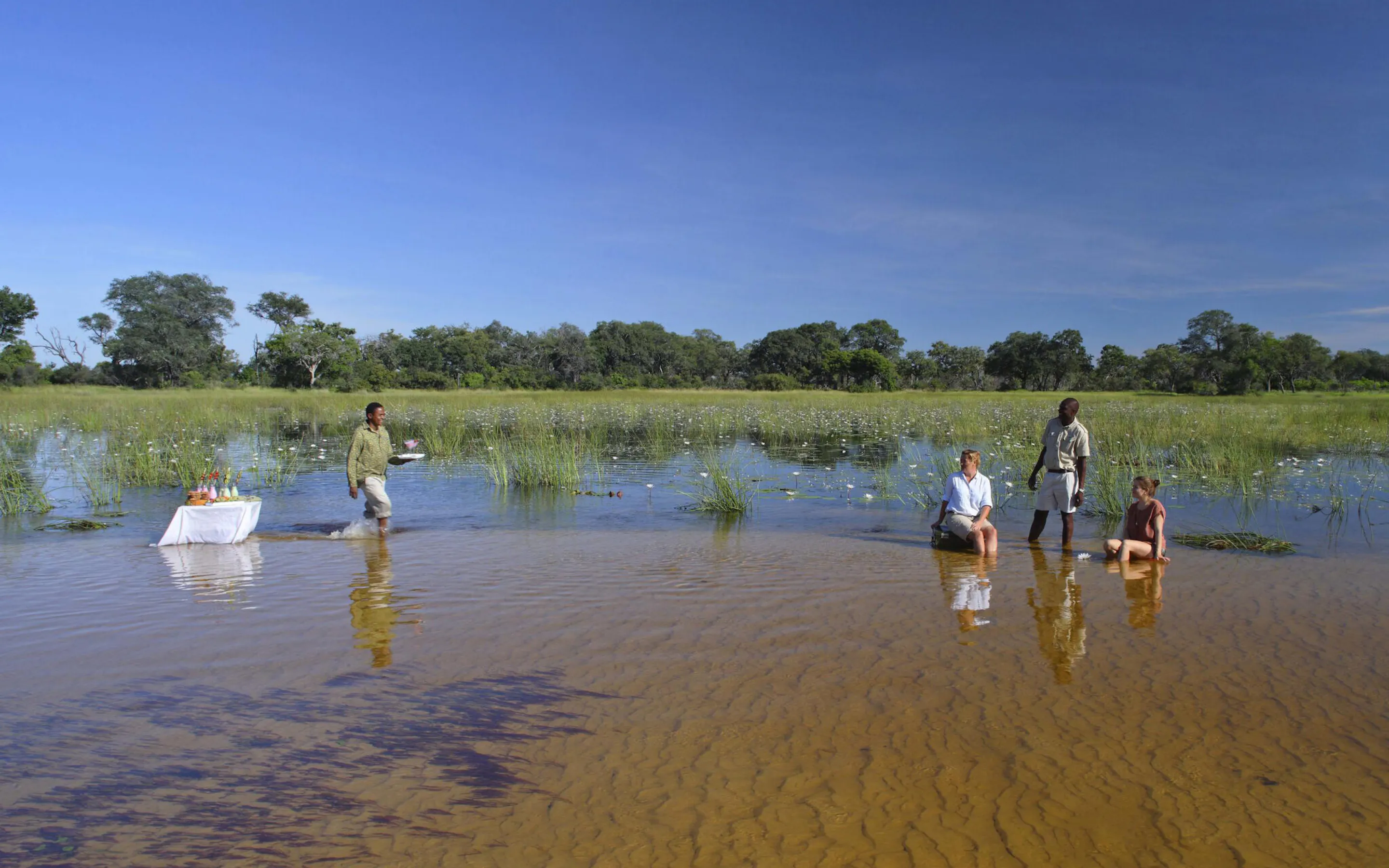
Few safari experiences are enjoyed in total silence. Absent the hum of a motor or the splash of a paddle, a mokoro glides atop glassy waters, splitting reeds and parting lily pads. Traveling just above the waterline affords a whole new vantage point. Through a glass-bottom mokoro, glimpse African pike or yellow-and-green scaled nembwe darting through aquatic flora. At the waterline, zoom in to appreciate the micro critters and avian life you otherwise miss on noisy, four-wheeled safaris. In the heart of the Delta, a secluded network of waterways and islands shelter wildlife, offering encounters that aren’t otherwise accessible. Spot grazing herds of rare, swamp-dwelling sitatunga and red lechwe antelope, or observe elephants swimming shoulder-deep through a tangle of reeds teeming with tiny frogs of all colors.
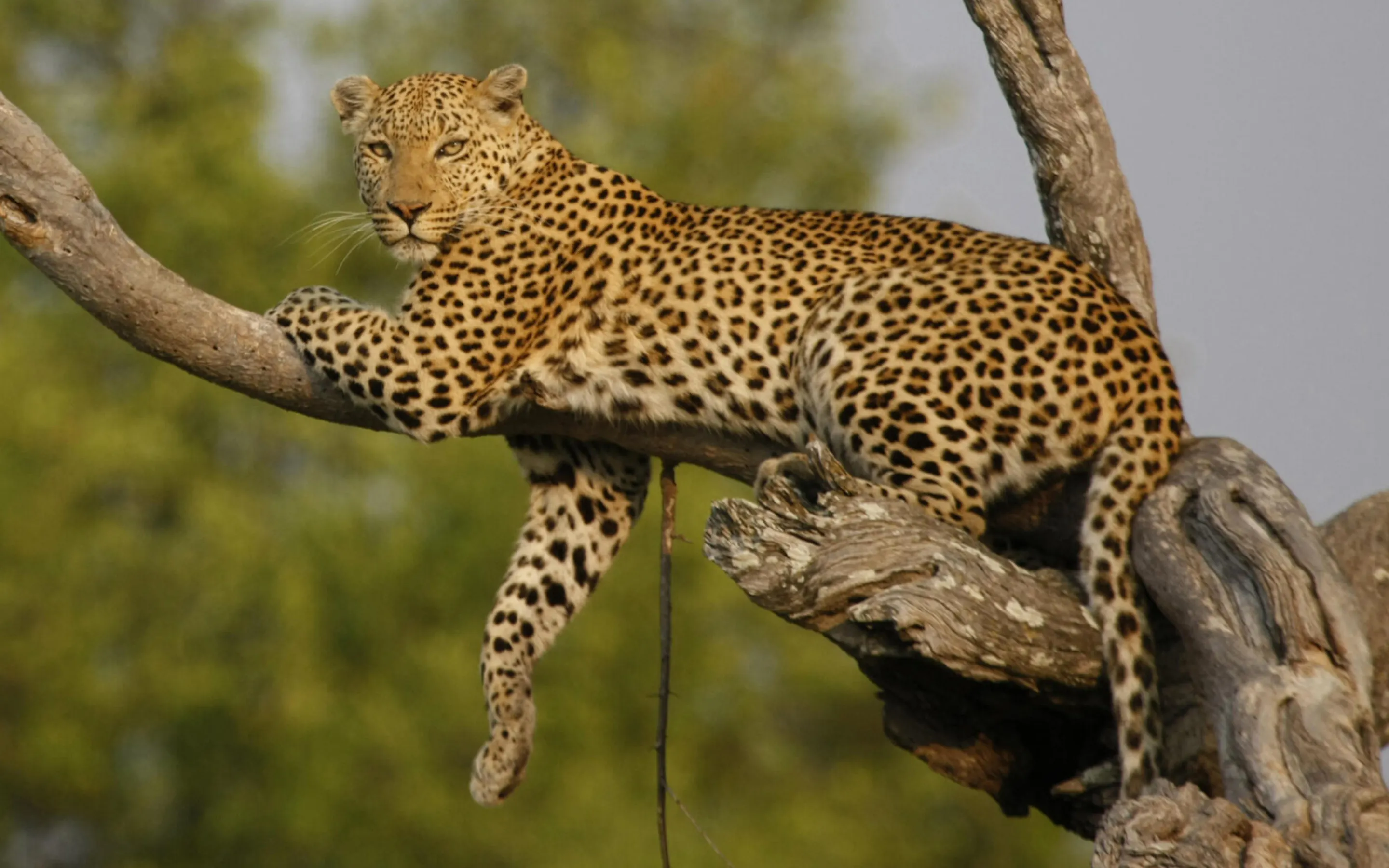
The Okavango Delta attracts a wide diversity of wildlife and you’re likely to encounter leopards.
Wildlife you’ll see on a mokoro safari
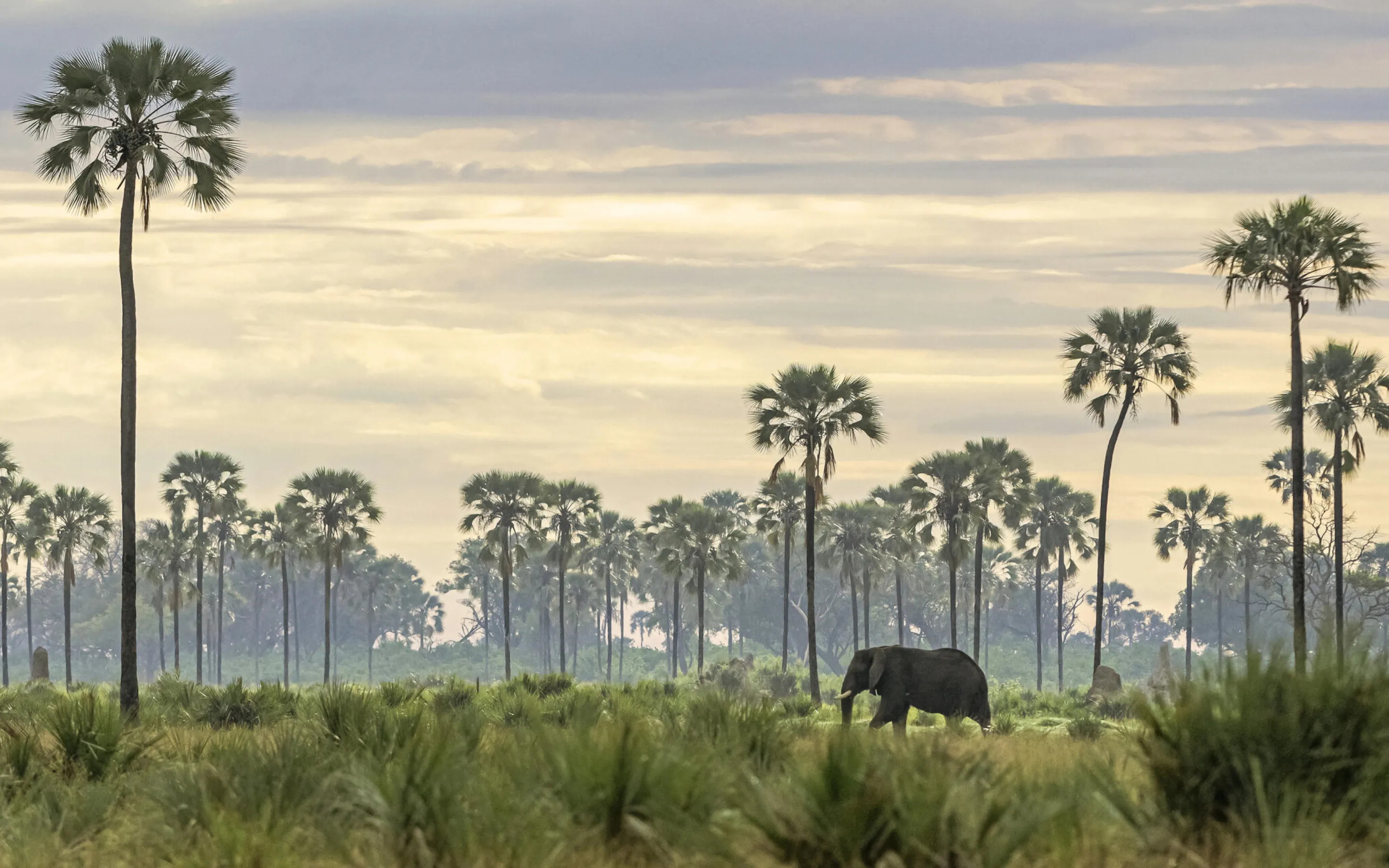
The Okavango Delta attracts a wide diversity of wildlife and you’re likely to encounter leopard, lion, buffalo, hyena, wild dog, hippo, zebra, wildebeest, giraffe, civet, serval, tsessebe, roan, sable, kudu, impala, sitatunga, semi-aquatic red lechwe, and many more. You’re assured to view elephants, too. Botswana boasts 130,000 wild ones (at last count), making this population the world’s largest.
With distinct wet and dry seasons, and varied topographies, Botswana is a siren’s call for birdlife and the enthusiasts who track them. At any given time, some 450 to 600 species of birds, both resident and migratory, are present in the Okavango Delta. Birders might spy a yellow billed kite, slaty egret, lilac breasted roller, pied kingfisher, pygmy goose, jacana, little bee eater, lesser gallinule, greater painted snipe or a rare Pel’s fishing owl.
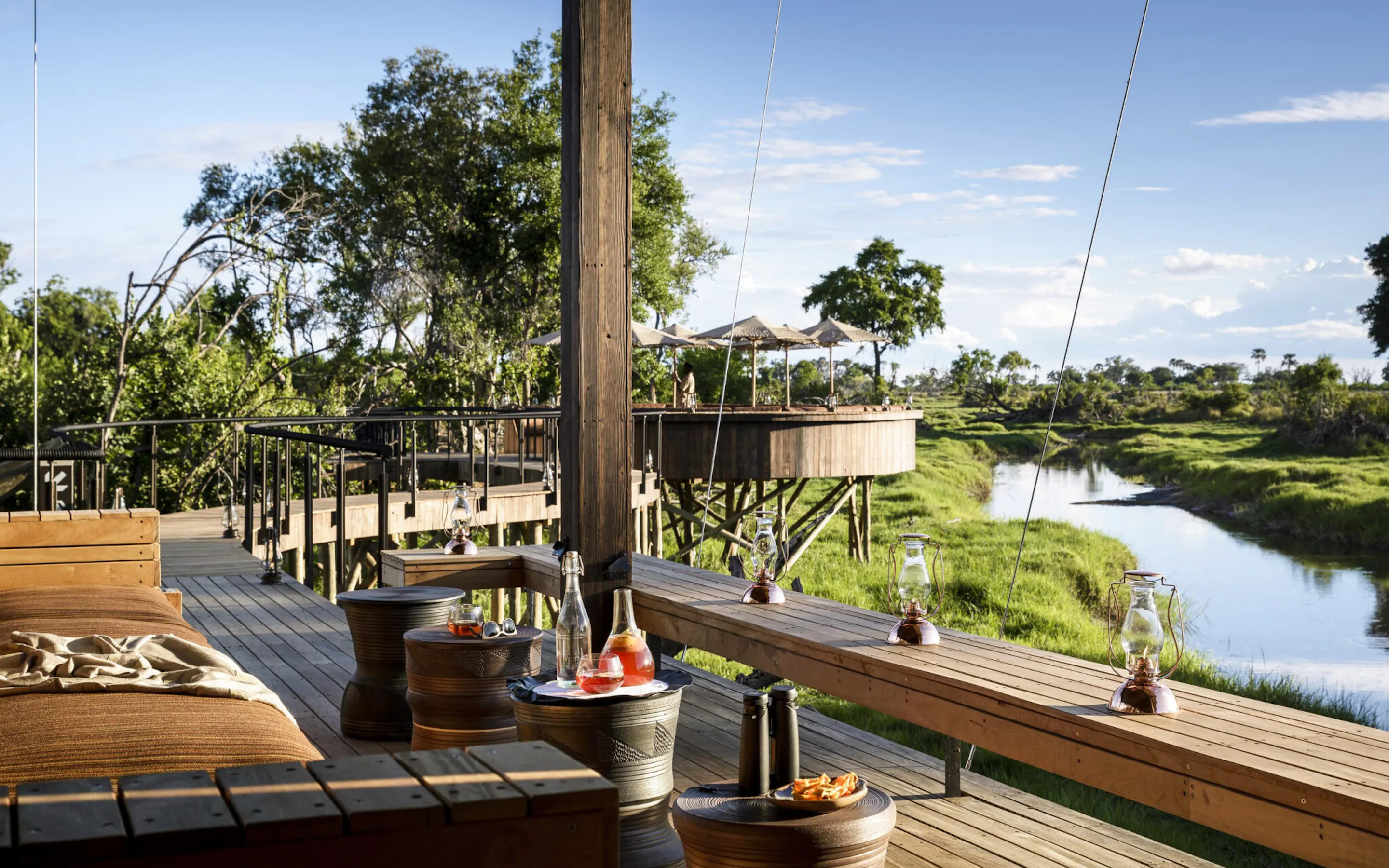
Lodges and camps offering mokoro safaris
Whether or not a property offers mokoro rides (especially in the Okavango Delta) depends on two things: (a) the time of year and its corresponding water level; and (b) proximity to a permanent waterway.
If a camp or lodge is located in an area where water levels are too high, or where hippos are prevalent, the property will prioritize guest safety over offering mokoro safaris.
Given these limitations, if a mokoro ride is high on your wish list here are a few properties which are able to offer them most of the year.
- Xigera Camp
- Xaranna Okavango Delta Camp
- Xudum Okavango Delta Lodge
- Kwara
- Little Kwara
Mokoro safari FAQs
Plan your mokoro safari with us
Ready to start planning your own incredible adventure? We make the process stress-free and enjoyable. Get in touch with our Botswana specialists today, and we'll take it from there.
September 15, 2026
Explore our itineraries
Every trip with Extraordinary Journeys is tailor-made, crafted in collaboration with one of our destination specialists. Use these as a starting point, or as inspiration to create your own journey.