Our guide to wildlife in the Galápagos
There’s perhaps no better place in the world for wildlife viewing than the Galápagos Islands. Meet giant tortoises, penguins, blue-footed boobies, and many more animals on a journey through the Ecuadorian archipelago in this Galápagos wildlife guide.

April 1, 2026
When it comes to wildlife-centric destinations, Ecuador’s Galápagos Islands certainly rank among the best in the world. In fact, the wildlife earned the destination worldwide fame. Naturalist Charles Darwin made numerous observations of the wildlife during his 1835 visit to the islands, directly contributing to his theory of evolution. Follow in his footsteps by journeying to the volcanic archipelago some 600 miles off the coast of mainland Ecuador, and make sure you have your binoculars with you. In this Galápagos wildlife guide we share the animals we’re most excited to see, from the iconic giant tortoise to the world’s northernmost penguin species, no matter what type of journey you’re on from a family vacation in South America to an iconic couple's trip in Ecuador.
Reptiles
Learn about the recovery of giant tortoises
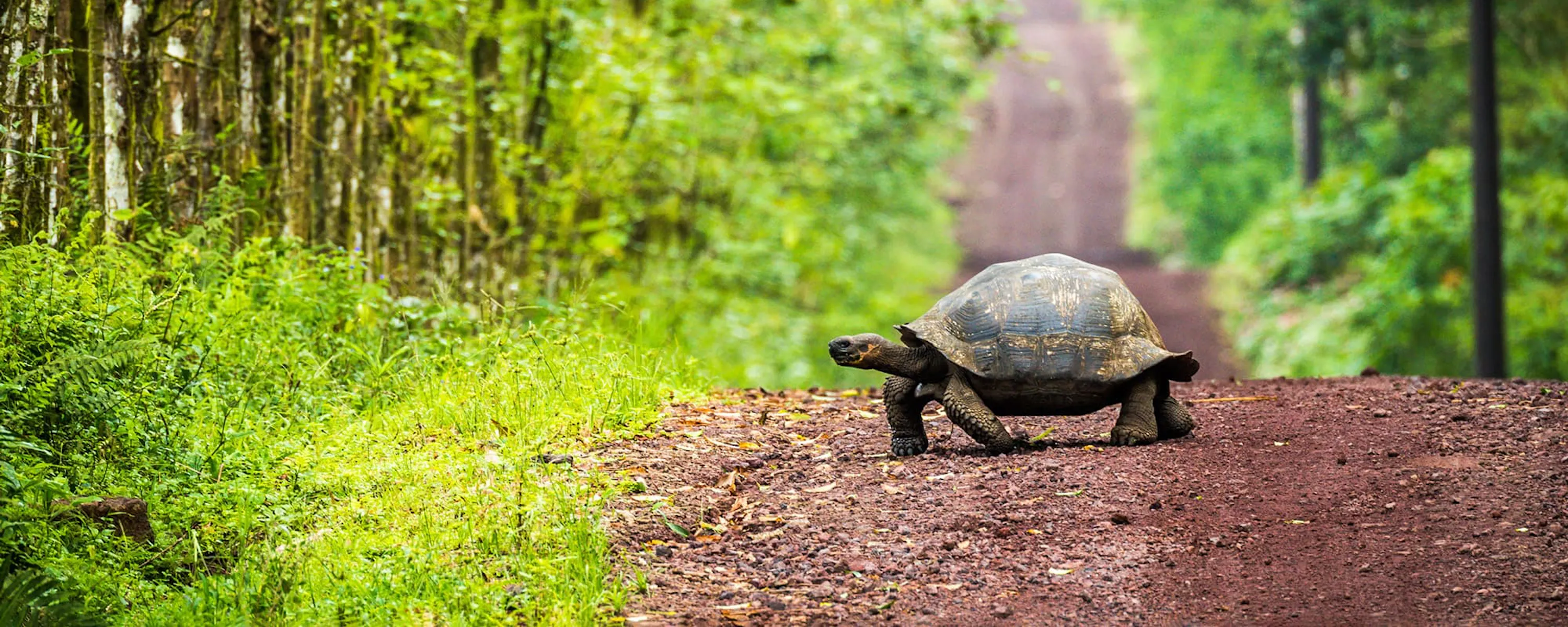
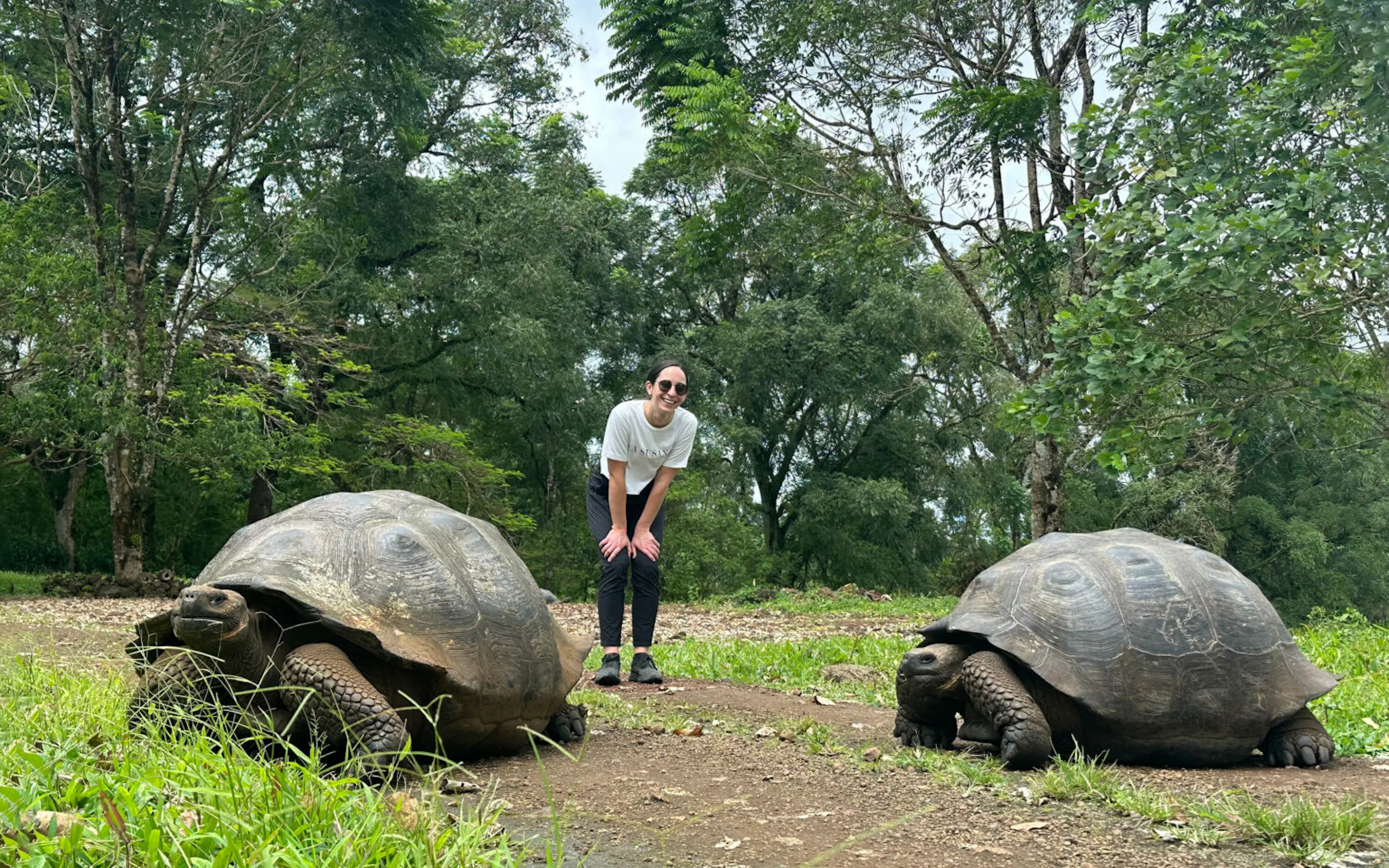
The Galápagos giant tortoise is one of the flagship species of the island; it’s one of only two extant giant tortoise species in the world. But they were almost driven to extinction here, eaten by both humans and invasive species like rats. Fortunately, their story is trending toward a happy ending. Conservation efforts are strong in the Galápagos; thanks to breeding programs on various islands, including Isla Santa Cruz, Isla Isabela, and Isla San Cristobal, populations are making a comeback. We’ll take you behind the scenes, giving you a chance to see giant tortoises of all ages and sizes—they can live to be more than 100 years old and weigh more than 500 pounds.
Where: Conservation centers on Santa Cruz, Isabela, and San Cristobal; in the wild in the Santa Cruz highlands and lowlands
When: Year-round in the conservation centers; July–November in the Santa Cruz highlands; December–June in the Santa Cruz lowlands
How: Visits to conservation centers; hikes; drives along the Santa Cruz highway
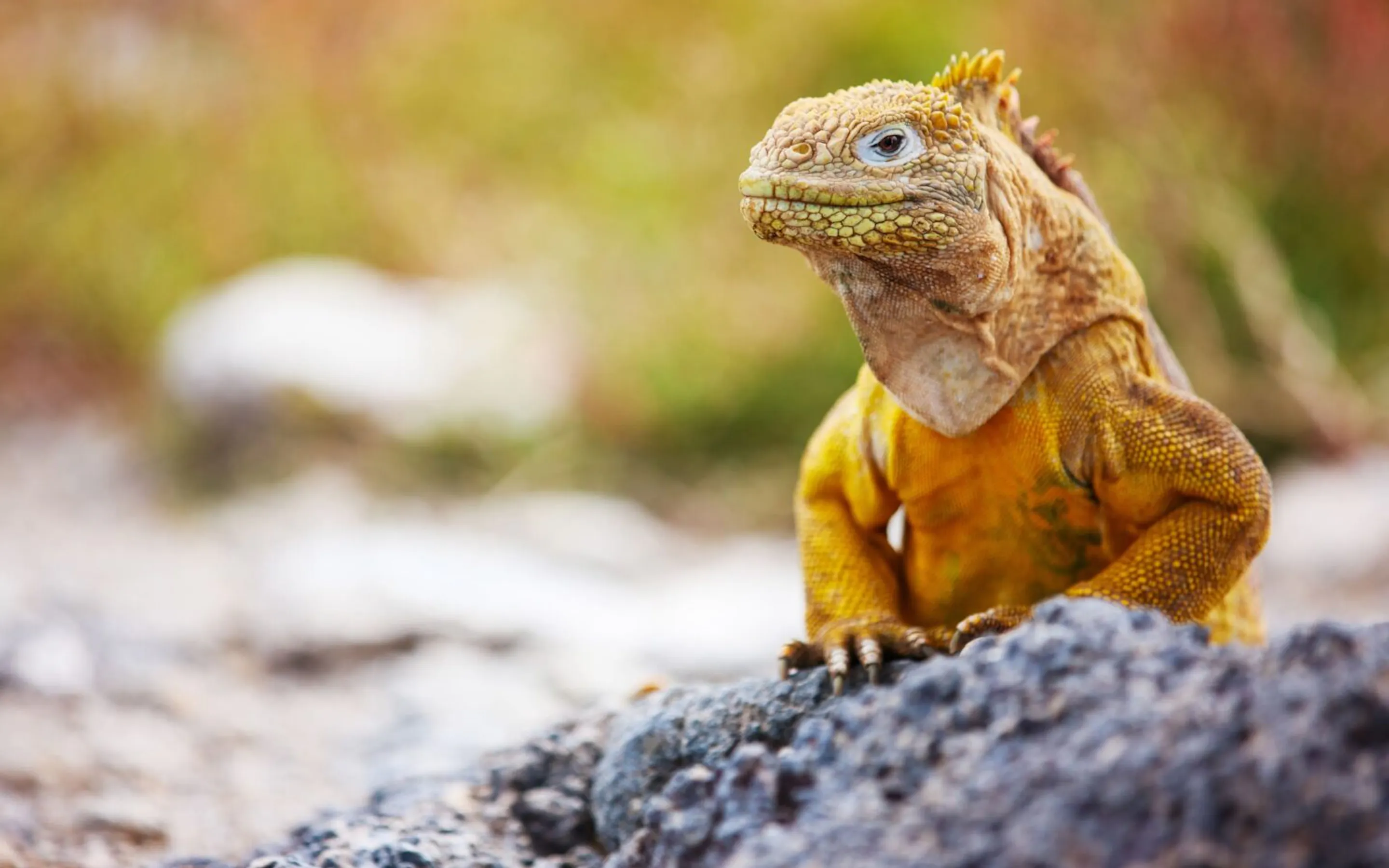
Discover the difference between Galápagos marine iguanas and land iguanas
We wouldn’t blame you if you were startled to see large lizards swimming through the waves in the Galápagos. These aren’t the iguanas you find in Florida—these are marine iguanas, referred to by Darwin as “hideous-looking creatures,” and they’re very adept swimmers that forage in the sea for algae. But there are land iguanas here, too, and Darwin didn’t much care for them either. We, however, find all the iguanas rather beautiful in terms of their coloration. While marine iguanas are typically dark gray, males may display iridescent greens and reds during mating season. And land iguanas can be yellow or even pink (the latter being a separate species called, appropriately, the Galápagos pink land iguana).
Where: Marine iguanas on nearly every island; land iguanas on Fernandina, Isabela, Santa Cruz, South Plaza, Baltra, Santiago and North Seymour
When: Year-round
How: Hikes, boat tours (for swimming marine iguanas)
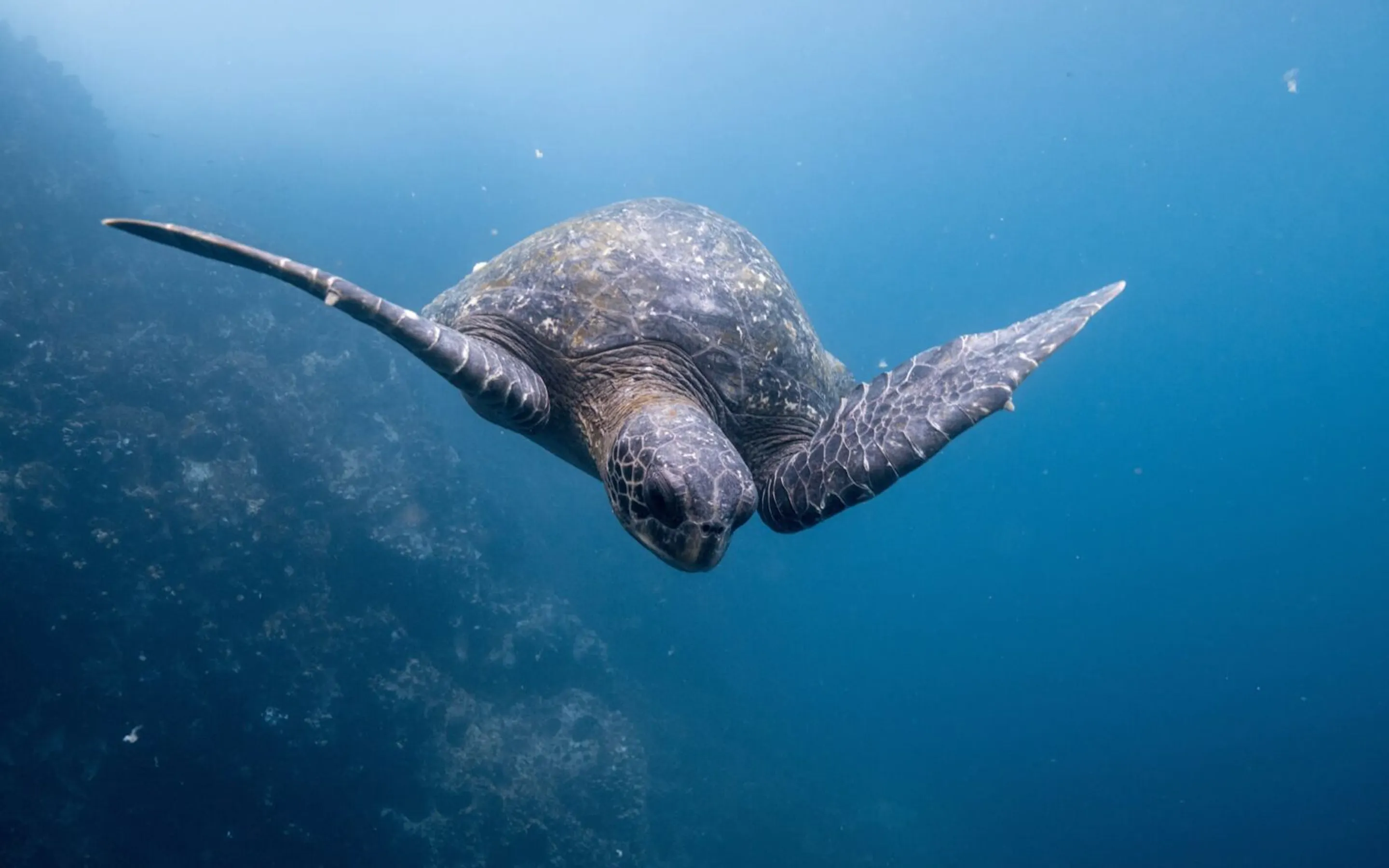
Snorkel with Pacific green sea turtles
There’s something magical about seeing a Pacific green sea turtle effortlessly gliding alongside you while you snorkel, knowing that it may be more than 70 years old. These long-lived gentle giants—which can weigh up to 450 pounds—are found all across the ocean, but only a specific population, the Galápagos green turtle, comes to nest across all the islands. Females haul themselves up onto more than 100 of the archipelago’s sandy beaches, most notably at Quinta Playa on Isla Isabela, to lay eggs from approximately December through January, but you can find them in the sea all year round.
Where: In the waters surrounding all islands; on sandy beaches on all islands
When: Females laying eggs from December to March; eggs hatching from April–May; adults swimming year-round
How: Snorkeling, diving, boat tours
Birds
Swim with Galápagos penguins
Yes, the Galápagos have penguins, but not very many of them. There are only about 1,000 breeding pairs of this species, which is the only penguin in the northern hemisphere—and one of the smallest—penguin species in the world. But we’ll take you to some of the most significant populations, such as the colony on the Marielas islets off Isabela Island. If you’re brave enough to get in the chilly water, you may even have a chance to see them zip by you underwater, bubbles trailing behind them.
Where: Bartolomé, Fernandina, Floreana, Isabela, and Santiago
When: Year-round
How: Snorkeling, boat tours
Spot Darwin’s finches
Darwin’s finches aren’t a specific species of bird but rather a group of closely related species—the differences between them helped Darwin develop his theory of evolution by natural selection. These days, you’ll find Darwin’s finches all over the Galápagos, and while it’s easy to see them throughout the islands, it might take you some time to spot all 18 species.
Where: All islands
When: Year-round
How: Walking around town, hikes
Photograph the turquoise eyes of flightless cormorants
In Antarctica, there’s a running joke that if you see a flying penguin, it’s probably a cormorant. But in the Galápagos, cormorants are actually more similar to their flippered brethren—they’re flightless. They do have little wings, but they’re used for balance when the birds are hopping across rocks, not flying. Flightless cormorants have long been a favorite subject of wildlife photographers, as they have mesmerizing turquoise eyes. See them along the rocky shorelines of Isla Isabela and Isla Fernandina.
Where: Isabela and Fernandina
When: Year-round; courting and nesting from May–October
How: Boat tours
Behold the blue-footed boobies, red-footed boobies, and Nazca boobies
Boobies, so named for the Spanish word bobo (meaning foolish or silly), are a group of birds noted for their spectacular dives into the sea to catch fish. The most famous is the blue-footed booby, whose blue feet are a matter of sexual selection—females tend to pick mates with the brightest feet. There are also red-footed boobies in the Galápagos, as well as Nazca boobies, which have relatively boring gray feet. But the Nazca boobies are the largest boobies in the archipelago, with wingspans up to five feet. Because boobies are seabirds, they spend most of their time at sea; you’ll get your best views of them during their breeding seasons, which we’ve detailed below.
Where: Blue-footed: North Seymour, Española, Fernandina, Floreana, Isabela, Pinzon, and Santa Cruz; red-footed: Genovesa and San Cristobal; Nazca: Española and Genovesa.
When: Breeding season for blue-footed: May–August; red-footed: January–September; Nazca: August–November on Genovesa and November–January on Española
How: Boat tours, hikes along rocky coasts
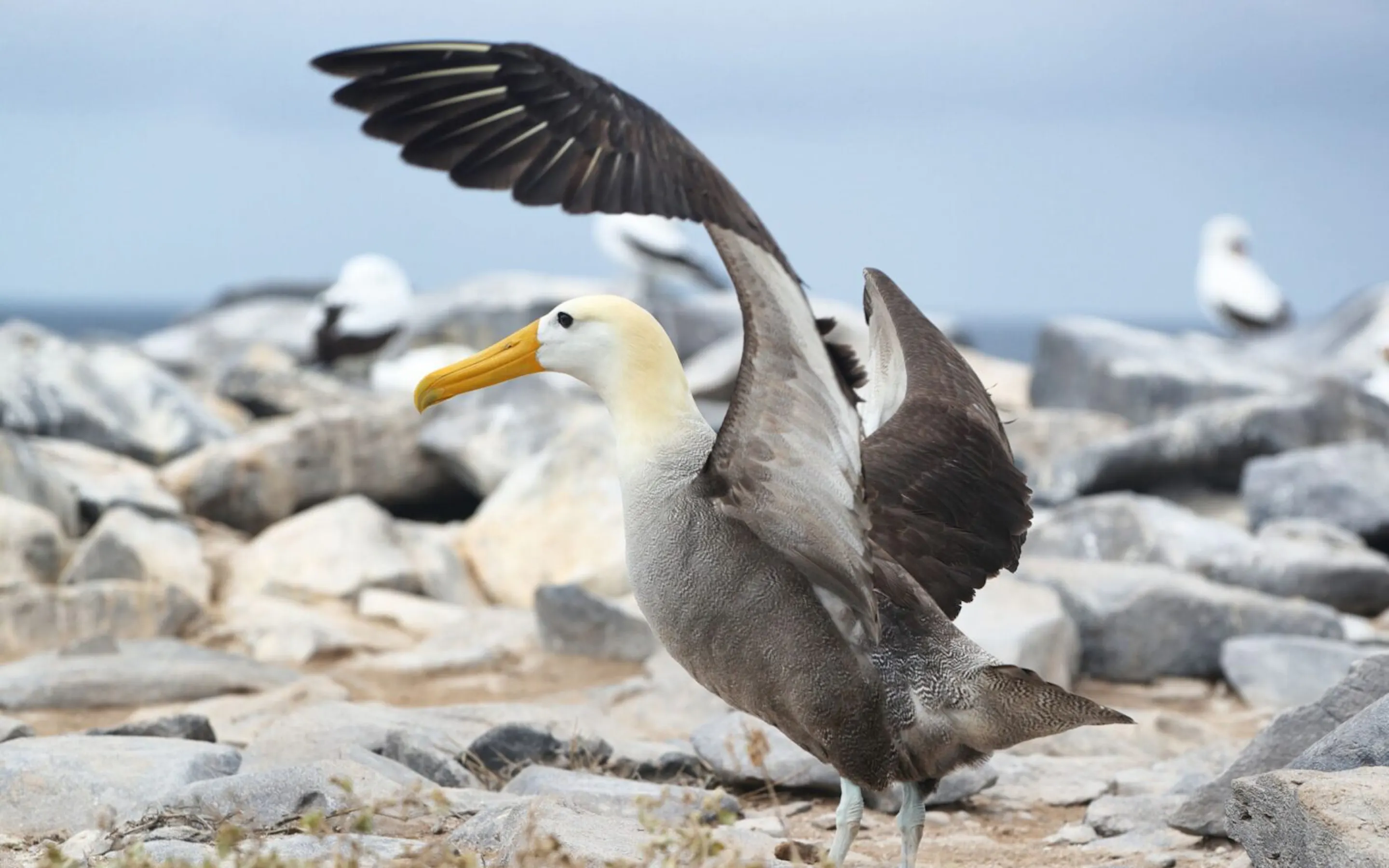
Witness the dances of waved albatross
The magnificent albatross is an impressive bird that spends most of its life at sea, spending time on land only to breed. The Galápagos is the breeding ground of the waved albatross, which is the largest bird in the archipelago with a wingspan of seven to eight feet. Though albatrosses mate for life, they still perform a courting ritual each breeding season—it’s a highly choreographed dance that’s extraordinary to watch. You can find them on Isla Española from April to December, with courtship occurring in April.
Where: Española
When: April–December; courting ritual in April
How: Hikes
See the frigatebirds float in the air all around you
No matter where you are in the Galápagos, if you look up, you’ll likely see a handful—or dozens, or hundreds—of frigatebirds hovering in the air above you. These masters of flight can stay in the air for weeks at a time, riding updrafts with impressive grace. If you grab a pair of binoculars, or if you get close enough to one roosting in the trees, you might notice a bulbous red pouch protruding from some of the birds’ necks. If you guessed that this, too, is a sexual selection trait, you’d be correct. Males puff up their bright throat pouches to attract females. There are two species of frigatebirds in the Galápagos: magnificent and great.
Where: Flying on all islands; magnificent colonies on North Seymour, Floreana, San Cristobal and Genovesa; great colonies on Española, San Cristobal, Genovesa, Darwin, Wolf, Daphne Major
When: Year-round
How: Just look up!
Find a flamboyance of flamingos
Some 400–500 American flamingos call the Galápagos home, with the largest populations in brackish lagoons Isla Floreana and Isla Isabela. If you’re lucky, you might catch the flamboyance in the middle of a sensational performance. Flamingo courtship dances, which can happen year-round, as the birds do not have a breeding schedule, involve the males parading around in groups, extending their necks, and turning their heads from side to side. They then perform wing salutes, showing off their plumage in dramatic fashion, followed by a quick preening session. Flamboyant, indeed.
Where: Floreana, Isabela, Santa Cruz, Santiago
When: Year-round
How: Hikes
Gaze upon the Galápagos hawk
The Galápagos’ apex predator is the mighty Galápagos hawk, but there are only an estimated 150 breeding pairs left on the islands. Though their numbers were once great, introducing invasive species like black rats that eat bird eggs and human persecution have decimated the population. You might spot them perched on exposed branches or perhaps hovering in the air, in both cases looking for prey.
Where: Española, Fernandina, Isabela, Rabida, Santa Cruz, Santa Fe, Santiago
When: Year-round
How: Hikes
Encounter the rare lava gull
Gulls can be found along shorelines worldwide, but the lava gull is endemic to the Galápagos Islands. It’s considered the rarest gull in the world, with just a few hundred breeding pairs across the archipelago, typically on Isla Santa Cruz, Isla Isabela, Isla San Cristobal, and Isla Genovesa. To spot them, look for a gull with a gray body, black head, and two white crescents surrounding its eye.
Where: Potentially all islands, but most typically Santa Cruz, Isabela, San Cristobal, and Genovesa
When: Year-round; peak breeding season is May–October
How: Walking around town, hikes
Mammals
Listen to the calls of Galápagos sea lions and fur seals
Mammals aren’t too common in the Galápagos, save for the Galápagos sea lions. You’ll find them just about everywhere, including on the main dock in Puerto Ayora on Isla Santa Cruz, Pups are born between June and November, and they’re highly inquisitive little creatures. Don’t be surprised if they approach you as you’re snorkeling, nibbling on your gear gently. If that’s an experience you’re seeking out, we recommend snorkeling at La Lobería on Isla San Cristóbal, Barrington Bay on Isla Santa Fe, and Pinnacle Rock on Bartolomé. Other than sea lions, there are also Galápagos fur seals here, but they’re a bit more elusive—except for the curious pups, born between August and November, who might approach you on the beach. Fur seals are smaller than the sea lions, and they have a thicker coat, hence their name.
Where: Galápagos sea lions: all islands; Galápagos fur seals: Isabela, Fernandina, Santiago, Bartolomé, Floreana
When: Year-round; sea lion pups from June–November; fur seal pups from August–November
How: Hikes, boat tours, snorkeling, diving
Marine life
Dive with hammerhead, Galápagos, and whale sharks
Perhaps not everyone wants to see a shark while they’re swimming in the ocean, but for those who do, the Galápagos has some spectacular opportunities. While you can see white-tip and black-tip reef sharks throughout the archipelago, the best shark spotting is at the remote islands of Darwin and Wolf, which have resident schools of hammerhead and Galápagos sharks. Whale sharks also appear here, do note that the dive sites here are for experienced divers only, as conditions can be challenging.
Where: Darwin and Wolf
When: Hammerhead and Galápagos: year-round; whale sharks: June–November
How: Snorkeling, diving
Swim with manta, spotted eagle, and golden rays
Several species of rays are found in the Galápagos, with three of the most sought-after being the manta, golden, and spotted eagle rays. Mantas, which can have larger than 25-foot wingspans, are most commonly seen around Darwin and Wolf. But you could get lucky and spot them within the main archipelago—specifically in the deep channel between Santiago and Sombrero Chino. Spotted Eagle rays are a bit smaller, with up to 16-foot wingspans, but they have beautiful spotted patterns. Golden rays are even smaller, with two-foot wingspans, and they blend perfectly into the sandy sea floor.
Where: Manta rays: Darwin, Wolf, the channel between Santiago and Sombrero Chino; spotted eagle and golden rays: Elizabeth Bay on Isabela and Caleta Tortuga Negra on Santa Cruz
When: Year-round; best water visibility is December–May
How: Snorkeling, diving
Where to see wildlife in the Galápagos Islands
If you’re wondering which Galápagos island has the most wildlife, don’t worry. That’s not an issue in the slightest, as every island is teeming with animals in the air, on land, and underwater. No matter where you go in the Galápagos, you’re pretty much guaranteed to see at least a few species in this Galápagos wildlife guide. Of course, some animals are harder to come across than others, as you won’t find every single species on every single island. So if any of them elude you on one trip, that just means you’ll have to make a return visit—and trust us, you’ll always want to come back for more.
Maybe your first time you’ll do a land-based journey at some of the best lodges in the Galápagos, and the second time take a cruise through the Galápagos—contact us to decide which means of travel is right for you.
April 1, 2026
Explore our itineraries
Every trip with Extraordinary Journeys is tailor-made, crafted in collaboration with one of our destination specialists. Use these as a starting point, or as inspiration to create your own journey.