The best safari parks in South Africa
An expert-informed guide to the best safari parks in South Africa. Learn where to go, the best places to stay, and when to go.
April 29, 2026
When it comes to wildlife, a South Africa safari delivers a knockout punch. We don’t like to use the word “guarantee,” but you’re practically assured to see familiar favorites including elephants, lions, giraffe, zebra, buffalo, hippo, impala, hyena, and abundant birdlife. Sightings of elusive leopards, cheetah, rhino, and endangered wild dogs are a satisfying thrill.
There are many wildlife-rich national parks and game reserves in South Africa and yet, Extraordinary Journeys only uses a fraction of them with regularity.
In this travel guide, we will reveal the best safari parks in South Africa and what qualifies them as such.
What makes a good safari park?
Whether in Kenya’s Maasai Mara or South Africa’s Greater Kruger, we typically recommend Africa’s private reserves and conservancies ahead of national parks—for a combination of reasons.
Exclusivity
The strongest argument for a private reserve safari is exclusivity.
National parks are public lands that welcome lodge guests, campers, and day-use visitors. By contrast, private reserves are owned by a collective of private landowners and overnight guests are the only ones permitted on-site. (Though some concessions negotiate traversing rights.) Private reserves also limit the number of camps and lodges to uphold a quality of experience, sometimes even capping the number of bookable bed nights in a year.
The cumulative result is a higher-quality safari experience. With fewer vehicles traversing a given area, you’ll experience the version of the wilderness you imagined, unencumbered by queues of Land Cruiser traffic. Expert driver-guides and trackers are all uniformly qualified, and you won’t encounter self-drive safari day-trippers.
What’s more, when you do come across a special sighting, reserves limit the volume of vehicles that can linger at one time, so you won’t be jockeying for the best position.
Close encounters
Another reason we prefer a private reserve is the ability to stray from the road.
Being limited to what you can see from the road can be frustrating. Squinting through binoculars, all you can do is will the animal to come closer.
On a private reserve you’re able to approach a leopard hanging from the branch of an acacia tree for a closer look. It’s an action your guide will only reserve for good reason, but in a national park such as Kruger it’s not permitted at all.
Flexibility
Another reason to choose a private reserve is that you’re not limited to national park operating hours.
Enjoy an unhurried sundowner on the hood of the truck then lazily make your way back to camp. Along the way, watch your tracker sweep the bush for red-glowing retinas on an after-dark safari.
Another splendid after-hours experience: a bush dinner backlit by candles in a surprise setting.
Wildlife density
The best safari parks in South Africa boast excellent game viewing. Wildlife is often measured by the presence of the Big Five (lion, elephant, rhino, leopard, and Cape buffalo), but that’s not the full story.
Reliable sightings, density, a diversity of species, healthy populations, and the occurrence of rare or migratory species are the shared characteristics of our favorite parks and reserves.
Scenic beauty
We also factor in the beauty of the scenery. Does the reserve reflect a diversity of landscapes? Imagine, terrain that shifts between riverine forest, plains, bushveld, and sandy riverbeds. Are there scenic viewpoints for sundowners or bush breakfasts? Is the reserve large enough? Is it a place you could spend three days exploring without growing tired of the same landscape?
The best safari parks in South Africa
Sabi Sands Game Reserve
If you have just one safari stop in South Africa—and a generous budget—let it be at Sabi Sands Game Reserve. A premier destination, it’s not just one of the best safari parks in South Africa, but the world.
Sharing a 31-mile unfenced border with Kruger National Park, you’re likely to count the Big Five within a few short days. Boasting reliable year-round water sources, Sabi Sands teems with healthy populations of predators, plains game, and everything in between. At times, you hardly have to search for wildlife. What’s more, habituated big cats barely blink to acknowledge your presence; ready your camera for some outstanding photography.
Wildlife aside, the terrain of Sabi Sands is beautiful. This 160,000-acre wilderness is spliced by two rivers (Sabi and Sand) and cloaked with postcard-pretty woodland savannah. Game drives wend through riverine bushveld, rocky outcrops, thickets, and savannah.
Founded in 1948 by a collective of conservation-minded landowners, Sabi Sands remains privately owned and managed. (Note: protective measures in Kruger started as early as 1898; it was gazetted a national park in 1926.) The well-established Reserve is further divided into concessions of varying size that feature one, two, or three lodges. In some cases, the concessions are still held by third and fourth-generation owners.
You’re spoiled for luxury accommodation in Sabi Sands; the reserve cradles some of the best safari lodges in South Africa. Standout properties include Singita Boulders, Dulini Leadwood, Lion Sands Ivory, Sabi Sabi Earth, AndBeyond Tengile, and Cheetah Plains.
Traversing rights between lodges dictate where game drives can travel within Sabi Sands. Choosing a lodge on a larger concession will offer a safari experience with greater exclusivity and less vehicle pressure. If it sounds confusing, don’t worry, an Extraordinary Journeys safari specialist can help select the lodge that balances your needs, style, and budget.
Timbavati Private Nature Reserve
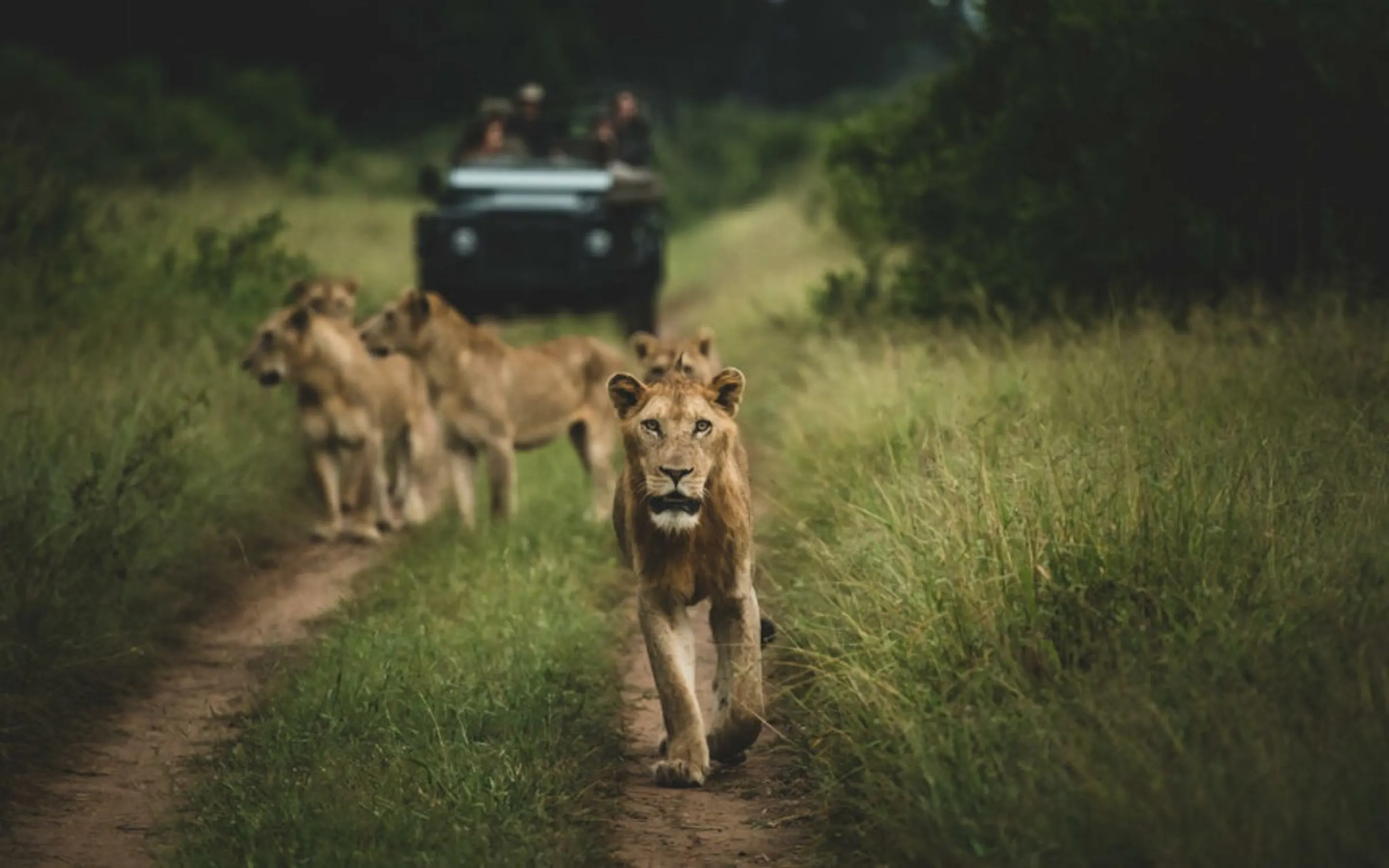
Another Kruger National Park safari top-pick, Timbavati Private Nature Reserve measures 130,000 acres and shares an unfenced border with the famous national park. Given its proximity and just-slightly-smaller size than Sabi Sands, the two often draw comparison. We’re commonly asked, which is better? Separated only by Manyeleti Game Reserve, there are many commonalities.
Timbavati’s landscape is also characterized by undulating woodland savannah, and though it does feature some dry riverbeds, no permanent rivers flow through it. Wildlife tends to congregate at water holes and dams. By contrast, two rivers flow through Sabi Sands which give that reserve its dense riverine vegetation—favored by leopards and rhino.
Safari-goers will encounter the Big Five, large predators, and all manner of plains game and birdlife in Timbavati. The reserve is home to large herds of buffalo and elephant, in addition to rare white lions. Game viewing is excellent—you’ll encounter the Big Five in a few days—though it can feel just slightly more “earned” than Sabi Sands. As an upside, you might enjoy this wilderness in greater solitude. Counting 18 lodges (compared to Sabi Sands’ 24), you’re less likely to encounter as many other vehicles here.
Timbavati is also privately owned by conservation-minded landowners who assembled mid-century. In 1993, its fence with Kruger was dropped, allowing wildlife to roam unencumbered. Unlike the rehabilitated reserves of the Eastern Cape and some others that hug Kruger, the land that Timbavati occupies was never permanently settled so its wilderness can be considered genuine.
Ultimately, the difference between Sabi Sands and Timbavati is lodge prestige. Sabi Sands has cultivated a reputation for ultra-luxury lodging. Though neither reserve offers even mid-range luxury, Timbavati represents a bit better value for money, especially if you’re not stuck on a specific brand.
In any case, there is no bad decision; both Timbavati and Sabi Sands offer high-caliber, equally satisfying safari experiences. Your Extraordinary Journeys safari specialist can help determine where to go. Or, compromise and visit both. Caveat: If your next destination is Victoria Falls or Mozambique, Sabi Sands offers better proximity to the airport that serves these international destinations.
Thornybush Game Reserve
Timbavati’s neighbor to its east, Thornybush Private Nature Reserve is a Greater Kruger gem and one of the best safari parks in South Africa. In this 37,000-acre Big Five wilderness, game drives ramble through open savannah, undulating lowveld, and prickly scrub.
What Thornybush lacks in size is made up with legacy. The well-established reserve was originally fenced in 1955, making it one of the first commercial reserves in Kruger, and in 2016, Thornybush dropped its fences. With wildlife roaming unencumbered, safaris here offer Kruger wilderness and wildlife without the crowds. You’re likely to encounter the Big Five throughout your multi-day stay, but count yourself lucky if you encounter rarer cheetah, wild dog, and white rhino.
Relative to Sabi Sands, game drives in Thornybush have a stronger hide-and-seek quality—and that’s not always a bad thing. The pursuit gives safari-goers an opportunity to lend guides and trackers an extra set of eyes, eagerly scanning the bush for the next thrill. It also affords you more time to hone in on safari’s supporting cast of actors. Slow down to appreciate unique flora, the Small Five (leopard tortoise, antlion, elephant shrew, buffalo weaver, and rhino beetle), and birdlife. You literally can’t miss Thornybush’s martial eagles, kori bustards, and saddle-billed storks—the largest members of their respective species. Hornbills and brilliantly colored lilac-breasted rollers and malachite kingfishers dazzle while reminding you, you’re on safari in Africa!
Thornybush counts 14 lodges within the reserve. There are great options for families and small groups. Serondella is an intimate setting for groups, as is the exclusive-use Kamara House. Royal Malewane is an amenity-laden designer lodge for those seeking an arm’s-length nature experience. (It’s also fenced, so bring the kids.) Sleep under canvas at Saseka Tented Camp, a romantic hideaway on a seasonally flowing river. (Hello, riverbed dinners.) Want even more privacy? Little Saseka invites sole-use bookings, even catering to families with young children.
Madikwe Game Reserve
A 185,000–acre parcel of rewilded wilderness snug against the border of Botswana, Madikwe Game Reserve is a must-visit safari park in South Africa. Despite its generous size, presence of the Big Five, and malaria-free safari status, Madikwe remains one of the country’s lesser-visited reserves—adding to its allure.
Established in 1991, Madikwe’s history is a monumental tale of heavy-lifting conservation. Under the banner of Operation Phoenix, massive land reform and the world’s most ambitious game-relocation effort witnessed the reserve’s total transformation from degraded cattle farmland to a thriving safari ecosystem.
Today, some 66 large mammal and ~300 bird species take sanctuary in Madikwe, which includes South Africa’s largest elephant population outside of Greater Kruger. (Operation Phoenix translocated entire herds of elephants—a world first.) What’s more, after a long and hard-fought reintroduction of endangered African wild dogs—starting with a founder population of just six members—the reserve is now home to three hunting packs. For painted dog-lovers, it’s one of the best places in the world to view them.
Madikwe offers scenic beauty across a mosaic of landscapes that shift from open savanna to towering escarpment and woodlands. The Dwarsberg Mountains stand at the reserve’s southern hem and cinnamon-colored clay and dirt is reminiscent of Australia’s Red Center.
Our only criticism of Madikwe is its volume of lodges; there are more than 20 within the reserve. As a solve, we situate guests away from the fray, in the more remote southeastern corner along the Marico River.
Kwandwe Private Game Reserve
Tucked away in a secluded part of the Eastern Cape, Kwandwe Private Game Reserve is one of the best safari parks in South Africa. Established in 1999 and now encompassing 74,000 acres, Kwandwe is a conservation victory built upon rewilded farmland. The reintroduction of some 7,000 wild animals means safari-goers can now spot healthy populations of the Big Five. Other rare species also roam the terroir; both black and white rhinos call the reserve home, alongside bat-eared foxes, Knysna woodpecker, Cape grysbok, black wildebeest, and the elusive black-footed cat.
Wildlife aside, Kwandwe captivates with vivid Little Karoo landscapes. Game drives traverse a breathtaking mix of rolling hills, expansive plains, and lush riverine forest along the Great Fish River, all backed by mountain views. While the reserve is fenced to deter poaching, the vastness and exclusivity of the area creates a sense of unbounded wilderness.
Conservation safaris are a special feature of safari in South Africa—especially within rehabilitated reserve land where teams of ecologists and zoologists work to maintain a delicately balanced ecosystem. Kwandwe is a leading destination for a rhino-focused conservation safari, and guests have the option to participate in monitoring, notching, and collaring. The reserve has also reintroduced cheetahs with great success. The now-thriving population has enabled Kwandwe to support cheetah translocation efforts across southern Africa.
We love that Kwandwe has only five accommodations spread across the entire reserve (for a total of 26 rooms). This high land-to-guest ratio means more time with the animals and fewer interruptions. Stylish accommodations include two luxury lodges, a private homestead, manor, and villa. Kwandwe is ideal for couples, honeymooners, families, and small groups. It’s also a top choice for a malaria-free safari.
Shamwari Private Game Reserve
Shamwari Private Game Reserve is also located in the Eastern Cape and has an origin story rooted in conservation. It took monumental ambition, effort, and collaboration to reverse three centuries of human impact that had eradicated the Eastern Cape of big game.
By 1992, farmland was assembled and merged, fences were torn down, and native flora was reintroduced to Shamwari. Elephants and white rhino were the first lumbering herbivores to be repopulated, followed by black rhino and buffalo. Big cats arrived in 2000, and Shamwari became the first official Big Five reserve in the Eastern Cape. The reserve’s next big ambitions look to reintroduce once-endemic spotted hyena and African wild dog. The joys and challenges of managing Shamwari are profiled on the Netflix series Shamwari Untamed.
Peppered across the reserve are seven accommodations. Families on a malaria-free safari will love Riverdine while the luxurious Sindile and Bayethe romance couples and honeymooners. Explorer Camp offers adventurous guests a back-to-basics summertime base camp for guided walking safaris.
Safari-goers rumble across Shamwari’s 61,000 protected acres on twice-daily game drives and bush walks. The landscape is a kaleidoscope of five unique biomes—thickets, grassland, forest, mountains, and bushveld—bisected by a 16–mile stretch of the snaking Bushman River. Round out your safari with a visit to the Born Free Big Cat Sanctuary to observe rescued lions and leopards that can not return to the wild.
All taken together, Shamwari is one of the best safari parks in South Africa.
Tswalu Kalahari Reserve
The one knock against a South Africa safari is that they can feel a little too tame and a little too accessible. Tswalu Kalahari Reserve is a splendid exception.
Situated on the lip of the southern Kalahari Desert, remote Tswalu is South Africa’s largest private reserve. Spanning more than a quarter-million acres, this wilderness reverberates with solitude. Home to just three luxurious accommodations for a maximum of 40 guests, you can’t ask for a more generous land-to-bed ratio. What’s more, each suite is allocated a private guide and vehicle, so you’ll crisscross this sublime, semi-arid savanna in near exclusivity.
Lacking elephants, you won’t spot the Big Five in Tswalu, but you will quickly come to appreciate the uniquely adapted dry savanna specialists that take sanctuary here. Game drives evoke more of a hide-and-seek thrill compared to other wildlife-dense safari parks in South Africa. Navigating the reserve’s rugged dune roads, scan for oryx, wildebeest, zebra, giraffe, warthog, and ostrich. Patience favors safari-goers hoping to spy Kalahari black-maned lion, desert black rhino, and wily African wild dog. Closer to the Korannaberg foothills, with luck, you might come upon a leopard. Elusive and critically endangered species such as cheetah, hyena, and black-backed jackal are rare but possible sightings Don’t leave before visiting a colony of habituated meerkats (you’re sure to be entertained by their quirky antics) or going pangolin tracking.
At the end of your day, retreat to the luxury of Tarkuni Homestead (a five-suite, exclusive-use villa), Motse (a six-suite camp), or Loapi (six “safari homes”). Savor slow gourmet dinners, then crane your neck skyward for brilliant stargazing. Tswalu marries well with a luxury Cape Town tour.
South Africa safari FAQs
April 29, 2026
Explore our itineraries
Every trip with Extraordinary Journeys is tailor-made, crafted in collaboration with one of our destination specialists. Use these as a starting point, or as inspiration to create your own journey.