Namibia safari: The top 8 places to go on your extraordinary adventure
Remote, vast, and wild, Namibia is a singular safari destination within Africa.

April 27, 2026
Remote, vast, and wild, Namibia is a singular safari destination within Africa. Situated along the Atlantic coastline in southeast Africa, Namibia shares borders with Angola and Zambia in the north, and Botswana and South Africa to the east and south, respectively. While the country isn’t home to the prolific herds of iconic animals found in Kenya or South Africa, Namibia offers something even more spectacular: silence that rings across cinematic red sand dunes, cinnamon sandstone mountains etched with ancient rock art, haunting shorelines littered with shipwrecks, and sleep-outs under spellbinding night skies.
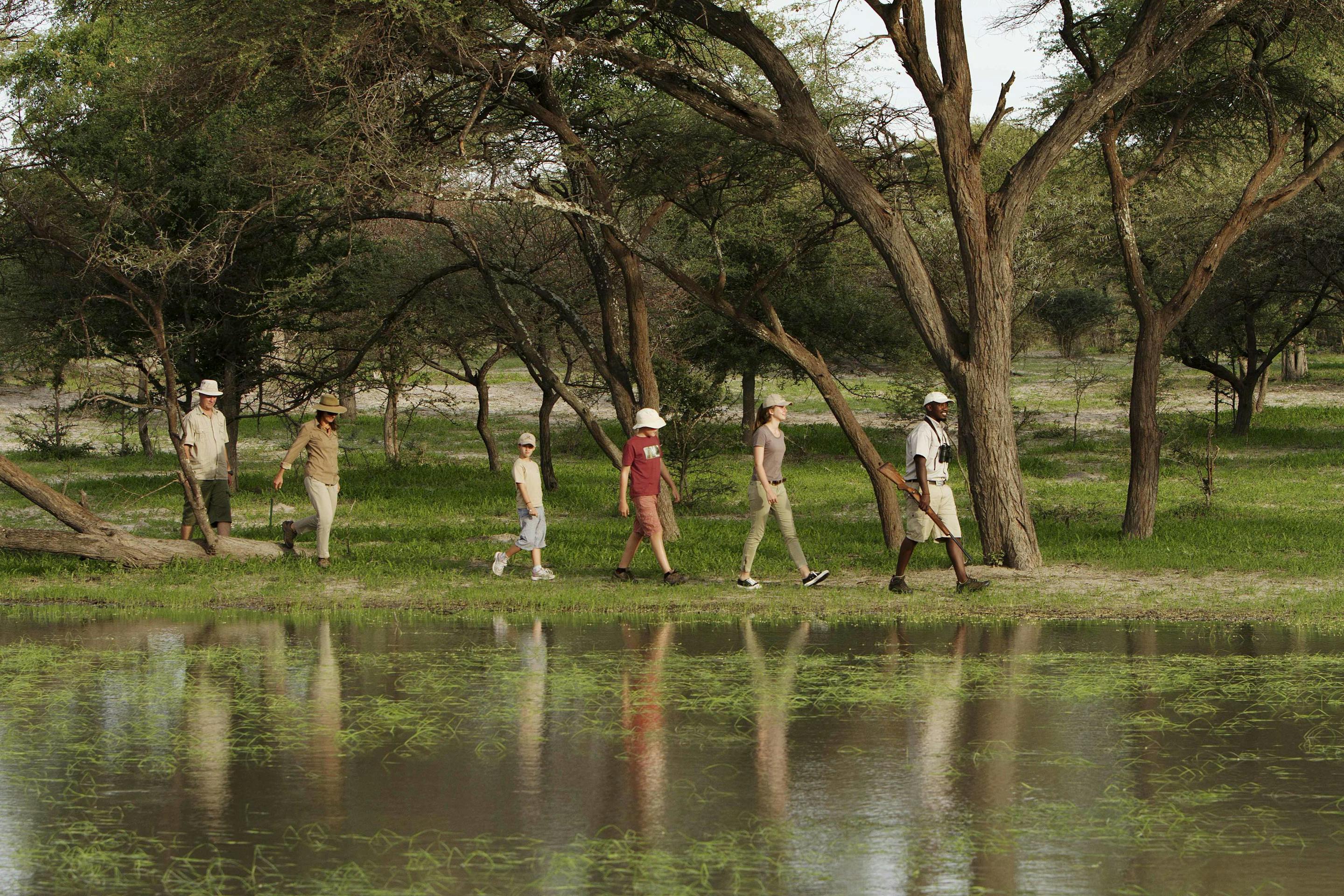
A Namibia safari is for adventurers who appreciate the uncommon and the extraordinary. A trip here is filled with authentic cultural encounters and fascinating ancient history and art. For wildlife enthusiasts, you’ll still get a look at rare desert-adapted animals, including black-faced impala, tssesebe, and gemsbok, cast against a stark landscape. It’s also a rewarding destination for travelers who want to take a more active approach to a safari, offering wonderful opportunities for walking safaris and hikes, as well as adrenaline-pumping activities such as skydiving and paragliding. The unique landscapes in Namibia are a photographer and nature lover’s dream, and stunning luxury camps offer a front-row seat.
In this Namibia safari guide, we dive into the country’s most enchanting regions.
The Namib Desert
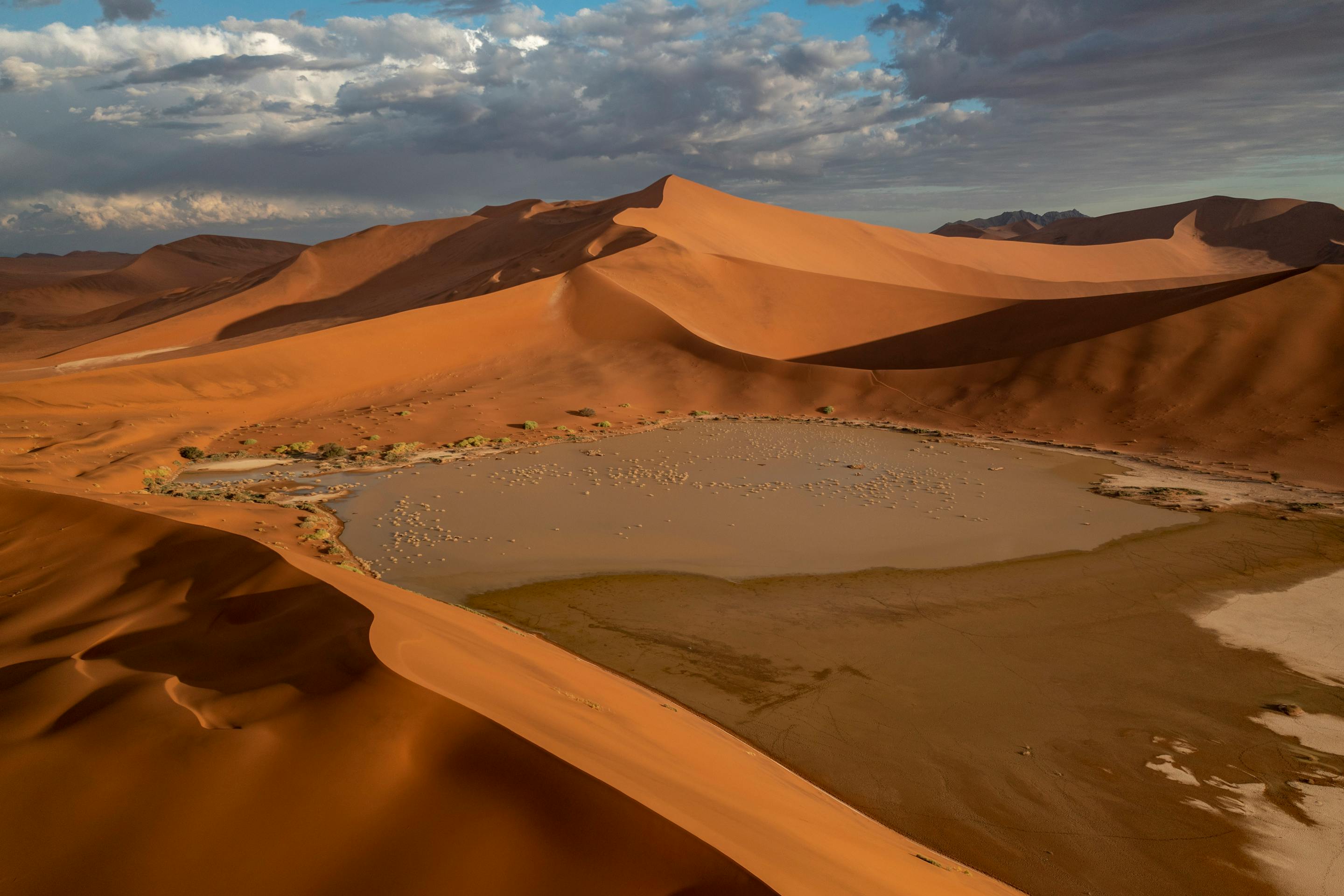
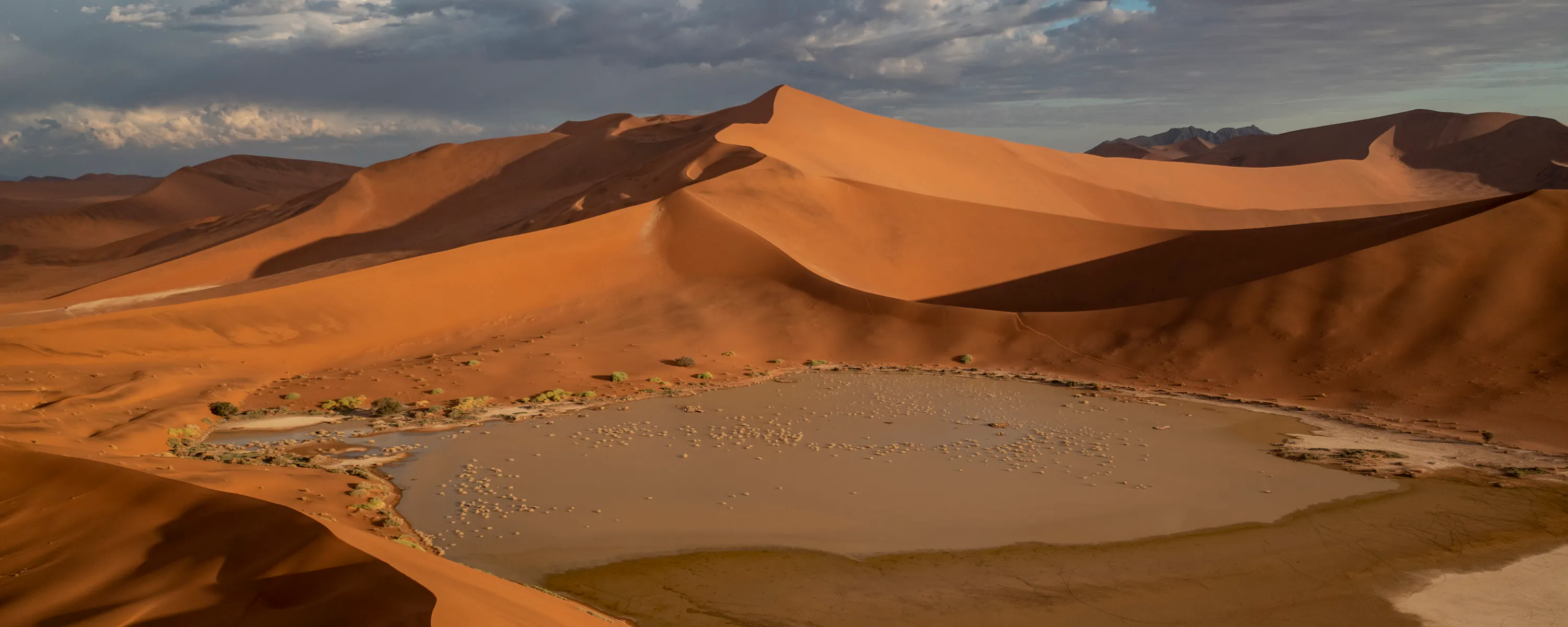
The oldest desert in the world, the Namib, is arguably the country’s most iconic, spectacular region—easily one of the best places to visit in Namibia. If the country conjures images of red sand dunes rolling toward an endless horizon, and the petrified trees of Deadvlei casting spectre-like shadows on a white clay pan, it’s the desert you’ve been dreaming of. Both the dunes of Sossusvlei and the haunting landscape of Deadvlei, where the bleached trees stand against a blue sky and surrounding ochre dunes, are part of Namib-Naukluft National Park. The park is the fourth largest in the world and stretches down the southern coastline for 248 miles.
Embark on a nature drive or hike the dunes in the early morning when they’re sculpted by a dramatic chiaroscuro of light and shadow. A hot air balloon ride over the desert is one of Namibia’s most peaceful experiences, and experiencing the silence and vastness from the sky feels profound. In the NamibRand Nature Reserve, a private concession in the southernmost part of the desert and home to Africa’s oldest dark sky preserve, a brilliant wash of stars paints the night sky. The Namib Desert also offers the chance to spot desert wildlife such as zebra, oryx and springbok, all uniquely adapted to the dry, harsh climate here.
The Best Places to Stay in the Namib Desert
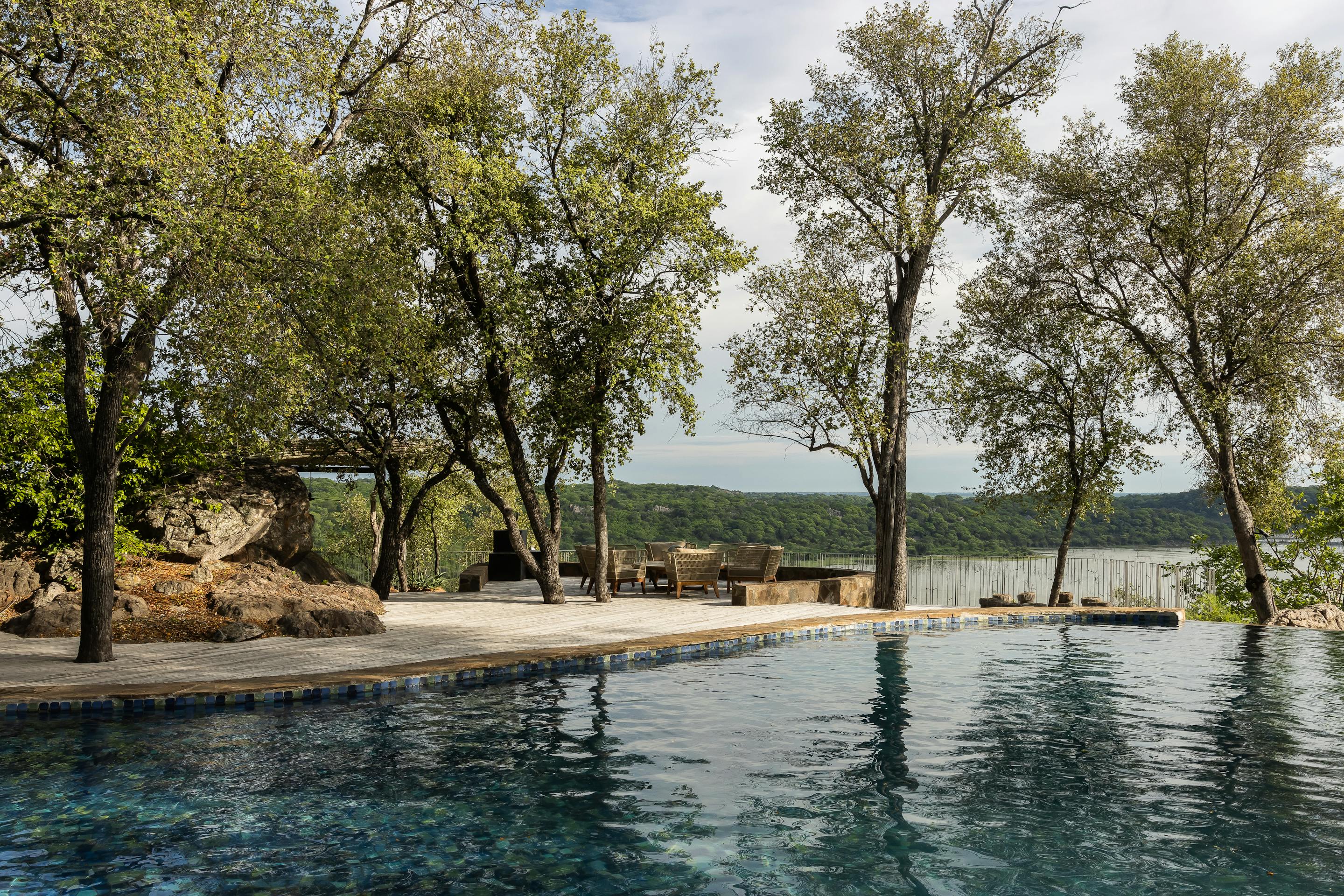
- Sossusvlei Desert Lodge | This stunning modern lodge is perched on an escarpment overlooking the Sossusvlei Private Desert Reserve and is a beacon of sustainable luxury in the desert. Ten stone-and-glass villas, a private observatory manned by a professional astronomer, and private plunge pools are among the sophisticated offerings here.
- Little Kulala | The dunes of Sossusvlei and stark panoramas of Deadvlei are accessed via a private entryway when staying at Little Kulala, an intimate and elegant desert camp where roll-out beds on each private terrace await a night under the stars.
- Wolwedans Dunes Camp | This beautiful nature-inspired camp is set on the edge of a secluded, 250-meter-high dune in the heart of the NamibRand Nature Reserve. Enjoy walking trails, horseback safaris, and drives through the reserve and then retreat to the silence and serenity of this six-tent camp.
- Kwessi Dunes | Located in the heart of the NamibRand Nature Reserve, Kwessi Dunes was designed to highlight the vast desert land and sky. Each of the 12 chic, contemporary thatched-roof chalets gaze out on the desert vista and come with separate “star-gazer rooms” that are completely open to the night sky.
The Skeleton Coast & Kunene
In one of Namibia’s most remote regions, bone-white dunes crest like waves, and the shipwrecks of ill-fated expeditions are buried along a spartan, windswept coast. The Skeleton Coast is a bit more difficult to access than other parts of the country, but this wild landscape of dramatic contrasts is worth the effort. (Hands-down, it’s one of the best places to visit in Namibia.) Along the 300-mile-long coastline, go beachcombing for fragments of whale bones and ships, set off on drives in search of rare desert-adapted wildlife, and watch the sun set over mountainous dunes.
The Skeleton Coast is part of the larger Kunene region, and just inland along the Kunene River is a part of Namibia that many travelers miss. A lush oasis springs to life along the riverbanks here, home to the semi-nomadic Himba people. Outside of the greener, tranquil landscape, which is quite a contrast to the coast, time here offers the opportunity to immerse yourself in Himba culture and learn about their traditional ways of life.
The Best Places to Stay on the Skeleton Coast & Kunene
- Shipwreck Lodge | This iconic Skeleton Coast lodge was designed to make you feel like you’re sleeping inside one of the coast’s notorious shipwrecks. Each standalone suite echoes the nautical design of one of the jagged ships buried in the region’s bone-white sand, with chic interiors that look directly out onto the ocean and endless sand dunes.
- Hoanib Skeleton Coast Camp | Eight elegant, minimalist tented suites are a chic oasis that reflect the Skeleton Coast’s austere, otherworldly beauty. You’ll enjoy the best of both worlds here, experiencing life along the oasis-like Kunene River while having the Skeleton Coast close by.
- Hoanib Valley Camp | This camp of six luxury tented suites is set just inland from the coast in Kaokoland. Hike among craggy rocky outcrops, dine under a spellbindingly bright starry sky, and keep your eyes peeled for desert-adapted lion, elephant, and giraffe—the camp was established as a joint venture with the Giraffe Conservation Foundation.
- Serra Cafema | This unique luxury camp offers a look at the Kunene region from a different vantage point: perched along the green shoreline of the Kunene River, where boating and fishing adventures, along with cultural experiences with the Himba people, await.
Damaraland
One of Namibia’s most otherworldly landscapes is found in Damaraland. Inland from the Skeleton Coast, the region is marked by dramatic red sandstone rock formations, palm-fringed oases, and the country’s highest peak. The Twyfelfontein petroglyphs, one of the best-known examples of rock art in Africa, are the main draw here. The UNESCO World Heritage Site includes 2500 engravings etched into the side of sandstone depicting animals, animal tracks, and geometric motifs.
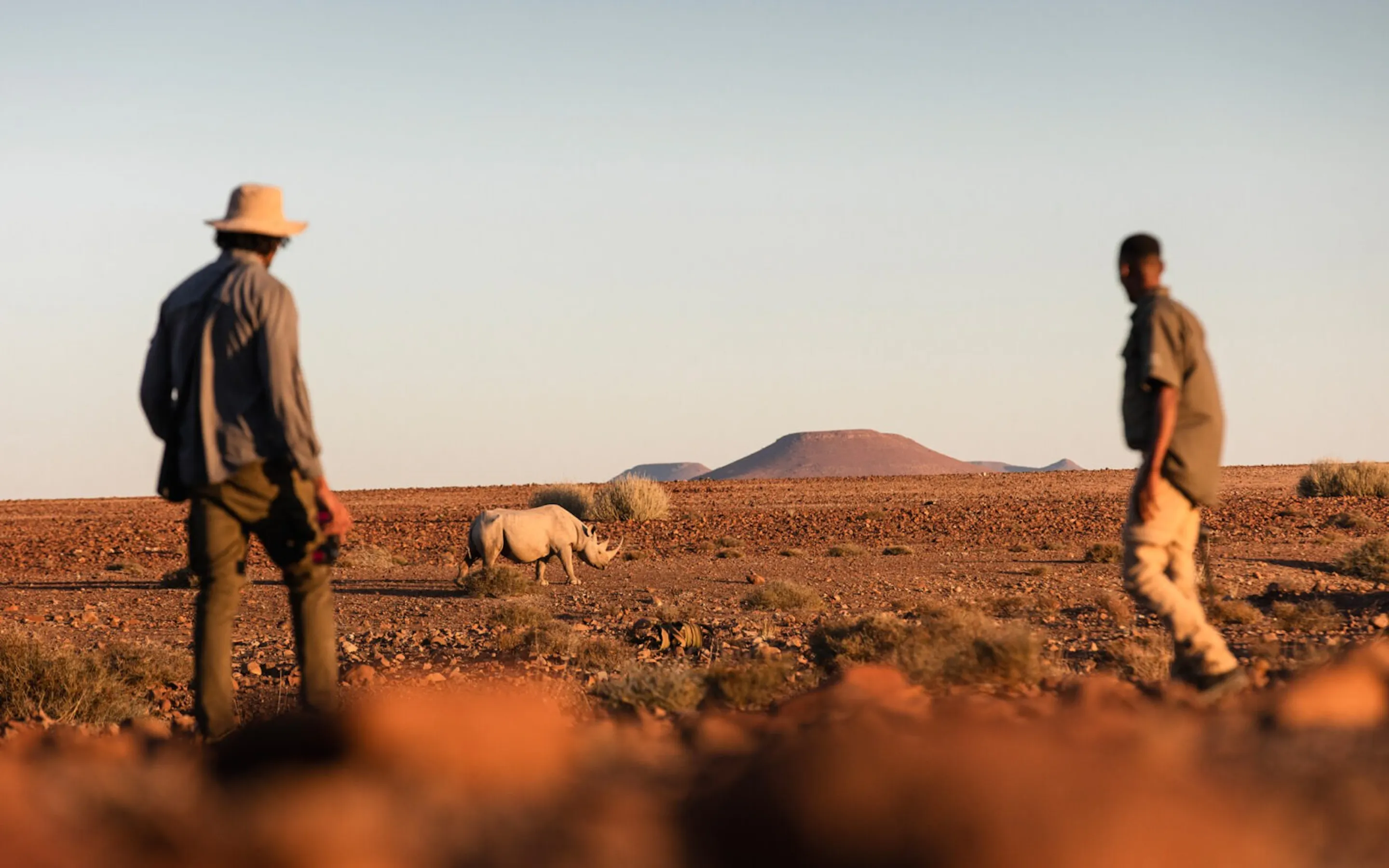
Although Twyfelfontein is a major highlight, Damaraland is also a Namibia safari destination. Wildlife here includes desert-adapted elephants, lions, and rhinos. Myriad hikes and walking safaris follow rivers carved through the lunar landscape, so you might spot these animals on foot, too. It’s one of the few places in Namibia where wildlife populations are actually increasing, thanks to a successful community-based, conservation tourism model.
The Best Places to Stay in Damaraland
- Desert Rhino Camp | Redesigned in 2024, Desert Rhino Camp was established to help protect Namibia’s last remaining wild black rhino population. The sanctuary boasts just six contemporary stone and canvas-roofed suites with sun-drenched patios and outdoor showers, all with a view of the desert wilderness.
- Onduli Ridge | This stunning modern camp is comprised of just six suites, each with spacious terraces offering a view of the endless savanna and hills, and at night the vast starry sky. You’ll also be only a 20-minute drive away from Twyfelfontein.
- Damaraland Camp | Damaraland Camp’s minimalist thatched-roof chalets overlook the tranquil Huab River Valley, marked by grassy savanna plains and rust-hued mountains in the distance.
Etosha National Park
Etosha National Park is the country’s premier wildlife destination, making it one of the best places to visit in Namibia. Compared to the Namib Desert or Damaraland, time spent in Etosha closer resembles a classic safari experience. The park itself is one of Africa’s largest, spanning nearly 9,000 square miles of green hills, savanna, and a massive salt pan that covers 25 percent of the land. The roads are paved, and the park can draw large crowds in July and August, so it’s a less rugged experience than other parts of Namibia. That’s part of the reason we mostly stick to the private conservancies that border the park, where game drives feel like a bit more of an adventure and where the best lodges are also found.
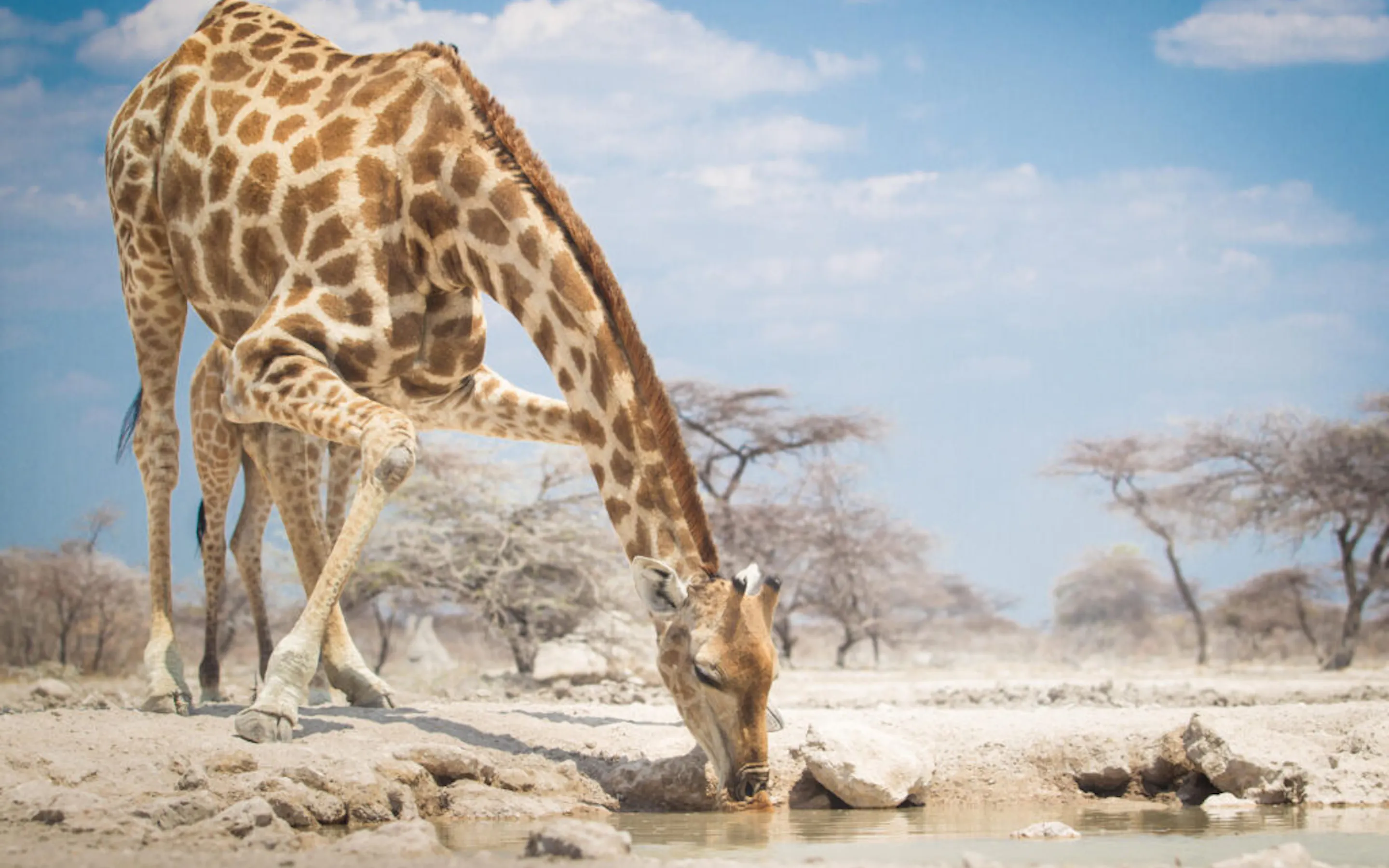
A profusion of waterholes in these private reserves attracts an incredible diversity of wildlife, especially during the dry season. You’ll have the chance to witness giraffes, zebras, black and white rhinos, and rare species including black-faced impala, tssesebe and gemsbok, quenching their thirst and playfully interacting with one another. The region offers the opportunity to track animals on foot on hikes led by expert guides while learning about the wildlife conservation efforts happening in each reserve.
The Best Places to Stay in Etosha National Park
- Little Ongava | Just three thatched-roof villas make up this romantic, secluded camp in the Ongava Game Reserve bush. Wake up to birdsong, go for a plunge in your private infinity pool, and warm up by the fireplace in your suite’s spacious sitting room.
- Onguma Tented Camp | The intimate Onguma Tented Camp is located within the 84,015-acre Onguma Game Reserve. Each of the seven tents is nestled in the forest overlooking a natural waterhole. This is classic elegance in the bush at its finest.
- Onguma Trails Camp | If you’re hoping to explore the Etosha region on foot, Onguma Trails Camp is a beautiful glamping experience in the heart of the wilderness. After the day’s walking safari, your luxe tent, a gourmet meal, and an outdoor wood-fired hot tub await.
- Etosha Mountain Lodge | This hilltop lodge is a warm and inviting retreat where villas designed with wood, roughhewn stone, and thatched roofs echo the surrounding environment. Set on a former hunting concession, a stay here now offers the opportunity to spot big cats and elephants and head out on night game drives to track some of the region’s nocturnal species.
The Central Highlands
The rolling green hills and yawning valleys of Namibia’s Central Highlands separate the Kalahari from the dunes of the Namib Desert. Some unique geological formations, such as Giant’s Playground, a landscape of giant dolerite boulders, and the rock art of the Erongo Mountains are a draw for natural history buffs. This is also the country’s main farming region, home to many small ranching communities, and is the site of renowned big cat conservation projects, which are the highlight here.
Namibia is home to the largest population of free-roaming cheetahs in the world—although, be warned, they can still be as elusive here as in other parts of Africa. In the Central Highlands, renowned conservation projects including the Cheetah Conservation Fund (CCF) and AfriCat have helped support this thriving population. CCF’s holistic conservation strategy benefits the entire ecosystem, including the surrounding communities, and aims to reduce human-wildlife conflict. A visit to their Research and Education Center overlooking the scenic Waterberg Plateau is memorable and enlightening—one of the best places to visit in Namibia.
The Best Places to Stay in the Central Highlands
- Okonjima Village and Bush Suites | This exclusive-use property in the Okonjima Nature Reserve has a honeymoon suite and two standalone villas for an exclusive wilderness experience. An individual host tends to your every need and guided bush walks and game drives are on offer all day.
- Okonjima Plains Camp | The Okonjima Nature Reserve is home of the Africat Foundation, and by staying at this 25-key lodge you’re contributing to their conservation efforts. Expert guides provide insights about the local wildlife while taking you leopard, cheetah, hyena, and wild dog tracking before you retreat to your modern, minimalist room for the evening.
- Ai Aiba Lodge | Ai Aiba is nestled against giant boulders in the foothills of the Erongo Mountain Range and offers simple yet well-appointed rooms and excellent service. You’ll be close to the region’s renowned rock art and the surrounding area is also a mountain biker’s heaven.
Swakopmund & Walvis Bay
Swap the Namibia safari trail for water adventures and a creative culinary scene in Swakopmund & Walvis Bay. The historic coastal town of Swakopmund is marked by palm-lined boulevards dotted with cafes, seaside promontories, and small art galleries. It’s also emerging as a foodie destination with its bounty of plump fresh oysters, buttery locally sourced fish, and a profusion of new gin distilleries and microbreweries. Just outside of town, mountainous sand dunes beckon for those who want to try sandboarding, quad biking, or riding a camel across the sand at sunset.
From Swakopmund, head south to Walvis Bay, a scenic hub for outdoor adventures out on the ocean. Kayak through a sheltered bay surrounded by cape fur seals and boat alongside bottlenose dolphins and whales, escorted by pelicans riding on the salty sea air. If you’re feeling daring, this is also the place to go skydiving or paragliding while in Namibia, or you can opt for a scenic flight over the Skeleton Coast for a bird’s-eye-view of the sand dunes and shipwrecks.
The Best Places to Stay in Swakopmund & Walvis Bay
- Strand Hotel | This contemporary hotel is the most luxurious option in Swakopmund with sleek rooms designed to echo the coastal setting, sea-view terraces, and some of the best dining options in the city on-site.
- Villa Margherita | A beautiful heritage home was redesigned to create Villa Margherita. The charming guesthouse has well-appointed rooms, a quiet garden where you can enjoy breakfast, and is within walking distance to the center of town.
- Fancy Fritz | This Art Deco-inspired boutique bed and breakfast is an intimate and romantic stay in Swakopmund with just three spacious, design-forward suites.
The Caprivi Strip
Often touted as Namibia’s last frontier, The Caprivi Strip, or Zambezi Region, is totally unique within the country. This narrow strip of land in the northeast is hugged by Botswana, Angola, and Zambia and draws comparisons to the Okavango Delta for its wetlands and waterways. Most travelers miss this tucked-away corner of Namibia, and while it takes time to reach, it’s well worth the journey for adventurous spirits who want to venture off the beaten path.
Unlike much of the barren desert landscape that characterizes Namibia, the Caprivi Strip is a lush, forested haven threaded by rivers. Along with Etosha National Park, it’s one of the country’s top wildlife destinations—even home to a couple of species such as hippos and buffalo that you won’t find in the park. This area also boasts several of its own national parks, where birding—the region is a birder’s dream—boating, fishing, and game drives await. While the scenery and wildlife are more indicative of Botswana than Namibia, it’s a lovely taste of a more traditional safari if you’re not continuing on to other countries, or you plan to cross over into Botswana next.
Fish River Canyon
Fish River Canyon in southern Namibia is Africa’s answer to the Grand Canyon, reaching up to 1,800 feet at its deepest and stretching for 100 miles. An abundance of hiking and mountain biking opportunities through the Martian landscape make this an outdoor adventurer’s dream and a unique addition to a Namibia travel itinerary.
Early morning walks along the chasm’s edge are set to the sound of baboon calls echoing across its walls, with views of the Fish River rushing by far below. There’s the opportunity to do multi-day hikes and mountain bike excursions here, with remote camps along the way where you’re nearly guaranteed to be the only travelers around for miles. This isn’t an easy region to reach and isn’t often included on a fly-in Namibia safari, but if you’re looking to experience a rugged, unexpected corner of the country, this is a wonderful option.
Namibia travel FAQs
April 27, 2026
Explore our itineraries
Every trip with Extraordinary Journeys is tailor-made, crafted in collaboration with one of our destination specialists. Use these as a starting point, or as inspiration to create your own journey.