Living history in Fes, Morocco
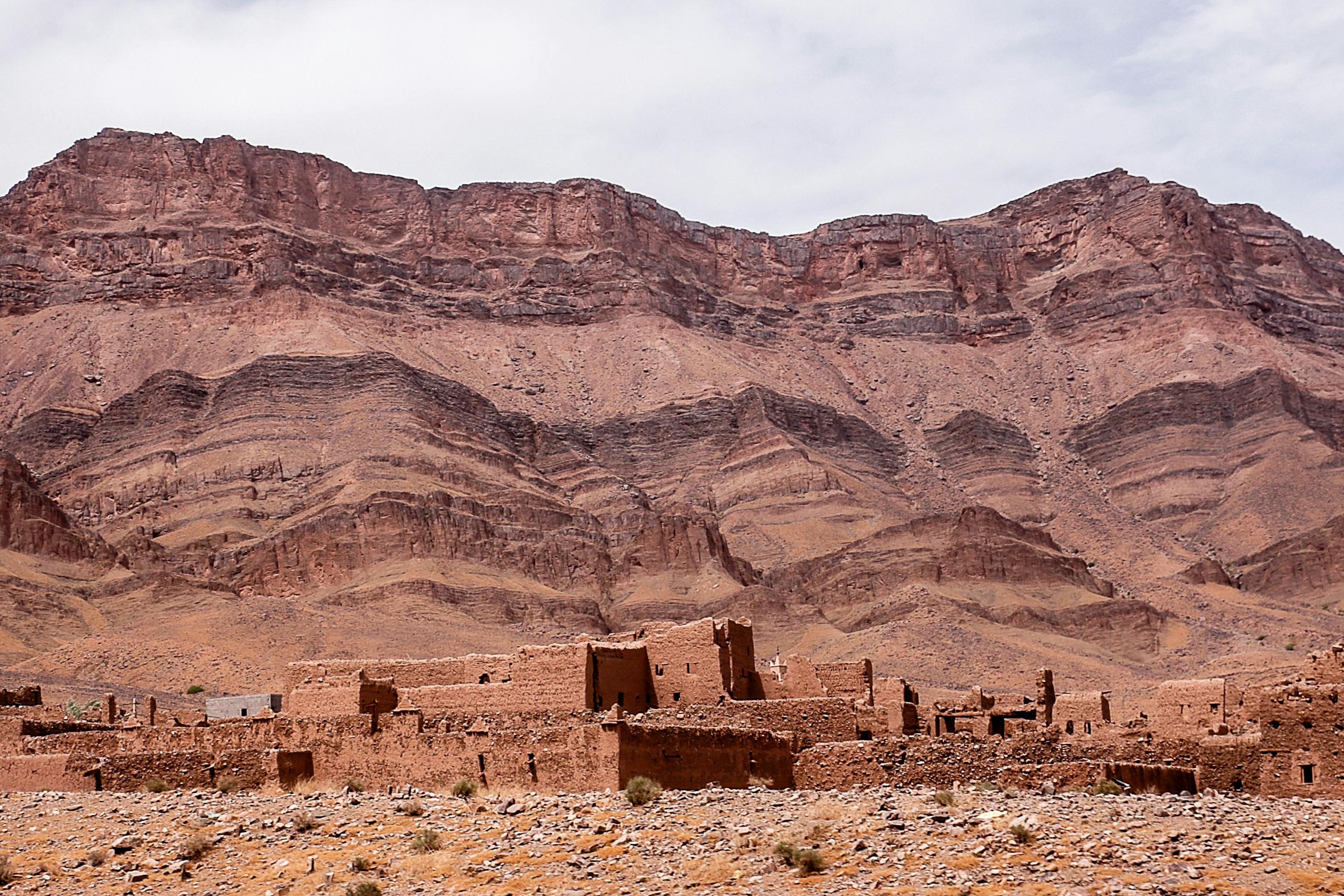
Amid the dust-blown mountains of northern Morocco, an ancient city brings past into the present.

March 9, 2026
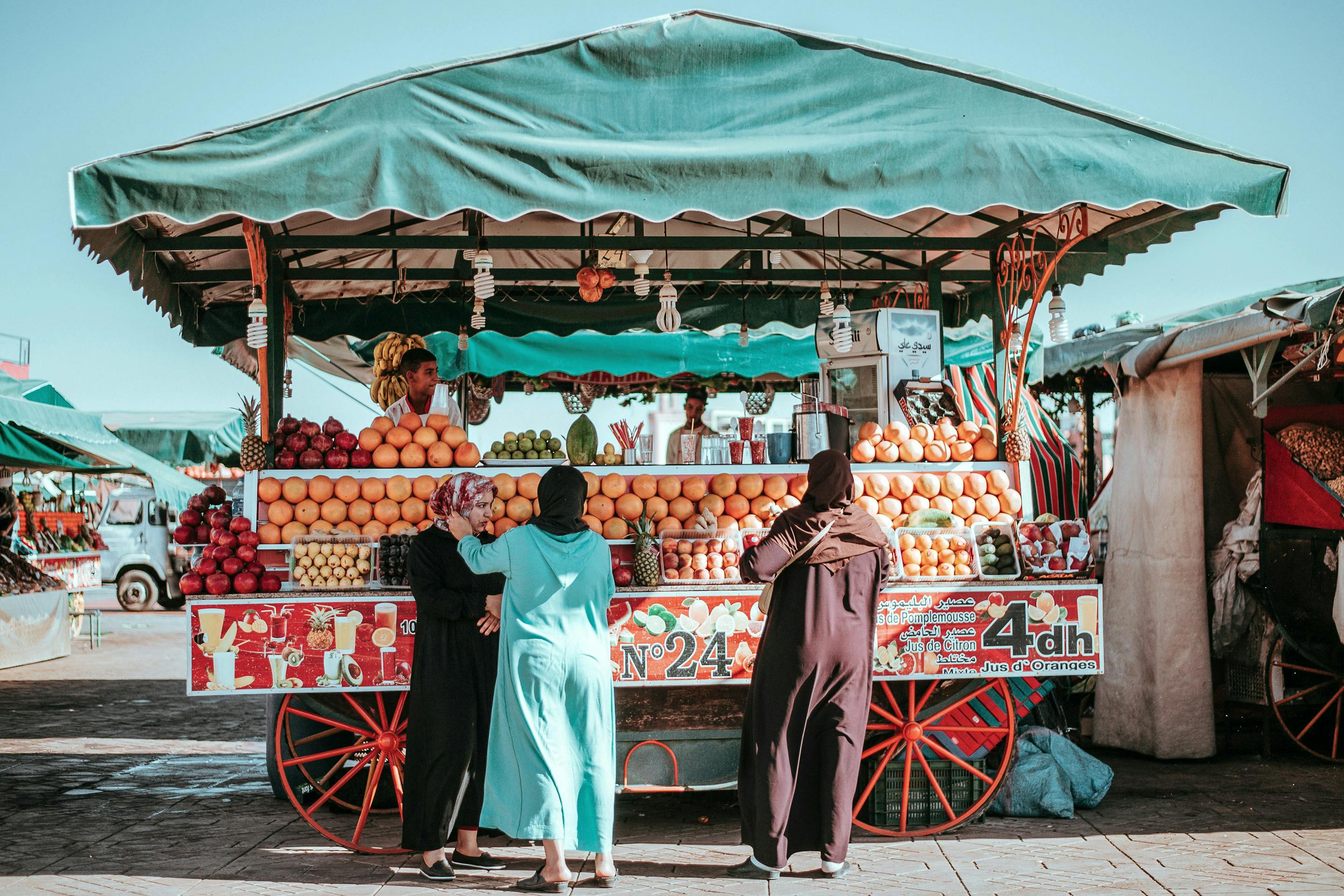
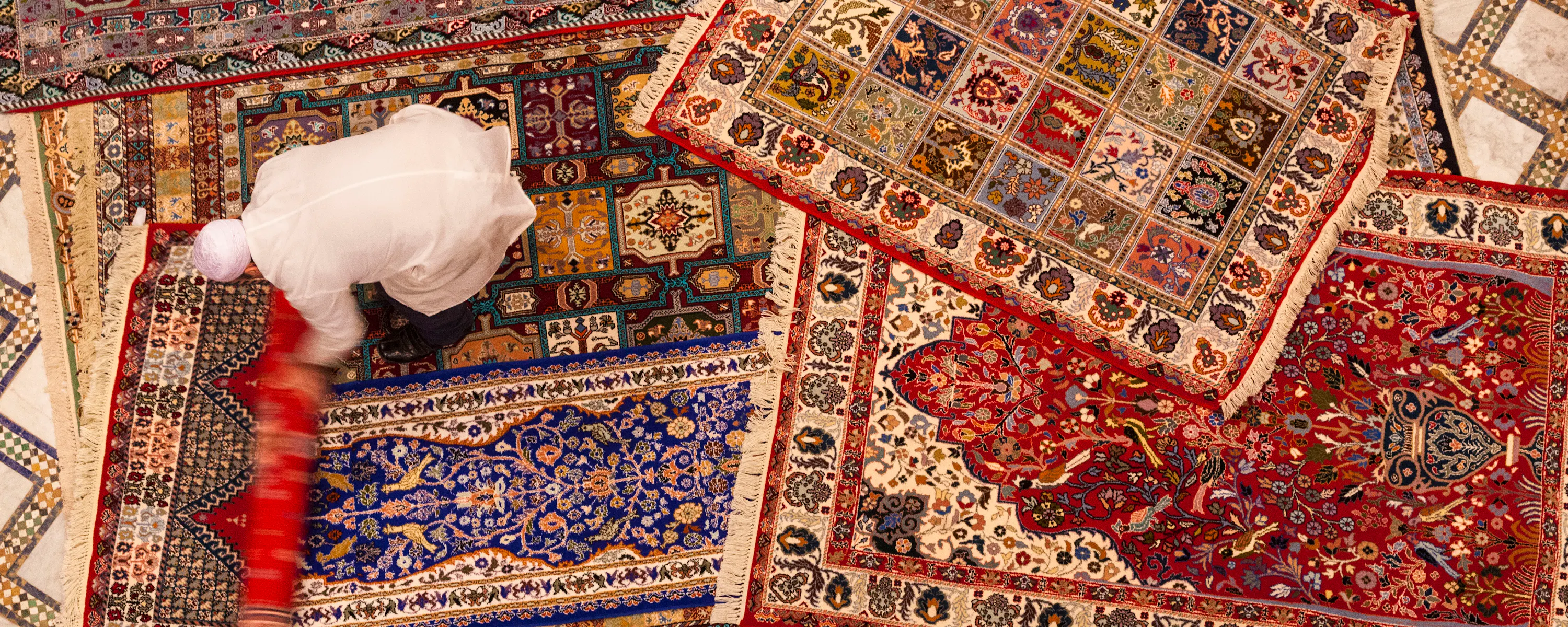
Spices and soaps; intricate carpets and innumerable slippers; the thwack of the butcher's knife and the muezzin's soaring call to prayer. A labyrinth of alleys and streets winding and contorting for miles, past camel heads dangling from meat hooks, vendors lost behind stalls overflowing with mint, and improbable mountains of powder in blazing reds, oranges, and yellows. To the visitor, the souks of Fes are a rush of bedlam and commotion; a constant rhythm of selling, buying, and making.
That things seemingly haven't changed in a hundred years isn't because Fes exists in a time warp: it's because some things haven't needed to change. Market sellers call out to their regulars. People stop and chat as they pick up a dozen eggs or a kilo of flour. The cafés are packed with crowds of people, catching up before the working day begins. The city's famous artisans work to order, hammering copper pots, delicately engraving brass plates, cutting elegant Islamic verse into marble gravestones.
It may seem like immersive spectacle, which, of course, some of it is—the tourist trade is an important one here, just like anywhere else—but most of what Fes reveals to visitors is simply somebody's every day. This is life happening.
I came to Fes, an ancient city in Morocco's northeast enclosed by sun-blasted mountains, intrigued by its history. Not the classic kind of dates and monuments, but the living history that makes the city so singular and fascinating. The medina, Fes' sprawling medieval core, has remained almost unchanged since the 11th century. Its narrow alleys wind and curve, navigated only by people and the occasional donkey—there are no cars within its walls, making it one of the largest pedestrian areas in the world. Beyond creating an endlessly walkable center, the lack of cars has helped preserve many of the city's age-old customs, something my guide, Chakib, is keen to demonstrate.
We begin to descend into the medina from the Bab Bou Jeloud—the Blue Gate, an ornate, mosaic-covered gate that serves as a main entrance into Fes el-Bali. He pulls me through an unassuming doorway into a room blazing with heat. At one end, a man dutifully shovels bread into the flames. Gently tipping each circular piece onto a large wooden spatula, before entrusting the dough to the fire. This is a community oven, something that has existed in the city for centuries. Alongside the mosque and the hammam, these small, smoke-stained rooms are the cornerstone of every neighborhood in Fes. Unseen and unknown, I would have never noticed this place on my own, but Chakib, my guide, grew up in the medina, and he knows that these ovens, where local families bring their bread to be baked, are a living part of Fes' long history.
Between upwards of thirty people visit the baker each day, carrying their freshly prepared bread swathed in patterned fabric. There are no tickets or receipts. Customers simply leave their bread with the baker, who makes a couple of marks in the dough (each pattern unique to a family) with a wooden stick. Everything he does is committed to memory, a recurring theme in Morocco's former capital.
"They are the CIA of the medina—they know everything about everyone," jokes Chakib.
As we leave the baker to his work, Chakib goes on to explain how the city's medieval heart has played a part in preserving this day-to-day custom. "The alleys and stairwells are so narrow, it's difficult to move large items, like ovens, into homes. With no cars, everything must move through the medina by cart," he says.
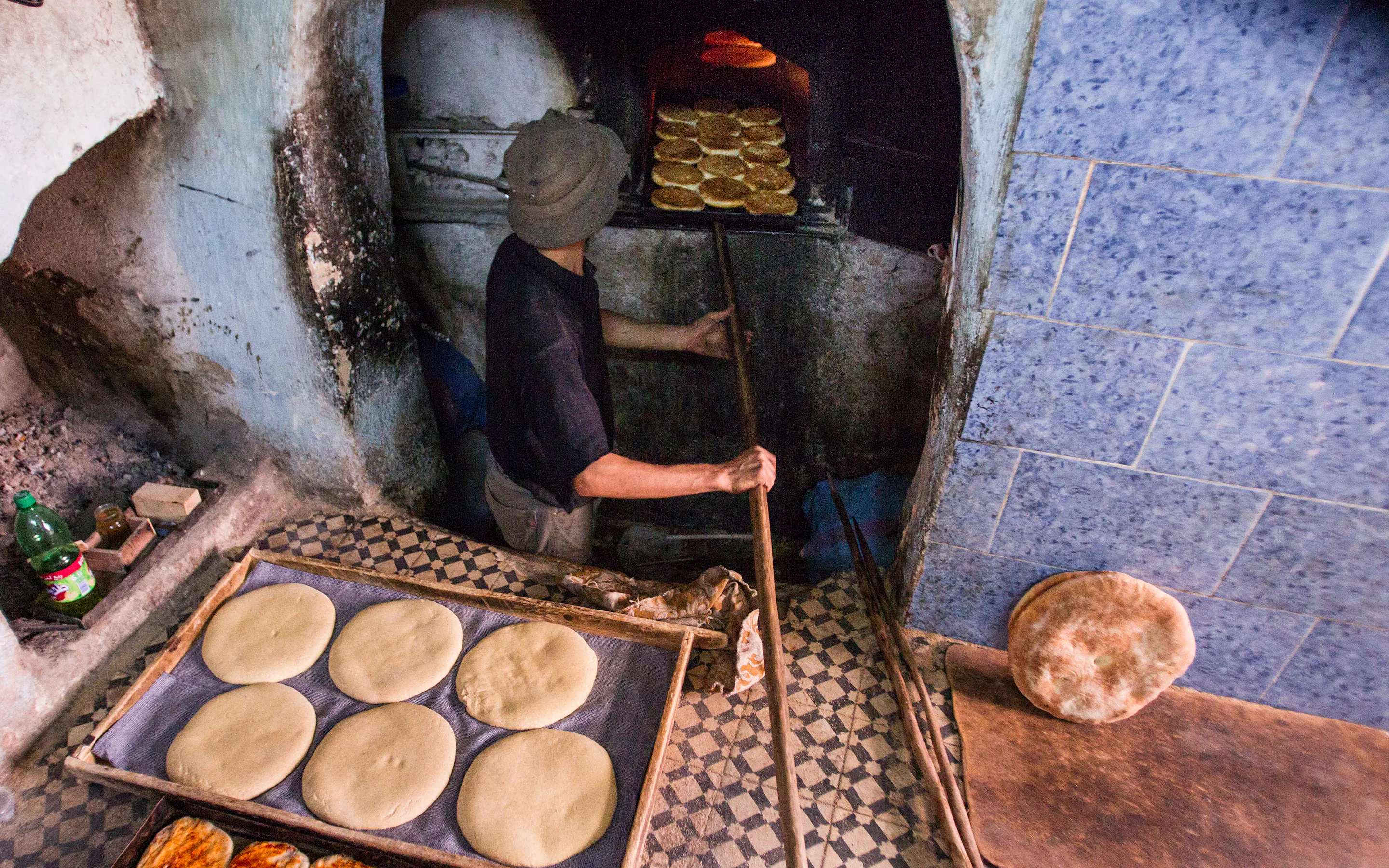
Everything the baker does is committed to memory, a recurring theme in Morocco's former capital.
While we only lingered a moment, it felt as if one of the city's many layers had been peeled back for me. It's not only the bread of Fes that has tradition baked into it. We duck down a gloomy-looking alleyway, which, like so many in Fes, seemingly only leads to more alleyways. Before we reach the end, a doorway appears on the left and Chakib leads us inside. Every wall is draped with colorful fabrics. Paisley patterns in pink and green. Ivory-white silk sheets and curtains. Towering stacks of beautifully soft scarfs of pashmina, silk, cashmere. To one side of the room sits a large loom strung with fine white threads of linen and silk. A man sits behind it working on a large piece of fabric, the clack-clack-clock-clock sound of the shuttle being sent from one end fills the shop with a hypnotic mantra.
The man on the loom, Hamsa, was taught by his father, who was, in turn, taught by his. Weaving has been in his family for at least six generations, passed down, not just as a necessity, but through pride and love for the craft. This is not unusual in Fes; many of the craftspeople I meet are part of a long line of artisans, with skills stretching back hundreds of years.
The loom itself is a masterpiece of engineering. A series of wooden planks and poles, strung together improbably to the untrained eye. Occasionally, the artisan halts the weaving to adjust the loom. His tinkering reminds me of a master musician tuning an instrument before the next song—only the weaver's skill is probably more impressive. It's a wonder that such a thing exists, the ingenuity that went into its creation, and more so that someone, in the time of Temu and fast fashion, still has the knowledge to use it.
Mohammed, the shop's owner and resident salesman, explains that the loom is at least three centuries old. "Once, everywhere would make fabric with this kind of handweaving loom, but today they are disappearing. Everything is made in China," he jokes.
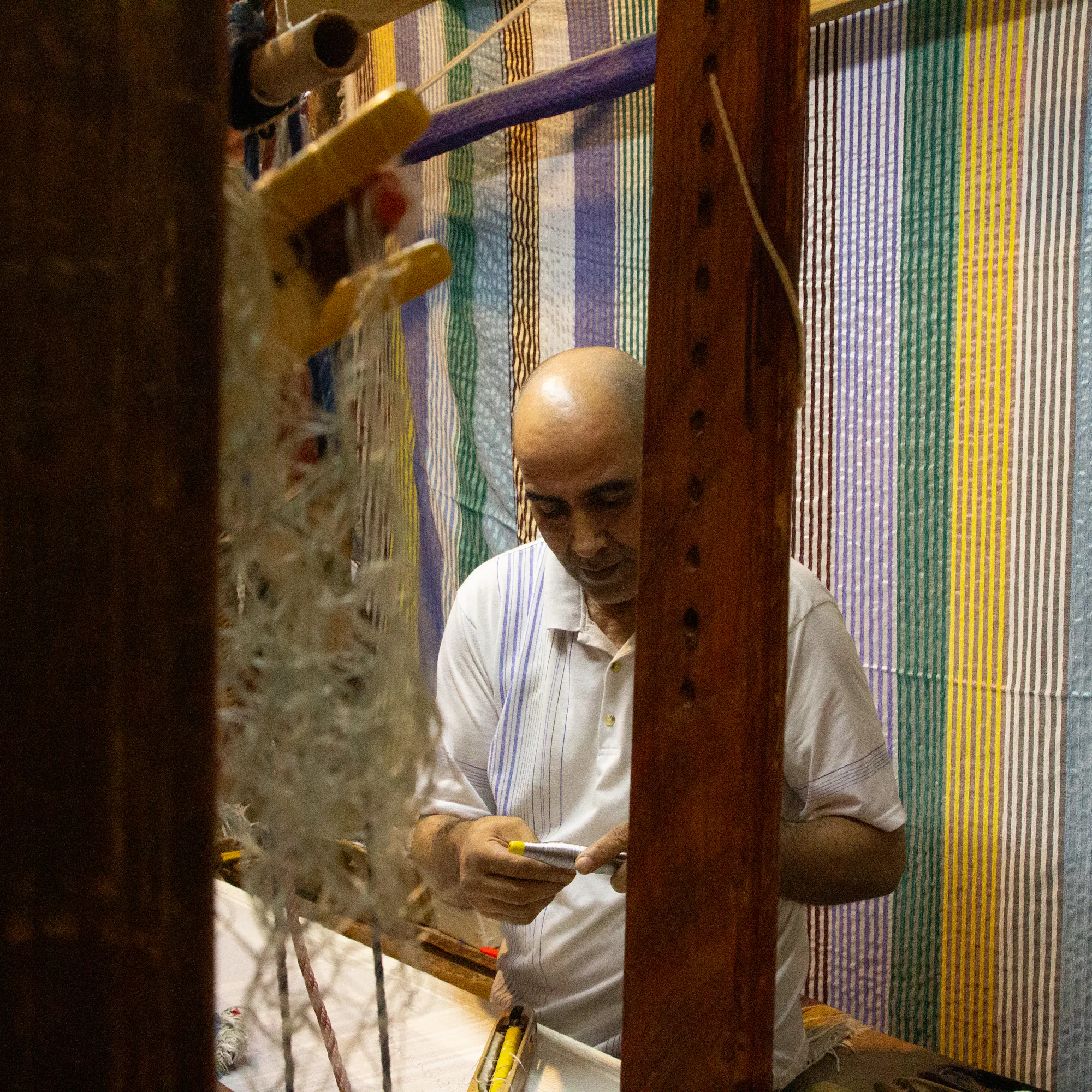
Once, everywhere would make fabric with this kind of handweaving loom, but today they are disappearing.
Fes has a long history of learning and handicrafts. Some of the oldest educational centers in the world exist here, such as al-Qarawiyyin, founded as a madrasa in the 9th century, and the Bou Inania Madrasa which dates back to the 14th century. At one point, between the 13th and 15th centuries, Fes became Morocco's imperial capital under the Marinid dynasty, and the city's rise to prominence helped foster an artisanal culture, encouraging the development of specialized trades—many of which are ongoing to this day.
We hear the artisans of Seffarine Square at work long before we arrive. Famous for its coppersmiths, the methodical clang of hammer on copper rings out along the alleyway. The path opens into a small square, distinctive for the imposing hand-carved wooden doors of the al-Qarawiyyin Library and a gnarled old tree twisting upwards from its center. Around the tree, copper pots and cups, saucepans and teapots, tagines and plates dangle from the walls of a handful of workshops.
Chakib introduces me to Hamid, who has worked in the same spot for almost 50 years. With the knowledge passed down from his father, he makes beautiful cookware and decorative plates for the home. The legacy of coppersmiths in his family goes back at least six generations, that he knows of, all working the copper the same way in this very square. As he hammers the base of a cooking pot, we learn that the next generation of his family is already at work; sitting opposite, in his own workshop, his son begins work on a fresh piece of dappled copper—a 200-year enterprise passing the torch with the hammer and gong of metal. This, Chakib explains, is the real history of Fes. Not written or recorded in the vaults of a library, but skills of craft passed from one person to the next.
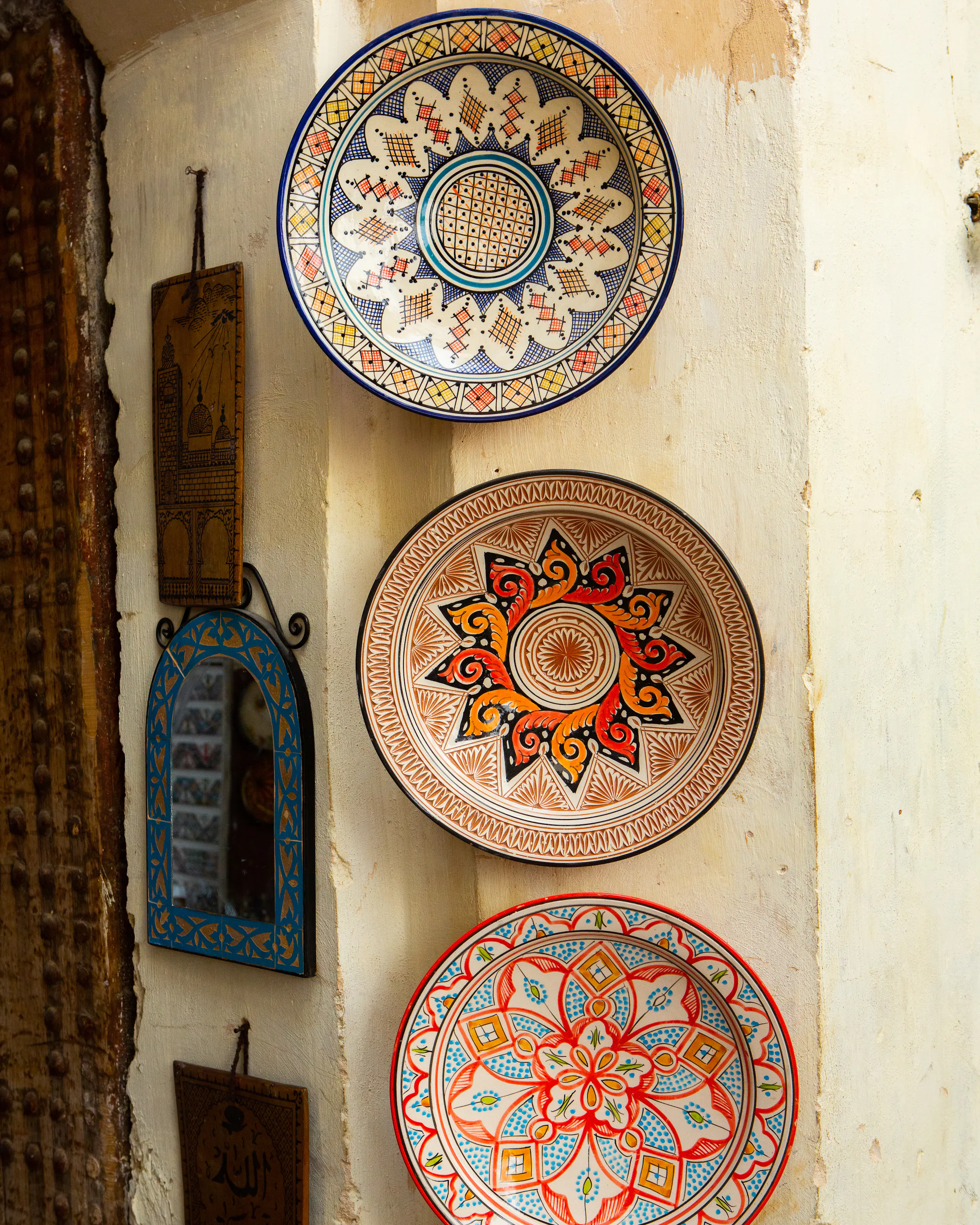
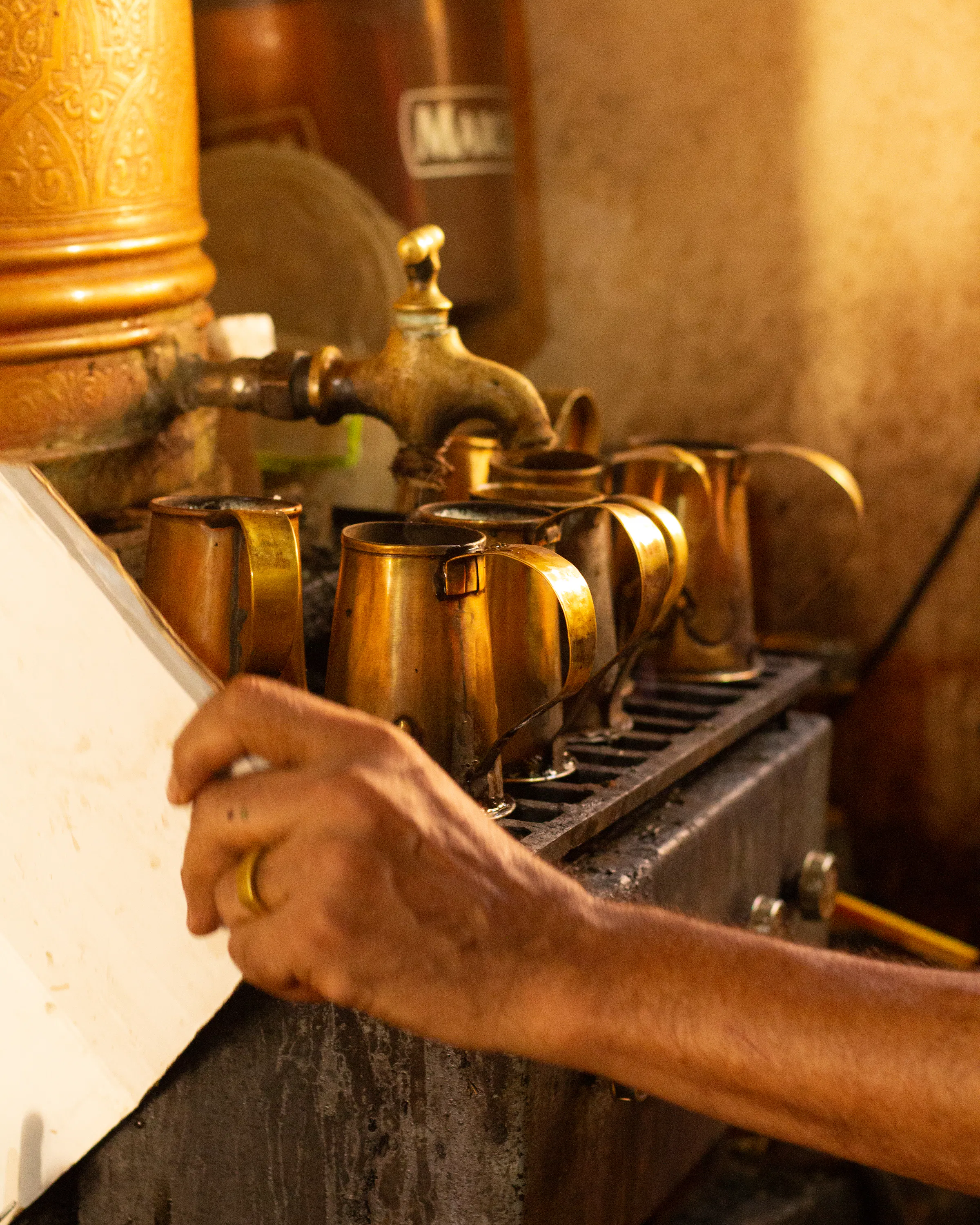
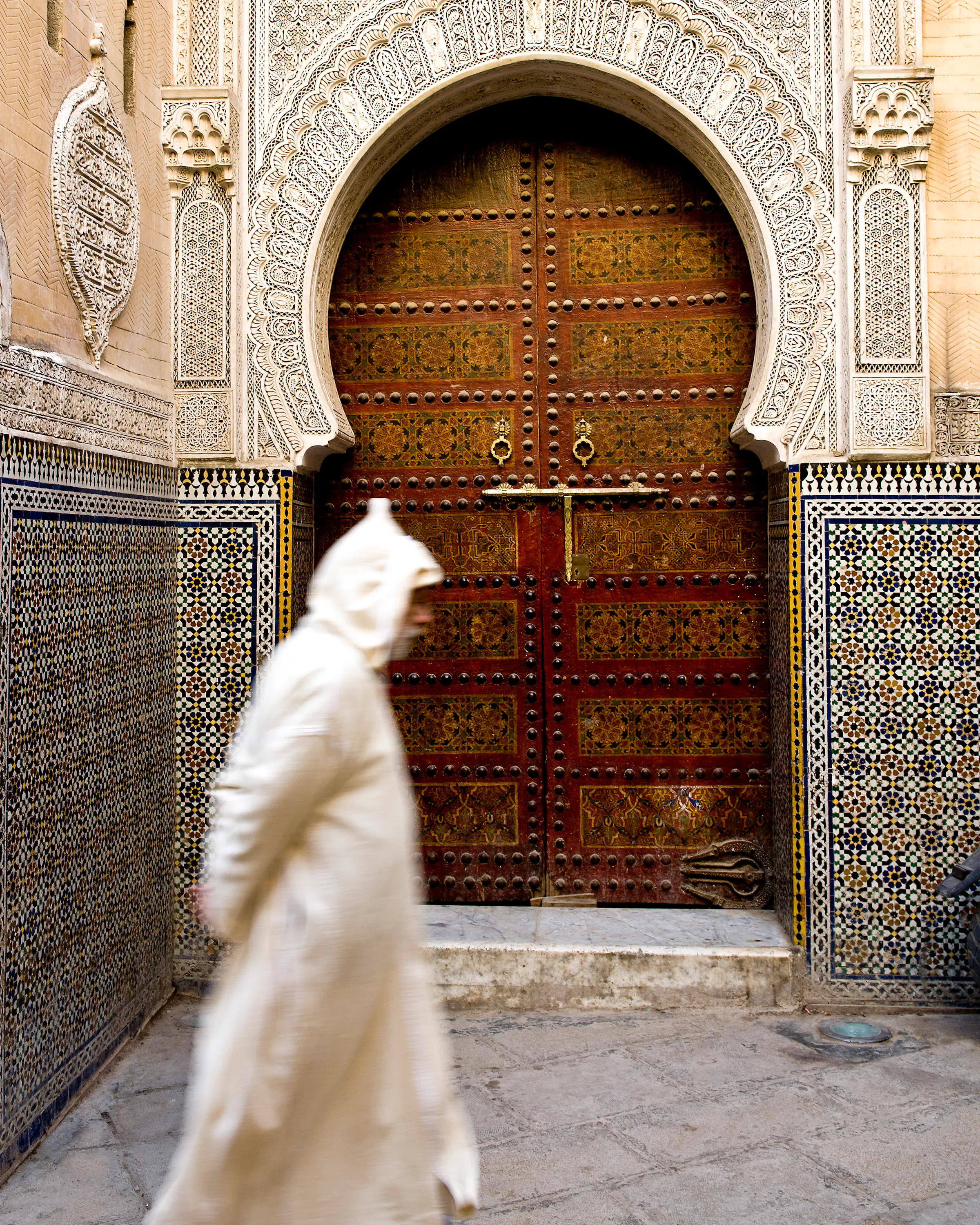
We go on to meet tailors and tanners. Master mosaic makers and crafters of fine zellige tiles (Fes’ distinctive square, gray clay tile). Metal engravers and Berber carpet weavers. With each trade, the story is the same. A family craft, generations in the making; history unfurling in real time, stored and preserved, in the hands of artisans.
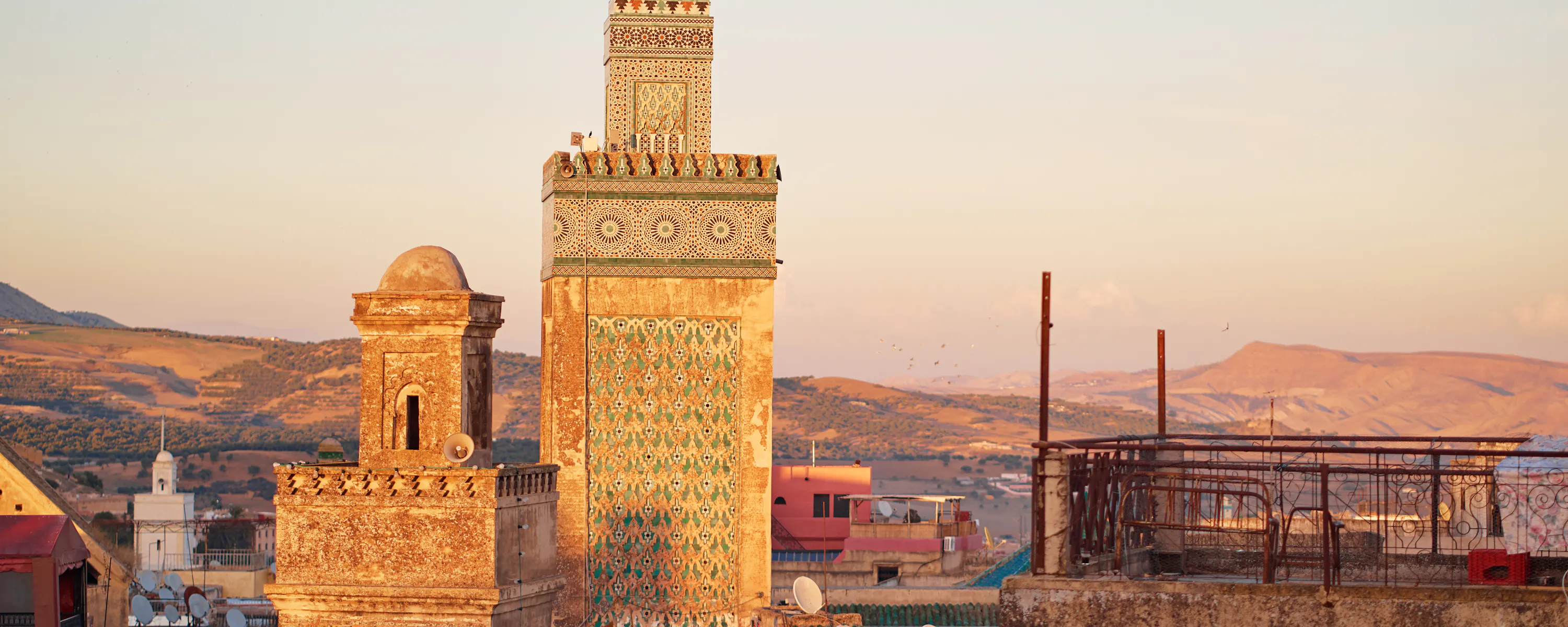
As the day draws to a close, we leave the streets of the medina behind—there is one final piece of Fes's living history that I want to see. From the Merenid Tombs, a set of hulking sandstone ruins that look out over Fes el Bali from a nearby hillside, the city’s lights begin to glimmer in the ensuing dusk. A pink-gray sky settles over the innumerable rooftops as starlings contort and weave above in a ritual end-of-day dance. Momentarily transfixed by the birds, I'm snapped back to the present as, one by one, the minarets begin to erupt; the muezzins' sonorous call to prayer join one another, swirling above the city, echoed by the surrounding hills and mountains. A profoundly powerful wall of sound, not in unison but together in its purpose, it grows and grows until finally it reaches a soul-stirring crescendo. A moment's silence follows, before the noise of the city crackles back into focus.
March 9, 2026
Explore our itineraries
Every trip with Extraordinary Journeys is tailor-made, crafted in collaboration with one of our destination specialists. Use these as a starting point, or as inspiration to create your own journey.