Land beyond time
In Australia's remote and sparsely populated north, ancient stories, a canvas of era-spanning culture, and wild adventures await.
March 26, 2026
I've spent all morning surrounded by a fearsome Australian menagerie of six-foot wallabies, monitor lizards sporting blood-red talons and stingrays with tails that end in wicked barbs. But nothing has prepared me for this. Crouching low, I gaze wide-eyed at a snake that must stretch 20 feet from tip to tail. Its ghostly white body is cross-hatched with fine red markings that lead to a mouth bared wide to reveal rows of impressive fangs.
This is the Rainbow Serpent, a mythical creature that is said to have formed many of Australia's physical features. And though this painting is thousands of years old, the first non-indigenous person to see it was a buffalo hunter named Max Davidson, who stumbled across it in 1987. Just a year earlier, he had been invited by the Amurdak traditional owners to set up a lodge on their sacred lands in Australia's tropical Top End.
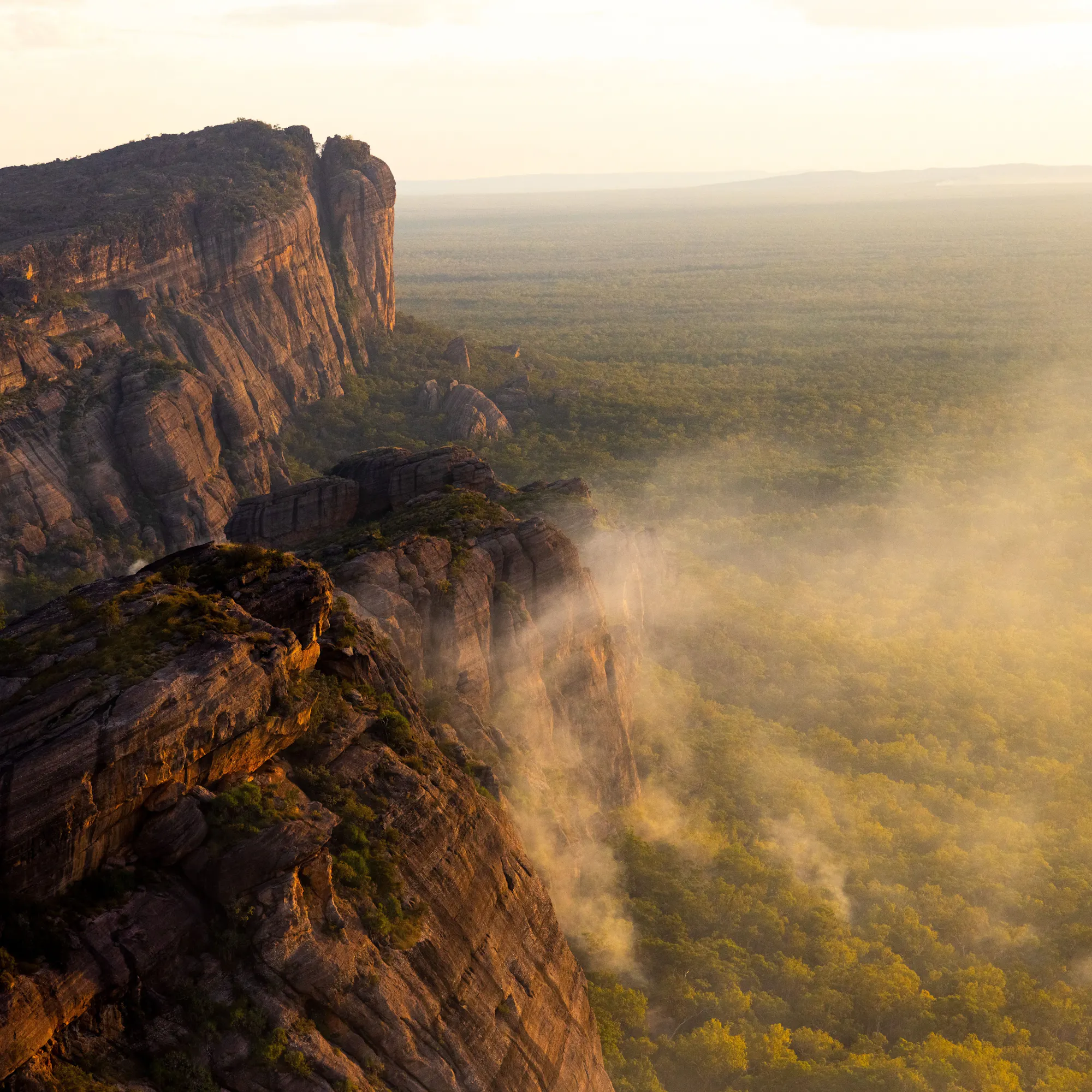
Every wet season, the weathered escarpments that rise above this landscape transform into island sanctuaries.
Fewer than 16,000 people live in Arnhem Land, a vast wilderness of mangrove swamps, monsoon rainforest, floodplains and tropical savanna that is larger than Maine. It's a place of abundant natural beauty, but to truly appreciate this wild region I need to engage with the culture of the people who have lived here for untold generations.
Every wet season, the weathered escarpments that rise above this landscape transform into island sanctuaries, and for 50,000 years the Amurdak people have used them as classrooms, libraries and museums by painting their stories onto the red sandstone. The result is perhaps the greatest concentration of rock art in the world, and the only way to see it is with a permit from an operator in the area.
At my side is Sab Lord, a colorful character even by the lofty standards of the Australian bush and well-known local guide. Lord, who is white, grew up living alongside the traditional owners in what is now Kakadu National Park. He can still remember the first time he encountered air conditioning on a trip to Darwin. "Me and my brother had to go to the dentist," he recalls with a throaty chuckle. "And when we felt the cold air, we ran out of the place screaming because we thought it was filled with bad spirits."
Over three days, I’m lead through groves of spiky pandanus, lagoons covered in giant lilypads and flooded forests where palms rise on slender trunks before the fronds explode outwards like fireworks. When the water gets too deep, we use a boat to navigate labyrinthine swamps where sweet-smelling melaleuca trees shed their bark in giant sheets. And every time we see a weathered sandstone outcrop, we alight to explore galleries where mournful thylacines (a dog-like marsupial carnivore that disappeared from the Australian mainland more than 3,000 years ago) share space with detailed paintings of antiquated Martini-Henry rifles.
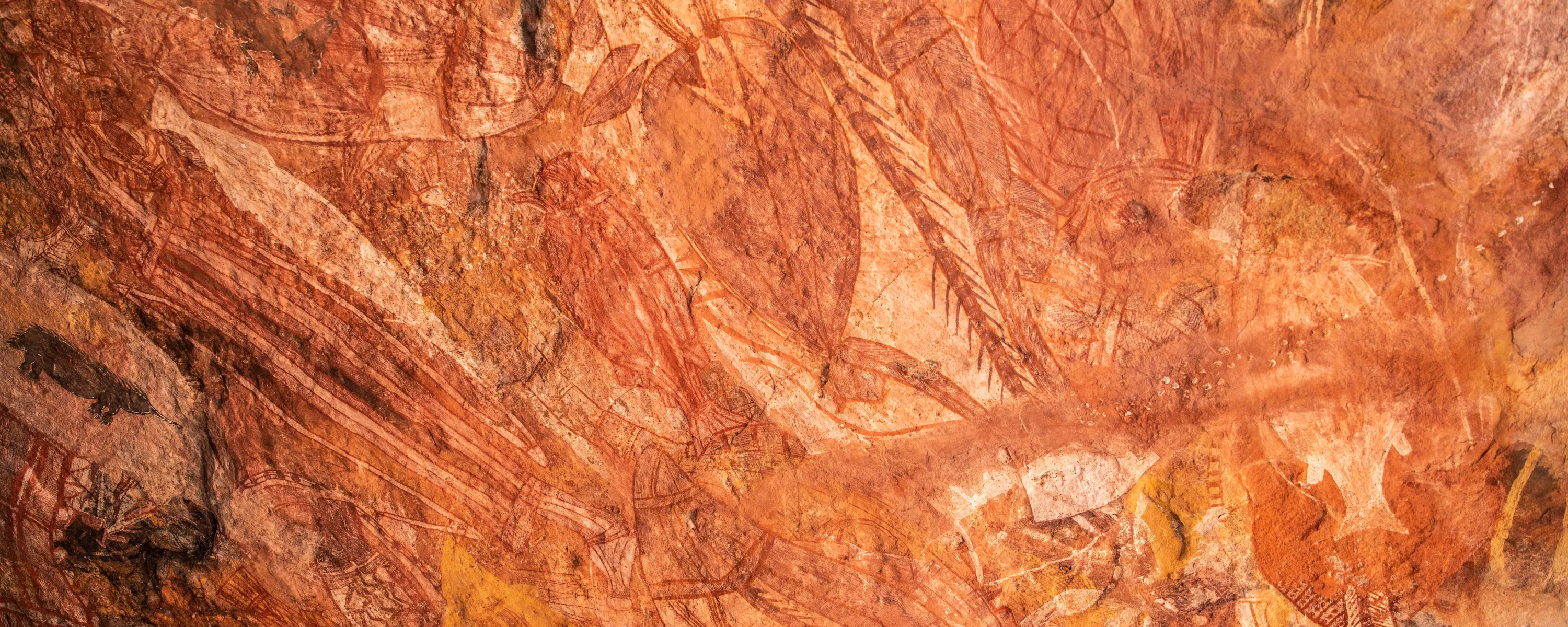
At a site called Left Hand, an exuberant parade of red, white and yellow images covers every available surface. Mythological beings, human figures and local wildlife dance around the walls and ceilings, the latter sometimes portrayed in an X-ray style that reveals their vital organs. For the Amurdak people, the act of painting was as important as the artworks themselves and thousands of images are layered on top of one another in a giant palimpsest.
Beneath the more recent red figures, faded mustard-colored artworks document how the environment changed when rising sea levels brought new species to the region some 8,000 years ago. Amazingly, some walls are covered in handprints that date back even further, displaying a connection between people and country that spans hundreds of generations.
After days immersed in this ancient cultural landscape, the transition to modern travel logistics feels almost jarring. It's possible to drive to Davidson's Arnhem Land during the dry season, but there's no road access when I visit in March. Instead, I leave in a light plane and watch flocks of cockatoos reduced to clouds of confetti drifting over the flooded forests before landing 250 miles away at Swim Creek Station, a pastoral lease with some 10,000 buffalo.
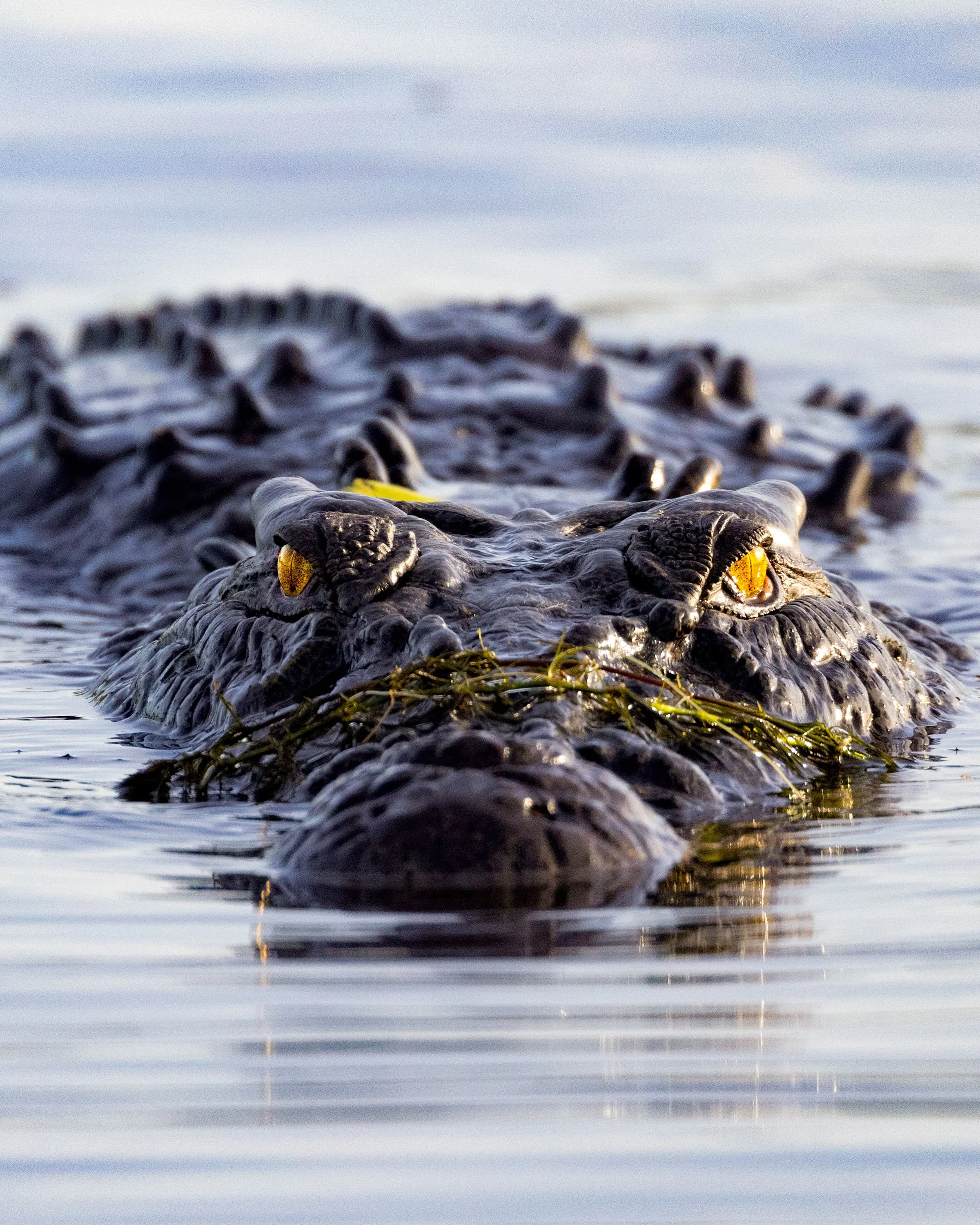
Hidden deep in the property is Bamurru Plains, a remote luxury lodge on the edge of a broad floodplain. When I arrive, the water is completely hidden by thick spike grass and the only way to track the progress of the 2000-pound bulls that lumber through the shallows is to follow the cattle egrets perched on their backs. Even harder to spot are the massive estuarine crocodiles that Lord refers to as "snapping handbags", though he assures me that they can see me just fine.
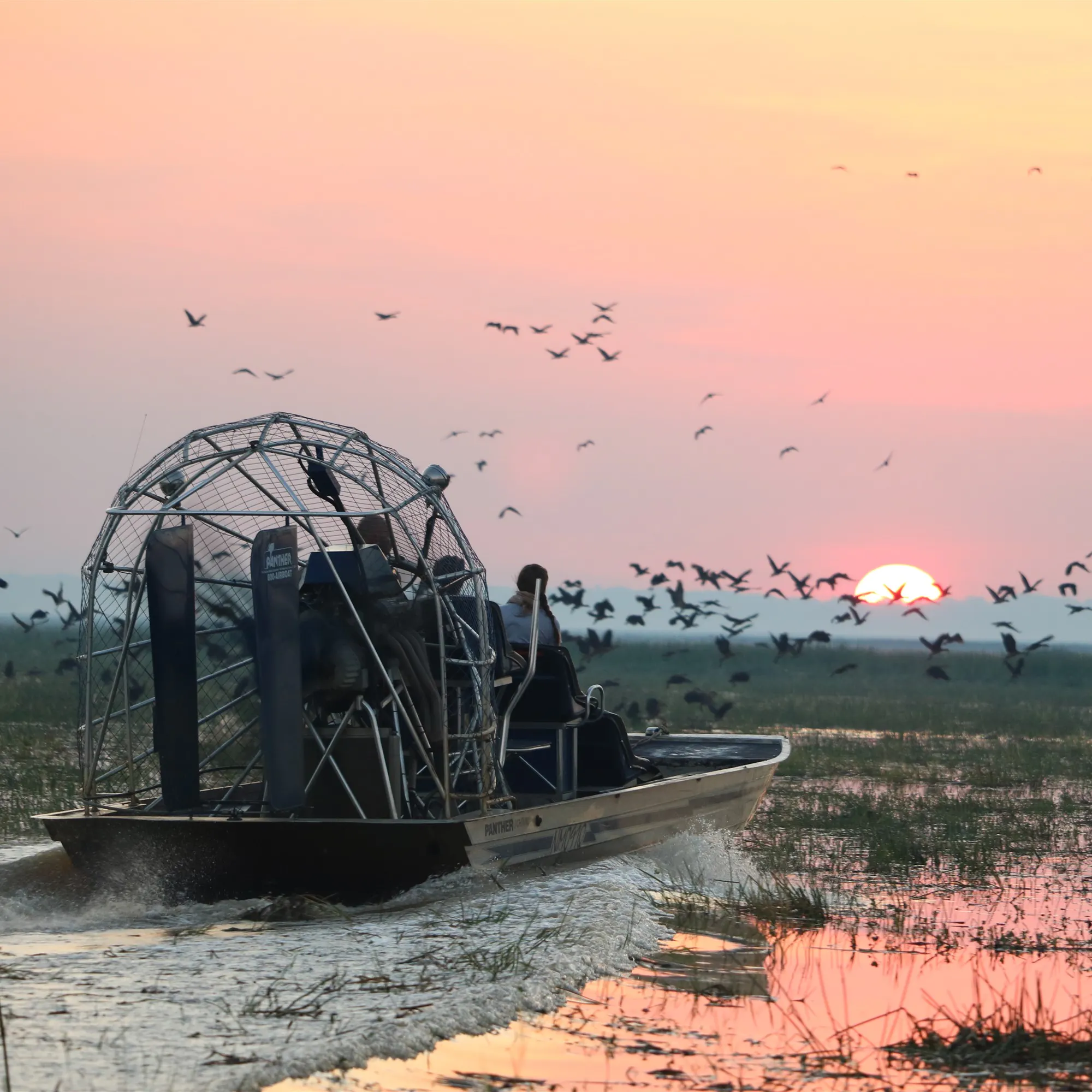
Boarding airboats that glide effortlessly over the floating mats of vegetation, we skirt eerie melaleuca swamps where azure kingfishers dart between the trees, black-necked storks patrol the water's edge on stilt-like legs and herds of buffalo graze between fields of termite mounds that resemble oversized gravestones. When the airboat slows down, I look out for the handsome orange and blue Leichhardt's grasshoppers that float in the air alongside us and native water lilies with delicate white, gold and violet flowers and crunchy stalks that taste like celery.
Fortunately, tastier fare awaits us at the lodge, and I spent my evenings feasting on oven-roasted red emperor fish topped with a native succulent called karkalla, tender pearl oyster flesh with tart finger lime caviar and ice cream made from the tangy honey of stingless native bees. I continue the local theme with a gin and tonic featuring acid-laden green ants, then head out to the deck to watch the sunset.
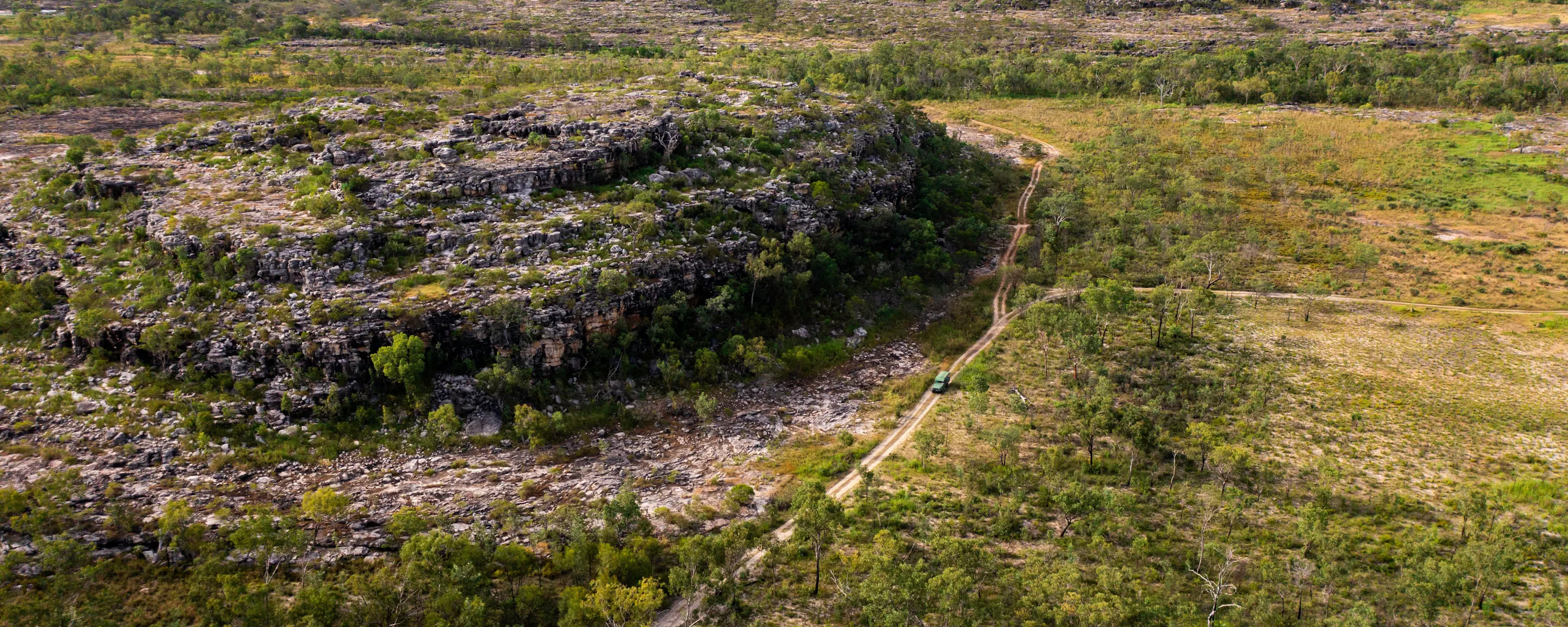
Despite the lack of wi-fi, it's easy to feel connected here, and the modern world seems far away as the golden sun slowly descends and the silhouettes of fabulously spiky pandanus trees are reflected in a silvery pool of water. I imagine this scene playing out unchanged for millennia until Lord sidles up beside me. "Come back in a month," he tells me, "and this will be a completely different place."
As the vegetation dries and "knock 'em down" winds flatten the glass, the smoke drifting up from countless fires will make the setting sun glow bright red. Later in the dry, half a million migratory magpie geese will arrive and turn this shrinking wetland into Australia's biggest nursery before spectacular lightning displays herald the onset of another wet season.
These cycles of fire, flood and rebirth play out every year, and a weeklong visit offers only the briefest glimpse into a world where entire ecosystems can transform in a matter of weeks while important cultural sites span hundreds of generations. This is a land that is at once timeless and constantly shifting, and it's not only the physical landscape that is in flux; it's impossible to visit Arnhem Land and be unchanged by the experience.
March 26, 2026
Explore our itineraries
Every trip with Extraordinary Journeys is tailor-made, crafted in collaboration with one of our destination specialists. Use these as a starting point, or as inspiration to create your own journey.